
The high peaks of the Himalayas are home to many secrets. One of the most fascinating is the Cordyceps mushroom—a fungus that grows in a way that almost sounds like a legend. For centuries, people living in the Himalayas have collected this rare fungus, using it for healing, energy, and even in rituals. But what is the real story behind Cordyceps? Is it all myth, or is there real science behind its fame? Let’s explore the incredible journey of Cordyceps, from ancient folklore to modern laboratories.
The Mysterious Birthplace: The Himalayas
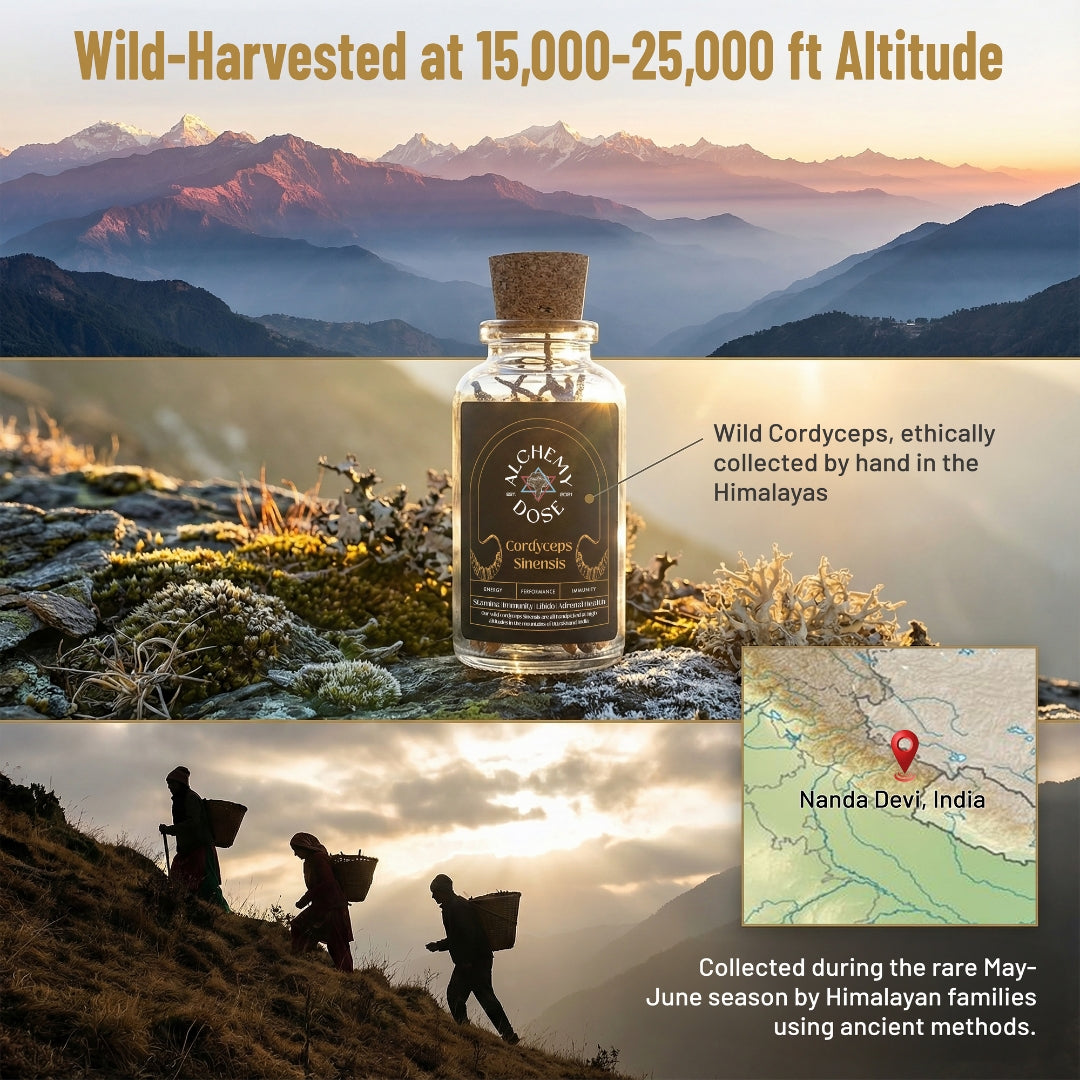
The Himalayan mountains are a unique ecosystem. Stretching across Nepal, Bhutan, India, and Tibet, these mountains rise over 8,000 meters (26,000 feet) into the sky. The environment is harsh—cold, windy, and often covered in snow. Yet, it is here that Cordyceps thrives.
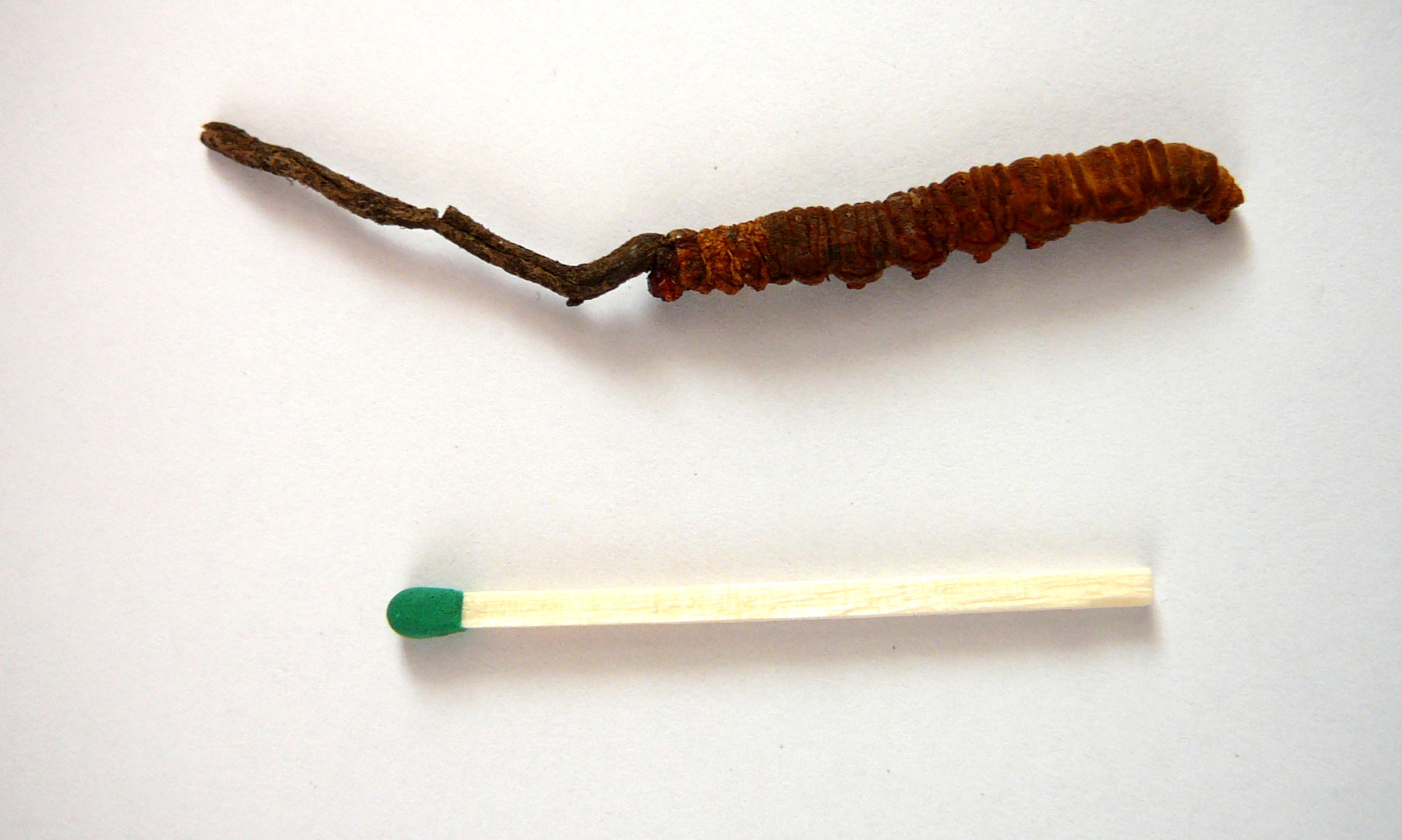
Cordyceps sinensis, sometimes called the “Himalayan Viagra” or “Yarsagumba” in local languages, grows at altitudes between 3,000 and 5,000 meters. Its life cycle is nothing short of bizarre: the fungus attacks and kills the larvae of ghost moths, then grows out of the body, sprouting a thin, brown stalk from the ground. Local people search for this tiny fungus every spring, often trekking for days at high altitude.
The Himalayan terrain shapes the character of Cordyceps. The fungus absorbs nutrients from the soil and the host insect, making it rich in unique bioactive compounds. These conditions are almost impossible to recreate elsewhere, which is why true Himalayan Cordyceps is so highly valued.
Ancient History And Traditional Uses
Cordyceps has a long history in traditional medicine. Written records from Tibet and China date back hundreds of years, describing Cordyceps as a remedy for many illnesses.
Cordyceps In Traditional Chinese Medicine
In China, Cordyceps was considered a treasure. Ancient texts say it can “restore vitality” and “prolong life.” Only the wealthy or royal families could afford it. Healers used Cordyceps to treat:
- Fatigue and weakness
- Respiratory problems such as coughs or asthma
- Kidney and liver diseases
- Low libido and reproductive issues
Cordyceps was often brewed as tea or mixed with other herbs. For many years, it was believed to have magical energy, especially for older people who felt tired or sick.
Himalayan Folk Medicine
In the high valleys of Nepal and Tibet, Cordyceps is part of daily life. Locals call it “Yarsagumba,” which means “summer grass, winter worm. ” People eat it raw, mix it with milk, or use it in soups. Some also use it in rituals to bring good health.
Herders noticed that their yaks became stronger after grazing in Cordyceps-rich areas. This observation added to the belief that Cordyceps gives strength and stamina.
Myth And Legend
Many stories surround Cordyceps. One legend tells of a shepherd who saw his sick animals recover after eating a strange fungus. Another myth says Cordyceps is a gift from the mountain spirits, only found by those with a pure heart.
These stories have helped keep Cordyceps in the center of Himalayan culture. Even today, collecting Cordyceps is a special event, with whole villages joining the harvest.
Credit: alchemydose.com
The Cordyceps Life Cycle: Nature’s Oddity
Cordyceps is not a normal mushroom. Its life cycle is more like a horror movie.
- Infection: The spores of Cordyceps land on a caterpillar or moth larva living underground.
- Growth: The fungus invades the insect’s body, slowly killing it from the inside.
- Emergence: Once the insect dies, a thin stalk (the fruiting body) grows out of the head and pushes through the soil.
- Harvest: Local people spot the stalks and dig out the whole fungus-insect combination.
This unique process gives Cordyceps its nickname: “caterpillar fungus.” It is both animal and plant—a combination that adds to its mystery.
The Cordyceps Market: From Mountain Trails To Global Trade
Cordyceps is one of the most expensive natural medicines in the world. A single kilogram can sell for tens of thousands of dollars. Why is it so valuable?
Harvesting Challenges
- High altitude: Collectors climb to dangerous heights, often above 4,000 meters.
- Short season: Cordyceps only appears for a few weeks each year.
- Labor intensive: Each fungus must be found and dug up by hand.
Economic Impact
In Nepal and Tibet, Cordyceps is called “soft gold.” For many families, selling Cordyceps is their main source of income. Some villages ban outsiders during the harvest season to protect their supply.
Quality And Authenticity
Buyers look for true Himalayan Cordyceps. Fake or farmed Cordyceps can be much less potent. Experts judge quality by color, size, and even smell.
Below is a comparison of wild Himalayan Cordyceps and cultivated Cordyceps militaris:
| Feature | Himalayan Cordyceps (sinensis) | Cultivated Cordyceps (militaris) |
|---|---|---|
| Source | Wild, high-altitude Himalayas | Farmed, lab-grown |
| Host | Caterpillar (ghost moth larva) | Grows on grains or other media |
| Active Compounds | High, complex profile | Good, but simpler profile |
| Price per kg | $10,000–$50,000 | $100–$500 |
| Traditional Value | Extremely high | Moderate |
Cordyceps In Modern Science
In the past 30 years, scientists have started to study Cordyceps carefully. Does it really do what ancient healers claimed? The answer is complex, but exciting.
Key Bioactive Compounds
Cordyceps contains unique substances, including:
- Cordycepin: May fight viruses, bacteria, and even cancer cells.
- Polysaccharides: Help boost the immune system.
- Adenosine: Supports heart health and energy.
- Sterols and peptides: May have anti-inflammatory effects.
Research Highlights
Energy And Endurance
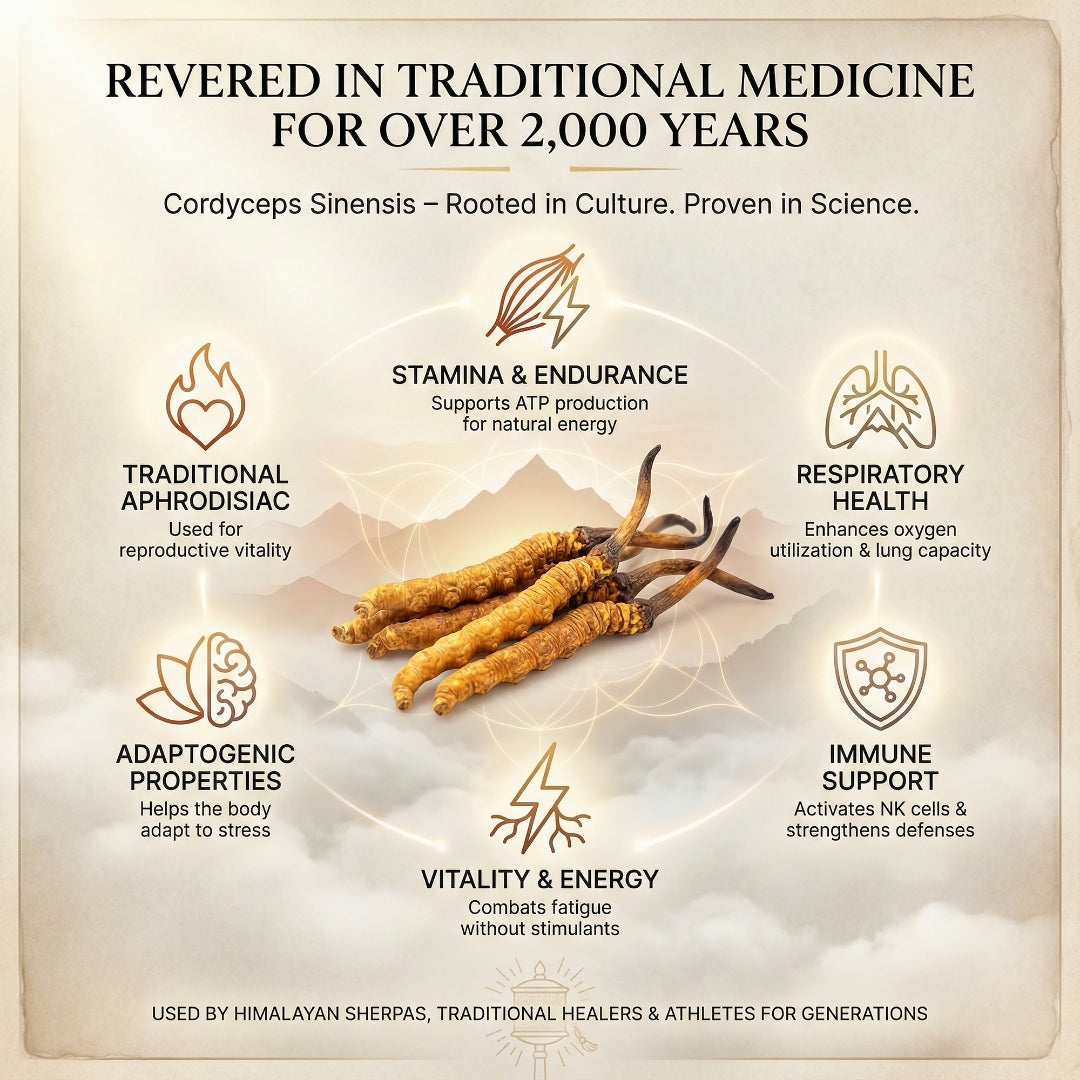
Several studies suggest that Cordyceps can help the body use oxygen better. In one clinical trial, older adults taking Cordyceps showed improved exercise performance. This matches the old stories about yaks and herders gaining strength.
Immunity And Healing
Cordyceps extracts appear to boost the immune system by increasing white blood cells. Some laboratory studies show that Cordyceps can help fight certain viruses and bacteria.
Anti-aging Effects
Some animal studies suggest Cordyceps can reduce fatigue, improve memory, and protect organs from damage. Researchers think this is due to its antioxidant properties.
Diabetes And Blood Sugar
A few small studies show that Cordyceps may help lower blood sugar and protect the pancreas. However, more research is needed in humans.
Cancer Research
Cordycepin has shown promise in fighting cancer cells in the lab. It may slow tumor growth and help chemotherapy work better. But these results are early, and Cordyceps is not a cure for cancer.
Below is a table summarizing major research findings:
| Health Area | Potential Benefit | Evidence Level |
|---|---|---|
| Energy & Endurance | Improved oxygen use, reduced fatigue | Human trials, moderate quality |
| Immunity | Boosted immune response | Lab & animal studies, some human |
| Anti-Aging | Antioxidant, organ protection | Mainly animal studies |
| Blood Sugar | Lowered blood sugar | Small human studies |
| Cancer | Slowed tumor growth (in lab) | Lab studies only |
Clinical Trials And Limitations
While early results are promising, most studies are small or done on animals. High-quality human trials are still rare. Also, many products sold as Cordyceps do not contain real Himalayan Cordyceps, which can affect results.
One non-obvious insight: the effects of Cordyceps can vary greatly depending on where and how it is grown. Some supplements use only Cordyceps militaris, which is easier to farm but may not have all the same compounds as wild Cordyceps sinensis.
The Modern Cordyceps Industry
As demand grows, the Cordyceps market faces new challenges.
Overharvesting And Sustainability
Wild Cordyceps populations are shrinking. In some areas, too much harvesting has damaged the environment. Governments now control and limit how much can be collected.
Cultivation Advances
Scientists have learned to grow Cordyceps militaris in the lab. While it is not exactly the same as wild Cordyceps sinensis, it is much cheaper and more sustainable. Many supplements now use the lab-grown form.
Regulation And Quality Control
Because Cordyceps is so valuable, fake or low-quality products are common. Buyers should look for:
- Verified source and species
- Lab testing for active compounds
- No harmful additives or fillers
Below is a comparison of wild vs. cultivated Cordyceps in terms of environmental impact:
| Type | Environmental Impact | Sustainability |
|---|---|---|
| Wild Cordyceps sinensis | High (risk of overharvesting, soil damage) | Low (not sustainable long-term) |
| Cultivated Cordyceps militaris | Low (controlled production) | High (can meet demand) |
Credit: alchemydose.com
The Cultural Importance Of Cordyceps
Cordyceps is more than just a medicine in the Himalayas. It is tied deeply to culture, community, and identity.
Festivals And Community
The Cordyceps harvest is a big event. In some villages, families camp in the mountains for weeks. There are songs, stories, and even special foods made with Cordyceps. The harvest brings people together and helps support rural economies.
Social Impact
Cordyceps income has changed life in remote areas. Families can afford better education and healthcare. However, it has also caused problems—sometimes there are fights over territory or price.
Knowledge And Tradition
Older generations teach the young how to find and collect Cordyceps. This knowledge is passed down, keeping traditional skills alive.
A non-obvious insight: the Cordyceps trade is one of the few ways Himalayan women can earn direct income. In some areas, women lead the search and control the sale of Cordyceps, giving them more independence.
Myths, Misunderstandings, And Modern Hype
Cordyceps is surrounded by both real science and wild claims.
Common Myths
- “Cordyceps is a magic cure for all diseases.” No scientific evidence supports this.
- “All Cordyceps are the same.” In reality, species and quality vary a lot.
- “More is always better.” Taking too much can cause side effects.
Media And Marketing
Some companies claim Cordyceps can make you run marathons or live longer. While some benefits are real, many are exaggerated. Always check if a product uses real Cordyceps and look for proper testing.
Side Effects And Safety
Most studies show Cordyceps is safe for healthy adults in normal amounts. Rare side effects include stomach upset, dry mouth, or allergic reactions. People with autoimmune diseases or on blood thinners should ask their doctor before using Cordyceps.
Cordyceps In Sports And Modern Health
Recently, athletes and health-conscious people have become interested in Cordyceps.
Sports Performance
Some professional runners and cyclists use Cordyceps extracts, hoping for better stamina and recovery. Studies show mixed results—some find small improvements, others do not.
Energy And Fatigue
Cordyceps is often marketed as a “natural energy booster. ” For people who feel tired or have mild health issues, it may help a little. But it is not a replacement for good nutrition and rest.
Immunity Boosters
During cold and flu season, Cordyceps supplements are popular. They may help support the immune system, but will not prevent or cure infections.
The Future Of Cordyceps: Science And Conservation
Cordyceps faces both bright promise and serious challenges.
Promising Research
Scientists are studying Cordyceps for new medicines. Its compounds may help with cancer, diabetes, or even aging. But it will take years of research to prove these effects in humans.
Protecting Wild Cordyceps
To save wild Cordyceps, more must be done:
- Stricter harvest limits
- Education for collectors
- Better laws and enforcement
- Support for cultivated Cordyceps
Sustainable Use
Switching to lab-grown Cordyceps can help protect nature and provide affordable products. More research is needed to make cultivated Cordyceps as effective as wild varieties.
How To Choose Cordyceps Products
With so many options, picking the right Cordyceps supplement can be confusing. Here’s what matters:
- Species: True Cordyceps sinensis is rare and expensive. Most products use Cordyceps militaris.
- Form: Capsules, powders, and tinctures are common. Whole dried Cordyceps is best for traditional use.
- Testing: Look for brands that test for active compounds.
- Source: Wild-harvested is most traditional, but lab-grown is more sustainable.
- Price: If it’s very cheap, it is likely not real Cordyceps.
Mistake to avoid: Some products contain only mycelium (the root part) grown on grain, not the true fruiting body. These may be less effective.
Cordyceps And Conservation: Balancing Nature And Need
Cordyceps is a gift from the Himalayas, but its popularity is also a threat. Overharvesting puts both the fungus and local wildlife at risk. Some regions now require permits or have banned collection to let populations recover.
International groups and governments are working to protect Cordyceps. This includes:
- Training collectors to harvest only mature fungi
- Rotating harvest areas each year
- Supporting lab cultivation to reduce pressure on wild stocks
By choosing sustainable products and supporting responsible harvesters, consumers can help protect this important resource.
Credit: en.wikipedia.org
Cordyceps And The Global Supplement Industry
Cordyceps is now sold in health stores worldwide. In China, it is used in hospitals as a supportive therapy. In the West, it is popular in natural medicine and even in coffee blends.
Regulation
Supplements are not always strictly regulated. Some contain little or no real Cordyceps. Buying from trusted brands and looking for third-party testing can help ensure quality.
Global Trade
The Cordyceps trade links remote Himalayan villages to cities around the world. Prices can change quickly, sometimes causing hardship for collectors. Fair trade programs can help support local communities.
Scientific Collaboration
Researchers from different countries are working together to study Cordyceps. Sharing knowledge helps protect both the fungus and the people who depend on it.
Cordyceps In Popular Culture And Media
Cordyceps is not just a health product—it has become part of popular culture.
- Featured in documentaries about the Himalayas
- Mentioned in TV shows and books as a “miracle fungus”
- Even inspired the video game “The Last of Us”, where a fictional Cordyceps outbreak turns people into zombies
While these stories are fun, real Cordyceps is not dangerous to humans. It is a valuable part of Himalayan life, not a monster from a game.
The Spiritual Side Of Cordyceps
In the Himalayas, Cordyceps is sometimes used in religious ceremonies. It is seen as a link between the earth and sky, between life and death. This reflects its unique life cycle—rising from death to bring new life.
Some monks use Cordyceps in meditation, believing it helps balance mind and body. While science cannot prove these spiritual effects, they are an important part of the fungus’s history.
Final Thoughts: The Living Legend Of Cordyceps
Cordyceps is a true wonder of the natural world. Its story mixes ancient myth, hard science, and living tradition. From the snowy peaks of the Himalayas to modern labs, it remains both rare and remarkable.
For those who seek it, Cordyceps offers more than just health benefits. It is a symbol of the connection between people and nature, between past and future. As we learn more, it is important to respect both the science and the stories that make Cordyceps so special.
If you want to explore more about Cordyceps and its history, you can visit the Wikipedia page on Cordyceps sinensis.
Frequently Asked Questions
What Is The Difference Between Cordyceps Sinensis And Cordyceps Militaris?
Cordyceps sinensis grows wild in the Himalayas, infecting caterpillars. It is rare and expensive. Cordyceps militaris is farmed in labs and easier to produce. Both have similar compounds, but sinensis is more valued in traditional medicine.
Is Cordyceps Safe To Use Every Day?
Most studies show Cordyceps is safe for healthy adults in normal doses. However, people with immune system problems or taking certain medicines should ask a doctor first.
Can Cordyceps Really Boost Energy And Sports Performance?
Some research suggests Cordyceps may improve stamina and reduce fatigue. Results are mixed, and effects are usually mild. It is not a magic pill for athletes.
How Can I Tell If A Cordyceps Product Is Real?
Check the label for the species (sinensis or militaris), look for third-party lab testing, and buy from trusted brands. Be careful of very cheap products—they may not contain real Cordyceps.
What Is The Best Way To Take Cordyceps?
Traditional use is whole dried Cordyceps, eaten or made as tea. Most people now use capsules or powders. Choose a form that fits your needs and make sure it is from a reliable source.