
Cordyceps mushrooms have gained global attention for their unique health benefits. Whether you are a wellness enthusiast, someone searching for natural energy boosters, or just curious about functional mushrooms, you have likely come across two popular forms: cordyceps extract and whole mushroom powder. The choice between these can be confusing, especially since both products often claim similar benefits. But in reality, there are important differences that can greatly affect your health results, cost, and even safety.
Knowing these differences is not just for supplement experts. Even beginners should understand how the preparation, potency, uses, and effects of cordyceps extract and whole mushroom powder are not the same. This article breaks down each aspect in simple language. You will learn what each form is, how they are made, what science says about their ingredients, and which one may be better for your needs. Along the way, you’ll find insights most people miss—like how extraction methods change bioavailability, and why not all cordyceps supplements are equal.
Let’s dive deep into the world of cordyceps and uncover the real differences between extract and whole mushroom powder.
What Is Cordyceps?
Cordyceps is a type of fungus with a long history in traditional Chinese medicine. There are more than 400 species, but the most famous are Cordyceps sinensis and Cordyceps militaris. Traditionally, wild cordyceps grew on insects high in the mountains of China and Tibet. Today, most supplements use cultivated versions, especially Cordyceps militaris, which can be grown without insects.
People use cordyceps for:
- Boosting energy and stamina
- Supporting the immune system
- Enhancing athletic performance
- Improving lung and kidney health
The key active compounds in cordyceps are cordycepin, adenosine, and polysaccharides. These substances are believed to give cordyceps its health effects.
What Is Cordyceps Extract?
Cordyceps extract is a concentrated form of the mushroom. It is made by taking the fruiting body (the visible part of the mushroom) and/or mycelium (the root-like part), and running them through an extraction process. The goal is to pull out the most important active compounds, leaving behind indigestible parts.
How Cordyceps Extract Is Made
Extraction involves several steps:
- Harvesting: Cordyceps is collected at the right time for maximum potency.
- Drying and Grinding: The mushrooms are dried and ground into a fine powder.
- Solvent Extraction: Hot water, alcohol, or both are used to separate valuable compounds like cordycepin and polysaccharides from the mushroom fiber.
- Concentration: The extracted liquid is concentrated by removing some water or alcohol.
- Spray Drying: The concentrate is turned into a powder for supplements.
Different extraction methods give different results. Hot water is good for polysaccharides, while alcohol is better for cordycepin and other non-water-soluble compounds.
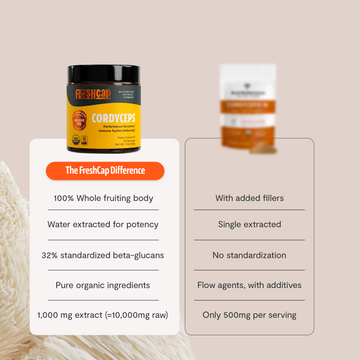
Key Features Of Cordyceps Extract
- Higher potency: More active compounds per gram than whole powder.
- Easier absorption: Extraction breaks down tough cell walls, making ingredients easier for your body to use.
- Less filler: You get more of what matters, and less indigestible fiber.
- Standardized: Some extracts are labeled with exact percentages of active compounds.
Credit: freshcap.com
What Is Whole Mushroom Powder?
Whole mushroom powder is made by drying the entire cordyceps mushroom and grinding it into a powder. Nothing is removed or concentrated. It is the simplest way to consume the whole mushroom, similar to eating it fresh—just in a powdered form.
How Whole Mushroom Powder Is Made
- Harvesting: Mushrooms are picked and cleaned.
- Drying: The whole mushroom is dried, usually by air or low heat.
- Milling: The dried mushroom is ground into a powder.
No solvents or special extraction steps are used. The result is a powder that contains everything in the original mushroom: active compounds, fiber, and even parts that are hard to digest.
Key Features Of Whole Mushroom Powder
- Full spectrum: Contains all mushroom parts, including fiber.
- Lower potency: Active compounds are less concentrated.
- No extraction: May be harder for your body to absorb some ingredients.
- Simple processing: Fewer steps, often considered more “natural.”
How Extraction Changes Potency And Bioavailability
The main reason people choose cordyceps extract is because it’s stronger. But why? The answer is bioavailability—how easily your body can absorb the important compounds.
The Science Of Bioavailability
Mushrooms have tough cell walls made of chitin. Humans can’t digest chitin well. Many active compounds in cordyceps, like polysaccharides and cordycepin, are trapped behind these cell walls. Extraction breaks down the chitin, freeing these compounds.
For example:
- Hot water extraction pulls out polysaccharides (immune-supporting sugars).
- Alcohol extraction gets out more fat-soluble compounds like cordycepin.
This means your body gets more of the good stuff, faster and with less effort.
Example: Polysaccharide Content
A typical cordyceps extract may contain 20–40% polysaccharides by weight, while whole mushroom powder may only have 5–10%. This is a big difference if you want immune support.
Example: Cordycepin Content
Cordycepin, a unique compound found mainly in Cordyceps militaris, is often present in higher amounts in extracts. Whole mushroom powder may have only 0. 1–0. 5% cordycepin, while a concentrated extract can reach 1–3%.
Why Beginners Miss This
Many people assume “whole” means “better,” but in cordyceps, extraction often means more active ingredients. This is especially true if you are looking for a specific health effect, like energy or immune support.
Nutritional Comparison: Extract Vs. Whole Powder
Let’s look at a side-by-side comparison of common nutrients and compounds in cordyceps extract and whole mushroom powder.
| Component | Cordyceps Extract (per 1g) | Whole Mushroom Powder (per 1g) |
|---|---|---|
| Polysaccharides | 200–400 mg (20–40%) | 50–100 mg (5–10%) |
| Cordycepin | 10–30 mg (1–3%) | 1–5 mg (0.1–0.5%) |
| Adenosine | 5–15 mg | 1–3 mg |
| Dietary Fiber | 5–10 mg | 400–600 mg |
As you can see, cordyceps extract packs in more active compounds, while whole mushroom powder delivers more fiber and “whole food” nutrients.
Extraction Methods Matter
Not all extracts are the same. The method and quality of extraction can change the final product.
Types Of Extraction
- Hot Water Extraction: Best for polysaccharides. Used in traditional Chinese medicine.
- Alcohol Extraction: Good for cordycepin and other alcohol-soluble compounds.
- Dual Extraction: Uses both water and alcohol for a fuller spectrum.
Common Extraction Ratios
Extracts are often labeled by ratios, like 8:1 or 10:1. This means 8 or 10 parts of mushroom were used to make 1 part of extract. Higher ratios usually mean stronger products, but not always. What matters most is the actual percentage of active compounds.
Quality Differences
Some companies use only the fruiting body (the main part of the mushroom), while others use mycelium (the root system). Fruiting body extracts are usually stronger. Low-quality extracts may be diluted with fillers like grain.
Hidden Insight
Many beginners don’t check for extraction details. Always look for:
- The extraction method (water, alcohol, or both)
- The part of the mushroom used (fruiting body vs. mycelium)
- Standardization (is the extract guaranteed to have a certain amount of polysaccharides or cordycepin?)

Credit: www.amazon.com
Health Benefits: What Does Science Say?
Both cordyceps extract and whole mushroom powder can support health, but their effects can differ.
Cordyceps Extract: Evidence-based Benefits
- Energy and endurance: Studies show cordyceps extract can increase ATP production, the main energy source for cells. Athletes often use it to boost stamina.
- Immune support: High polysaccharide content in extracts can modulate immune activity.
- Anti-aging effects: Extracts may reduce fatigue and improve antioxidant levels.
- Better absorption: Extracted compounds reach your bloodstream more easily.
Example: A 2016 study found that cordyceps extract improved exercise performance in older adults by boosting oxygen use.
Whole Mushroom Powder: Full-spectrum Nutrition
- Gentle immune support: Whole powder may have a broader range of compounds, including fiber and micronutrients.
- Digestive benefits: The high fiber content can support gut health.
- Less concentrated: Effects are milder and may require higher doses.
Example: Whole mushroom powder is sometimes used in food products for general wellness, but not for strong therapeutic effects.
When Each Is Better
- Choose cordyceps extract if you want:
- Fast, strong effects (energy, immunity)
- Precise dosing
- To avoid taking large amounts of powder
- Choose whole mushroom powder if you want:
- Gentle, daily wellness support
- Added fiber and nutrients
- A more “natural” whole-food supplement
Safety And Side Effects
Both forms are generally safe for most people, but there are differences.
Cordyceps Extract
- More potent: Higher risk of mild side effects like upset stomach or diarrhea if taken in large doses.
- Sensitive individuals: People with mushroom allergies or certain medical conditions should consult a doctor.
- Interactions: May interact with immune-suppressing drugs.
Whole Mushroom Powder
- Lower potency: Fewer side effects, but you may need to take more powder for the same effect.
- Indigestible fiber: Large amounts can cause bloating or gas.
Safety Tip
Start with a low dose, especially with extracts. Always buy from reputable sources that test for contaminants.
Dosage: How Much Should You Take?
There is no single “correct” dose, as it depends on your goal, product strength, and individual body.
Typical Dosages
- Cordyceps extract: 500–1000 mg per day for general health. Higher doses (up to 3000 mg) may be used for athletic performance, but only under guidance.
- Whole mushroom powder: 1–3 grams per day is common. Because it’s less concentrated, higher amounts are needed.
Practical Example
If your extract is 10:1, 500 mg equals about 5 grams of mushroom. With whole powder, you’d need to take 5 grams to get the same amount of cordyceps.
Common Mistake
Beginners often use the same dose for both forms. This leads to underdosing with whole powder, or overdosing with extract. Always check the label for suggested serving size.
Cost And Value Comparison
The price you pay per dose can be quite different between extract and whole powder.
| Product Type | Average Cost (per 60 servings) | Typical Dose | Active Compounds per Dose |
|---|---|---|---|
| Cordyceps Extract | $25–$40 | 500 mg | 100–200 mg polysaccharides |
| Whole Mushroom Powder | $15–$25 | 2 g | 100–150 mg polysaccharides |
What This Means
- Extracts cost more per gram, but you use much less per dose.
- Whole powder is cheaper per gram, but you need a bigger dose for similar benefits.
- Value depends on your health goal and budget.
Hidden Insight
If you only want mild wellness support, whole powder can be more affordable. If you want strong effects, extract gives better value for the money.
Taste, Convenience, And Uses
The way you use cordyceps can also affect your choice.
Cordyceps Extract
- Mild taste: Easier to mix in drinks or capsules.
- Small serving size: More convenient for busy people.
- Versatile: Can be used in coffee, smoothies, or as capsules.
Whole Mushroom Powder
- Earthy flavor: Stronger taste, which some people dislike.
- Larger serving: Harder to hide in food or drink.
- Good for cooking: Can be added to soups, broths, or baking.
Practical Tip
If you dislike strong mushroom flavors, extracts are usually easier to take. If you enjoy “whole food” products, whole powder can be added to recipes.
Quality And Purity: What To Look For
Not all cordyceps supplements are created equal. Here’s how to choose a quality product:
- Check the species: Cordyceps militaris is most common and contains more cordycepin. Cordyceps sinensis is rare and expensive.
- Source and growing method: Look for organically grown, lab-tested products.
- Extraction details: Good extracts say how they’re made and what part of the mushroom is used.
- Standardization: Quality extracts state how much cordycepin or polysaccharides they contain.
- Third-party testing: Ensures no heavy metals, pesticides, or contaminants.
Common Buyer Mistake
Many beginners buy the cheapest product without checking if it’s an extract or whole powder. This can lead to poor results and wasted money.
Who Should Choose Cordyceps Extract?
Cordyceps extract is best for people who want:
- Strong, targeted effects: For energy, immunity, or athletic performance.
- Precise dosing: Useful for people following a wellness plan.
- Maximum absorption: Good if you have digestion issues.
- Convenience: Small serving size, easy to take anywhere.
Extract is often chosen by athletes, older adults, and people with specific health goals.
Who Should Choose Whole Mushroom Powder?
Whole mushroom powder is better for those who prefer:
- Gentle, daily support: For general wellness, not targeted effects.
- Whole food supplements: If you like minimally processed products.
- Extra fiber: For digestive health.
- Cooking and recipes: If you want to add mushrooms to food.
Whole powder is popular with natural health fans, cooks, and people who want broad-spectrum nutrition.
Myths And Misconceptions
There are several myths about cordyceps supplements. Here’s what you need to know.
Myth 1: Whole Powder Is Always Better Because It’s “natural”
Reality: Whole powder is less concentrated. Extracts are “natural” too—just more focused.
Myth 2: Extracts Are Too Strong And Cause Side Effects
Reality: At correct doses, extracts are safe for most people. Start low and increase as needed.
Myth 3: Any Cordyceps Product Will Give The Same Results
Reality: The species, extraction method, and quality all matter. Results can be very different.
Myth 4: All Extracts Are The Same
Reality: Dual-extracted, fruiting body extracts are usually best. Some cheap extracts use mostly mycelium and fillers.
Myth 5: Higher Price Always Means Higher Quality
Reality: Not always. Check for third-party testing and clear labels, not just price.
How To Read Supplement Labels
Choosing the right cordyceps product can be confusing because labels often use marketing language. Here’s what to look for:
- Species name: Prefer Cordyceps militaris for high cordycepin.
- Extraction method: “Hot water,” “alcohol,” or “dual-extracted.”
- Active compound content: Look for standardized amounts (e.g., “contains 25% polysaccharides”).
- Serving size and servings per container: Helps you compare value.
- Third-party testing: Shows the company checks for safety.
Example Label Comparison
Suppose you see two products:
- Product A: “Cordyceps militaris extract, 8:1, standardized to 20% polysaccharides, fruiting body only, hot water extracted.”
- Product B: “Cordyceps powder, whole mushroom, 100% pure, 60 servings.”
Product A gives more detailed information and is likely more potent. Product B is a whole food option but less concentrated.
Real-world Uses And Combinations
Cordyceps is often used alone, but sometimes it is combined with other supplements.
Popular Combinations
- With reishi or lion’s mane: For full-spectrum mushroom support.
- With caffeine: For a gentle energy boost without jitters.
- With ashwagandha: For stress support and stamina.
How To Use
- Extracts: Mix in coffee, tea, smoothies, or take as capsules.
- Whole powder: Add to soups, stews, or baking.
Practical Example
Many athletes use cordyceps extract in their pre-workout shake for better performance. Home cooks might add whole powder to broth for a wellness soup.
Storage And Shelf Life
How you store your cordyceps supplement affects its potency.
- Cordyceps extract: Keep in a cool, dry place. Lasts 1–2 years if unopened.
- Whole mushroom powder: Store airtight to avoid moisture. Should be used within 6–12 months for best quality.
Tip
Avoid exposing either product to heat, light, or humidity. Always check for a freshness date.

Credit: www.liberia.ubuy.com
Environmental And Ethical Considerations
Sustainability is important, especially with wild-harvested mushrooms. Most cordyceps supplements now use lab-grown or cultivated Cordyceps militaris, which is better for the environment.
- Cultivated cordyceps: Grown on rice or other substrates, not insects.
- Wild cordyceps: Rare, expensive, and overharvested. Not sustainable.
If you care about ethics, choose products labeled as cultivated or lab-grown.
Summary Table: Key Differences
Here’s a quick look at the main differences between cordyceps extract and whole mushroom powder.
| Feature | Cordyceps Extract | Whole Mushroom Powder |
|---|---|---|
| Potency | High (concentrated) | Low (full spectrum) |
| Absorption | Easy | Slower |
| Serving Size | Small (500 mg) | Large (2–3 g) |
| Taste | Mild | Earthy, strong |
| Active Compounds | More per gram | Less per gram |
| Cost per Dose | Higher, but less needed | Lower, but more needed |
| Use Case | Energy, immunity, athletics | General wellness, cooking |
| Processing | Extracted, concentrated | Dried, ground whole |
Final Thoughts
Cordyceps extract and whole mushroom powder both come from the same fungus, but they are not the same. Extracts deliver higher levels of active compounds and are best for people seeking targeted health benefits. Whole mushroom powder offers gentle, full-spectrum support and extra fiber, making it a good choice for daily wellness and cooking.
The best choice depends on your health goals, budget, and how you want to use cordyceps. Read labels carefully, start with a low dose, and buy from reputable brands that provide extraction and testing details. If you want to learn more about the science and history of cordyceps, the Wikipedia page on Cordyceps is a reliable resource.
Cordyceps can be a powerful addition to your wellness routine—if you pick the right form for your needs.
Frequently Asked Questions
What Is The Main Difference Between Cordyceps Extract And Whole Mushroom Powder?
Cordyceps extract is concentrated and contains higher levels of active compounds like cordycepin and polysaccharides, making it more potent and easily absorbed. Whole mushroom powder is less concentrated and includes all parts of the mushroom, including fiber, but with lower levels of active ingredients.
Can I Use Both Extract And Whole Powder Together?
Yes, you can use both forms together. Some people take the extract for targeted benefits (like energy or immunity) and use whole powder for general wellness or in cooking. Just be careful not to exceed the recommended daily dose for each.
Which Form Is Better For Athletes Or People Needing An Energy Boost?
Cordyceps extract is usually better for athletes or those wanting a noticeable energy boost. It contains more concentrated active compounds that help increase ATP production, which is important for stamina and endurance.
Is Whole Mushroom Powder Safer Than Extract?
Both are generally safe when used properly, but whole powder is milder and less likely to cause side effects. However, you would need to take larger amounts to get the same benefits as extract. Always start with a low dose and consult a healthcare provider if you have concerns.
How Do I Know If A Cordyceps Supplement Is High Quality?
Look for the species name (Cordyceps militaris is common), details on the extraction method, standardization of active compounds, and third-party lab testing. Avoid products with vague labels or no information about their source and processing.