
Cordyceps Militaris Home Cultivation: Rice Substrate Method Explained
Growing your own Cordyceps militaris mushrooms at home is more achievable than many people think. These unique fungi, known for their bright orange color and potential health benefits, have gained popularity among mushroom enthusiasts, traditional medicine users, and even chefs. The rice substrate method is one of the most accessible ways to cultivate Cordyceps militaris, especially for beginners and home cultivators. This article will guide you through every step, from understanding the mushroom’s biology, preparing your substrate, inoculation, incubation, fruiting, to harvesting and troubleshooting.
You’ll discover why Cordyceps militaris is valued, what makes rice an ideal medium, and how to avoid common mistakes. Whether you aim to grow these mushrooms for personal health, culinary use, or curiosity, this comprehensive guide will set you on the right path.
Along the way, you’ll find practical tips, non-obvious insights, and clear explanations designed to make even complex steps easy to follow.
Understanding Cordyceps Militaris
Cordyceps militaris is a fascinating fungus, both scientifically and culturally. Unlike the more famous Cordyceps sinensis, which grows parasitically on caterpillars in the wild, Cordyceps militaris can be cultivated on artificial substrates like rice, making it much more sustainable and accessible.
What Makes Cordyceps Militaris Special?
- Bioactive Compounds: Cordyceps militaris is rich in cordycepin, adenosine, and polysaccharides, compounds linked to potential immune-boosting, anti-inflammatory, and energy-enhancing effects.
- Culinary Uses: The mushroom has a mild, slightly nutty taste and bright orange color, making it attractive for culinary experiments.
- Traditional and Modern Medicine: Used in Eastern medicine for centuries, modern research is still uncovering its benefits.
Why Cultivate At Home?
- Cost Savings: Fresh Cordyceps militaris can be expensive to buy. Growing at home reduces the cost significantly.
- Quality Control: You control substrate, growing conditions, and freshness.
- Learning Experience: Cultivation teaches patience, observation, and microbiology basics.
- Sustainability: Home cultivation avoids wild harvesting, which can endanger native populations.
Key Biological Facts
- Growth Temperature: 18–24°C (64–75°F)
- Light Requirements: Needs light for fruiting (unlike most gourmet mushrooms)
- CO2 Sensitivity: High CO2 inhibits fruiting; needs fresh air for healthy growth
- Substrate Preference: Grows well on grains, especially rice, supplemented with nutrients
Why Use The Rice Substrate Method?
The rice substrate method has become the standard for home Cordyceps militaris cultivation for several reasons.
Advantages Of Rice As A Substrate
- Readily Available: Rice is easy to find and inexpensive worldwide.
- Consistent Results: Provides a reliable yield when prepared correctly.
- Simple Process: No need for complex equipment or ingredients.
- Clean Appearance: White rice allows you to easily spot contamination.
Comparison: Rice Vs. Other Substrates
Here’s how rice compares to other common substrates for Cordyceps militaris:
| Substrate | Yield | Ease of Use | Cost | Supplement Needs |
|---|---|---|---|---|
| White Rice | Moderate to High | Very Easy | Low | Yes (nutrients) |
| Brown Rice | High | Easy | Low | Yes (nutrients) |
| Silkworm Pupae | Very High | Difficult | High | Optional |
| Millet | Moderate | Easy | Low | Yes |
White rice is preferred for its simplicity and availability. While silkworm pupae produce higher yields, they are expensive and not practical for most home cultivators.
Important Note
Rice alone does not contain all nutrients Cordyceps militaris needs. Supplementing with protein (e. g. , soy peptone, yeast extract) is crucial for optimal fruiting.
Gathering Materials And Equipment
Before you start, gather all necessary items. Preparation is key to avoid last-minute problems.
Required Materials
- Cordyceps militaris culture: Liquid culture or spores from a reputable supplier.
- White rice: Medium or short grain preferred.
- Nutrient supplements: Most common are soy peptone, yeast extract, or powdered dog food.
- Water: Filtered or distilled is best.
- Glass jars or plastic containers: Wide-mouth jars (250ml to 500ml) work well.
- Pressure cooker or autoclave: For sterilizing rice and equipment.
- Aluminum foil: For covering jars during sterilization.
- Alcohol wipes or spray: For sanitizing surfaces and tools.
- Gloves and face mask: To reduce contamination risk.
- Still air box or flow hood: Optional but increases success.
Optional But Helpful
- Digital scale: For accurate measurements.
- Spray bottle: For misting.
- Thermometer and hygrometer: To monitor temperature and humidity.
- Light source: LED or fluorescent, 12 hours on/off cycle.
Where To Buy Cultures And Nutrients
Always buy Cordyceps militaris liquid culture from a trusted mycology supplier. Avoid unknown online sellers to reduce contamination risk. For supplements, health food stores, brewing supply shops, and online marketplaces carry soy peptone and yeast extract.
Preparing The Rice Substrate
Proper substrate preparation is vital for healthy Cordyceps growth and avoiding contamination.
Step 1: Measuring Ingredients
For one 250ml jar, you’ll need:
- 60 grams white rice
- 60 ml water
- 1 gram soy peptone (or yeast extract, or 3 grams powdered dog food)
Multiply as needed for more jars.
Step 2: Washing The Rice
Rinse rice under running water until the water runs clear. This removes excess starch, which can cause clumping and uneven colonization.
Step 3: Mixing Supplements
Add the measured nutrient supplement to the washed rice. Mix thoroughly. If using powdered dog food, grind it into a fine powder first.
Step 4: Hydrating The Substrate
Add 60 ml water for every 60 grams rice. The rice should look wet but not flooded. Too much water leads to soggy, anaerobic conditions—ideal for mold, not mushrooms.
Step 5: Filling Jars
Spoon the rice mixture into each jar, filling to about 2/3 full. Leave space for air and future mushroom growth.
Step 6: Covering And Sealing
- Wipe jar rims with alcohol.
- Loosely cover with a lid (with a small hole for gas exchange) or use aluminum foil.
- If using foil, poke a few small holes in the top.
Step 7: Sterilization
Place jars in a pressure cooker or autoclave. Sterilize at 15 psi for 60 minutes. Let cool to room temperature before moving to inoculation.
Pro Tips
- Do not skip supplementing. Rice alone is not enough.
- Do not overfill jars. Overcrowding reduces air exchange and leads to stunted growth.
- Make sure jars are cool before opening to avoid killing your culture.

Credit: lamycosphere.com
Inoculation: Introducing Cordyceps To The Rice
Inoculation is the process of adding mushroom culture to your sterile rice substrate.
Step 1: Prepare A Clean Workspace
Wipe down all surfaces with alcohol. Wear gloves and a mask. Work in a still air box or near a flow hood if possible.
Step 2: Inoculating Jars
- Shake your liquid culture syringe to mix well.
- Flame-sterilize the needle (if using a syringe).
- Inject 2-4 ml of culture into each jar, aiming for different spots.
- If using agar, place a small wedge (1cm x 1cm) onto the rice.
Step 3: Sealing
Quickly reseal jars with their lids or foil. Avoid leaving jars open to the air.
Step 4: Labeling
Write the date and type of culture on each jar. This helps track growth and spot problems early.
Step 5: Initial Incubation
Place jars in a clean area at 20–22°C (68–72°F). Keep out of direct sunlight.
Non-obvious Insights
- Injecting in several spots speeds up colonization by giving the mycelium multiple starting points.
- If using agar, cut with a sterile scalpel and transfer with flame-sterilized tweezers.
Incubation: Encouraging Mycelium Growth
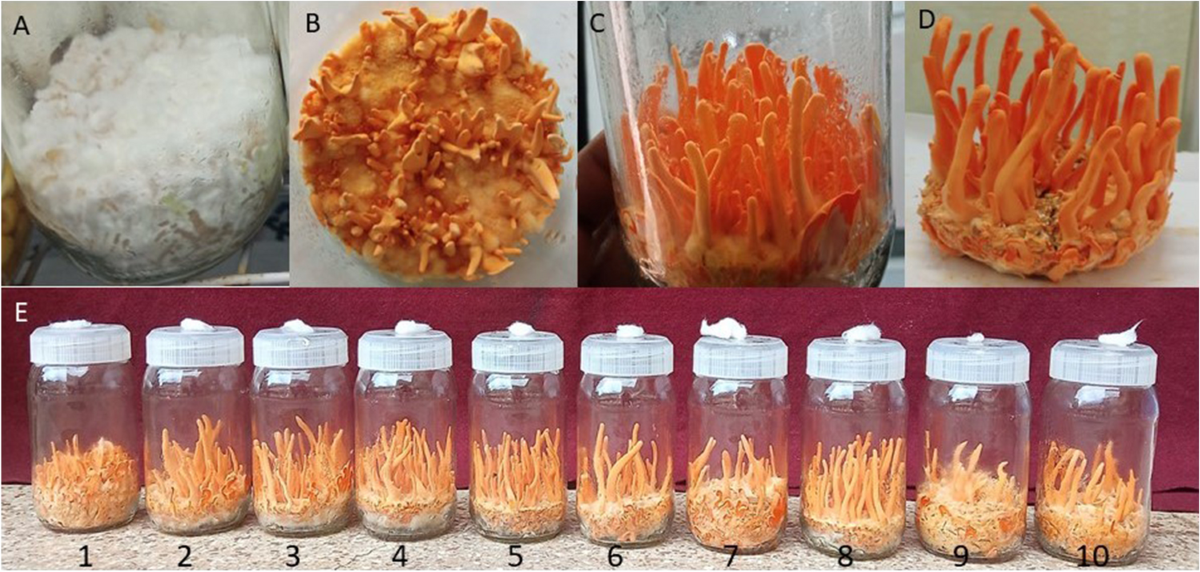
During incubation, the Cordyceps militaris mycelium (the “roots” of the fungus) colonizes the rice.
Monitoring Colonization
- Mycelium appears as white, fluffy threads spreading through the rice.
- Full colonization usually takes 7–14 days, sometimes up to 21 days.
Best Practices
- Temperature: Keep steady at 20–22°C (68–72°F).
- Light: Incubation does not require light, but a little ambient light is fine.
- Air Exchange: Loosen lids slightly or use breathable covers (micropore tape over holes).
- Moisture: Do not open jars during this stage; keep humidity inside.
- Contamination Watch: Look for green (Trichoderma), black, or pink spots—signs of contamination.
What If You See Contamination?
- Remove contaminated jars immediately.
- Do not attempt to save them; spores can spread quickly.
Pro Tip
Many beginners think higher temperature means faster growth. For Cordyceps militaris, keep temperatures in the low 20s Celsius. Higher temps encourage contamination and abnormal growth.
Fruiting: Triggering Mushroom Formation
Once the rice is fully colonized (no uncolonized grains are visible), it’s time to encourage fruiting.
Step 1: Introducing Light
Cordyceps militaris requires light to form its characteristic fruiting bodies. Provide:
- 12 hours of light per day (LED or fluorescent, 500–1500 lux)
- 12 hours darkness
Avoid direct sunlight, which can overheat jars.
Step 2: Adjusting Air And Humidity
- Loosen jar lids further or remove them and cover with breathable material (e.g., two layers of micropore tape).
- Maintain humidity at 70–90%. A plastic fruiting chamber or humidity tent can help.
- Mist air inside the chamber 1–2 times per day if needed, but do not soak the rice.
Step 3: Temperature For Fruiting
Optimal range: 18–20°C (64–68°F). Fruiting bodies can form outside this range, but yields decrease.
Fruiting Timeline
- Pinhead formation: 7–10 days after light is introduced
- Mature fruiting bodies: 30–40 days from inoculation
Common Fruiting Issues
- No fruiting: Usually due to lack of light, poor air exchange, or insufficient nutrients.
- Thin, weak mushrooms: Often caused by too much CO2. Increase air exchange.
- Drying out: Maintain humidity, but avoid condensation on the substrate.
Important Insight
Unlike gourmet mushrooms (like oyster or shiitake), Cordyceps militaris does not need a “shock” (cold or water) to fruit. Light and fresh air are the main triggers.
Harvesting And Post-harvest Handling
Knowing when and how to harvest your Cordyceps militaris is key to quality and potency.
When To Harvest
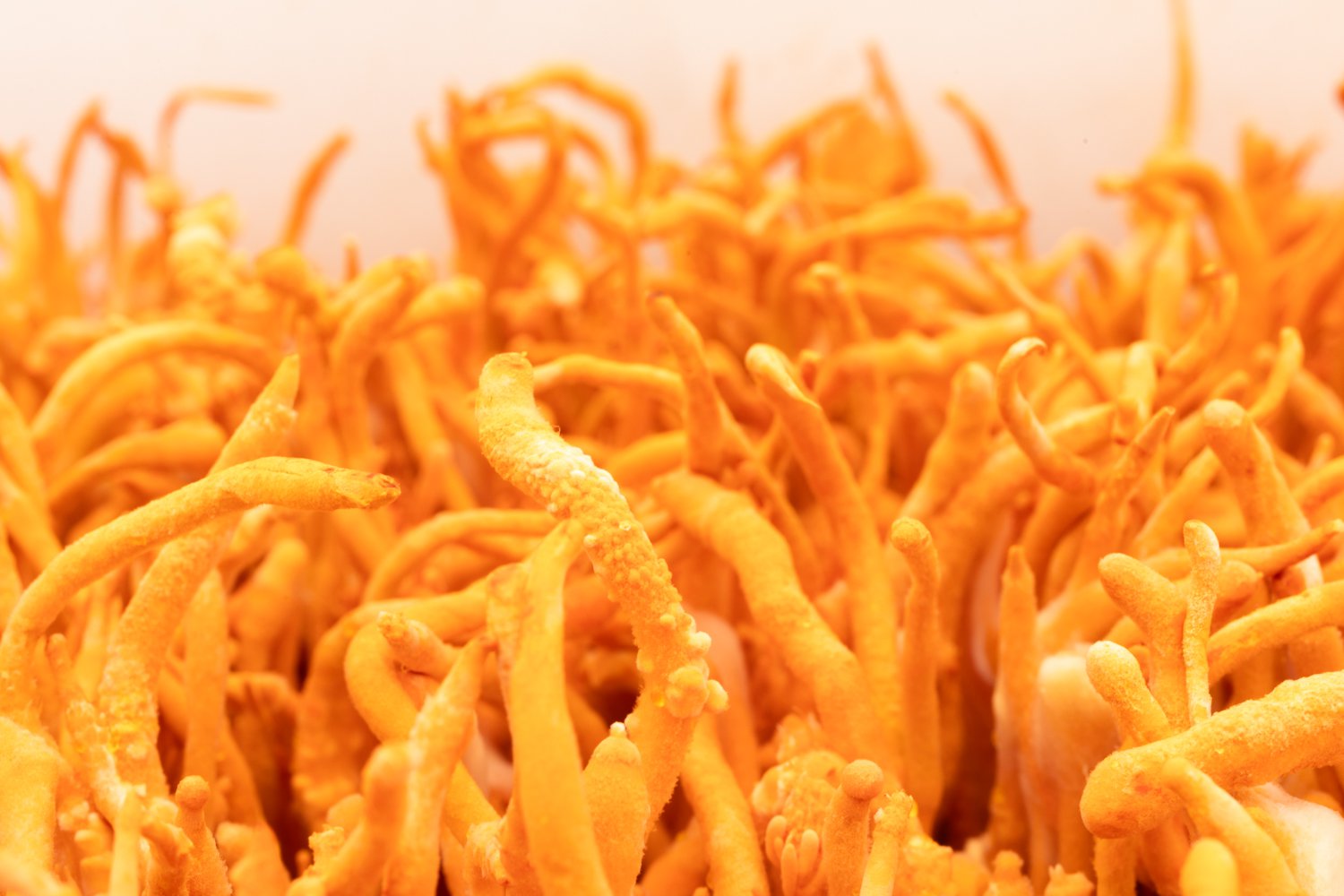
- Harvest when the fruiting bodies are bright orange, firm, and before the tops start to darken or release spores.
- Typically, this is 35–50 days after inoculation.
How To Harvest
- Use clean scissors or a scalpel.
- Cut mushrooms at the base, just above the rice substrate.
Post-harvest Processing
- Fresh Use: Store in the refrigerator in a paper bag for up to 1 week.
- Drying: Use a food dehydrator at 40–50°C (104–122°F) until completely dry. Store in airtight containers.
- Powdering: Dried Cordyceps can be ground into powder for teas, capsules, or cooking.
Preservation Tips
- Drying preserves potency and flavor.
- Store in a cool, dark place to prevent degradation of active compounds.
Typical Yields
Yields vary based on culture quality, supplements, and technique. Expect 5–15 grams dry weight per 250ml jar under good conditions.
Troubleshooting: Common Problems And Solutions
Cordyceps militaris cultivation can be challenging. Here are solutions to frequent issues.
1. Contamination
- Symptoms: Green, black, or pink spots; sour smell.
- Causes: Inadequate sterilization, poor hygiene, contaminated culture.
- Fix: Discard affected jars. Improve sterilization and cleanliness next time.
2. No Mycelium Growth
- Symptoms: Rice remains unchanged weeks after inoculation.
- Causes: Dead culture (from overheating), contamination, or expired culture.
- Fix: Use fresh, viable culture. Double-check sterilization.
3. Poor Fruiting
- Symptoms: Mycelium grows but no mushrooms form.
- Causes: Not enough light, high CO2, or lack of nutrients.
- Fix: Increase light exposure, improve air exchange, ensure proper supplementation.
4. Mushrooms Too Thin Or Short
- Symptoms: Mushrooms form but look weak.
- Causes: High CO2, low nutrients, too dry or too wet substrate.
- Fix: Improve air exchange, check supplement amount, monitor humidity.
5. Mushrooms Dry Out Or Rot
- Symptoms: Fruiting bodies shrivel or become mushy.
- Causes: Incorrect humidity (too low or too high).
- Fix: Adjust misting and airflow, avoid direct misting onto mushrooms.
Non-obvious Insights
- Don’t Over-Supplement: Too much nutrient can cause bacterial growth, leading to contamination.
- Genetic Strain Matters: Some strains fruit better on rice than others. Try different suppliers if you repeatedly fail.
Enhancing Yield And Potency
A few tweaks can make a big difference in your Cordyceps militaris results.
1. Optimizing Supplements
- Use a mix of soy peptone and yeast extract for broader nutrition.
- Some cultivators add a pinch of calcium carbonate to balance acidity.
2. Improving Air Exchange
- For best results, use jars with filter lids (synthetic filter discs or breathable tape).
- Avoid plastic wrap or tightly sealed lids during fruiting.
3. Light Quality
- Blue-white LED light (4000–6500K) encourages stronger, more colorful fruiting bodies.
4. Genetic Selection
- Save spores or tissue from your best-performing mushrooms for future grows. This is called “strain selection” and can increase yield over time.
5. Scaling Up
- Once you master small jars, consider larger containers or trays for higher yields. Make sure to adjust air exchange and humidity accordingly.
Safety And Hygiene Tips
Cultivating Cordyceps militaris is safe if proper hygiene is followed.
Key Hygiene Practices
- Clean all surfaces before and after work.
- Flame sterilize tools before each use.
- Wear gloves and a mask when handling cultures or substrate.
- Regularly wash hands and avoid touching sterile materials.
Safety With Cultures
- Only use cultures from reputable suppliers.
- Do not eat mushrooms with signs of contamination or abnormal appearance.
Allergies And Sensitivities
- Some people may be allergic to Cordyceps spores. Handle mature mushrooms with care, especially during harvest.
The Science Behind Rice Substrate Cultivation
Cordyceps militaris’ ability to grow on rice is the result of modern research and adaptation.
Wild Vs. Cultivated Growth
Wild Cordyceps militaris grows on insects, especially caterpillars. At home, rice acts as a stand-in, but lacks certain nutrients found in insect hosts.
How Supplements Help
- Soy peptone and yeast extract provide protein and vitamins missing from rice.
- Proper supplementation triggers more robust fruiting and higher cordycepin content.
Research And Results
Studies show that Cordyceps militaris grown on supplemented rice can match or exceed wild-harvested mushrooms in key compounds like cordycepin and adenosine. For example, a 2021 study found that rice substrate with 1–2% soy peptone produced Cordyceps with cordycepin content similar to wild specimens.
Storage And Use Of Home-grown Cordyceps Militaris
Once harvested, you can use Cordyceps militaris in many ways.
Storage Methods
- Fresh: Refrigerate in a paper bag up to 1 week.
- Dried: Store in airtight glass jars in a cool, dark place. Lasts 1–2 years.
- Powder: Grind after drying, store in airtight container.
Culinary Uses
- Add to soups, stews, or teas for a nutritional boost.
- Use powder in smoothies, energy balls, or as a seasoning.
Supplement Use
- Capsule your own powder for easy daily use.
- Always consult a doctor before starting new supplements, especially if you have health conditions.
Example Recipe: Cordyceps Tea
- 1–2 grams dried Cordyceps militaris
- 250ml hot water
- Steep for 10 minutes
- Add honey or lemon to taste
Comparing Home Cultivation To Buying Cordyceps Militaris
Is it worth growing at home, or should you buy ready-made Cordyceps? Here’s a comparison:
| Factor | Home Cultivation | Buying |
|---|---|---|
| Cost | Low (after setup) | High ($5–$15 per gram dried) |
| Quality Control | Complete | Variable |
| Learning Value | High | None |
| Time Investment | High | Low |
| Freshness | Maximum | Often dried/older |
Growing your own is more work, but you get fresher, cheaper, and often higher-quality mushrooms.
Credit: link.springer.com
Expanding Beyond Rice: Other Substrates
Once you master the rice method, you might want to experiment with other substrates.
Brown Rice
Higher in nutrients, can boost yield and potency. Preparation is similar to white rice, but rinse and soak longer.
Millet
Smaller grain size, easier for mycelium to colonize. Needs more water and supplements.
Insect-based Substrates
Closest to Cordyceps’ wild environment. Can be expensive and hard to source, but yields highest potency.
Mixed Substrates
Some advanced growers mix rice with millet, corn, or other grains for a broader nutrient profile.
Non-obvious Insight
Mixing substrates can increase yield, but also contamination risk. Always sterilize thoroughly and start with small test batches.
Key Takeaways For Success
- Use fresh, viable culture from a reliable source.
- Supplement rice with protein for best growth.
- Maintain strict cleanliness at every stage.
- Provide light and fresh air for fruiting.
- Monitor for contamination and act quickly if it appears.
- Be patient: Cordyceps militaris grows slowly but rewards careful attention.
Credit: realmushrooms.com
Frequently Asked Questions
How Long Does It Take To Grow Cordyceps Militaris On Rice?
From inoculation to harvest, the process usually takes 35–50 days. Colonization takes around 7–21 days, and fruiting another 20–30 days, depending on temperature, light, and air exchange.
Can I Use Brown Rice Instead Of White Rice?
Yes. Brown rice is richer in nutrients and often results in higher yields. However, it may be more prone to contamination and is a bit harder to sterilize. Rinse and soak thoroughly before use.
Do I Need A Flow Hood To Grow Cordyceps Militaris At Home?
A flow hood or still air box increases your chances of success, but many home growers succeed without one. The key is to keep your workspace as clean as possible and sterilize everything properly.
How Do I Know If My Cordyceps Militaris Mushrooms Are Ready To Harvest?
Harvest when the fruiting bodies are bright orange, firm, and before the tops begin to darken or produce spores. If they start to look pale or shriveled, you’ve waited too long.
Where Can I Find More Scientific Information About Cordyceps Militaris?
A good starting point is the Wikipedia page on Cordyceps militaris, which includes scientific studies, links, and further reading for those interested in deeper research.
Growing Cordyceps militaris at home using the rice substrate method is a rewarding project that combines science, patience, and practical skill. With careful preparation, attention to detail, and the tips shared here, you can enjoy a steady supply of these unique and valuable mushrooms right from your kitchen or closet.
The process may have a learning curve, but the results are well worth the effort—fresh, potent Cordyceps militaris for your health, cooking, or curiosity.