
Finding wild mushrooms can be a rewarding adventure, but it’s important to know exactly what you’re looking for. One mushroom that’s both delicious and highly sought after is the Hen of the Woods, also known as Maitake. These mushrooms have a unique appearance, grow in specific places, and can be easily confused with others if you’re not careful. Learning how to identify them safely can open up a whole new world of flavors and experiences in the forest.
Exploring for wild Maitake is more than just mushroom hunting—it’s about understanding the forest and paying close attention to details. Many foragers remember their first Hen of the Woods discovery. The mushroom’s size, shape, and even its smell can be unforgettable.
But before you head into the woods, it’s important to know exactly what makes a Hen of the Woods different from other mushrooms. This guide will take you through every detail, from where and when to look, to signs that help you avoid dangerous lookalikes.
You’ll also learn about legal and ethical foraging, and how to make the most of your Maitake finds.
Understanding Hen Of The Woods (maitake)
Hen of the Woods, or Grifola frondosa, is a polypore mushroom that grows at the base of trees, especially oaks. It’s popular not just for its taste but also for its health benefits. The name “Hen of the Woods” comes from its appearance—it looks a bit like the fluffed tail feathers of a hen.
Maitake means “dancing mushroom” in Japanese, a name given because people were so happy when they found it.
Botanical Description
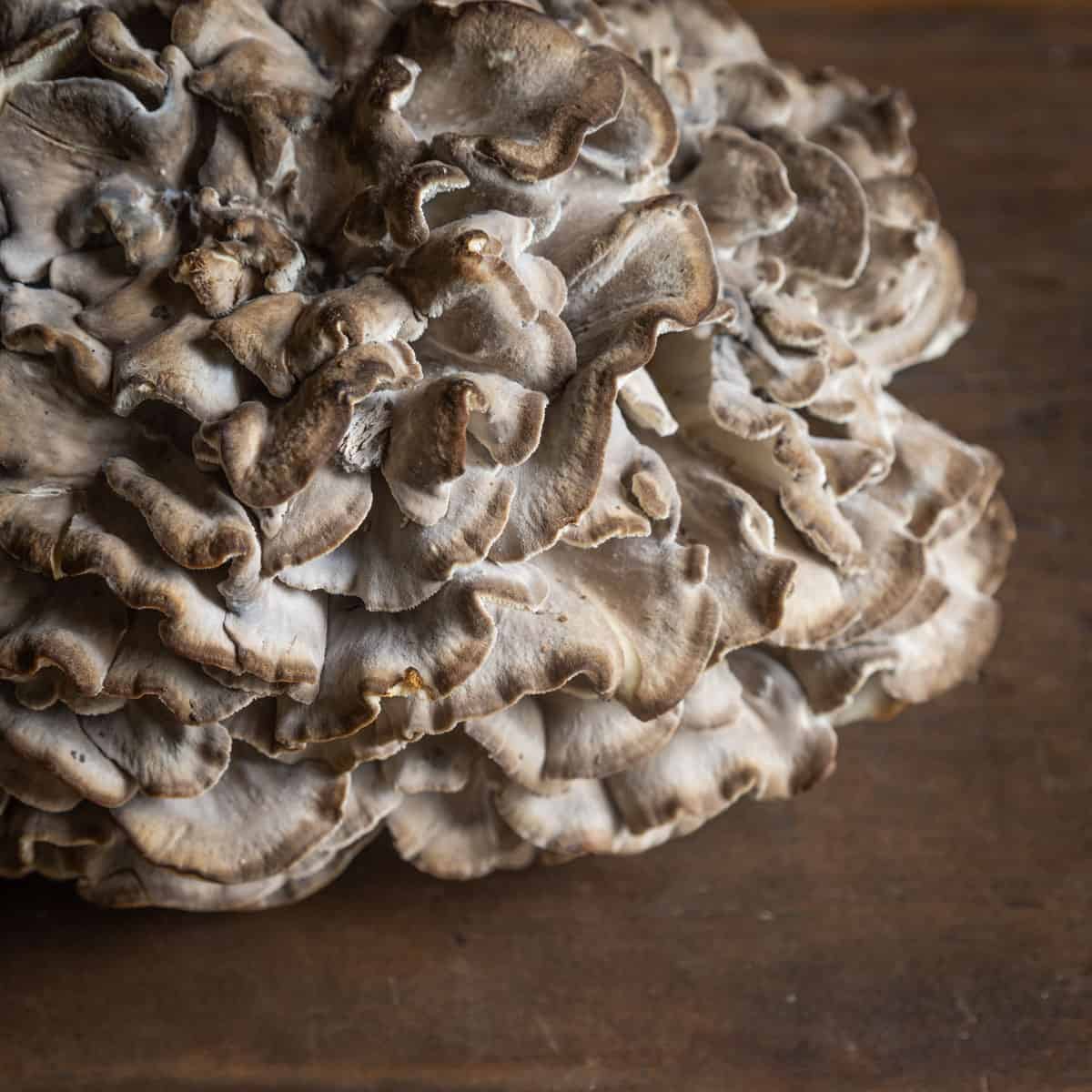
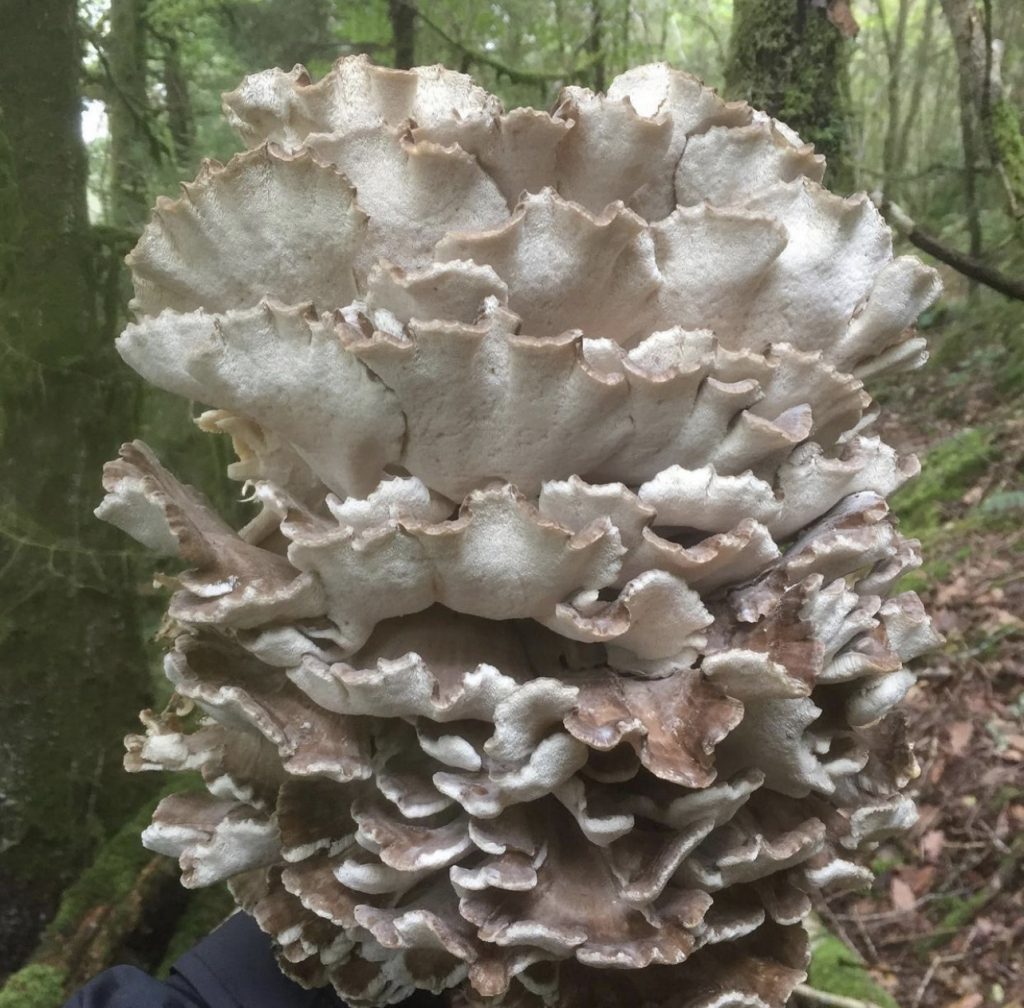
Maitake is a perennial fungus. It returns to the same spot year after year if the conditions are right. The fruiting body is made of many overlapping caps, which can range in color from grayish-brown to brown. The base is white and thick, often hidden under leaves or soil.
The caps are spoon-shaped, usually 2 to 7 cm wide, and have wavy edges. Underneath, instead of gills, you’ll find small white pores. The whole mushroom can become quite large—sometimes over 10 kg, but most are 1–4 kg.
Culinary And Medicinal Value
People prize Hen of the Woods for its earthy flavor and firm texture. It’s excellent in stir-fries, soups, and roasted dishes. In traditional medicine, Maitake is believed to boost the immune system and help with blood sugar levels. Studies have found it contains beta-glucans, which are compounds that may support health.
Where And When To Find Hen Of The Woods
Knowing where and when to look is key to finding Hen of the Woods.
Preferred Habitat
Maitake grows mainly at the base of hardwood trees, especially oaks, but sometimes at maples, elms, and chestnuts. It prefers old, mature trees and can often be found where the roots are exposed or where the tree is slightly damaged.
Look for:
- Large, healthy oaks with thick trunks
- Areas with lots of leaf litter
- Moist but well-drained soil
Geographic Distribution
Hen of the Woods is native to East Asia, Europe, and North America. In the United States, it’s most common in the eastern half, from Maine to Alabama and west to Minnesota and Texas. It’s rare in the western U.S.
Timing Your Search
The best time to find Maitake is late summer to early autumn, usually from September to November. A few days after heavy rain can be ideal. In warmer climates, the season may start in August or last into December.
Foragers often return to successful spots yearly, as Maitake often grows in the same place.
Key Identification Features
To safely identify Hen of the Woods, pay attention to all its characteristics.
Growth Pattern
- Grows at the base of living or dead hardwoods
- Appears as a single large cluster, not as individual mushrooms
- Cluster can be 10 cm to over 60 cm across
Cap Structure
- Many overlapping, fan-shaped or spoon-shaped caps
- Caps are soft, smooth, and often wavy at the edges
- Color ranges from brownish-gray to tan
Underside
- No gills; instead, small, white pores underneath each cap
- Pores release white spores
Stem And Base
- Thick, white, branching stem at the center of the cluster
- Base is often hidden by leaves or soil
- Stem is tough and fibrous
Smell And Texture
- Pleasant, earthy aroma
- Firm but not tough; tears easily by hand
- Fresh specimens are moist, not slimy
Example
Imagine you find a large, grayish-brown mass at the base of an oak tree. The mass is made up of many small, wavy caps growing from a thick, white base. The underside of the caps is covered with tiny pores, not gills.
This is likely Hen of the Woods.
Differentiating Maitake From Lookalikes
Correct identification is critical because some mushrooms that resemble Maitake are inedible or even toxic. Here are some common lookalikes and how to tell them apart:
1. Black-staining Polypore (meripilus Sumstinei)
- Also grows in clusters at tree bases
- Caps are lighter gray and bruise black when touched
- Flesh turns black when cut
- Edible but much tougher and less tasty than Maitake
2. Berkeley’s Polypore (bondarzewia Berkeleyi)
- Grows in large clumps at the base of oaks
- Caps are whiter and larger (up to 75 cm)
- Texture is tough and rubbery
- Underside has larger pores
3. Umbrella Polypore (polyporus Umbellatus)
- Grows in similar places
- Caps are smaller, round, and more separate
- Stems are longer and more distinct
- Rare in North America
4. Chicken Of The Woods (laetiporus Sulphureus)
- Bright orange or yellow
- Grows in shelves, not rosettes
- Texture is softer
- Edible but tastes very different
Quick Comparison
Here’s a simple comparison to help you see the differences:
| Mushroom | Color | Shape | Underside | Edibility |
|---|---|---|---|---|
| Hen of the Woods | Gray-brown | Clustered rosette | White pores | Excellent |
| Black-Staining Polypore | Pale gray (turns black) | Clustered, thick caps | White/turns black | Edible, tough |
| Berkeley’s Polypore | White/tan | Large, thick caps | Large pores | Edible when young |
| Chicken of the Woods | Orange/yellow | Shelves | Yellow pores | Edible |
Non-obvious Insights
- Color changes with age: Maitake can become darker as it matures, so don’t only use color to decide.
- Spore print: Maitake makes a white spore print. If you’re unsure, cut a cap, place it on white paper overnight, and check the color.
- Bruising reaction: Unlike black-staining polypore, Maitake does not turn black when bruised or cut.
Step-by-step Identification Guide
If you’re new to mushroom foraging, following clear steps can help you avoid mistakes.
1. Find The Right Tree
Start by searching around old oaks, especially those with large, gnarled bases. Maitake rarely grows far from the trunk.
2. Look For A Large Cluster
Spotting a single small mushroom is not typical for Maitake. Look for a mass that can be as large as a basketball, sometimes bigger.
3. Examine The Caps
Check that the caps are overlapping, fan-shaped, and have smooth, wavy edges. The color should be some shade of brown or gray.
4. Check The Underside
Turn a cap over. If you see small white pores (not gills), that’s a good sign.
5. Inspect The Base
The stem should be thick and white, branching into many smaller stems that connect to the caps.
6. Smell And Feel
A fresh Hen of the Woods will smell earthy and be firm but not hard. If it’s slimy or smells bad, it’s past its prime.
7. Take A Spore Print (if Unsure)
Cut a cap and leave it, pore side down, on a piece of white paper. A white spore print confirms it’s not a dangerous lookalike.
8. Double-check With A Field Guide
If you’re still not sure, use a trusted mushroom field guide with photos, or consult a local expert.
Safety Precautions
Foraging wild mushrooms is fun, but safety comes first.
Never Eat Unidentified Mushrooms
Eating the wrong mushroom can cause serious illness or worse. If you have any doubt, do not eat it.
Start Small
Even if you’re sure you have Maitake, start by eating a small amount. Some people have allergies or sensitivities.
Avoid Polluted Areas
Do not pick mushrooms from roadsides, polluted parks, or areas sprayed with chemicals. Mushrooms can absorb toxins from the soil.
Use Proper Tools
Bring a sharp knife to cut the base, a basket for carrying, and a brush to clean dirt. Avoid plastic bags—they trap moisture and spoil the mushrooms.
Legal And Ethical Foraging
Check local laws before picking mushrooms. Some parks or forests forbid foraging. Only take what you’ll use and leave some behind to let the mushroom continue growing.
Advanced Tips For Successful Foraging
As you gain experience, you’ll discover tricks that help you find more Maitake and make the most of each trip.
1. Revisit Productive Spots
Maitake often returns to the same tree every year. Mark your spots with GPS or a notebook.
2. Track Rainfall
Mushrooms need moisture. After 2–3 days of rain in autumn, head to your favorite spots.
3. Look For Signs
Sometimes you’ll see last year’s decayed Maitake at the base of a tree. This is a good sign to check that tree again during the season.
4. Harvest Carefully
Cut the mushroom at the base rather than pulling it up. This helps preserve the underground parts so it can regrow next year.
5. Clean In The Field
Remove leaves, dirt, and bugs before putting Maitake in your basket. This keeps your harvest fresh and saves time at home.
6. Check For Worms
Older Maitake can have small worms in the stems. If you find them, cut away the damaged parts.
7. Use All Your Senses
Sight, touch, and smell all matter. A healthy Maitake looks vibrant, feels firm, and smells earthy.
Common Mistakes To Avoid
Even experienced foragers sometimes make errors. Here are mistakes to watch for:
1. Relying Only On Photos
Mushrooms can look different depending on age, weather, and location. Use multiple features for ID, not just pictures.
2. Ignoring The Underside
Many lookalikes have gills or different pores. Always check under the cap.
3. Picking Mushrooms Too Young Or Too Old
Small, young Maitake may be hard to identify. Old ones may be infested or decayed.
4. Forgetting To Check The Tree
If the mushroom isn’t growing at the base of a hardwood, it’s probably not Maitake.
5. Harvesting Everything
Taking every mushroom from a spot can stop it from coming back. Leave some behind.
Maitake’s Ecological Role
Understanding the role of Hen of the Woods in the forest helps you be a better forager.
Decomposer
Maitake helps break down dead wood, returning nutrients to the soil. It forms a relationship with tree roots, sometimes as a parasite but often as a decomposer.
Food For Wildlife
Deer, squirrels, and insects may eat Maitake. Leaving some behind supports the forest ecosystem.
Indicator Of Tree Health
While Maitake often grows on healthy trees, finding lots at the base may signal the tree is stressed or declining.
Harvesting And Handling Maitake
Proper harvesting and handling will give you the best-tasting mushrooms and help them last longer.
How To Harvest
- Use a sharp knife to cut the mushroom at the base
- Gently lift the cluster to avoid breaking it
- Shake off dirt and insects
Immediate Cleaning
Wipe with a soft brush or cloth. Avoid washing with water in the field; moisture can cause spoilage.
At Home
- Rinse briefly before cooking if needed, but don’t soak
- Store in the refrigerator in a paper bag for up to a week
- For longer storage, slice and freeze, or dry the pieces
Cooking Tips
Maitake works well in many dishes. Its flavor deepens with roasting, sautéing, or adding to soups. The stems are tougher than the caps but can be used for stocks.
Comparing Maitake To Other Popular Wild Mushrooms
Many foragers also find other wild mushrooms. Here’s how Maitake stacks up:
| Mushroom | Best Season | Habitat | Main Use |
|---|---|---|---|
| Hen of the Woods | Late summer – autumn | Base of hardwoods | Roasting, stir-fry |
| Morel | Spring | Mixed woods | Frying, soups |
| Chanterelle | Summer – autumn | Mossy, damp woods | Sauté, sauces |
| Lion’s Mane | Autumn | Dead hardwoods | Sauté, tea |
Foraging Etiquette And Conservation
Responsible foraging ensures you and others can enjoy Maitake for years.
Follow Local Rules
Check rules for each park or forest. Some allow foraging, others do not.
Respect Nature
Avoid damaging tree roots or the forest floor. Leave young mushrooms to grow.
Share Your Knowledge
Help others learn safe and responsible foraging. Sharing locations is optional—many foragers keep their best spots secret.
Leave No Trace
Take all your trash, avoid trampling plants, and disturb as little as possible.
Using Technology For Identification
Modern tools can make mushroom identification safer and more accurate.
Smartphone Apps
Several apps use photo recognition to help identify mushrooms. Examples include iNaturalist and Picture Mushroom. These can give you suggestions but always double-check with a human expert.
Online Communities
Foragers often share finds on forums and social media groups. Upload photos and ask for help, but never rely only on an online ID for edible mushrooms.
Gps Mapping
Mark your favorite spots and track your finds with a GPS app. This helps you return next year and keeps your data organized.
Spore Print Analysis
Some advanced foragers use microscopes to check spore size and shape. This is rarely needed for Maitake but can be helpful for other species.
Legal Aspects And Foraging Rights
Each region has different laws about picking wild mushrooms.
Private Vs. Public Land
On private land, always ask permission. On public land, check with local authorities.
Permits
Some state and national forests require a permit for mushroom picking. Fines for breaking these rules can be high.
Selling Wild Mushrooms
If you want to sell wild Maitake, you may need special training or a license. Check with your local extension office for details.
Conservation Efforts
In some areas, wild mushroom populations are declining. Follow guidelines to protect these resources.
Credit: foragerchef.com
The Science Behind Maitake’s Health Benefits
Many foragers are interested in Maitake not just for food, but also for its potential health properties.
Beta-glucans
Maitake contains beta-glucans, which are complex sugars that may support the immune system. Some studies suggest Maitake extracts can help regulate blood sugar and cholesterol.
Research
While more studies are needed, Maitake is used in Japan and China as a supplement. It’s being studied for its effects on cancer, but results are still early.
Cautions
Eating whole Maitake mushrooms is safe for most people, but high-dose supplements should be used with care and medical advice.
For more scientific information, you can read the overview on Wikipedia.
Real-world Foraging Stories
Many experienced foragers have stories about finding their first Hen of the Woods.
One forager recalls, “After a rainy weekend, I went back to a big oak I’d been watching for years. There it was—a huge Hen of the Woods, bigger than a basketball. It was fresh, firm, and the smell was amazing.
I took half and left the rest, and every year since, more have grown in the same spot. ”
These stories highlight the importance of patience, observation, and respect for the forest.
Troubleshooting: Why You Might Not Find Maitake
Even with all the right knowledge, you may not find Maitake every time. Here are common reasons:
Wrong Season
Check your calendar—Maitake usually appears from September to November.
Wrong Habitat
They need mature hardwoods, especially oaks. Young forests or pine woods rarely have Maitake.
Drought Or Dry Weather
If it’s been very dry, mushrooms may not appear. Wait for rain and check again a few days later.
Overharvesting
If a spot is picked clean every year, the mushroom may stop growing there.
Competition
Wildlife and other foragers may get there first. Early morning or weekdays can improve your odds.
Preserving And Enjoying Your Harvest
After finding Hen of the Woods, you’ll want to make the most of it.
Cleaning
Break into smaller pieces and brush off dirt. Rinse briefly if needed, but avoid soaking.
Storage
Keep in a paper bag in the fridge for up to a week. For longer storage, slice and freeze or dry pieces.
Cooking
Maitake is versatile. Try roasting with olive oil, adding to soups, or sautéing with garlic. The stems can be tough, but make great stock.
Nutritional Value
Maitake is high in protein, fiber, B vitamins, and minerals like potassium and copper. It’s low in calories and fat.
Drying And Freezing
To dry, slice and use a dehydrator or a low oven. Store in airtight containers. To freeze, sauté lightly first, then freeze in bags.

Credit: northspore.com
Common Myths About Hen Of The Woods
Some myths can confuse new foragers. Let’s clear up a few:
“all Large Mushrooms At Tree Bases Are Maitake.”
False. Other polypores, some tough or inedible, grow at tree bases too.
“color Is The Only Way To Identify.”
False. Maitake changes color with age and weather. Use shape, pores, and habitat too.
“hen Of The Woods Grows On All Tree Types.”
False. While mostly on oaks, you may rarely find it on other hardwoods, but not on conifers or pines.
“you Can Eat Wild Mushrooms If Animals Do.”
False. Some toxic mushrooms don’t affect wildlife but are dangerous to humans.
“once You Find One, You’ll Always Find More.”
Not always. Conditions change, and some years are better than others.
Frequently Asked Questions
What Is The Main Difference Between Hen Of The Woods And Chicken Of The Woods?
Hen of the Woods (Maitake) is gray-brown, grows in clustered rosettes at the base of oaks, and has white pores. Chicken of the Woods is bright orange or yellow, grows in shelf-like layers, and has a soft texture. Their taste and uses are also different.
Is Hen Of The Woods Safe To Eat Raw?
It is not recommended to eat Hen of the Woods raw. Cooking breaks down tough fibers and makes nutrients more available. Raw mushrooms may also cause stomach upset.
How Can I Store Hen Of The Woods After Picking?
Store fresh Maitake in a paper bag in the refrigerator. For longer storage, slice and freeze or dry the pieces. Avoid plastic bags, as they trap moisture and cause spoilage.
Can Hen Of The Woods Be Cultivated At Home?
Yes, Maitake can be grown at home, but it is more challenging than some other mushrooms. It requires special spawn and hardwood sawdust or logs. Kits are available for home growers.
Are There Any Poisonous Mushrooms That Look Like Hen Of The Woods?
While there are no deadly lookalikes, some inedible polypores can resemble Maitake, such as black-staining polypore and Berkeley’s polypore. Always check all features and consult an expert if unsure.
Finding Hen of the Woods in the wild is a skill that improves with practice. With patience, attention to detail, and respect for nature, you can safely enjoy one of the forest’s best edible treasures. Happy foraging!
Credit: gallowaywildfoods.com