
Turkey Tail For Candida Overgrowth: Rebalancing Gut Fungal Flora
Candida overgrowth is a problem that can affect many parts of your body, but it often starts in the gut. If you have ever had recurring yeast infections, digestive issues, or unexplained fatigue, you might be dealing with too much Candida. This fungus is a natural part of our gut flora, but when it grows out of control, it can cause real trouble. Many people look for natural ways to regain balance, and one solution gaining attention is Turkey Tail mushroom.
Turkey Tail is not just another herbal supplement. It is a medicinal mushroom used for centuries in traditional medicine, especially in Asia. Now, modern science is catching up, and research shows that Turkey Tail may help fight Candida and support a healthier gut environment.
But how does it work, and what is the best way to use it? This article will guide you through everything you need to know about Turkey Tail for Candida overgrowth, from how it interacts with your body to practical steps for adding it to your routine.
Understanding Candida Overgrowth
Candida is a type of fungus, or yeast, that naturally lives in your body. In small amounts, it is harmless and even helps with digestion and nutrient absorption. The problem begins when Candida albicans, the most common species, grows too much. This can happen for many reasons:
- Overuse of antibiotics, which kill good bacteria
- High-sugar or processed food diets
- Chronic stress
- Hormonal changes (such as pregnancy or birth control use)
- Weakened immune system
When Candida takes over, it can lead to a range of symptoms:
- Bloating and gas
- Diarrhea or constipation
- Sugar cravings
- Brain fog
- Chronic fatigue
- Skin rashes or nail infections
- Recurring vaginal yeast infections
- Oral thrush (white patches in the mouth)
Candida overgrowth is sometimes called Candidiasis. It can be stubborn and hard to treat, especially if you do not address the root causes.
Why Gut Flora Balance Is Crucial
Your gut is home to trillions of microbes, including bacteria, fungi, and viruses. Together, they make up your gut microbiome. A healthy gut has a balance between good and bad microbes. When this balance is lost, bad microbes like Candida can grow too much.
Restoring gut balance means reducing Candida and supporting beneficial bacteria. This usually involves changing your diet, using probiotics, and sometimes taking antifungal medications. However, natural options like Turkey Tail are also becoming popular because they work gently and support overall health.
What Is Turkey Tail Mushroom?
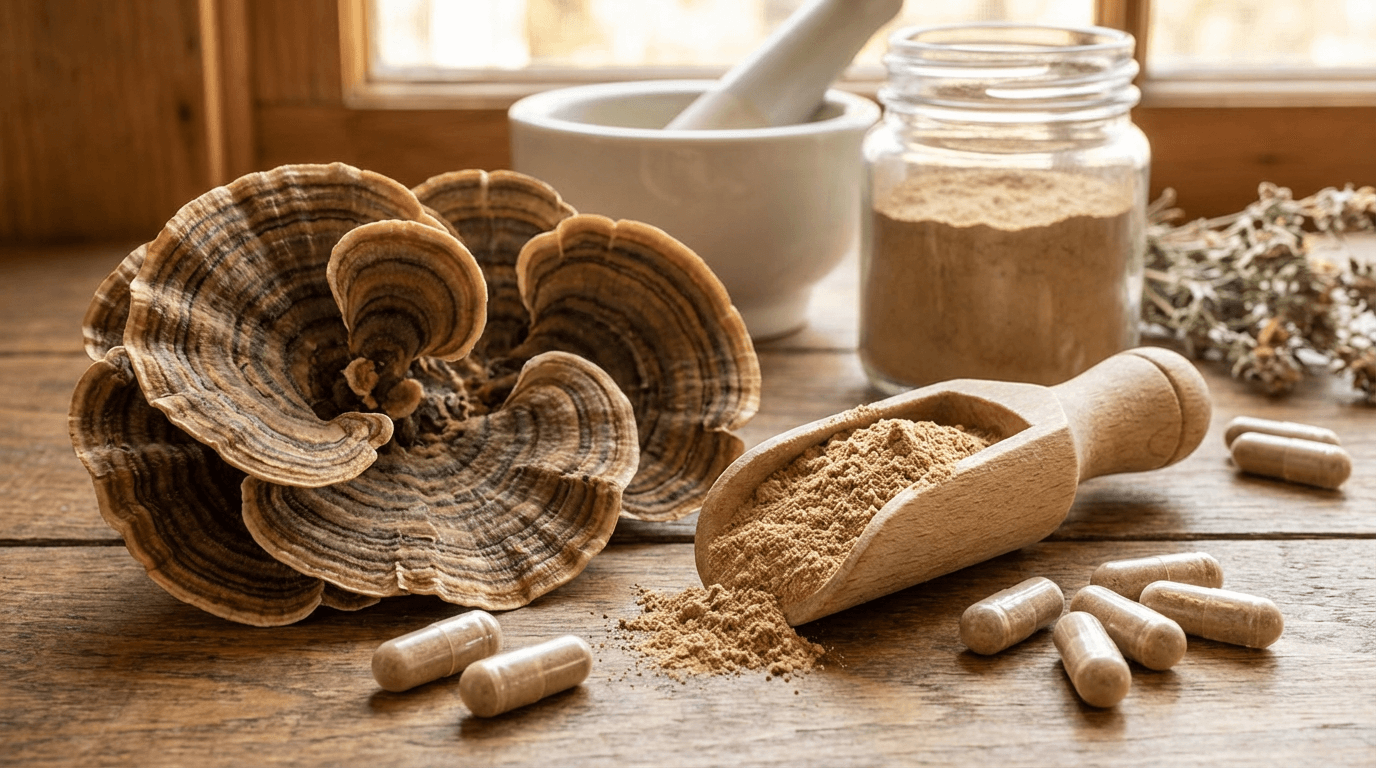
Turkey Tail (Trametes versicolor) is a type of medicinal mushroom that grows on dead logs and trees. Its name comes from its colorful, fan-shaped rings, which look like the tail feathers of a wild turkey. In Chinese medicine, it is called Yun Zhi, and in Japan, it is known as Kawaratake.
Turkey Tail is famous for its powerful health benefits, especially for the immune system. People have used it for centuries to fight infections, improve digestion, and increase energy. Modern research has found that Turkey Tail contains special compounds that may help control Candida and rebalance the gut.
Key Compounds In Turkey Tail
The main active ingredients in Turkey Tail are:
- Polysaccharopeptides (PSP and PSK): These are complex sugars linked with proteins. They help boost the immune system and have been studied as cancer treatments in Asia.
- Beta-glucans: These are types of fiber that feed good bacteria in your gut and also support immune health.
- Antioxidants: Turkey Tail is rich in phenols and flavonoids, which help reduce inflammation and protect cells from damage.
These compounds work together to create a unique effect on your body—especially your gut and immune system.
How Turkey Tail Targets Candida Overgrowth
You might wonder: how can a mushroom help fight a fungus in your gut? The answer lies in the way Turkey Tail supports your immune system and helps restore gut balance.
Immune System Modulation
One of the biggest reasons Candida grows out of control is a weak immune response. Turkey Tail’s PSP and PSK compounds help regulate your immune system. They do not just boost it randomly; they help your body respond better to infections, including fungal ones. This means your body is more effective at recognizing and controlling Candida.
Prebiotic Effects
Turkey Tail acts as a prebiotic, which means it feeds the good bacteria in your gut. These good bacteria, such as Lactobacillus and Bifidobacterium, help keep Candida in check. When you support these bacteria, you make it harder for Candida to grow too much.
Direct Antifungal Properties
Research shows that some compounds in Turkey Tail can slow down the growth of Candida directly. For example, studies have found that extracts from Turkey Tail can stop Candida albicans from forming biofilms. Biofilms are protective layers that help Candida hide from your immune system and resist treatment.
By breaking down these biofilms, Turkey Tail makes Candida easier to control.
Reducing Inflammation
Candida overgrowth often leads to inflammation in the gut. This inflammation can damage the lining of your intestines, leading to a condition called “leaky gut. ” Turkey Tail’s antioxidants help calm this inflammation, allowing your gut lining to heal and making it harder for Candida to spread.
Evidence From Research
Several laboratory and animal studies show that Turkey Tail can:
- Inhibit the growth of Candida in petri dishes
- Boost immune cells that fight fungal infections
- Support gut barrier function, reducing inflammation
- Increase populations of beneficial bacteria
While more human studies are needed, the evidence so far is promising.
Turkey Tail Vs. Other Natural Remedies For Candida
Many people use herbs and supplements to fight Candida. How does Turkey Tail compare to more common options like garlic, oregano oil, or probiotics? Here is a practical comparison:
| Remedy | Main Action | Unique Benefit | Possible Downside |
|---|---|---|---|
| Turkey Tail | Immune support, prebiotic, antifungal | Supports gut flora and immune balance | May work slowly; not a quick fix |
| Garlic | Direct antifungal | Strong, fast action on Candida | Can cause stomach upset, strong odor |
| Oregano Oil | Potent antifungal | Effective against many fungi | Can harm good bacteria if overused |
| Probiotics | Increase good bacteria | Restore gut balance | Some strains not effective against Candida |
| Coconut Oil | Fatty acids disrupt yeast | Gentle on the gut | High-calorie; limited research |
Turkey Tail stands out because it does not just fight Candida directly. It also strengthens your body’s defenses and helps your gut recover, making it a good choice for long-term balance.
Using Turkey Tail For Candida: Dosage, Forms, And Timing
Adding Turkey Tail to your routine is simple, but you need to know the best way to use it for Candida. Here are the main options:
Forms Of Turkey Tail
- Powder: This is made by drying and grinding the whole mushroom. You can add it to smoothies, coffee, or food.
- Capsules: Easy to take, with a set dose per pill. Good for people who do not like the taste.
- Extracts (liquid or powder): These are concentrated forms, often standardized to contain a certain amount of PSP, PSK, or beta-glucans.
- Teas: Slices or powder brewed in hot water. This is a traditional way, but not as strong as extracts.
How Much To Take
There is no official dose for Turkey Tail, but most studies and experts suggest:
- 1 to 3 grams of powder per day (about 1/2 to 1 teaspoon)
- 1000 to 3000 mg per day for capsules or extracts
Start with a lower dose and increase slowly to see how your body reacts. If you have a sensitive stomach, take it with food.
How Long To Use It
Turkey Tail works best when used for several weeks or months. Candida overgrowth is rarely fixed overnight. Many people use Turkey Tail for at least 4 to 8 weeks, along with diet changes and other supplements.
When To Take It
- With meals: This helps absorption and lowers the chance of stomach upset.
- In the morning: Some people feel a gentle energy boost from Turkey Tail.
Combining With Other Supplements
Turkey Tail works well with probiotics and digestive enzymes. It can also be used with other antifungal herbs, but talk to your healthcare provider if you are taking medications or have health concerns.
Real-world Example: Case Study
Let’s look at a real-life example to see how Turkey Tail can help with Candida.
Maria, a 34-year-old woman, struggled with bloating, fatigue, and recurring vaginal yeast infections. She had taken antibiotics three times in one year for sinus infections. Her doctor suspected Candida overgrowth. Maria began a low-sugar diet, added a probiotic, and started taking 2 grams of Turkey Tail powder daily.
After two weeks, Maria noticed less bloating and more energy. After six weeks, her yeast infections had not returned, and her digestion was much better. While this is just one person’s experience, it shows how Turkey Tail can be a helpful part of a larger plan.

Credit: www.amazon.com
Turkey Tail And The Gut Microbiome
The gut is more than a simple tube for digesting food. It is a living ecosystem. Candida is only one part of this system. When it grows too much, it crowds out good bacteria and can even change the way your gut works.
How Turkey Tail Changes The Microbiome
Turkey Tail’s prebiotic fibers feed good bacteria, especially Bifidobacterium and Lactobacillus. These bacteria help break down food, make vitamins, and keep Candida under control.
At the same time, Turkey Tail’s antifungal compounds slow down Candida growth. This gives good bacteria a chance to recover and rebuild their numbers. Over time, the balance tips back toward a healthy gut.
Supporting Research
A study published in the journal “Applied and Environmental Microbiology” found that mice given Turkey Tail extract had:
- Higher levels of beneficial gut bacteria
- Lower levels of harmful bacteria and fungi
- Less gut inflammation
Another study showed that Turkey Tail’s prebiotics helped people with low gut diversity increase their healthy bacteria after just eight weeks of use.
Turkey Tail And Biofilms: Breaking Candida’s Defenses
Candida is not easy to kill because it forms biofilms—sticky layers that protect it from your immune system and even from antifungal drugs.
Turkey Tail contains unique compounds that can disrupt biofilms. This is important because:
- Biofilms make Candida infections chronic and hard to treat.
- Breaking down biofilms makes Candida more sensitive to your immune system and antifungal remedies.
For example, research published in “Mycopathologia” showed that Turkey Tail extracts weakened Candida biofilms, making it easier to clear the infection.
Choosing Quality Turkey Tail Products
Not all Turkey Tail supplements are the same. Quality matters because mushrooms can absorb toxins from the soil, and some products may not have enough active compounds.
Here’s how to pick a good product:
- Whole mushroom vs. mycelium: Look for products made from the whole fruiting body (the visible mushroom), not just the mycelium (root-like threads). Fruiting body has more active compounds.
- Certified organic: This means the mushrooms are grown without harmful pesticides or chemicals.
- Lab tested: Reputable brands test for heavy metals, toxins, and actual content of beta-glucans or PSP.
- Transparent labeling: The label should say how much of each key compound is present.
| Feature | Why It Matters | What to Look For |
|---|---|---|
| Fruiting body | More active compounds | Label says “fruiting body” |
| Organic certification | No pesticides or chemicals | USDA or other organic seal |
| Lab testing | Safety and potency | Third-party testing info |
| Beta-glucan content | Shows immune support level | At least 30% beta-glucans |
How To Support Turkey Tail’s Effects With Lifestyle Changes
Turkey Tail is most effective when used as part of a complete approach to gut health. Here’s what else you can do to fight Candida:
- Reduce sugar and refined carbs: Candida thrives on sugar. Cutting back starves the fungus.
- Eat more fiber: Fiber feeds good bacteria, which keep Candida in check.
- Add fermented foods: Foods like yogurt, sauerkraut, and kimchi provide probiotics.
- Manage stress: Chronic stress weakens your immune system.
- Avoid unnecessary antibiotics: Use antibiotics only when truly needed.
- Get enough sleep: Rest helps your body heal and fight infections.
These steps create an environment where Turkey Tail and your natural defenses can work better.
Common Mistakes To Avoid
When using Turkey Tail for Candida, beginners often make these errors:
- Expecting fast results: Fungal balance takes time. Be patient.
- Using low-quality products: Cheap supplements may have little active Turkey Tail.
- Ignoring diet: If you keep eating sugar, Turkey Tail cannot do its job.
- Stopping too soon: Give your body at least a month to adjust.
- Not combining with probiotics: Turkey Tail works best with good bacteria.
Remember, a holistic approach always works better than a single remedy.
Side Effects And Precautions
Turkey Tail is considered safe for most people. However, some people may have mild side effects:
- Stomach upset or gas
- Dark-colored stools
- Dry mouth
People with mushroom allergies should avoid Turkey Tail. If you have an autoimmune disease, are pregnant, breastfeeding, or taking immune-suppressing drugs, talk to a healthcare professional before starting.
One non-obvious insight: Turkey Tail may interact with certain medications, especially those for immune system conditions. It is always wise to check with your doctor.
Credit: antioxi-supplements.com
Scientific Studies: What The Research Really Says
There is growing interest in using Turkey Tail for fungal infections like Candida. Here are some highlights from recent studies:
- A 2017 study in “Frontiers in Microbiology” found that Turkey Tail extract helped restore gut bacteria balance and stopped Candida from overgrowing in mice.
- Another experiment showed that Turkey Tail polysaccharides improved the immune response against Candida in lab animals.
- A review published in “International Journal of Molecular Sciences” highlighted Turkey Tail’s role in breaking down biofilms and supporting gut health.
While these results are promising, most research is still in early stages. Human studies are needed to confirm the best doses and combinations.
For those interested in scientific details, you can read more at the National Institutes of Health.
Turkey Tail In Traditional Medicine
Turkey Tail is not a new discovery. In China and Japan, it has been used for centuries to strengthen the body after illness, support digestion, and even as part of cancer therapy.
Traditional healers noticed that people who took Turkey Tail recovered faster from infections and had fewer digestive problems. Modern science is now revealing why: the mushroom’s unique mix of immune-boosting and gut-healing compounds.

Credit: onlinelibrary.wiley.com
Turkey Tail And The Bigger Picture: Fungal Balance Beyond Candida
While Candida is the most famous gut fungus, your gut contains many other types, including Saccharomyces, Aspergillus, and more. A healthy gut has a wide variety of fungi, not just one type dominating.
Turkey Tail helps restore this diversity by:
- Feeding beneficial microbes of all kinds
- Slowing overgrowth of harmful species
- Supporting overall gut resilience
This broad approach means Turkey Tail is not just a Candida remedy; it is a tool for overall gut harmony.
Practical Tips For Adding Turkey Tail To Your Routine
If you are ready to try Turkey Tail for Candida, here are some easy ways to start:
- Mix Turkey Tail powder into your morning smoothie or oatmeal.
- Take a capsule with breakfast and lunch.
- Brew Turkey Tail tea with a slice of fresh ginger for extra digestive support.
- Combine Turkey Tail with a quality probiotic for a one-two punch.
- Track your symptoms and progress in a journal to see what works best for you.
How To Track Your Progress
When fighting Candida, it is important to know if your approach is working. Here are some ways to measure progress:
- Keep a symptom diary: Write down daily symptoms like bloating, fatigue, and cravings.
- Watch for changes in digestion: More regular bowel movements, less gas, and better appetite are good signs.
- Look for fewer yeast infections or skin rashes.
- Ask your doctor about Candida tests if you want more data.
Do not forget that ups and downs are normal. Healing takes time.
The Future Of Turkey Tail And Gut Health
Interest in medicinal mushrooms like Turkey Tail is growing fast. New research is exploring how they might help with:
- Autoimmune diseases
- Chronic fatigue
- IBS and other gut disorders
- Mental health, through the gut-brain connection
As we learn more, Turkey Tail could become a key tool for anyone wanting better digestive health and stronger immunity.
Frequently Asked Questions
What Is The Best Way To Take Turkey Tail For Candida Overgrowth?
Capsules and extracts are the most convenient and provide a reliable dose. Powders can be added to food or drinks if you prefer. Always choose a high-quality, organic product made from the fruiting body of the mushroom.
How Long Does It Take To See Results With Turkey Tail?
Most people notice some improvement in digestion and energy within 2–4 weeks. However, full results for Candida may take 6–12 weeks or longer, especially if the overgrowth is severe.
Can I Use Turkey Tail With Antifungal Medications?
Yes, Turkey Tail can be used alongside most antifungal drugs, but always check with your healthcare provider first. It may even enhance the effectiveness of antifungal treatments by breaking down biofilms.
Are There Any Side Effects Or Risks With Turkey Tail?
Turkey Tail is safe for most people, but some may experience mild digestive upset. Those with mushroom allergies, autoimmune conditions, or on immune-suppressing drugs should consult a doctor before use.
Is Turkey Tail Safe For Children Or Pregnant Women?
There is not enough research to say for sure. Pregnant or breastfeeding women, and young children, should avoid Turkey Tail unless advised by a healthcare professional.
Turkey Tail is a powerful ally in the fight against Candida overgrowth. By supporting your immune system, feeding good gut bacteria, and gently reducing fungal growth, it offers a balanced approach to long-term gut health. Combined with smart diet choices and a healthy lifestyle, Turkey Tail can help you regain control and enjoy better energy, digestion, and overall well-being.