
Growing your own mushrooms can feel like magic. You start with a simple log and, over time, watch beautiful fungi appear and spread. Among all the mushrooms you can grow, turkey tail is one of the most fascinating. Known for its colorful, fan-shaped caps and medicinal benefits, turkey tail is a favorite for backyard cultivators who want something unique and useful. But how do you get started with turkey tail growing on logs? What makes it different from other mushrooms? This guide will show you everything you need to succeed, even if you are new to mushroom cultivation. You’ll learn how to choose the right logs, prepare them, inoculate with spawn, care for your logs, and harvest turkey tail mushrooms at home. Along the way, you’ll discover practical tips, common mistakes to avoid, and insights that many beginners overlook. Let’s dive in and explore the art and science of turkey tail cultivation in your backyard.
Understanding Turkey Tail Mushrooms
Turkey tail mushrooms, scientifically known as Trametes versicolor, are one of the most recognizable fungi in forests worldwide. Their name comes from their colorful, banded appearance, which looks like the tail feathers of a wild turkey. These mushrooms grow on dead or decaying wood and are easy to spot because of their vibrant shades of brown, blue, orange, and white.
What sets turkey tail apart is its reputation in traditional medicine. Studies have shown that turkey tail contains polysaccharopeptides (PSP and PSK), compounds believed to support the immune system. While turkey tail is not typically eaten for taste, it is valued for teas and extracts.
Turkey tail grows in many climates, making it suitable for backyard cultivation. It thrives on hardwood logs, which makes the log-growing method both natural and effective. For home growers, turkey tail offers a rewarding project that connects you to nature and provides health benefits.
Benefits Of Growing Turkey Tail On Logs
Choosing to grow turkey tail on logs has several unique advantages compared to other methods like sawdust blocks or bags.
- Natural Habitat: Logs mimic the mushroom’s natural environment, leading to healthier and more robust growth. The mushrooms often develop stronger colors and shapes on logs.
- Low Maintenance: Once set up, log cultivation requires minimal attention. Logs keep moisture better and resist contamination more than other methods.
- Sustainability: Using logs from your land or local sources makes this method eco-friendly. After the mushrooms finish fruiting, the logs decompose and enrich your soil.
- Long-Term Yields: A well-prepared log can produce turkey tail mushrooms for 3 to 5 years, with flushes several times a year.
- Educational Value: Watching the lifecycle of turkey tail on logs helps you understand fungi, decomposition, and woodland ecology.
- Aesthetic Appeal: Turkey tail’s colors brighten your garden or woodland, providing both beauty and utility.
Choosing The Right Logs
Success with turkey tail starts with the logs you use. Not all wood is the same, and picking the wrong type can mean weak growth or even failure.
Best Tree Species For Turkey Tail
Turkey tail prefers hardwood logs. Here are the top choices:
- Oak: The most reliable wood for turkey tail. Dense, slow to rot, and holds moisture well.
- Maple: Good for rapid colonization and strong yields.
- Beech: Another excellent option, common in many regions.
- Alder: Decays faster, so yields come quickly but may not last as long.
- Sweetgum and poplar are also suitable but may not last as many years.
Avoid conifers like pine or cedar. Their resins and oils can inhibit mushroom growth.
Log Size And Age
- Length: 3 to 4 feet (about 1 meter) is ideal. Shorter logs dry too quickly; longer logs are heavy to handle.
- Diameter: 4 to 8 inches (10–20 cm) is best. Thicker logs last longer but are harder to move.
- Freshness: Cut logs during winter or early spring, when the sap is down and bark is tight. Inoculate logs within 2 to 6 weeks after cutting. If you wait too long, wild fungi can colonize the log first.
Storage And Handling
Stack logs off the ground to prevent contamination. Keep them in a shady, moist area, but out of direct rain. Do not let logs dry out before you inoculate, as dry logs resist colonization.
Preparing Your Logs
Getting your logs ready is a critical step. Proper preparation prevents contamination and ensures the spawn has the best chance to grow.
Cleaning And Cutting
- Brush off dirt, moss, or loose bark. Do not strip the bark—mushrooms need it for protection and moisture.
- Trim off any branches or twigs.
Drilling Holes
Use a power drill with a 5/16 inch (8 mm) bit. Drill holes about 1. 5 inches (4 cm) deep, spaced 4–6 inches (10–15 cm) apart along the length and around the log. Stagger the rows so the spawn spreads evenly.
A typical log will need 30–50 holes.
Marking For Inoculation
Use chalk or a marker to help track which holes you’ve filled. This is especially useful if you’re inoculating many logs at once.

Credit: lykyn.com
Sourcing Turkey Tail Spawn
Spawn is the living mycelium that you insert into your logs. You can buy turkey tail spawn from mushroom supply companies. There are two main types:
- Plug spawn: Wooden dowels colonized by turkey tail mycelium. Easy for beginners.
- Sawdust spawn: Loose, colonized sawdust. Spreads faster but needs special tools.
Choose a supplier with good reviews and clear information about their spawn. Make sure the spawn is fresh—old spawn can be weak and may not colonize well.
Inoculating The Logs
This is the most hands-on part of the process. Inoculation means introducing the turkey tail mycelium into the log so it can spread and eventually fruit.
Step-by-step Inoculation
- Prepare Your Workspace: Set up in a clean area. If it’s windy, work indoors or in a garage to avoid contamination.
- Fill the Holes:
- For plug spawn: Tap each plug into a drilled hole using a rubber mallet.
- For sawdust spawn: Use a plunger tool to pack sawdust spawn into each hole.
- Seal the Holes: Melt cheese wax or beeswax and use a brush to seal each hole. This keeps moisture in and pests out. Do not use paraffin wax (it can crack and fall off).
- Label Your Logs: Write the inoculation date and mushroom species on the end of each log. This helps you track progress, especially if you grow different mushrooms.
Non-obvious Insights
- Many beginners use too little spawn. Filling holes generously speeds up colonization.
- Sealing holes is not optional; unsealed holes can let in mold or insects, ruining your log.
Setting Up Your Mushroom Log Stack
Where and how you stack your logs impacts mushroom growth. Turkey tail likes cool, moist, and shady spots.
Choosing The Right Location
- Find a shaded area under trees, on the north side of a building, or behind a shed.
- Avoid direct sunlight—it dries logs and slows colonization.
- Good air flow is important, but avoid windy spots.
Stacking Methods
There are several ways to arrange your logs:
| Method | Description | Pros | Cons |
|---|---|---|---|
| Leaning (A-Frame) | Logs lean against each other or a support. | Good air flow, easy to move. | Needs stable supports. |
| Log Cabin | Logs stacked in crisscross layers. | Stable, easy to expand. | Lower air flow in middle logs. |
| Single Row | Logs laid flat on supports. | Simple, easy access. | Takes more space. |
Moisture Management
After stacking, water your logs well. The first few weeks are crucial—logs must stay moist to help mycelium spread. Use a hose to soak logs weekly in dry weather. In very dry climates, cover stacks with a burlap or shade cloth to keep humidity up.
The Colonization Phase
After inoculation, turkey tail mycelium spreads inside the log. This stage is mostly hands-off but still important.
How Long Does Colonization Take?
Turkey tail is slower than some mushrooms. Colonization can take 6 to 18 months. The exact time depends on:
- Log type (oak is slowest, alder is fastest)
- Log size (thicker logs take longer)
- Temperature (ideal: 15–25°C or 59–77°F)
- Moisture (logs must not dry out)
Signs Of Progress
You may see white patches (mycelium) at the cut ends or around the holes after several months. This is a good sign. If you see green or black mold, the log may be contaminated.
Common Mistakes
- Letting logs dry out—this is the main reason for slow or failed colonization.
- Checking or moving logs too often—disturbs the growing mycelium.
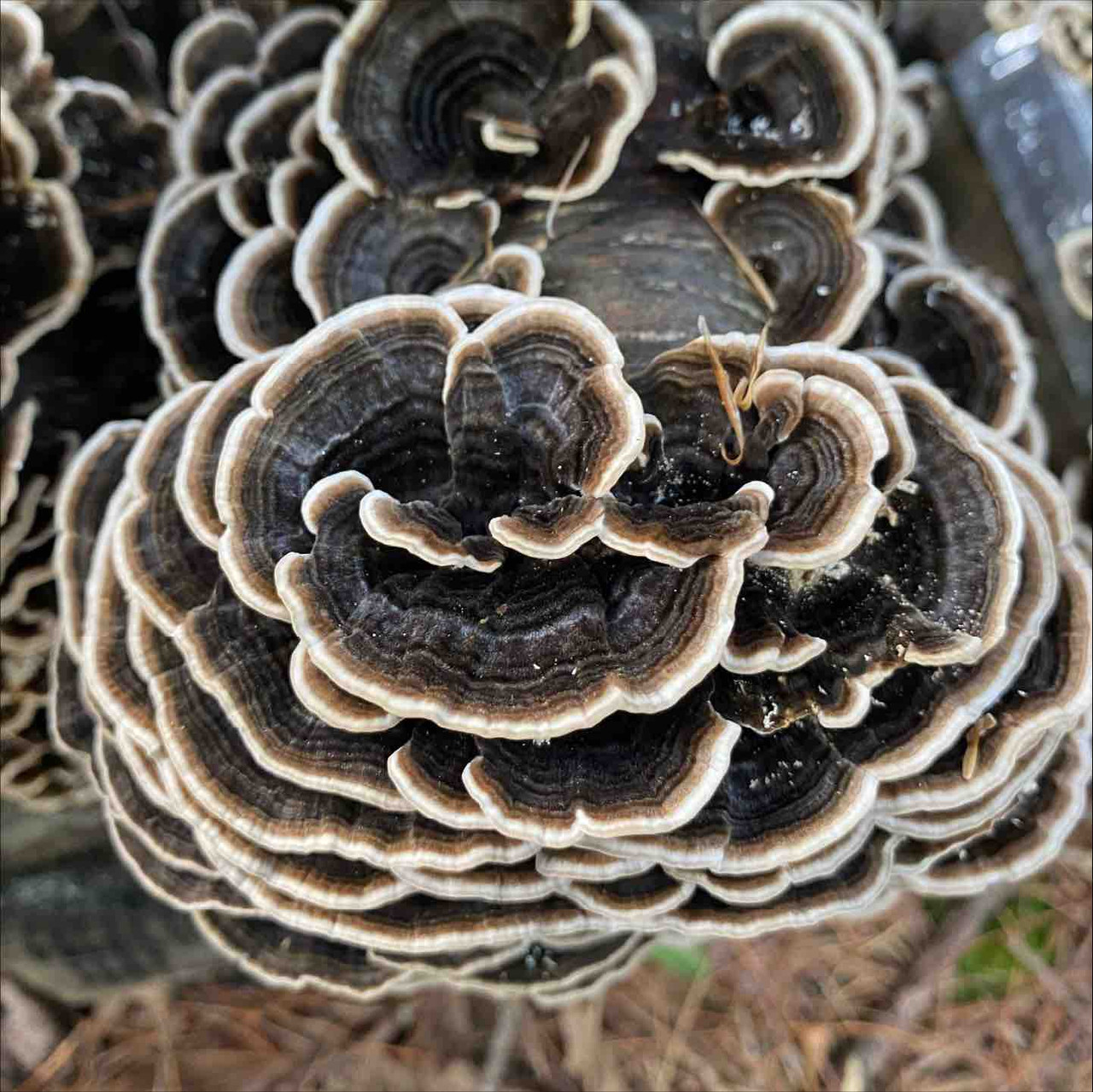
Credit: fieldforest.net
Triggering Fruiting
Once your logs are fully colonized, it’s time to encourage them to fruit.
How To Know If Logs Are Ready
The cut ends show white fuzz or turkey tail-like growth. This usually happens in the second year after inoculation.
Ways To Trigger Fruiting
- Shock the Logs: Soak them in cold water for 24–48 hours. Use a tub, kiddie pool, or large trash can. This mimics spring rains and triggers mushrooms to fruit.
- Seasonal Timing: Turkey tail fruits naturally in cool, damp weather—typically autumn. You may get fruiting after heavy rains.
- Patience: If logs do not fruit the first year, don’t worry. Some logs need a full year or more.
Non-obvious Insight
- Some growers forget to shock logs and rely only on weather. Controlled soaking can double your yield.
Harvesting Turkey Tail Mushrooms
The big moment: harvesting your own homegrown turkey tail. Here’s how to do it right.
Identifying Mature Mushrooms
Turkey tail mushrooms are ready to harvest when:
- The caps are fully colored and firm to the touch.
- The underside has tiny pores, not gills.
- The edges are not curling or drying out.
Harvest before heavy rains or frost, which can damage the mushrooms.
How To Harvest
- Use a small, sharp knife or garden scissors.
- Cut the caps off at their base, leaving the main log undisturbed.
- Do not tear or break the mushrooms off—this can damage the mycelium and reduce future yields.
Post-harvest Handling
- Clean off any dirt or debris.
- Dry turkey tail mushrooms for long-term storage.
- Store in an airtight jar in a cool, dry place.
Drying is the most common way to preserve turkey tail. You can use a food dehydrator or spread mushrooms on a screen in a warm, airy space.
Processing And Using Turkey Tail
Turkey tail is not a culinary mushroom, but it’s popular for its medicinal properties.
Making Turkey Tail Tea
- Chop dried turkey tail into small pieces.
- Add 1–2 tablespoons to a pot of water (about 500 ml).
- Simmer for 30–60 minutes.
- Strain and drink the tea.
You can add honey, ginger, or lemon for flavor. The tea is earthy and slightly bitter.
Extracts And Tinctures
Some people make double extracts by first simmering turkey tail in water, then soaking it in alcohol. This process pulls out different compounds. If you plan to use turkey tail for health reasons, research extraction methods carefully.
Common Uses
- Immune support (consult your doctor)
- Home remedies
- Natural dyes (the mushrooms can color fabrics)
Troubleshooting: Common Problems And Solutions
Growing turkey tail is simple, but problems can still occur. Here are some common issues and what to do.
Problem: No Mushrooms After A Year
- Log may not be fully colonized. Wait another season.
- Logs may be too dry. Soak them for 24–48 hours.
- Spawn quality may have been poor. Try again with a new batch.
Problem: Mold Or Contamination
- If you see green, black, or slimy growth, the log may be contaminated.
- Remove contaminated logs to prevent spread.
- Cleanliness during inoculation is key.
Problem: Mushrooms Dry Or Shrivel
- Logs are not getting enough moisture.
- Water logs regularly, especially in hot, dry weather.
- Consider moving logs to a shadier spot.
Problem: Insects Or Slugs
- Some pests like to eat mushrooms.
- Harvest as soon as mushrooms are ready.
- Use natural barriers (like copper tape) if slugs are a problem.
Non-obvious Insight
- If you see wild turkey tail mushrooms on nearby stumps, it means your environment is good for cultivation.
Comparing Turkey Tail To Other Log-grown Mushrooms
Turkey tail is not the only mushroom you can grow on logs. Here’s a comparison with other popular species:
| Mushroom | Time to First Harvest | Log Lifespan | Main Uses | Ease of Growing |
|---|---|---|---|---|
| Turkey Tail | 12–24 months | 3–5 years | Medicinal tea, extracts | Easy |
| Shiitake | 6–12 months | 3–7 years | Culinary | Moderate |
| Oyster | 6–9 months | 2–4 years | Culinary | Easy |
| Reishi | 12–18 months | 2–5 years | Medicinal | Moderate |
Turkey tail is among the easiest and most reliable medicinal mushrooms for beginners.
Key Success Factors For Backyard Cultivation
If you want consistent results, focus on these points:
- Log Selection: Use fresh, healthy hardwood logs.
- Moisture Control: Never let logs dry out, especially in the first year.
- Clean Inoculation: Work cleanly to avoid contamination.
- Proper Location: Shade and humidity are your friends.
- Patience: Turkey tail takes time, but the wait is worth it.
Many beginners lose patience and disturb logs too often. Trust the process—mycelium works best when left alone.

Credit: lykyn.com
Practical Tips From Experienced Growers
- Use a drill with a depth stop to make sure all holes are the same size and depth.
- Label logs with both the date and the tree species for better tracking.
- If you have extra spawn, use it to “paint” the log ends—this speeds up colonization.
- Consider growing more than one mushroom species in your log pile for variety.
- Share extra turkey tail with friends; it makes a great gift for gardeners or herbalists.
Environmental Impact And Sustainability
Turkey tail cultivation on logs is gentle on the environment. Here’s why:
- Low Inputs: You only need logs, spawn, and wax—no chemicals or fertilizers.
- Soil Building: When logs rot down after several years, they feed the soil and create new habitat for insects and fungi.
- Biodiversity: Mushroom logs attract birds, insects, and other wildlife, increasing your garden’s diversity.
- Waste Reduction: Use pruned branches or fallen trees instead of burning or discarding them.
For more information about the ecological role of fungi, see this Wikipedia article on Turkey Tail fungus.
Safety Considerations
While turkey tail is safe for most people, it’s important to:
- Positively identify all mushrooms before use. Turkey tail has lookalikes (like false turkey tail). Use a field guide or consult a local expert.
- Avoid using logs from trees treated with chemicals.
- If you plan to use turkey tail for health reasons, consult your doctor first. Some compounds may interact with medications.
Never eat or brew tea from mushrooms unless you are 100% sure of their identity.
Cost And Yield Estimates
Growing turkey tail on logs is affordable and can provide a steady supply for years.
- Startup Costs: $25–$60 for spawn, tools, and wax (for 5–10 logs).
- Log Sourcing: Often free if you have trees or know a local arborist.
- Yield: Each log can produce 0.5 to 1.5 pounds (225–700 grams) per year, for 3–5 years.
Here’s a simple breakdown:
| Item | One-Time Cost | Annual Yield | Log Lifespan |
|---|---|---|---|
| 5 Logs, Spawn, Wax, Tools | $60 | 3–7 lbs (1.5–3 kg) | 3–5 years |
| 10 Logs, Spawn, Wax, Tools | $100 | 6–15 lbs (3–7 kg) | 3–5 years |
Compared to buying turkey tail supplements, home cultivation is much more cost-effective and rewarding.
Frequently Asked Questions
How Do I Tell Real Turkey Tail From False Turkey Tail?
True turkey tail has a white pore surface on the underside, not gills. The color bands are distinct and fuzzy, not smooth. False turkey tail (Stereum) lacks pores and is often thinner. Use a good field guide for comparison.
Can I Use Logs From Trees That Fell Last Year?
It’s best to use logs that are freshly cut (within 2–6 weeks). Older logs may already have wild fungi, which compete with your spawn. If you must use older logs, check for signs of rot or other mushrooms.
How Long Do Turkey Tail Logs Produce Mushrooms?
Most logs will fruit for 3 to 5 years, depending on wood type, log size, and growing conditions. Oak logs last longest; alder and poplar are quicker but break down faster.
Can I Grow Turkey Tail Indoors?
Turkey tail prefers outdoor conditions. While some people try indoor cultivation with sawdust blocks, growing on logs indoors is difficult due to the need for humidity and airflow. Outdoor log cultivation is easier and more reliable.
Are Turkey Tail Mushrooms Safe To Eat?
Turkey tail is not toxic but is too tough to eat like a regular mushroom. It is usually dried and used for tea or extracts. Always be sure of your identification before use.
Growing turkey tail on logs is a satisfying project for anyone interested in mushrooms, herbal medicine, or sustainable gardening. With patience and a little care, you can transform simple logs into a living source of color, health, and learning in your backyard. Whether you are drawn by the beauty of the fungus, the health benefits, or the joy of homegrown food, turkey tail offers an accessible and rewarding experience for all levels of growers.