
Turkey Tail And Colorectal Cancer: What Japanese Research Reveals
For centuries, nature has offered powerful remedies hidden in plain sight. Among them, the turkey tail mushroom stands out for its vibrant colors and unique health benefits. Known scientifically as *Trametes versicolor*, this mushroom grows on decaying wood and is easy to spot in forests around the world. But what truly sets turkey tail apart is its growing reputation in modern medicine, especially in the fight against colorectal cancer.
In recent decades, Japan has led the way in researching how turkey tail can help battle one of the world’s most common and deadly cancers. Japanese scientists have conducted detailed studies, clinical trials, and even developed mushroom-based medicines. Their work has changed how both doctors and patients see the role of natural therapies in cancer care.
This article will guide you through what Japanese research has discovered about turkey tail and colorectal cancer, explaining the science in simple words and showing what it could mean for the future of cancer treatment.
What Is Turkey Tail Mushroom?
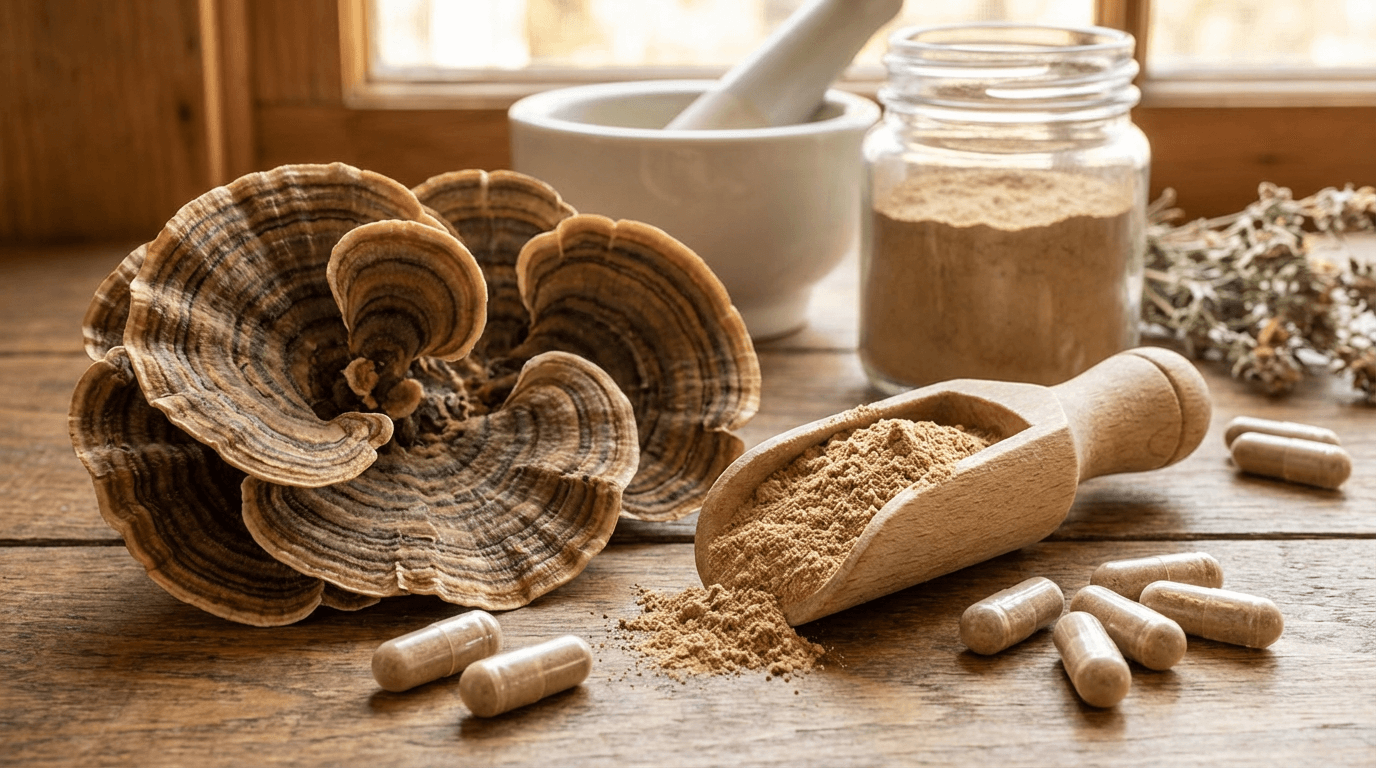
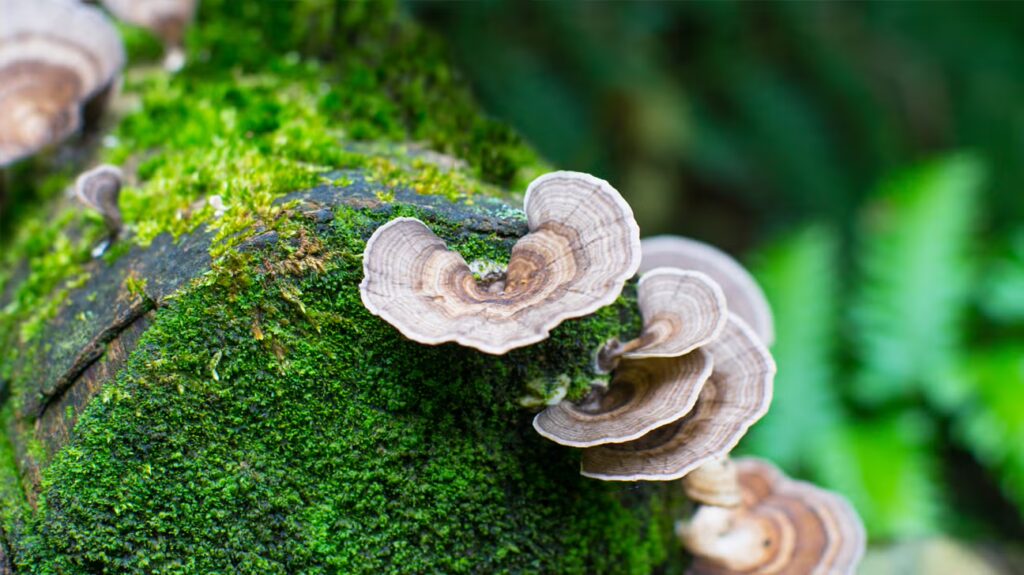
The turkey tail mushroom gets its name from the way its fan-shaped caps resemble the tail feathers of a wild turkey. It is a common mushroom, found in forests on rotting logs and stumps. While it may look simple, inside it holds a rich mix of compounds that have caught the attention of researchers worldwide.
Key Components
Turkey tail contains several important natural substances. The most studied are:
- Polysaccharide-K (PSK): Also called Krestin, this is a type of beta-glucan unique to turkey tail.
- Polysaccharopeptide (PSP): Another complex sugar-protein compound.
- Beta-glucans: These are known to support the immune system.
- Phenols and flavonoids: Antioxidant compounds that protect cells.
These components work together to help the body’s defense system fight off invaders, including cancer cells.
Traditional Use In Japan
In Japan, turkey tail has been used for hundreds of years as a traditional medicine. It is often brewed into teas or included in herbal mixtures to support general health. However, it was not until the 1960s that Japanese researchers started looking closely at its effects on cancer, leading to a wave of scientific interest.
Understanding Colorectal Cancer
Colorectal cancer is a type of cancer that starts in the colon or rectum. It is the third most common cancer worldwide and a major cause of death. Early stages often have no symptoms, which makes early detection difficult. By the time signs like blood in stool, stomach pain, or weight loss appear, the cancer may already have spread.
Risk Factors
Several things can increase the risk of developing colorectal cancer:
- Age: Most cases occur after age 50.
- Family history: Genetics play a strong role.
- Diet: High-fat, low-fiber diets raise risk.
- Inflammatory bowel diseases: Such as Crohn’s disease or ulcerative colitis.
- Lifestyle: Lack of exercise, smoking, and heavy drinking.
Standard Treatments
Treatment usually includes:
- Surgery: To remove the cancerous part of the colon or rectum.
- Chemotherapy: Drugs that kill cancer cells.
- Radiation therapy: Using high-energy rays to destroy cancer.
- Targeted therapy: Drugs that attack specific cancer cell features.
While these treatments can be effective, they often come with serious side effects such as fatigue, nausea, lowered immunity, and risk of infection. This is where natural therapies like turkey tail are being explored as supportive treatments.

Credit: lykyn.com
The History Of Turkey Tail Research In Japan
Japan has a long tradition of using mushrooms for health. But in the 1960s and 70s, Japanese scientists began to study turkey tail with modern scientific tools. Their goal was to find natural substances that could help support the immune system during cancer treatment.
The Discovery Of Psk
One major breakthrough came when researchers isolated Polysaccharide-K (PSK) from turkey tail. They found that PSK could boost immune cells, making them more active against cancer. The Japanese government approved PSK as an official cancer medicine in the 1970s. It has since been used alongside chemotherapy to help patients fight different cancers, especially stomach and colorectal cancer.
Clinical Trials And Widespread Use
By the 1980s and 90s, Japanese hospitals were regularly using PSK as a part of colorectal cancer care. Clinical trials in Japan became models for other countries interested in mushroom-based therapies. Today, PSK is still prescribed in Japan and recognized by the medical system.
How Turkey Tail Works Against Cancer
Understanding how turkey tail works helps explain why it became so important in Japan’s fight against colorectal cancer.
Immune System Support
The main way turkey tail helps is by boosting the immune system. Cancer cells often hide from the immune system. Compounds like PSK and PSP make immune cells more alert and active, so they are better at finding and attacking cancer cells.
- T cells: These are “killer” cells that destroy cancer.
- Natural killer (NK) cells: Another immune cell type important for fighting tumors.
- Macrophages: These cells eat and remove dangerous cells.
Turkey tail extracts have been shown to increase the activity of all these cells.
Direct Effects On Cancer Cells
Some studies suggest that PSK can:
- Slow the growth of cancer cells.
- Make it harder for cancer to spread (metastasize).
- Help chemotherapy drugs work better.
Reducing Treatment Side Effects
Chemotherapy and radiation can weaken the immune system. Turkey tail’s immune-boosting effects may help patients recover faster, reduce infections, and improve overall quality of life.
Landmark Japanese Studies On Turkey Tail And Colorectal Cancer
Over the years, Japanese scientists have published many important studies on turkey tail and colorectal cancer. Here are some of the most significant.
1. The 1985 Psk Trial (colorectal Cancer Patients)
This large study involved over 200 colorectal cancer patients who had surgery to remove their tumors. Half received PSK after surgery, while the other half did not.
- Results: The group taking PSK had a higher five-year survival rate (around 73%) compared to the control group (60%). Recurrence rates were also lower.
2. The 1990s Multi-center Study
A nationwide trial followed patients with stage II and III colorectal cancer. All received standard chemotherapy, but some received PSK as well.
- Results: Those who took PSK showed a 10–15% improvement in survival over five years. They also had fewer infections and recovered faster from treatment.
3. Long-term Follow-up Studies
Researchers checked on patients ten years after their original treatment.
- Results: The benefits of PSK lasted over the long term, with higher survival rates and better health outcomes for those who had taken the mushroom extract.
4. Meta-analyses
In the early 2000s, Japanese researchers reviewed all available data. Their analysis found that PSK, when added to standard treatment, consistently improved survival and reduced the chance of cancer coming back.
5. Recent Studies
In recent years, Japanese teams have used advanced lab techniques to show how turkey tail compounds interact with immune cells and cancer cells at the genetic level. These studies continue to confirm earlier findings.
Turkey Tail Vs. Standard Treatments: What Do The Results Show?
Japanese research has compared turkey tail with standard cancer treatments. Here’s what the data reveals.
| Aspect | Standard Treatment Only | With Turkey Tail (PSK) |
|---|---|---|
| 5-Year Survival Rate | ~60-65% | ~70-75% |
| Recurrence Rate | Higher | Lower |
| Immune Function | Often weakened | Improved or maintained |
| Side Effects | Common and severe | Reduced in many cases |
This table shows that adding turkey tail to treatment may help patients live longer, avoid cancer coming back, and feel better during recovery.
The Science: How Psk And Psp Work In The Body
Japanese labs have spent decades studying the exact effects of PSK and PSP from turkey tail on the human body.
Boosting White Blood Cells
PSK increases the number of white blood cells—the body’s main defense against infection and cancer. It makes these cells more active, so they are better at finding and attacking cancer cells.
Blocking Cancer Spread
Laboratory tests show that PSK can slow the ability of cancer cells to move and invade new areas. This is important for stopping metastasis, the process where cancer spreads to other organs.
Supporting Gut Health
Newer research from Japan also shows that turkey tail may help restore healthy bacteria in the gut. Since the gut is important for both digestion and immunity, this effect could help patients handle cancer treatment better.
Gene Regulation
Advanced genetic studies show that PSK can turn on certain genes that help fight cancer and turn off genes that help cancer grow. This “gene regulation” may be part of why it works so well with chemotherapy.
Turkey Tail Dosage And Forms Used In Japanese Studies
When it comes to using turkey tail, Japanese research is careful about dosage and how the mushroom is prepared.
Dosage In Clinical Trials
Most Japanese clinical trials used PSK in doses of about 3 grams per day, split into three doses. This was usually given as a powder or capsule, alongside chemotherapy.
Forms Used
- Extracts: Most studies used purified extracts, not raw mushroom.
- Capsules or powder: Easy to take and allows for precise dosing.
- PSK vs PSP: In Japan, PSK is most common, but some studies also use PSP.
How Long Was It Taken?
Patients usually took PSK for months to years, often continuing for 1–2 years after surgery or chemotherapy. This long-term use seemed to give the best results.
Safety And Side Effects: What Japanese Research Reports
Safety is always a major concern with any treatment. Japanese studies have looked closely at the side effects of turkey tail.
Common Side Effects
Most patients in Japanese trials handled PSK very well. Side effects were usually mild and included:
- Mild stomach upset
- Soft stools
- Occasional skin rash
These problems were rare and often went away on their own.
Serious Side Effects
Serious side effects were very uncommon. In fact, many studies found that patients taking PSK had fewer infections and complications than those who did not.
Interactions With Other Medicines
Turkey tail was almost always used alongside chemotherapy and other drugs. Japanese doctors found it safe to use together, but they always monitored patients carefully.
Limitations And Challenges In Japanese Research
Even though the results are promising, Japanese research is not perfect. There are some important things to keep in mind.
Study Design
Some early studies did not use modern “double-blind” methods. This means that patients and doctors knew who was getting PSK, which could influence results.
Differences In Patient Groups
Not all studies included the same types of patients. Some included only early-stage cancer, while others included more advanced cases.
Availability Outside Japan
PSK is widely used in Japan, but it is not approved as a medicine in many other countries. This can make it hard for patients elsewhere to access the same treatments.
Need For More Research
While the evidence from Japan is strong, more studies are needed in other countries and with larger groups to confirm the results.
Comparing Turkey Tail To Other Mushroom Therapies
Japan is famous for studying not only turkey tail but also other medicinal mushrooms, such as shiitake (Lentinula edodes) and maitake (Grifola frondosa). How does turkey tail stack up?
| Mushroom | Main Active Compound | Main Use in Japan | Evidence for Colorectal Cancer |
|---|---|---|---|
| Turkey Tail | PSK, PSP | Support for colorectal, stomach, and lung cancer | Strongest evidence |
| Shiitake | Lentinan | Support for stomach cancer | Moderate evidence |
| Maitake | D-fraction | Immune support and some cancer studies | Less evidence |
Turkey tail remains the most studied and best-supported mushroom therapy for colorectal cancer, especially in Japan.
Practical Guidance For Patients And Families
If you or a loved one is facing colorectal cancer, you may wonder if turkey tail could help. Here are some practical tips based on Japanese research.
1. Talk To Your Doctor First
Before adding any supplement or therapy, always discuss it with your cancer care team. They can help you weigh the risks and benefits.
2. Use Standardized Extracts
The studies from Japan used standardized PSK extracts, not raw mushrooms or homemade teas. These extracts are more reliable and allow for proper dosing.
3. Do Not Replace Standard Care
Turkey tail should be used with standard treatments, not instead of them. It is meant to support chemotherapy, surgery, or radiation—not replace them.
4. Monitor For Side Effects
Even though side effects are rare, watch for any changes in digestion or skin and let your doctor know.
5. Check The Source
If you buy turkey tail supplements, choose products from reputable companies that use standardized extracts.
6. Patience Is Important
Japanese studies found the best results with long-term use. Do not expect overnight changes. Improvements in survival and quality of life showed up over months and years.
Credit: antioxi-supplements.com
Two Non-obvious Insights From Japanese Research
Many people miss these key points when thinking about turkey tail and cancer:
1. The Biggest Benefit Is in Early-Stage Cancer
Japanese data show that PSK works best when started soon after surgery or with early chemotherapy—not in late-stage cancer. This suggests immune support is most important when the body is still strong.
2. It May Help Prevent Recurrence
While many focus on survival, Japanese studies also found that PSK lowers the risk of cancer coming back after treatment. This “recurrence prevention” is a special strength of turkey tail therapy.
The Global Impact Of Japanese Research
Because of Japan’s leadership, other countries are now studying turkey tail. Hospitals in China, Korea, and even the United States have started their own trials. Some Western doctors recommend turkey tail supplements to cancer patients, especially those interested in integrative medicine.
However, outside Japan, PSK is usually sold as a dietary supplement, not a prescription drug. This means quality and strength can vary. Always look for products backed by testing and quality control.
Credit: mycobio.co.nz
What Does The Future Hold?
Japanese research on turkey tail and colorectal cancer continues to inspire new studies. Scientists are now looking at:
- Combining PSK with new cancer drugs to see if the effects are even stronger.
- Personalized medicine—matching the right therapy to the right patient based on genetics.
- Gut microbiome research—using turkey tail to help restore healthy gut bacteria during and after cancer treatment.
If these new approaches succeed, the humble turkey tail mushroom could become even more important in the fight against cancer worldwide.
Frequently Asked Questions
What Is The Main Active Ingredient In Turkey Tail Used In Japanese Cancer Research?
The main active ingredient is Polysaccharide-K (PSK), also called Krestin. PSK is a type of beta-glucan that supports the immune system and has been shown in Japanese studies to help improve survival in colorectal cancer patients when used alongside standard treatments.
Can Turkey Tail Mushroom Cure Colorectal Cancer By Itself?
No, turkey tail alone cannot cure colorectal cancer. Japanese research shows that it works best when used together with standard treatments like surgery and chemotherapy. It helps support the immune system and may reduce the risk of cancer returning, but it is not a replacement for medical care.
Are There Any Risks Or Side Effects To Using Turkey Tail Supplements?
Most Japanese studies report mild side effects such as stomach upset or soft stools, which usually go away on their own. Serious side effects are rare. However, it is important to use standardized extracts and talk to your doctor before starting any new supplement, especially during cancer treatment.
How Is Turkey Tail Different From Other Medicinal Mushrooms Like Shiitake Or Maitake?
Turkey tail contains PSK and PSP, which have the strongest evidence for supporting colorectal cancer treatment in Japanese studies. Shiitake contains lentinan, used mostly for stomach cancer, while maitake is mainly studied for immune support. Turkey tail is the most researched for colorectal cancer.
Where Can I Find More Scientific Information About Turkey Tail And Cancer?
A trusted source for more information is the Wikipedia page on Polysaccharide-K, which summarizes research, clinical trials, and usage in Japan and other countries.
The story of turkey tail and colorectal cancer is a powerful example of how ancient remedies and modern science can work together. Thanks to decades of Japanese research, this colorful mushroom is now seen as a valuable partner in the fight against cancer—offering hope, support, and a new way to help patients on their journey to recovery.