
Many people love hunting for mushrooms in the wild. The excitement of finding a fresh, edible morel is hard to beat. However, this fun activity comes with real risks. Some mushrooms look almost like morels but are actually false morels, which can be deadly if eaten. Knowing how to tell the difference between true morels and dangerous lookalikes is not just a useful skill—it can save your life.
Each year, cases of mushroom poisoning happen across the world. Most are because people cannot tell the difference between edible and toxic mushrooms. False morels often appear in the same places and at the same time as true morels, making mistakes easy, even for experienced foragers.
While true morels are prized for their taste, false morels contain dangerous toxins that can cause severe illness or death.
In this article, you will learn how to identify false morels, understand their risks, and avoid making a critical mistake. You will discover the key features that set false morels apart, common myths, and practical steps for safe foraging. Whether you are new to mushroom hunting or have some experience, this guide offers detailed advice to keep you safe.
Understanding False Morels
False morels are a group of mushrooms that look similar to true morels but are often poisonous. The term “false morel” refers to several species, mainly in the Gyromitra and Verpa genera. The most dangerous are in the Gyromitra group, especially Gyromitra esculenta. These mushrooms grow in forests around the world, especially in North America and Europe.
Unlike true morels (Morchella species), false morels have toxins that can damage the liver and nervous system. Some people have died after eating them. Even if cooked, some types of false morels stay poisonous. The symptoms of poisoning can appear several hours after eating, which makes the danger hard to spot until it is too late.
Why False Morels Are So Dangerous
The main toxin in many false morels is gyromitrin. When you eat these mushrooms, your body turns gyromitrin into monomethylhydrazine (MMH)—a chemical also used in rocket fuel. This toxin affects the liver, kidneys, and nervous system. Even a small amount can make you very sick.
Symptoms of false morel poisoning include:
- Severe stomach pain
- Vomiting and diarrhea
- Dizziness and confusion
- Seizures
- Liver failure
- In the worst cases, death
Children and older adults are even more at risk. Cooking or drying does not always remove the toxin. Some people have eaten false morels for years without problems, but this is a dangerous myth. The toxin can build up in your body, so even if you feel fine now, you could get sick later.
Key Differences: True Morels Vs. False Morels
It is easy to confuse true morels and false morels. However, learning their differences can prevent serious mistakes. The best way to stay safe is to look at several key features:
Appearance
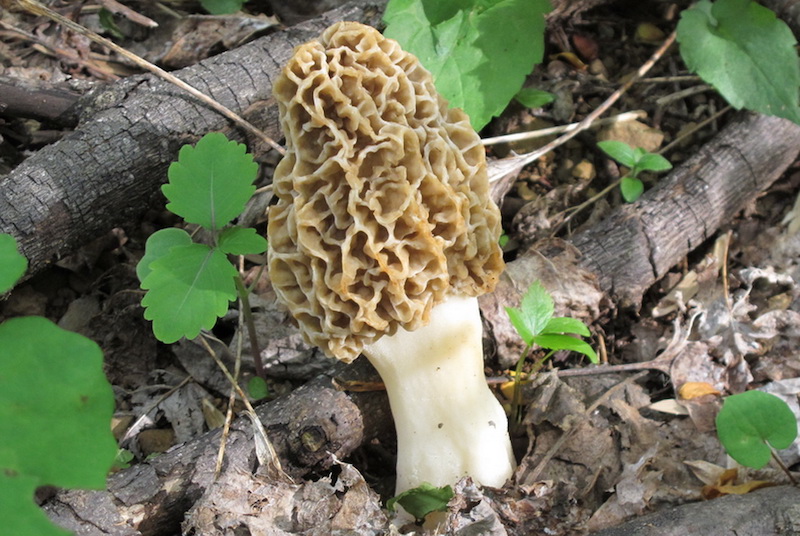
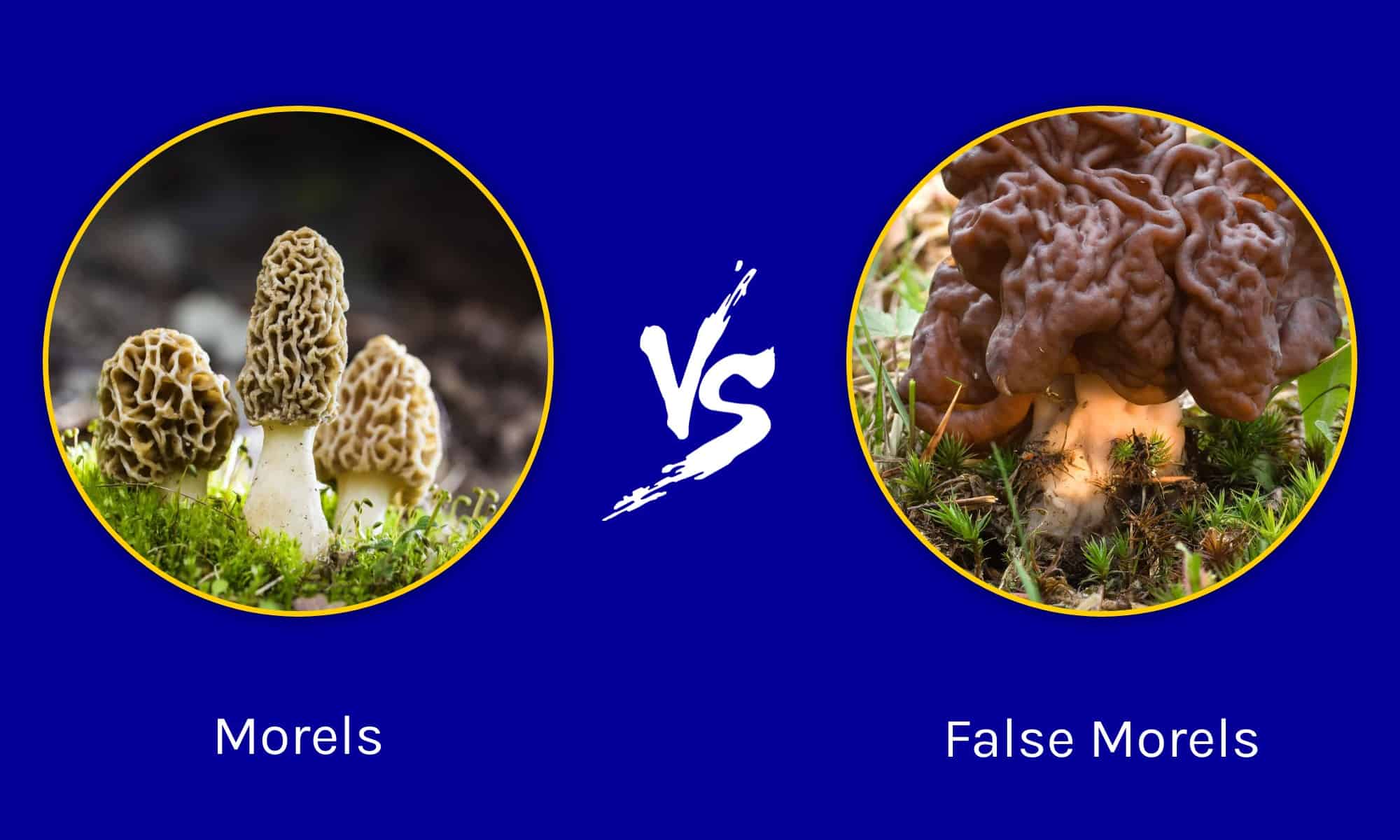
True morels have a honeycomb-like cap with deep pits and ridges. The cap is attached to the stem at the base. False morels often have a wrinkled, brain-like cap that looks uneven or lumpy. The cap may not be fully attached to the stem.
| Feature | True Morel | False Morel |
|---|---|---|
| Cap Shape | Honeycomb, pits and ridges | Wrinkled or brain-like |
| Cap Attachment | Fully attached to stem | Often hangs free or partly attached |
| Hollow Inside | Completely hollow from top to bottom | Chambers or cottony tissue inside |
| Color | Yellow, brown, or black | Red-brown, reddish, or yellow-brown |
Inside Structure
One of the most reliable ways to tell the difference is to cut the mushroom in half, from top to bottom. True morels are completely hollow inside. False morels often have cottony tissue, chambers, or are not fully hollow.
Cap-stem Attachment
With a true morel, the cap is attached directly to the stem at the base. In many false morels, the cap hangs freely or only attaches at the very top.
Season And Habitat
True morels usually grow in spring, often around dead or dying trees. False morels can appear in similar places, but some species grow later in the year or in different habitats, such as sandy soil or near conifers.
The Most Common False Morels (and Their Dangers)
It is important to know which false morel species are most common and dangerous. Here are the main ones you should watch for:
1. Gyromitra Esculenta (the Deadly False Morel)
This mushroom is responsible for most false morel poisonings. It has a reddish-brown, brain-like cap and a thick, white stem. It often grows in sandy soil, especially in pine forests.
- Key features: Cap looks like a brain, not a honeycomb. Cap is not fully attached to the stem.
- Danger: Contains high levels of gyromitrin. Even small amounts can kill.
2. Gyromitra Gigas (snow Morel)
This species is larger and appears early in the spring, sometimes when snow is still on the ground. The cap is yellow-brown and has deep wrinkles.
- Key features: Large, lobed cap with folds; color is yellow to tan.
- Danger: Contains gyromitrin, though usually less than G. esculenta. Still toxic.
3. Gyromitra Infula (elfin Saddle)
This false morel has a saddle-shaped, reddish-brown cap and grows on decaying wood, especially in late summer and fall.
- Key features: Cap is shaped like a saddle or has two “wings.” Cap often not attached at the base.
- Danger: Contains gyromitrin; causes severe poisoning.
4. Verpa Bohemica (early False Morel)
This mushroom comes up early in spring, sometimes before true morels. It has a cap that looks wrinkled but hangs freely from the stem, like a thimble.
- Key features: Cap is wrinkled, not deeply pitted. Cap hangs free except at the very top.
- Danger: Some people eat it, but it can cause stomach upset and, rarely, neurological symptoms.
5. Verpa Conica
Similar to V. bohemica, this species has a smooth or slightly wrinkled cap that hangs loose from the stem.
- Key features: Cap is conical and smooth; not deeply pitted.
- Danger: Sometimes causes illness; not recommended for eating.
Credit: earthsky.org
Common Myths That Lead To Mistakes
Many mushroom hunters believe myths that can lead to poisoning. Here are the most dangerous ones:
- “If animals eat it, it’s safe for humans.” This is false. Many animals can eat mushrooms that are deadly to people.
- “Cooking or drying removes all toxins.” This is not true for false morels. Some toxins remain even after cooking.
- “If you eat a little, you’ll be fine.” The toxin can build up over time, and some people react strongly to even small amounts.
- “It smells or tastes good, so it’s safe.” Smell and taste are not reliable ways to judge safety.
Practical Steps For Identifying False Morels
To stay safe, follow these steps every time you find a mushroom that looks like a morel:
- Examine the cap closely. True morels have deep pits and ridges, like a honeycomb. False morels have folds or wrinkles, often irregular.
- Check cap attachment. Try to gently pull the cap from the stem. In true morels, the cap is attached at the base. In false morels, the cap often hangs loose or is only attached at the top.
- Slice the mushroom lengthwise. True morels are completely hollow inside, from the tip of the cap to the bottom of the stem. False morels often have cottony or chambered interiors.
- Notice the season and location. Most true morels appear in spring in certain forests. False morels can appear in different places or seasons.
- Use a mushroom field guide. Always carry a recent, local field guide with photos. Compare your find with pictures and descriptions.
- Ask an expert. If you are not 100% sure, show your mushroom to a local expert before eating.
- Never eat raw mushrooms from the wild. Even some true morels can be mildly toxic if not cooked.
Visual Clues: Identifying True Morels And False Morels In The Field
Foragers rely on both sight and touch to identify mushrooms. Here are some visual and physical clues to help:
- True morels are symmetrical, with a uniform honeycomb pattern. Their caps and stems are the same color.
- False morels often look irregular, lopsided, or have a cap that is much darker than the stem.
- If you gently squeeze the stem, true morels feel hollow and light. False morels may feel firm or cottony.
A good tip is to take clear photos of the mushroom from all angles before picking. This helps with identification later or if you need to ask an expert.
Dangers Of Misidentification: Real-life Cases
False morel poisoning is not just a theory—it happens every year. In Europe, hundreds of cases are reported yearly, and about 10% are fatal. In North America, cases spike every spring as mushroom hunters head outdoors.
One example is a family in Finland who ate Gyromitra esculenta, thinking it was safe. All members were hospitalized, and one person died. In another case, a group of experienced foragers in the United States became seriously ill after confusing Verpa bohemica with true morels.
Symptoms of poisoning often appear 6 to 24 hours after eating. This delay can make it hard to connect the illness to the mushroom, which is why some cases go unreported.
How To Avoid A Dangerous Mistake
Mushroom hunting should be fun, not risky. Here are the most important rules for staying safe:
- Never eat a mushroom unless you are 100% sure of its identity. If you have any doubt, do not eat it.
- Cut every mushroom in half lengthwise. Check for a hollow interior and cap attachment.
- Share your find with an experienced forager or mycologist. Local mushroom clubs often offer identification help.
- Keep the first mushroom you pick. If poisoning occurs, doctors can test the mushroom to help with treatment.
- Teach children to avoid all wild mushrooms. Kids are at higher risk because their bodies are more sensitive.
- Be careful with online advice. Not all mushroom websites or videos are reliable. Use trusted sources and guides.
- Avoid eating mushrooms raw. Even safe mushrooms can cause stomach upset if not cooked well.
What To Do If You Suspect False Morel Poisoning
If you think you or someone else has eaten a false morel:
- Call emergency services immediately.
- If possible, bring a sample of the mushroom to the hospital.
- Do not wait for symptoms to appear; some toxins act slowly but are still deadly.
- Do not try to treat poisoning at home.
Quick treatment can save lives. Doctors may use special medications to remove toxins or support the liver. There is no home remedy for mushroom poisoning.
Comparing True Morels And False Morels: A Side-by-side Guide
Here’s a quick comparison for reference when you are in the field:
| Feature | True Morel (Morchella) | False Morel (Gyromitra, Verpa) |
|---|---|---|
| Cap Texture | Pitted, honeycomb | Wrinkled, lobed, or brain-like |
| Cap-Stem Connection | Cap attached at base to stem | Cap hangs free or attached only at top |
| Inside Structure | Hollow from tip to base | Chambered or filled with cottony tissue |
| Toxicity | Edible (when cooked) | Poisonous, sometimes deadly |
| Season | Spring | Spring, summer, fall |
The Role Of Local Knowledge And Mushroom Clubs
Mushroom identification can change from region to region. Some species look different in other parts of the world. Local mushroom clubs or societies are excellent resources. They often hold forays, classes, and identification workshops.
Joining a club will help you meet experts, share your finds, and learn from people who know your area. Most large cities and many small towns have local mycology groups. Connecting with others is one of the best ways to avoid mistakes.

Credit: williamrubel.com
Safe Foraging Habits For Beginners
If you are new to foraging, start slowly and carefully. Here are safe habits every beginner should follow:
- Learn with an expert: Go on your first forays with someone who knows the local mushrooms well.
- Take detailed notes: Write down when and where you find each mushroom, what trees are nearby, and what the weather is like.
- Use more than one field guide: Different guides may show different photos or information. Compare them before eating any wild mushroom.
- Practice with non-edible mushrooms: Learn to identify common, easy-to-spot mushrooms first. Practice by finding and identifying poisonous species (but do not eat them).
- Start with small amounts: When you finally try a wild mushroom, eat only a little, and wait 24 hours to see if you react. But remember: Never do this with any mushroom that could be a false morel.
A little caution goes a long way. Most experienced foragers have stories of near-misses. The best ones learn from their mistakes and never repeat them.
The Science Behind Morel And False Morel Toxins
You may wonder why false morels are so dangerous when they look so similar to true morels. The reason lies in their chemistry.
- Gyromitrin is the main toxin in many false morels. It turns into monomethylhydrazine (MMH) in your body.
- MMH damages your liver, central nervous system, and sometimes your blood.
- The amount of gyromitrin can vary in different mushrooms, even within the same species.
- Some people are more sensitive than others, but no one is immune.
Cooking may remove some of the toxin, but not all. Inhaling the steam while cooking false morels can also cause poisoning. There is no safe way to prepare a truly toxic mushroom.
Why Some People Eat False Morels (and Why You Shouldn’t)
In some regions, especially in parts of Scandinavia and Eastern Europe, people eat false morels after special preparation. They boil the mushrooms several times, throwing away the water each time. This can reduce the toxin, but it does not remove it all.
The World Health Organization and local health agencies warn against eating any false morels, no matter how they are cooked. The risk is simply too great. Some people who have eaten false morels for years suddenly get sick or die.
The toxins can build up in your body over time.
Learning From Mistakes: Common Errors To Avoid
Beginners often make the same mistakes. These errors can be deadly when it comes to false morels:
- Picking mushrooms in poor light: Shadows can hide important details. Only pick mushrooms in good daylight.
- Ignoring the inside: Many people forget to cut the mushroom open. The inside tells you a lot.
- Trusting old advice: Mushroom knowledge changes as science learns more. Use up-to-date guides.
- Relying on phone apps alone: Some identification apps are helpful, but they are not 100% reliable. Always double-check with other sources.
- Getting over-confident: Even experts make mistakes. Stay humble and careful.
Useful Tools For Safe Identification
Technology and simple tools can help you avoid mistakes:
- A sharp knife: For slicing mushrooms to check their inside structure.
- A hand lens or magnifier: To see details of the cap and stem.
- A field guide: Choose one with color photos for your region.
- A basket or mesh bag: To carry mushrooms without mixing types.
- A notebook and camera: Document every find for learning and sharing.
Smartphones can also be useful for taking photos and comparing with online resources. However, do not rely on them as your only source.
Foraging With Kids: Extra Precautions
Taking children mushroom hunting can be fun, but it comes with special risks. Kids are more likely to put things in their mouths and are more sensitive to toxins.
- Teach children not to eat anything they find. Make this rule clear from the start.
- Show them dangerous mushrooms. Let kids see and touch false morels (while supervised), so they learn to spot them.
- Keep all mushrooms out of reach. Carry your finds in a closed basket or bag.
- Have a plan for emergencies. Know where the nearest hospital is, and have emergency numbers ready.
Credit: a-z-animals.com
International Differences: False Morels Around The World
False morels are found across North America, Europe, and Asia. However, different species are common in different areas. In Finland and Sweden, Gyromitra esculenta is widely collected and even sold in markets, despite the risks. In the United States and Canada, public health authorities warn against eating all false morels.
Local laws may ban collecting or selling false morels in some places. Always check the rules before foraging.
How Experts Identify Mushrooms: Best Practices
Professional mycologists use a step-by-step process to identify mushrooms. Here is how they do it:
- Examine the cap, stem, and inside structure.
- Note the location and habitat: What kind of trees, soil, and climate are nearby?
- Check spore prints: Some experts use a spore print to confirm species, but this is rarely needed for morels.
- Compare with multiple guides: Even experts check several sources before eating wild mushrooms.
- Consult with others: They often share photos and ask colleagues for a second opinion.
You can follow this careful approach to stay safe.
What To Do With Uncertain Finds
Sometimes, you will find a mushroom that looks like a morel but does not match exactly. In these cases:
- Do not eat it. The risk is not worth it.
- Take clear photos and notes.
- Ask experts or post photos in reliable online forums for help.
- Leave the mushroom in the forest if you are not sure.
Patience and caution are your best friends in mushroom foraging.
Responsible Foraging: Protecting Nature And Yourself
Foraging is not just about finding food—it is also about respecting nature. Here’s how to be a responsible forager:
- Pick only what you need: Leave some mushrooms behind for wildlife and to reproduce.
- Do not disturb the ground: Use a knife to cut mushrooms, not to dig up soil.
- Avoid rare or protected species: Some mushrooms are endangered.
- Dispose of toxic mushrooms safely: Do not leave poisonous mushrooms where children or pets can find them.
- Report poisonings: If you or someone else gets sick, report it to health authorities. This helps track dangerous species.
The Value Of Learning: Continuing Your Mushroom Education
Mushroom hunting is a lifelong learning process. Even experts are always learning new things. Here are ways to improve your skills:
- Attend local forays and classes: Many clubs offer guided walks and talks.
- Read new field guides: Science discovers new species and changes names often.
- Follow trusted online sources: For example, the North American Mycological Association shares safe foraging tips.
- Keep a mushroom journal: Write down every find and what you learn.
The more you learn, the safer you will be.
Useful Resources For Mushroom Foragers
If you want to learn more, here are trusted resources:
- Local mycological societies
- Public health departments
- University extension programs
- Online communities (choose those with expert moderators)
For a thorough explanation of mushroom toxins and identification, see the Wikipedia page on Gyromitra esculenta.
Frequently Asked Questions
How Can I Tell A True Morel From A False Morel?
The best way is to cut the mushroom in half, from top to bottom. True morels are completely hollow inside, and their caps are attached at the base to the stem. False morels usually have chambers or cottony tissue inside, and their caps often hang freely or are only attached at the top.
Are All False Morels Deadly?
Not all false morels are equally deadly, but many contain dangerous toxins. The most dangerous is Gyromitra esculenta, which can cause death or severe illness. Some Verpa species cause only stomach upset, but it is safest to avoid all false morels.
Is It Safe To Eat False Morels If I Cook Them Well?
No. Cooking or drying does not always remove all toxins from false morels. Some toxins can even be inhaled in steam during cooking. There is no safe way to prepare a truly toxic false morel.
What Should I Do If I Accidentally Eat A False Morel?
Seek medical help immediately. Bring a sample of the mushroom with you if possible. Do not wait for symptoms to appear, as some toxins take hours to act but are still deadly.
Can I Trust Mushroom Identification Apps On My Phone?
Mushroom identification apps can help, but they are not always accurate. Always double-check with field guides and, if possible, show your find to an expert before eating any wild mushroom.
Identifying false morels is a skill that takes time to learn, but it is worth every effort. With careful observation, good guides, and a cautious approach, you can enjoy mushroom hunting safely. Remember: when in doubt, throw it out. Your health and safety are more important than any meal found in the forest.