
Growing Lion’s Mane mushrooms on supplemented sawdust blocks is a rewarding adventure that brings gourmet mushrooms to your kitchen or farm. If you’ve seen those fluffy, white clusters with their “pom-pom” look and wondered how to grow them yourself, you’re in the right place. This process is accessible for beginners, but there are details that make a big difference between a successful harvest and a disappointing one. With the right substrate, environment, and timing, you can enjoy fresh Lion’s Mane at home or even turn your hobby into a small business.
Lion’s Mane (Hericium erinaceus) is prized for its taste, texture, and health benefits. Many people compare its flavor to seafood, especially crab or lobster. It’s also valued for brain health and nerve regeneration, making it popular with health-conscious growers. While the process shares similarities with growing other gourmet mushrooms like oyster or shiitake, Lion’s Mane has its own unique requirements. This guide covers everything: substrate selection, sterilization, inoculation, incubation, fruiting, harvesting, and troubleshooting. You’ll learn common mistakes, get practical tips, and see how to avoid wasted time and effort.
Let’s look at every step for cultivating Lion’s Mane on supplemented sawdust blocks, with insights you won’t find in most basic guides.
Understanding Lion’s Mane Mushrooms
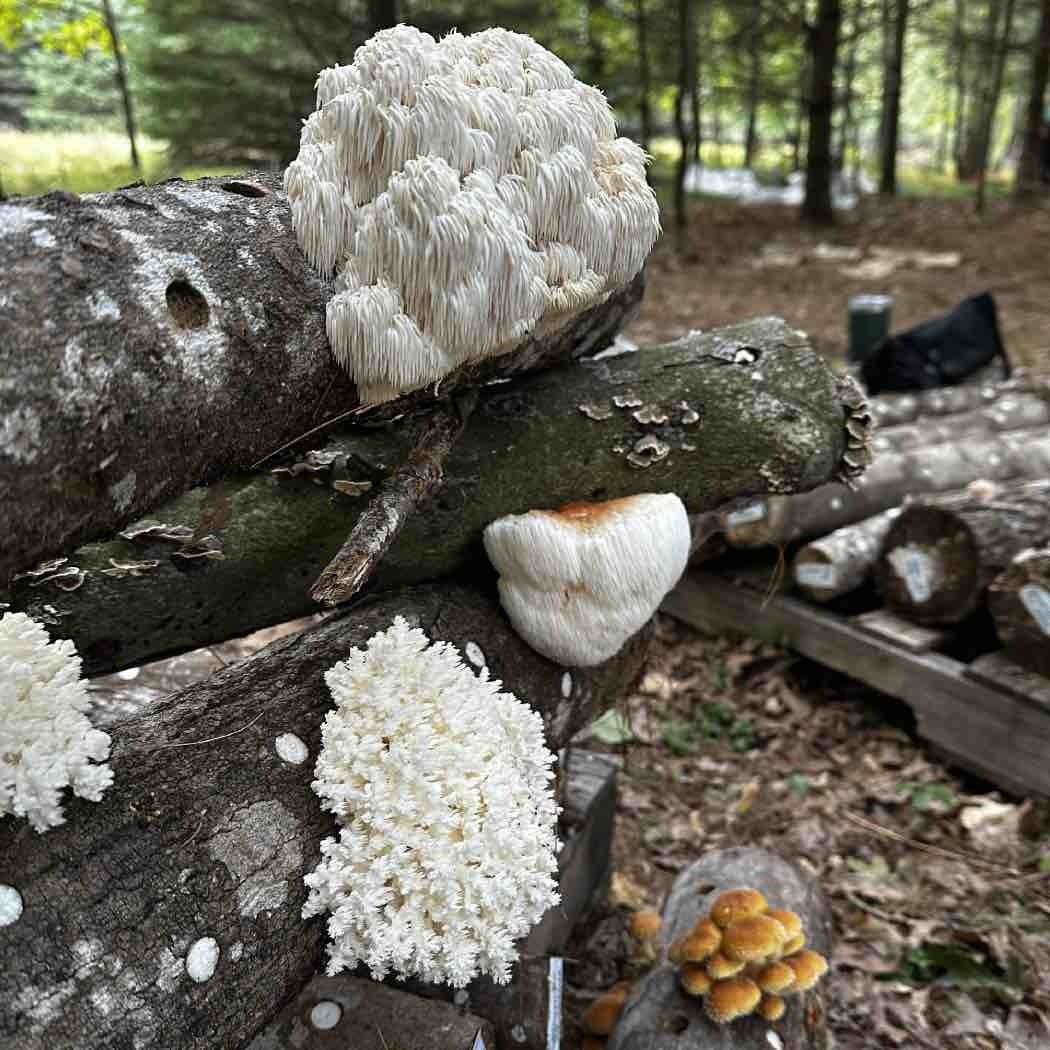
Lion’s Mane is a unique fungus with long, white spines that hang down like a lion’s mane. Unlike many mushrooms, it doesn’t have gills or caps. Instead, its spines grow in clusters. It’s native to North America, Europe, and Asia, often found on hardwood trees in the wild.
Lion’s Mane is also visually striking. When mature, it forms large, rounded clusters covered in soft, icicle-like spines. Sometimes, the spines grow so long that they almost look like delicate hair. In the wild, you’ll find Lion’s Mane growing on dead or dying hardwood trees, especially beech, oak, and maple.
If you ever spot one, you’ll notice its pure white color; yellowing means it’s aging.
Why Grow Lion’s Mane?
- Gourmet value: It’s a chef’s favorite, with a texture and taste similar to crab or lobster. Lion’s Mane can be cooked, grilled, or even used as a meat substitute.
- Health benefits: Contains compounds that may help with nerve repair, memory, and focus. Studies show it may boost brain function and support overall wellness.
- Market demand: High value at farmer’s markets and specialty grocers. Many chefs and foodies seek it for its unique flavor and appearance.
- Home use: Fresh Lion’s Mane is hard to find in regular stores. Growing your own lets you enjoy it at peak freshness, which is when flavor and texture are best.
Lion’s Mane also freezes well after cooking, so you can store extra harvest for later meals.
Unique Growing Needs
Lion’s Mane prefers a high humidity and moderate temperature for fruiting. It’s fussier than oysters, and requires more precise care during incubation and fruiting stages. Its mycelium is slower than some other species, so patience is important.
Unlike oyster mushrooms, which tolerate a wide range of conditions, Lion’s Mane can stall or deform if humidity or airflow is wrong. It also grows slower: while oyster mushrooms might colonize a block in 7–10 days, Lion’s Mane often takes 2–4 weeks. This slower growth helps it build larger, denser fruit bodies, but also gives contaminants more time to invade if you’re not careful.
Materials And Equipment Needed
Before starting, gather your equipment and ingredients. Quality tools and substrate produce better yields and reduce contamination risk.
Substrate Ingredients
- Hardwood sawdust (oak, beech, maple preferred; avoid softwoods)
- Bran supplement (wheat bran or soy hulls)
- Water
- Gypsum (optional, improves texture and nutrients)
Hardwood sawdust is the main food source. Bran or soy hulls add extra nutrition, boosting mushroom growth and yield. Gypsum adds calcium and sulfur, which supports strong mycelium development and helps prevent clumping in the substrate.
Equipment
- Large mixing container: For combining sawdust, bran, gypsum, and water.
- Grow bags (autoclavable filter bags or polypropylene bags with 0.2 micron filters): These keep substrate sterile while letting mycelium breathe.
- Pressure cooker or autoclave (essential for sterilization): Without this, contamination is almost guaranteed.
- Lion’s Mane grain spawn: The “seed” for your mushrooms.
- Alcohol spray (for sanitation): Clean hands, surfaces, and tools.
- Gloves and face mask: Protects against contamination.
- Thermometer and hygrometer: Monitor temperature and humidity.
- Sharp blade or scissors (for harvesting): Clean cuts help prevent damage.
Additional Items
- Heat mat (for colder rooms): Keeps blocks warm during incubation.
- Misting bottle: To maintain humidity during fruiting.
- Fruiting chamber (plastic tote, grow tent, or small greenhouse): Holds the blocks and keeps conditions stable.
You can improvise with some items, but avoid shortcuts with sterilization and spawn quality.
Non-obvious Insight: Choose Hardwood Sawdust From A Reputable Source. Sawdust From Treated Wood Or Softwood Can Contain Chemicals Or Resins That Harm Lion’s Mane Mycelium.
Softwoods (like pine or spruce) contain resins that are toxic to most mushroom mycelium. Also, construction or furniture sawdust may have chemical residues. Always source from untreated, clean hardwoods.
Selecting And Preparing The Substrate
The substrate is the food for your mushrooms. Lion’s Mane grows best on hardwood sawdust blocks enriched with bran. Proper supplementation increases yield but also contamination risk if not sterilized well.
Sawdust And Bran Mix Ratios
A common recipe:
- 5 kg hardwood sawdust
- 1 kg wheat bran
- 0.1 kg gypsum (optional)
- 3.5 liters of water
This yields enough for several 1. 5–2 kg blocks.
If you want to experiment, you can try the “master’s mix” (50:50 sawdust:soy hulls). This is richer, but requires the same careful sterilization.
Mixing The Substrate
- Measure and mix the dry sawdust, bran, and gypsum thoroughly. Get an even distribution—clumps of bran or gypsum can cause uneven growth.
- Add water slowly, mixing until the substrate feels like a damp sponge—no dripping, but you can squeeze a drop or two out. If it’s too dry, colonization will stall; if too wet, contamination risk increases.
- Pack into bags: Fill bags about 2/3 full, leaving space for air and mycelium growth.
If you’re unsure about moisture, pick up a handful and squeeze. One or two drops should emerge; more than that means it’s too wet.
Practical Tip: Over-supplementation (too Much Bran) Increases Contamination. Stick To 20% Or Less By Weight.
Bran is powerful, but also attracts bacteria and molds. Too much can overwhelm your sterilization and ruin your crop.
Sterilizing The Substrate
Sterilization is vital. Unlike pasteurization, which works for some mushrooms, Lion’s Mane requires full sterilization to kill all competing organisms.
Using A Pressure Cooker Or Autoclave
- Place the substrate bags into your pressure cooker.
- Bring to 15 psi (121°C/250°F).
- Hold for 2.5–3 hours for 1.5–2 kg blocks.
- Let cool to room temperature (overnight is best).
This process ensures all bacteria, mold spores, and yeasts are destroyed. If you skip or rush this step, contamination can appear quickly, often before mycelium gets a foothold.
If you have a larger setup, an autoclave is faster and more efficient. For home growers, a large pressure cooker works well. Sterilize in batches if needed.
Non-obvious Insight: Sterilize Only What You Can Inoculate Within 24 Hours. Delays Give Contaminants A Head Start.
Try to plan your workflow so you inoculate soon after cooling. If bags sit too long, airborne spores can settle and start growing.

Credit: liquidfungi.com
Inoculating The Blocks
After sterilization, add the Lion’s Mane spawn to your substrate. This step must be as clean as possible to avoid mold or bacteria.
Inoculation Steps
- Sanitize your workspace: Wipe surfaces, spray hands/gloves with alcohol, and wear a mask. Keep pets and drafts out of the room.
- Break up spawn: Gently loosen grain spawn in its bag (don’t open until ready). This spreads mycelium evenly.
- Add spawn: Open the cooled substrate bag, pour in 10–15% grain spawn by weight. For a 2 kg block, use 200–300 grams.
- Mix well: Seal the bag and shake to distribute spawn evenly. The more evenly you mix, the quicker colonization happens.
- Seal and label: Use an impulse sealer or tie the bag tightly. Mark with the date and strain.
Labeling helps track progress and troubleshoot problems later.
Practical Example: For A 2 Kg Substrate Block, Use 200–300 Grams Of Grain Spawn.
If you’re unsure, err on the higher side. More spawn means faster colonization and less contamination risk.
Incubation: Allowing Mycelium To Colonize
Incubation is when the mycelium spreads through the block, digesting the substrate and building strength.
Conditions For Incubation
- Temperature: 21–24°C (70–75°F)
- Humidity: Not important at this stage (bags stay closed)
- Light: Dark or indirect light
- Airflow: Minimal, but not airtight—filter patch allows gas exchange
A closet, cupboard, or shelf works well. Don’t stack bags tightly; leave space for airflow.
What To Expect
- Colonization Time: 2–4 weeks
- Visual signs: White, fluffy mycelium spreads from spawn points
- Ready for fruiting: When the block is fully white, with no bare patches
You might notice condensation inside the bag. This is normal unless it pools heavily. If growth stalls for more than a week, check temperature and spawn quality.
Non-obvious Insight: Lion’s Mane Mycelium Can Look “wispy” Or Like Cobwebs At First. This Is Normal—don’t Mistake It For Contamination Unless You See Green, Black, Or Strong Odors.
Some contaminations (like Trichoderma) appear green or dark, with a sour smell. Healthy Lion’s Mane is sweet or earthy.
Preparing The Fruiting Environment
Once colonized, blocks need a new environment to trigger mushroom formation. Lion’s Mane forms best in high humidity and moderate temperatures.
Building A Fruiting Chamber
You can use a:
- Plastic tote: Drill holes for airflow. Line the bottom with paper towels or mesh to keep blocks off pooled water.
- Grow tent: Maintain humidity with a humidifier. Useful for larger grows.
- Mini-greenhouse: For larger grows or multiple blocks.
If you’re growing only one or two blocks, a tote or large plastic box works well. For bigger setups, a tent or greenhouse is easier to manage.
Optimal Fruiting Conditions
- Temperature: 16–21°C (60–70°F)
- Humidity: 85–95%
- Light: Indirect, 8–12 hours/day (avoid direct sun)
- Air exchange: 4–6 times/hour (fan, or manual fanning)
Lion’s Mane prefers moist air. Low humidity causes spines to dry or shrink. Good air exchange prevents CO₂ buildup, which can make mushrooms stringy.
Moving The Blocks
- Cut small “X” slits or remove plastic from one side of the block. Try to keep most of the bag intact so the block doesn’t dry out.
- Place the block on a wire rack or mesh—do not let it sit in water.
- Mist the chamber walls, not directly on the block.
If you cut too much plastic, substrate dries out. Too little, mushrooms may grow deformed inside the bag.
Practical Example: For A Plastic Tote, Mist 2–3 Times Daily And Fan The Chamber After Each Mist To Bring In Fresh Air.
If humidity drops below 80%, mushrooms can stall or dry out.
Initiating Fruiting
Lion’s Mane sometimes needs a “shock” to start fruiting after colonization.
Common Methods
- Expose to fresh air: Opening the bag or making slits triggers fruiting.
- Lower temperature: Moving to a cooler room can help.
- Increase humidity: Boost to at least 90% for pin formation.
Some growers dunk the block in cold water for a few hours before fruiting. This mimics rain and can trigger pinning.
Signs Of Pinning
- Small, white “pom-poms” appear within 5–10 days.
- These pins will grow into full Lion’s Mane clusters.
Pins may appear at the cut, but sometimes they form elsewhere on the block. Don’t worry if they pop up in unexpected places.
Non-obvious Insight: Lion’s Mane Often Fruits From The Top Or Sides Of The Block, Not Always Where You Cut. Be Patient; Avoid Cutting The Bag Open Too Much, As This Can Dry Out The Substrate.
If pins don’t appear after 10–14 days, check humidity and air exchange. Too dry or too stale air slows fruiting.
Maintaining Fruiting Conditions
Consistent conditions are crucial for high-quality mushrooms.
Monitoring The Fruiting Chamber
- Check humidity: If walls aren’t foggy, mist more. Use a hygrometer to check levels.
- Air exchange: If mushrooms look “leggy” or elongated, increase fresh air.
- Temperature: Too hot (above 24°C/75°F) slows growth and can dry out pins.
Lion’s Mane grows best when conditions stay stable. Fluctuations can cause deformities or slow growth.
Adjusting For Problems
- Drying out: Increase misting or add a humidifier. If blocks look dry, soak them briefly and return to chamber.
- Bacterial blotch: Reduce direct water on the block or mushrooms. Blot with a paper towel if needed.
- Blue bruising: Normal, but a sign of rough handling or low humidity.
If mushrooms get blue spots, check your misting routine and handle gently.
Practical Tip: Lion’s Mane Is Sensitive To Co₂. Poor Air Exchange Leads To Stringy Or Misshapen Fruit Bodies.
Try to keep the chamber well-ventilated but not drafty.
Harvesting Lion’s Mane Mushrooms
Timing matters for taste and shelf life. Harvest just as the spines elongate but before they start to droop.
Harvesting Steps
- Check clusters: Spines should be 1–2 cm long, tips still white.
- Cut gently: Use a sharp knife or scissors at the base.
- Handle carefully: Lion’s Mane bruises easily.
Harvesting too late can cause yellowing and loss of flavor. Too early, mushrooms are small and less tasty.
Storage
- Refrigerate: Store in paper bags; lasts up to 7 days.
- Dehydrate: For long-term storage, use a dehydrator at 45–50°C.
Keep Lion’s Mane away from strong-smelling foods. It absorbs odors easily.
Non-obvious Insight: Lion’s Mane Absorbs Flavors From Other Foods. Keep Separate In The Fridge To Maintain Purity.
If you plan to cook soon, use within 2–3 days for best taste.
Second And Third Flushes
Supplemented sawdust blocks can produce more than one crop, called “flushes. ”
How To Get Multiple Flushes
- Let the block rest: After the first harvest, keep the block moist.
- Rehydrate: Soak the block in clean, cold water for 2–4 hours.
- Return to fruiting conditions: Repeat misting and air exchange.
Blocks may shrink after each flush. Don’t worry; this is normal. Each new flush may produce smaller mushrooms, but quality remains high.
Yields are lower for each flush, but total output can increase by 30–50%.
Troubleshooting Common Problems
Growing Lion’s Mane can bring surprises. Here’s how to handle typical issues.
Contamination
- Green mold (Trichoderma): Remove and discard contaminated blocks. Clean area.
- Bacterial slime: Usually due to poor sterilization. Start with fresh substrate.
If you see contamination, act fast. Mold spreads quickly and can spoil nearby blocks.
Slow Colonization
- Low spawn rate: Use at least 10% spawn for faster colonization.
- Cold temperatures: Move to a warmer room (21–24°C).
If colonization stalls for more than a week, check your setup and consider increasing spawn next time.
Poor Fruiting
- Low humidity: Increase misting or add a humidifier.
- Lack of air exchange: Open chamber more often or add fans.
If mushrooms fail to form, double-check all environmental factors.
Misshapen Mushrooms
- High CO₂: Increase fresh air.
- Direct water: Avoid spraying directly on mushrooms.
Misshapen fruit bodies are usually edible, but may be harder to sell or cook.
Credit: fieldforest.net
Comparing Substrate Options
Not all sawdust blocks are equal. Here’s a comparison of common substrates for Lion’s Mane cultivation:
| Substrate Type | Yield Potential | Contamination Risk | Cost | Availability |
|---|---|---|---|---|
| Hardwood sawdust + wheat bran | High | Medium | Low | Easy |
| Soy hulls + sawdust | Very High | High | Medium | Moderate |
| Straw only | Low | Low | Low | Easy |
| Commercial “master’s mix” | Very High | High | High | Order online |
Note: Soy hulls increase nutrition and yield, but also contamination risk if not sterilized well.
Master’s mix is popular with commercial growers, but requires strict cleanliness.
Yield Expectations And Commercial Considerations
Knowing what to expect helps with planning and business decisions.
Typical Yields
- Home blocks (2 kg): 400–800 grams per flush (20–40% biological efficiency)
- Commercial blocks: Up to 1 kg per flush with optimal conditions
If conditions are perfect, biological efficiency can sometimes reach 50%. Beginners usually get 20–30% until their process improves.
Factors Affecting Yield
- Spawn rate (more spawn = faster, better colonization)
- Substrate quality and freshness
- Sterilization quality
- Fruiting conditions (humidity, temperature, air)
Poor sterilization is the most common cause of low yields. Also, stale or old sawdust can slow growth.
Cost Breakdown Example
| Item | Cost (USD) |
|---|---|
| Hardwood sawdust (5 kg) | $3 |
| Wheat bran (1 kg) | $1.50 |
| Lion’s Mane spawn (500 g) | $8 |
| Grow bags (5) | $5 |
| Utilities/sterilization | $2 |
| Total per 2 kg block | $3.50–$5 |
Practical Example: Selling fresh Lion’s Mane at $20/kg, one home block can yield $16–$32 per flush, covering costs and more.
If you scale up, bulk prices drop, but so do margins unless you manage quality well.
Advanced Tips For Better Results
After mastering the basics, try these methods to improve yield and quality.
Use Masters Mix
A 50:50 mix of hardwood sawdust and soy hulls (by weight) is called “master’s mix.” It can nearly double yields but requires strict sterilization.
If you switch to master’s mix, expect faster colonization and larger mushrooms, but also more need for sanitation.
Experiment With Block Size
Smaller blocks colonize faster with less contamination risk; larger blocks produce more but need more precise conditions.
If you’re new, start with smaller 1 kg blocks. As you gain confidence, try larger sizes for increased yield.
Clone High-performing Fruits
Instead of always buying spawn, clone your best Lion’s Mane mushrooms for future grows. This preserves strong genetics and adapts your culture to local conditions.
To clone, cut a small piece from the inside of a healthy fruit body and transfer to sterile agar. Grow out, then use for grain spawn.
Automate Fruiting Chambers
A small humidifier, timer, and fan can automate your chamber. This keeps conditions stable, especially in dry climates.
Automation reduces labor and improves consistency, especially for larger setups.
Monitor With Data Loggers
Track humidity and temperature with cheap data loggers. This helps identify problems before they reduce yields.
Some growers use WiFi sensors to get alerts if humidity drops, so they can fix issues quickly.
Cleaning And Reusing Equipment
Maintaining clean gear is essential for each grow.
- Wash all containers and tools with hot, soapy water.
- Spray surfaces with alcohol or dilute bleach.
- Replace or sterilize grow bags; don’t reuse contaminated bags.
Reusable bags or containers save money but require careful cleaning. If in doubt, start fresh.
Lion’s Mane In The Kitchen
Freshly harvested Lion’s Mane is a culinary treat.
- Tear into bite-sized pieces; sauté with butter and garlic for a seafood-like dish.
- Add to stir-fries, soups, or use as a meat substitute.
- Dehydrate for storage; rehydrate before cooking.
Lion’s Mane works well battered and fried, or roasted with herbs. Its texture holds up in stews and casseroles.
Non-Obvious Insight: Sautéing until golden brown brings out natural umami flavors and a crab-like texture.
Don’t overcrowd the pan. Let mushrooms brown properly for best taste.
Where To Learn More
Mushroom cultivation is a deep field. If you want advanced techniques or to scale up, check out resources like the Mushroom Cultivation Wikipedia page.
Many online forums and books cover advanced methods, troubleshooting, and business advice.

Credit: www.out-grow.com
Frequently Asked Questions
What Is The Best Temperature For Lion’s Mane Fruiting?
The ideal temperature for fruiting Lion’s Mane is 16–21°C (60–70°F). Lower temperatures can slow growth, while higher temperatures can dry out the mushrooms or cause abnormal shapes.
If your room is warmer, try using a cool mist humidifier and increase air exchange.
How Do I Know When Lion’s Mane Is Ready To Harvest?
Harvest when the spines are 1–2 cm long and still white. If the tips turn yellow or the spines start to droop, the mushroom is overripe and will lose quality.
Check daily during peak growth; Lion’s Mane can grow quickly once pins form.
Can I Reuse The Substrate Block After The First Harvest?
Yes, you can get a second and sometimes third flush. Soak the block in cold water for a few hours, then return it to fruiting conditions. Each flush will be smaller than the first.
Some growers report up to four flushes, but most blocks produce two or three.
Why Do My Lion’s Mane Mushrooms Look Stringy Or Deformed?
Stringy or deformed Lion’s Mane is usually caused by high CO₂ and low fresh air exchange. Increase ventilation and avoid overcrowding blocks in the fruiting chamber.
Try adding a small fan or opening vents more often.
Is Sterilization Really Necessary, Or Can I Just Pasteurize?
Sterilization is essential for supplemented sawdust. Pasteurization does not kill all contaminants, and the high nutrition from bran or soy hulls encourages mold and bacteria. Always use a pressure cooker or autoclave.
Skipping this step almost always leads to contamination.
Growing Lion’s Mane on supplemented sawdust blocks is a fascinating journey from sawdust to gourmet food. With careful attention to detail, patience, and a spirit of experimentation, you can enjoy fresh, delicious, and healthful mushrooms at home. Every harvest builds your skill and confidence.
Don’t worry about small mistakes—they’re part of learning. The joy of seeing your first fluffy white cluster is worth every step. Happy growing!