
Foraging Oyster Mushrooms: Identification, Season, And Habitat Guide
Oyster mushrooms are one of the most popular and rewarding wild mushrooms for foragers. Their delicate flavor, unique shape, and ease of recognition make them a favorite among mushroom hunters—both beginners and experienced foragers. But while oyster mushrooms are known for being relatively safe and easy to identify, there are still important details you must understand to forage them responsibly and with confidence. This guide covers everything you need to know: how to identify oyster mushrooms, the best time and places to find them, key lookalikes, and practical tips that even seasoned foragers sometimes overlook.
What Are Oyster Mushrooms?
Oyster mushrooms belong to the genus Pleurotus. The most common species is Pleurotus ostreatus, but other species like P. pulmonarius and P. populinus are also found in different regions. These mushrooms are called “oyster” because their caps often resemble the shape of an oyster shell and sometimes share a faint seafood aroma.
Oyster mushrooms are prized for their:
- Mild, anise-like flavor
- Tender, meaty texture
- Nutritional value (rich in protein, fiber, B vitamins, and minerals)
- Potential health benefits (antioxidants and immune support)
It’s important to note that while cultivated oyster mushrooms are common in grocery stores, wild specimens often taste richer and have a more satisfying texture.
Why Forage Oyster Mushrooms?
Foraging for oyster mushrooms offers several unique benefits:
- Freshness and flavor: Wild oysters are often fresher and more flavorful than store-bought varieties.
- Sustainability: Harvesting wild mushrooms leaves a minimal environmental footprint.
- Connection with nature: Foraging is a rewarding outdoor activity that sharpens your observation skills.
Oyster mushrooms are also a good starting point for those new to mushroom foraging because their identification features are distinctive and well-documented.
Key Identification Features
Accurate identification is essential for safe foraging. While oyster mushrooms are among the safer wild mushrooms, there are still lookalikes and poisonous species you must avoid. Here’s how to confidently recognize oyster mushrooms in the wild.
Cap
The cap is usually:
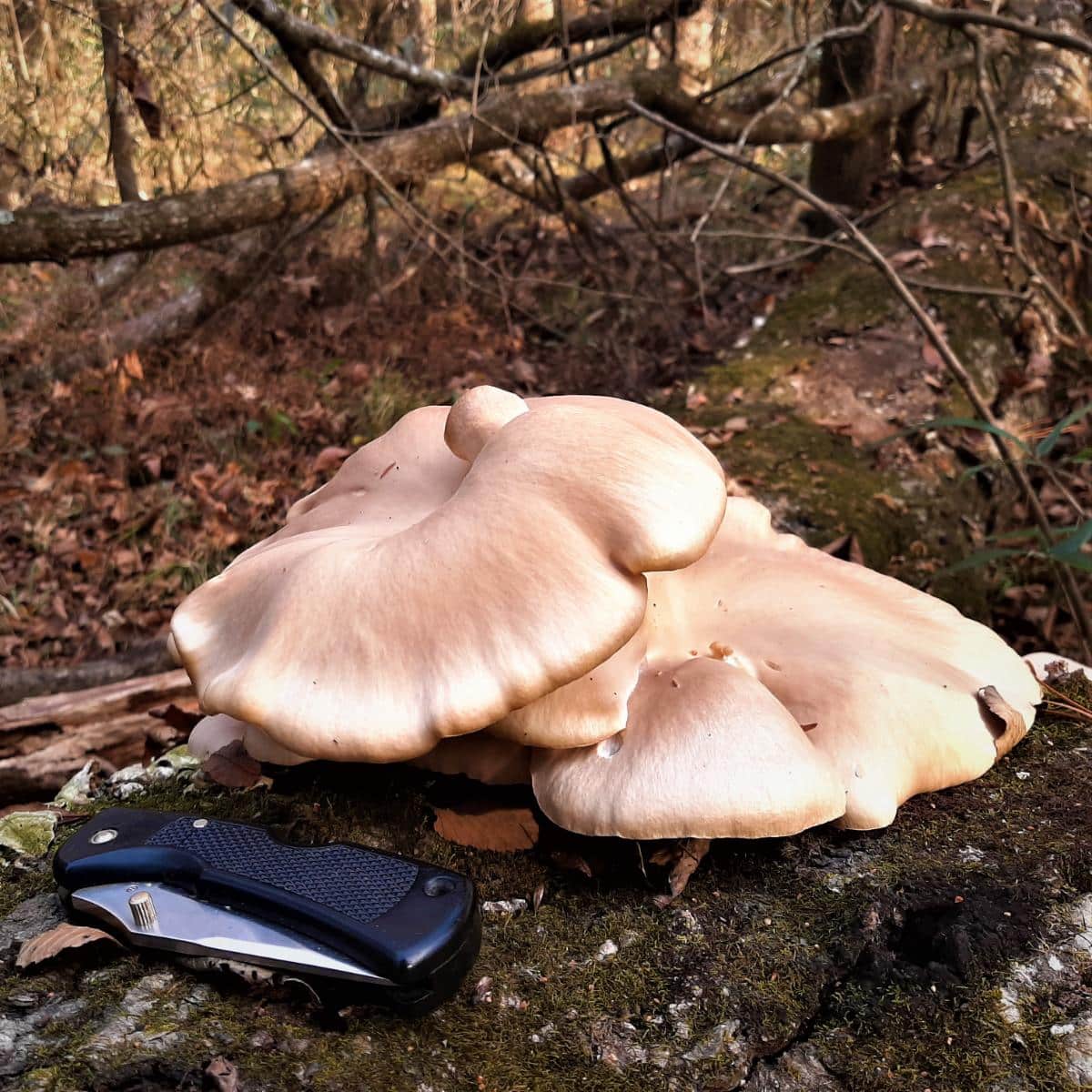
- Fan-shaped or oyster-like
- Smooth and moist when young, becoming slightly wavy or split with age
- Ranging from white, off-white, tan, or light gray to dark brown (depending on the species and age)
- Size: 5–25 cm (2–10 inches) across
Mature specimens may have overlapping clusters, creating a “shelf” effect on wood.
Gills
The gills are one of the most important features:
- White to cream in color
- Decurrent (running down the stem or, in some cases, directly from the cap onto the wood)
- Closely spaced
If you gently rub the gills, they usually do not bruise or change color.
Stem
Oyster mushrooms often have:
- Short, stubby stems, or sometimes no stem at all
- If present, the stem is off-center, not straight in the middle
- White to cream color, sometimes slightly hairy near the base
Many oyster mushrooms appear almost “stemless” because they grow horizontally from wood.
Spore Print
A spore print is an essential tool for identification. Oyster mushrooms produce a white to lilac-gray spore print. Collecting a spore print can help confirm your find, especially if you are unsure.
How To Take A Spore Print:
- Cut off a cap and lay it, gills down, on a piece of white and black paper.
- Cover with a bowl to prevent drying.
- Leave for 6–12 hours.
- Check for a pale white to grayish print.
Smell And Texture
Oyster mushrooms have a mild, sweet, or faintly anise-like smell. Some species may have a slightly fishy or seafood aroma, especially when very fresh.
The flesh is:
- Soft, but not slimy
- Breaks easily
- Not brittle or chalky
Growth Habit
Oyster mushrooms grow in clusters or “shelves” on wood. They rarely grow as single mushrooms in the soil.
Important Note: Non-obvious Insights
- Look for bugs and larvae: Wild oyster mushrooms often attract insects, especially in warm weather. Always check for tiny holes or movement; some clusters can be almost hollowed out by bugs.
- Color changes with age: Young oysters are often pale or gray; older ones can turn yellowish or brown. Older mushrooms lose flavor and may be rubbery—pick young, firm caps for best results.
Common Oyster Mushroom Species
There are several species of oyster mushrooms, each with slightly different appearance and preferred habitat. Here’s a comparison of the most common types:
| Species | Color | Preferred Wood | Main Season | Notes |
|---|---|---|---|---|
| Pleurotus ostreatus | White to grayish | Hardwood (esp. beech, aspen, oak) | Late fall to early spring | Most common species |
| Pleurotus pulmonarius | Paler, sometimes tan | Hardwood, sometimes softwood | Spring to autumn | Grows in warmer months |
| Pleurotus populinus | White to pale brown | Poplar and aspen trees | Late spring to summer | Prefers poplar/aspen |
| Pleurotus djamor (Pink Oyster) | Pink | Hardwood | Summer (rare, tropical/subtropical) | Not cold hardy |
Credit: www.etsy.com
When Is Oyster Mushroom Season?
The best time to find oyster mushrooms depends on your climate and local tree species. However, they often fruit in response to rain, humidity, and cooler temperatures.
Season By Region
- Temperate regions: Main flushes are in fall (October–December) and spring (March–May).
- Mild winters: Fruiting can occur throughout the winter, especially after heavy rain.
- Warm climates: Some species (like P. pulmonarius) appear in late spring and summer.
Key Triggers
Oyster mushrooms often appear:
- A few days after heavy rain (especially after a dry spell)
- When temperatures are between 10–21°C (50–70°F)
- On moist, decaying wood with little direct sunlight
A practical tip: If you find one cluster, look nearby. Oyster mushrooms tend to fruit in waves, and the same log or stump can produce several flushes in one season.
How Long Do They Last?
Oyster mushrooms grow quickly—sometimes reaching full size in 3–7 days. But they also decay fast, especially in warm, humid weather. Harvest soon after spotting them for best quality.
Where To Find Oyster Mushrooms
Oyster mushrooms are saprotrophic—they feed on dead or dying wood. This means you won’t find them growing from the soil or grass. Here’s where to look:
Preferred Substrates
- Fallen logs (especially hardwoods like beech, oak, poplar, and aspen)
- Standing dead trees (called snags)
- Broken branches
- Stumps
Oysters rarely grow from conifers (pine, spruce) but some species may appear on softwoods in rare cases.
Typical Habitats
- Moist, shady forests
- Riverbanks and floodplains (fallen wood stays wet)
- Urban parks and greenbelts (if dead wood is left to rot)
- Orchards or old tree lines
Geographic Range
Oyster mushrooms are found across North America, Europe, Asia, and Australia. Their exact fruiting time varies by region, but their habitat needs are similar worldwide.
Pro Forager Tips
- Check after storms: Strong winds and rain bring down branches, creating new oyster mushroom habitat.
- Remember old spots: If you find oysters on a log one year, mark the location. The mycelium often fruits in the same place for several years.
Oyster Mushroom Lookalikes (and How To Avoid Them)
While oyster mushrooms are relatively easy to identify, some mushrooms look similar—especially to beginners. Here’s how to tell them apart from common lookalikes.
1. Angel Wings (pleurocybella Porrigens)
- Similarities: White, fan-shaped, grows on wood.
- Differences: Angel wings are smaller, pure white, and have a thinner, more fragile texture. Their gills are very thin and delicate.
- Toxicity: Known to cause poisoning in some people, especially those with kidney problems.
- How to avoid: Only forage oyster mushrooms from hardwoods, not conifers. Angel wings prefer conifers.
2. Elm Oyster (hypsizygus Ulmarius)
- Similarities: Grows on wood, pale cap, decurrent gills.
- Differences: Grows on living elm trees, has a central stem, and the cap is more convex rather than shell-like.
- Edibility: Edible, but tougher and less flavorful than true oysters.
3. Jack-o’-lantern (omphalotus Illudens)
- Similarities: Orange color, gills, grows in clusters on wood.
- Differences: Bright orange cap and gills, gills do not run down the stem, glows faintly in the dark.
- Toxicity: Poisonous—causes severe stomach upset.
- How to avoid: Oyster mushrooms are never orange.
4. Crepidotus Species
- Similarities: Small, shelf-like, grows on wood.
- Differences: Usually much smaller, brownish spore print, soft/fuzzy surface.
- Edibility: Not recommended; some species may cause stomach upset.
5. Mock Oyster (phyllotopsis Nidulans)
- Similarities: Grows on wood, shelf-like.
- Differences: Bright yellow-orange, unpleasant smell (like rotten cabbage), fuzzy surface.
- Edibility: Inedible—bitter and smelly.
Comparison Table: Oyster Mushrooms Vs. Lookalikes
| Feature | Oyster Mushrooms | Angel Wings | Jack-O’-Lantern | Mock Oyster |
|---|---|---|---|---|
| Cap Color | White/gray/brown | Pure white | Bright orange | Yellow-orange |
| Spore Print | White/lilac-gray | White | Cream | Pale orange |
| Smell | Mild/anise | Faint | None | Unpleasant |
| Grows On | Hardwood | Conifers | Hardwood | Hardwood |
| Edibility | Edible | Potentially toxic | Poisonous | Inedible |
How To Harvest Oyster Mushrooms
Proper harvesting ensures you get the best quality mushrooms and allows the patch to fruit again.
Step-by-step Harvesting Guide
- Use a sharp knife to cut the cluster at the base, close to the wood. Avoid pulling or twisting, which can damage the underlying mycelium.
- Inspect for bugs. Check each mushroom for holes, larvae, or discoloration. If a mushroom is soggy, slimy, or infested, leave it behind.
- Trim debris. Remove any bark, dirt, or tough base tissue in the forest—this keeps your collection clean.
- Collect in a basket or mesh bag. This allows spores to fall as you walk, helping spread the mushroom for future harvests.
Practical Tips
- Avoid old, tough mushrooms. Young, firm caps are best for eating.
- Don’t over-harvest. Leave some clusters to mature and release spores.
- Harvest in dry weather for better shelf life; wet mushrooms spoil quickly.
Cleaning And Storing Oyster Mushrooms
Oyster mushrooms are delicate and need gentle handling.
Cleaning
- Brush off dirt with a soft brush or cloth.
- If needed, rinse quickly under cold water, but don’t soak—oysters absorb water easily.
- Pat dry with a paper towel.
Storing
- Refrigerate in a paper bag or loosely covered container.
- Best used within 2–3 days of picking.
- For longer storage: Sauté and freeze (raw oysters become mushy when frozen).
Cooking And Eating Oyster Mushrooms
Oyster mushrooms are versatile and suit many recipes.
Popular Cooking Methods
- Sautéed with garlic and herbs
- Stir-fried in Asian dishes
- Grilled or roasted
- Added to soups or stews
Oysters have a mild flavor that pairs well with butter, soy sauce, or a squeeze of lemon. They cook quickly—usually in less than 10 minutes.
Safety Note
Always cook wild oyster mushrooms before eating. Raw mushrooms can be hard to digest.
Credit: www.mushroom-appreciation.com
Sustainable Foraging Practices
Responsible foraging protects wild mushroom populations and their forest habitats.
Rules For Responsible Harvest
- Harvest only what you will use. Leave small or damaged clusters.
- Avoid over-picking from a single log or tree.
- Spread spores by using a mesh bag.
- Respect private property and local regulations—never forage where it’s prohibited.
- Document your finds. Share photos and notes with local mushroom groups to help track populations.
Conservation Note
Oyster mushrooms are not threatened, but their habitat—old, decaying wood—is sometimes removed from forests for firewood or landscaping. Protecting dead wood helps all saprotrophic fungi thrive.
Regional Differences In Oyster Mushroom Foraging
Oyster mushrooms can look and behave differently depending on where you live. Here are a few regional tips:
North America
- P. ostreatus is common in the East and Midwest.
- In the Pacific Northwest, oysters can fruit throughout the wet winter.
- Aspen and poplar forests in the Rocky Mountains host P. populinus.
Europe
- Widespread in mixed hardwood forests.
- Fruiting usually peaks after autumn rains.
Asia
- Several native oyster species.
- Widely cultivated, but wild foraging is common in rural areas.
Australia
- Native oyster mushrooms fruit after rains, especially in temperate forests.
Oyster Mushroom Foraging: Real-world Examples
Story: A Family Foraging Trip
Sarah, a forager in the Midwestern US, checks her favorite riverside trail after a rainy week in October. She spots large, gray oyster mushrooms on a fallen cottonwood. Using her knife, she gently cuts several clusters, leaving the small ones for later.
At home, she brushes off the dirt and cooks them in butter with garlic. Her family enjoys a delicious, fresh side dish.
Common Beginner Mistakes
- Mistaking old, tough mushrooms for prime specimens: Always check the texture—young oysters are soft and flexible.
- Foraging from conifers: Oyster mushrooms rarely grow on pine or spruce. Look for hardwoods.
- Ignoring bugs: Small holes often mean larvae inside. Check before eating.
Advanced Tips: Getting The Most From Your Hunt
- Learn tree identification: Knowing beech, poplar, or aspen helps you find oyster habitats faster.
- Check after frosts: Oysters can survive mild freezes and may fruit even in winter.
- Document your locations: Use a GPS or notebook—good oyster logs may fruit for years.
Safety Precautions
Foraging mushrooms always carries some risk. Here’s how to stay safe:
- Never eat mushrooms unless you are 100% sure of the ID.
- Double-check with a local expert or mycologist if you have any doubts.
- Keep a sample of your mushroom in the fridge when trying a new species for the first time—this helps doctors identify it in case of illness.
- Start with a small portion if you’re eating wild oyster mushrooms for the first time.
Legal Considerations
In many places, wild foraging is regulated:
- National and state parks often prohibit picking mushrooms.
- Private land: Always ask for permission.
- Local rules: Some cities or reserves allow limited foraging for personal use.
Check local regulations before you forage. Fines can be steep for picking mushrooms in protected areas.
The Science Behind Oyster Mushrooms
Oyster mushrooms are not just delicious—they’re fascinating organisms.
- Decomposers: Oysters break down lignin and cellulose in wood, recycling nutrients into the ecosystem.
- Bioremediation: They can clean up oil spills and pesticides by breaking down toxins—a process called mycoremediation.
- Antimicrobial properties: Oyster mushrooms produce compounds that fight bacteria and viruses.
Oyster Mushroom Cultivation
If you can’t find wild oysters, you can grow them at home.
- Grow kits: Easy to use—just add water and wait for mushrooms.
- On logs: Drill holes in a hardwood log, insert oyster spawn, and keep moist.
- Indoor growing: Oyster mushrooms thrive on straw, coffee grounds, or cardboard.
Home cultivation is a fun way to have fresh mushrooms year-round and practice identification skills safely.
For more scientific background, see Pleurotus ostreatus on Wikipedia.
Credit: lykyn.com
Frequently Asked Questions
What Trees Do Oyster Mushrooms Grow On?
Oyster mushrooms prefer hardwood trees such as beech, oak, poplar, and aspen. They are rarely found on conifers (pine, spruce). Some species have a strong preference for certain trees—for example, P. populinus likes poplar and aspen.
How Can I Tell Oyster Mushrooms From Poisonous Lookalikes?
Check for these features:
- Fan-shaped cap, white to gray/brown
- White to lilac-gray spore print
- Grows on dead hardwood
- Mild anise smell
Avoid mushrooms with bright orange, yellow, or pure white caps on conifers. When in doubt, consult a local expert.
When Is The Best Time To Forage For Oyster Mushrooms?
The main seasons are late fall to early spring in temperate regions, and after heavy rains. In some climates, they can fruit year-round. Check moist, shady woods a few days after rain for best results.
What’s The Best Way To Store Oyster Mushrooms After Foraging?
Keep them in a paper bag or a loosely covered container in the fridge. Use within 2–3 days for best texture and flavor. For longer storage, cook and freeze them—raw oyster mushrooms don’t freeze well.
Can Oyster Mushrooms Be Grown At Home?
Yes! Oyster mushrooms are popular for home cultivation. You can use a grow kit, inoculate logs, or even grow them on recycled materials like coffee grounds. Home cultivation is safe and a great way to learn about mushrooms.
Oyster mushrooms are a rewarding discovery for any forager. With careful attention to identification, season, and habitat, you can enjoy one of nature’s tastiest and most sustainable wild foods. Always forage responsibly, respect the forest, and savor the adventure of finding your own wild oyster mushrooms.