
Foraging Chanterelles: Identification, Habitat, And Cooking Tips
The golden glow of chanterelles in the forest is something mushroom lovers never forget. Foraging these wild treasures is both an adventure and a test of careful observation. For beginners and experienced mushroom hunters, chanterelles offer a unique mix of beauty, taste, and practicality. But successful foraging means more than luck—it demands knowledge about identification, understanding their favorite habitats, and knowing how to bring out their best flavors in the kitchen.
This guide covers all the essentials for finding, identifying, and cooking chanterelles. You’ll learn what makes chanterelles different from lookalikes, where to search for them, and how to prepare them for a delicious meal. Whether you’re new to foraging or want to sharpen your skills, this complete resource will help you safely enjoy one of the world’s most sought-after wild mushrooms.
The Allure Of Chanterelles
Chanterelles are famous for their golden color, fruity aroma, and delicate flavor. Their popularity stretches across continents, with many cultures considering them a gourmet ingredient. In markets, chanterelles can cost $20–$40 per pound, showing their high value. Foragers prize them because they can’t be easily farmed—every chanterelle must be found in the wild.
The excitement of chanterelle hunting is also about being in nature. These mushrooms grow in clean, healthy forests. Finding a patch is like discovering hidden gold. But with this reward comes responsibility: knowing how to identify chanterelles and not harm the forest ecosystem.
Chanterelles’ appeal is more than just their looks or price. Many chefs describe their flavor as a combination of mild pepper, fruit, and earth. This makes them versatile in cooking, and they hold their shape better than many wild mushrooms.
Their unique taste stands out in simple dishes and brings a special touch even to complex recipes. In Sweden and France, for example, entire festivals celebrate the start of chanterelle season—showing their importance in food culture.
Foraging also connects people to the landscape in a mindful way. Walking slowly through the woods, scanning the ground, and paying attention to subtle signs builds a relationship with the forest that few other activities offer. Many seasoned foragers say it’s not just about the mushrooms, but about the peace and focus that comes from hunting them.
Understanding Chanterelle Species
There are several species of chanterelles found worldwide. The most well-known is Cantharellus cibarius, often called the golden chanterelle. Other important species include:
- Cantharellus formosus (Pacific Northwest, USA)
- Cantharellus lateritius (Eastern USA)
- Cantharellus californicus (California, USA)
- Cantharellus pallens (Europe)
- Cantharellus tubaeformis (Yellowfoot or Winter Chanterelle)
Though all are considered edible and tasty, their appearance and preferred habitats can differ slightly. Learning about the different species in your area helps you forage more successfully.
Some regions also have lesser-known local species. For example, the Appalachian Mountains in the eastern U.S. host Cantharellus appalachiensis, which fruits in summer alongside oaks. In Japan, the local Cantharellus japonicus grows with conifers. Differences in color, size, and fruiting season can be subtle, but knowing your local species increases your chances of finding the best patches and reduces the risk of confusion with lookalikes.
Another non-obvious point: the flavor and texture can vary between species and even depending on the forest type. Chanterelles from coniferous forests sometimes taste a bit earthier, while those from hardwood forests are often more fruity. Getting to know these differences adds depth to your foraging and cooking experiences.
How To Identify Chanterelles
Correct identification is essential—mistaking chanterelles for toxic lookalikes can be dangerous. Here’s how to recognize true chanterelles:
Key Characteristics
- Color
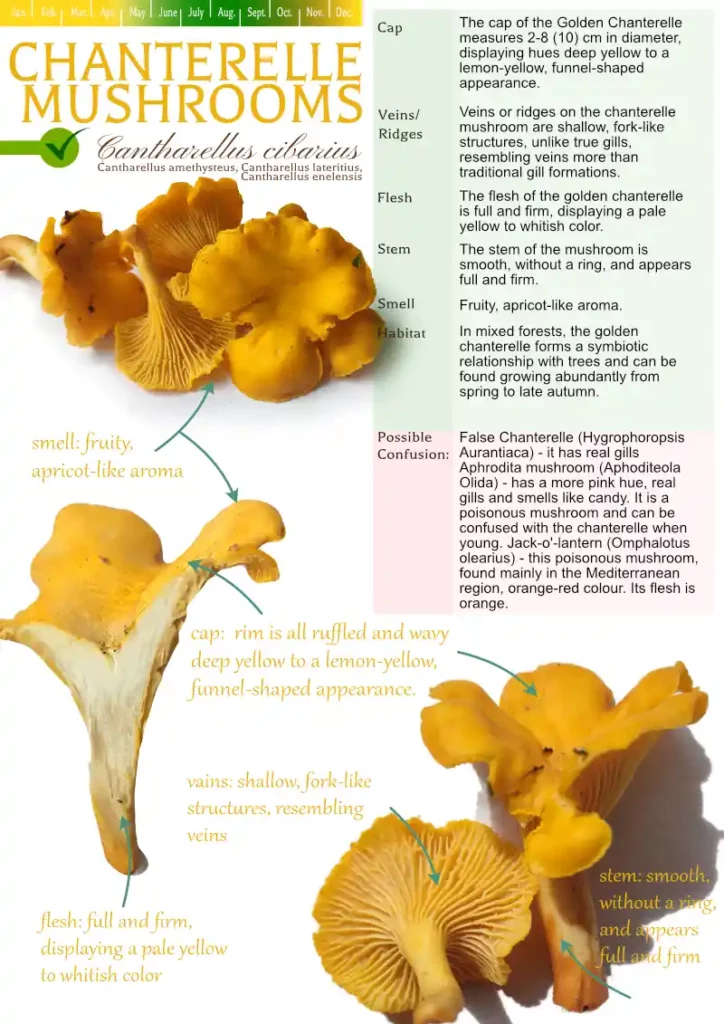
- Golden yellow to orange.
- Sometimes paler in young specimens.
- Older mushrooms may fade or develop whitish patches.
- Cap Shape
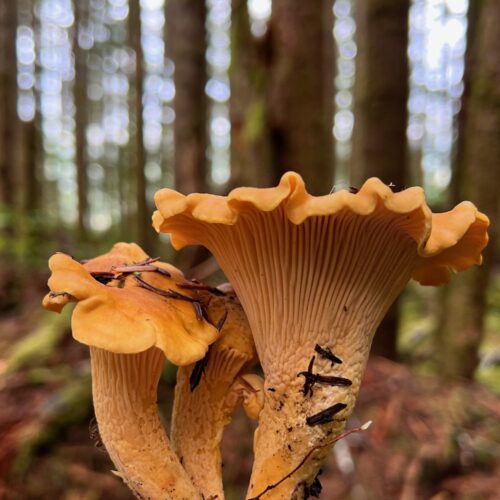
- Wavy, funnel-shaped.
- Edges are often irregular and sometimes rolled under.
- The cap may become more vase-like as it matures.
- Gills
- Not true gills but false gills: Shallow, forked ridges running down the stem.
- Decurrent (run down the stem).
- Soft and can be peeled with a fingernail.
- Stem
- Solid (not hollow).
- Same color as the cap or slightly lighter.
- Tapers downwards (not bulbous).
- The base of the stem sometimes blends into the forest floor, so dig gently to check.
- Smell
- Fruity, often like apricots or peaches.
- Smell is stronger in fresh, young mushrooms.
- Spore Print
- Pale yellow to white.
- Spore print can help confirm ID if in doubt.
Detailed Visual Guide
| Feature | Chanterelle | Common Lookalike |
|---|---|---|
| Cap Shape | Wavy, funnel-shaped | Flat, sometimes depressed (false chanterelle) |
| Gills/Ridges | Forked, shallow, run down stem | Blade-like, deep, not running down stem |
| Stem | Solid, tapers downward | Hollow or equal width, sometimes fragile |
| Smell | Fruity, apricot-like | No strong smell or musty |
Non-obvious Identification Tips
- Feel the gills: True chanterelles have soft, rubbery ridges. If the gills break easily or feel sharp, it’s likely a lookalike.
- Check the stem: A chanterelle’s stem is always solid and the same color as the cap. If you see a hollow or different-colored stem, be cautious.
- Test the aroma: The apricot-like scent is often missing in poisonous lookalikes.
- Check for bruising: Chanterelles rarely bruise, but some lookalikes turn brown or blue when handled.
- Note how they grow: Chanterelles often appear scattered or in loose groups on the forest floor, not in dense clusters.
Beginners often overlook the importance of checking multiple features at once. If a mushroom matches on color but not on gills, or if it smells earthy rather than fruity, do not pick it for eating.
Dangerous Lookalikes And How To Avoid Them
Foragers must be aware of mushrooms that look like chanterelles. The most common are the jack-o’-lantern mushroom (Omphalotus illudens) and the false chanterelle (Hygrophoropsis aurantiaca).
Jack-o’-lantern Mushroom
- Color: Bright orange, sometimes more vivid than chanterelles.
- Gills: True, blade-like gills (not forked or shallow), tightly packed.
- Growth: Grows in large clusters on wood or buried roots, not from soil alone.
- Toxicity: Causes severe stomach upset if eaten.
- Glow: The gills can glow greenish in the dark, a unique feature but not always visible.
False Chanterelle
- Color: More orange than yellow, sometimes with a darker center.
- Gills: Thin, deep, and easily separated from the cap.
- Smell: Lacks fruity aroma.
- Texture: Cap is often thinner, and flesh is softer.
| Lookalike | Key Difference | Danger Level |
|---|---|---|
| Jack-o’-lantern | True gills, grows on wood, very bright orange | Highly toxic |
| False chanterelle | Deep gills, less fruity smell, thinner cap | Mildly toxic |
Practical Advice
- Only pick mushrooms you’re 100% sure about.
- If uncertain, consult a local expert or bring samples to a mycological society.
- Never eat wild mushrooms based on photos alone—real-life inspection is critical.
- Carry a magnifying glass to inspect gill structure closely if you’re new to foraging.
- Make notes of your finds and cross-check with reliable field guides to build experience.
Many beginners think that brightly colored mushrooms are always dangerous, but in fact, color alone is not a safe guide. Lookalikes may also fruit in the same habitat, so stay vigilant, especially during peak season when many fungi appear at once.
Chanterelle Habitat: Where And When To Forage
Chanterelles are choosy about where they grow. Understanding their habitat preferences is key to finding them.
Forest Types
- Deciduous forests: Chanterelles especially love beech, oak, birch, and maple forests.
- Coniferous forests: They also grow with pines, spruces, and firs in cooler regions.
- Mixed forests: Some species thrive in areas with both hardwood and softwood trees.
Forests with little human disturbance and a mix of tree ages tend to produce more mushrooms. Old-growth stands are especially good, but even younger woods can have productive patches.
Soil And Ground Conditions
- Moist, well-drained soil: Chanterelles dislike soggy or waterlogged ground.
- Leaf litter and moss: They often appear among fallen leaves, moss, or needles.
- Gentle slopes: Look on hillsides or raised areas where water drains well.
Chanterelles are rarely found in compacted or bare soil. They need a rich layer of organic matter, so avoid heavily used trails or cleared areas.
Climate And Season
- Temperate regions: Chanterelles prefer mild, rainy climates.
- Season: In the Northern Hemisphere, the best time is from late June through September. In southern climates or the Pacific Northwest, they may appear as early as May or as late as November, especially after rainfall.
- Microclimate: Patches near creeks or in valleys often fruit earlier or longer than those on dry hilltops.
A non-obvious insight: In dry years, chanterelles may only appear in the shadiest, coolest parts of the forest. If the season seems poor, adjust your search to lower, wetter areas.
The Role Of Trees
Chanterelles are mycorrhizal fungi—they form a partnership with trees. They cannot grow without living roots. This means you won’t find them in open fields or dead wood. Instead, look for mature forests with healthy, old trees.
Some species are picky about their tree partners. For example, Cantharellus formosus prefers Douglas fir, while C. cibarius is more flexible. Learning to recognize the trees in your area can speed up your search.
Microhabitat Clues
- Look for shade: Chanterelles dislike direct sunlight. They often hide under ferns, shrubs, or fallen branches.
- Notice patterns: If you find one, search nearby. Chanterelles often grow in scattered groups, not tight clusters.
- Watch for competitors: Slugs and insects love chanterelles. If you see signs of nibbling, you’re in the right place.
- Check after storms: Heavy rain followed by warm weather is ideal.
Regional Examples
- Europe: Common in Sweden, France, Germany, and the UK, especially in old beech and oak woods.
- USA (Pacific Northwest): Abundant in coastal forests with Douglas fir and hemlock.
- Canada: Found in British Columbia and Quebec, especially after summer rains.
- Japan: Look in cedar and pine forests, especially in the mountains.
Some experienced foragers mark good patches on maps and revisit them each year, as healthy spots often produce reliably for decades.
Best Practices For Ethical And Safe Foraging
Responsible foraging protects both your health and the forest.
Legal Considerations
- Check local regulations: Some parks or forests ban mushroom picking, or limit how much you can take.
- Permits: Certain areas require a permit for mushroom foraging.
- Respect private property: Always get permission if you’re on private land.
Laws can change from year to year, and some countries have very strict rules. For example, in some European countries, picking more than a set amount can result in large fines.
Sustainable Harvesting
- Use a knife: Cut mushrooms at the base to minimize damage to the mycelium (the underground part of the fungus).
- Leave some behind: Never take all the mushrooms in a patch. This ensures spores can spread and future harvests remain healthy.
- Avoid trampling: Stick to paths or open areas to protect delicate forest plants.
If a patch is small or the mushrooms are immature, leave them to grow. Overharvesting can cause a decline in local populations, which can take years to recover.
Safety Precautions
- Carry a guidebook: A reliable field guide with clear photos can help confirm IDs in the field.
- Separate unknowns: Keep unfamiliar mushrooms in a different basket or bag.
- Double-check before eating: Inspect your harvest again at home, preferably in good light.
- Keep samples: If you try a new species, keep a small sample in the fridge in case of illness—this can help doctors identify the cause.
Non-obvious Tips
- Forage after rain: Chanterelles often appear 2–5 days after a soaking rain.
- Mark good spots: Use a GPS app or mark on a paper map—successful patches often produce year after year.
- Forage early in the morning: Mushrooms are fresher and less likely to have been picked by others or eaten by animals.
Foragers who build a routine—checking weather, marking successful locations, and learning how different forests “behave”—find more mushrooms and have a lower risk of accidents.
Credit: salishmushrooms.com
Preparing Chanterelles For Cooking
Bringing wild mushrooms into the kitchen requires care. Proper cleaning and preparation keep their flavor and texture at their best.
Cleaning Chanterelles
- Brush Off Dirt
- Use a soft brush or dry cloth to remove soil and debris.
- Avoid washing under running water, which can make mushrooms soggy.
- For very dirty mushrooms, gently scrape dirt with a paring knife.
- Trim the Stems
- Cut away tough or dirty stem ends.
- You can also slice larger mushrooms lengthwise to check for bugs.
- Quick Rinse (if needed)
- For heavily soiled mushrooms, a quick dip in cold water is okay. Dry thoroughly with a towel.
- Spread mushrooms on a clean towel to air dry before cooking.
A non-obvious tip: Do not soak chanterelles. They can hold a lot of water and lose flavor if left in water for long.
Storing Fresh Chanterelles
- Refrigerate: Store in a paper bag, not plastic, to avoid moisture buildup.
- Use soon: Chanterelles are best when cooked within 2–3 days.
- Drying: For long-term storage, slice and dry in a dehydrator or low oven.
- Keep cool and dry: In humid climates, add a sheet of paper towel to absorb extra moisture.
Preserving Chanterelles
- Freezing: Sauté gently in butter, cool, then freeze in airtight containers. Raw chanterelles do not freeze well.
- Pickling: Chanterelles can be pickled in vinegar with spices for a tangy treat. They keep their texture better than many other mushrooms.
- Drying: Dried chanterelles rehydrate well for soups and stews. To use, soak in warm water for 30 minutes, then cook as usual.
Preserved chanterelles can last for months, allowing you to enjoy their flavor long after the season has ended.
Cooking Tips: How To Make Chanterelles Shine
Chanterelles are prized for their delicate flavor—think of apricots, pepper, and earth. The best recipes highlight, not hide, these qualities.
Classic Cooking Methods
- Sautéing
- Heat a pan with butter or olive oil.
- Add cleaned chanterelles, cook on medium heat until moisture releases and evaporates.
- Season with salt, pepper, and fresh herbs.
- Finish with a splash of cream or wine if desired.
- Simple Chanterelle Omelet
- Sauté chopped chanterelles with shallots or onions.
- Add beaten eggs, cook gently, fold, and serve.
- Top with fresh herbs like parsley or chives.
- Chanterelle Cream Sauce
- Sauté mushrooms, add a splash of white wine, reduce.
- Stir in cream, simmer until thick, serve over chicken or pasta.
- Optionally, add a touch of lemon juice for brightness.
Advanced Recipes
- Risotto: Stir chanterelles into rice with stock and finish with Parmesan. Add mushrooms halfway through cooking to keep their texture.
- Tarts and Quiches: Combine with leeks, cream, and eggs in a pastry shell. Pre-cook mushrooms to remove moisture.
- Wild Mushroom Soup: Mix with other wild mushrooms for deep flavor. Blend part of the soup for a creamy texture, leave some chunks for bite.
Chanterelles pair well with eggs, cream, and mild cheeses, but also shine in simple pasta dishes with only a bit of garlic and olive oil.
Non-obvious Cooking Insights
- Don’t overcrowd the pan: Cook in batches. Too many mushrooms at once steam instead of brown, which weakens the flavor.
- Avoid strong spices: Heavy garlic or chili can mask chanterelle’s delicate taste.
- Use their liquid: The water released from sautéing is full of aroma—add it back to soups or sauces for extra depth.
- Let flavors build: Cook some mushrooms until crisp and golden, and others until just soft for layered taste and texture.
- Don’t overcook: A few minutes is often enough—overcooked chanterelles become rubbery.
Pairings
- Herbs: Thyme, tarragon, parsley.
- Proteins: Chicken, veal, eggs, fish.
- Wine: Light whites or dry rosé complement chanterelles well.
- Vegetables: Try with spinach, peas, or asparagus for seasonal dishes.
Nutritional Value And Health Benefits
Chanterelles aren’t just tasty—they offer real health benefits.
- Low in calories: About 15–20 calories per 100 grams.
- Rich in vitamins: Especially vitamin D, B vitamins, and vitamin C.
- Minerals: Good source of potassium, copper, and iron.
- Antioxidants: Contains carotenoids and polysaccharides that may support immune health.
- Dietary fiber: Adds bulk and aids digestion.
Chanterelles are one of the few wild foods high in vitamin D, which supports bone health and the immune system. Eating wild mushrooms like chanterelles adds variety and nutrition to your diet, but always cook them thoroughly to aid digestion.
A lesser-known benefit is that wild mushrooms can help diversify your gut microbiome, which is important for overall health. However, some people may be sensitive to wild fungi, so try small amounts first if you are new to foraging.
Common Mistakes Beginners Make
Even careful foragers can slip up. Here are pitfalls to avoid:
- Mistaking lookalikes: Relying on color alone is dangerous. Always check multiple features.
- Picking from polluted areas: Chanterelles absorb heavy metals and toxins. Avoid roadsides, industrial sites, or treated lawns.
- Storing in plastic: This causes mushrooms to rot quickly. Use paper or basket instead.
- Overcooking: Too much heat makes chanterelles rubbery and bland.
- Ignoring local rules: Fines and bans are real—know your area’s laws.
- Harvesting too early: Small, button-sized mushrooms don’t spread spores. Let some mature for a sustainable patch.
- Not checking for bugs: Inspect mushrooms for insects or larvae, especially if picked late in the season.
Beginners often rush the process—take your time to check each mushroom and the area where you found it.
Foraging As A Community: Learning And Sharing
Mushroom foraging is more fun and safer with others. Joining a local mycology club can:
- Help you learn from experienced foragers.
- Offer group forays and ID workshops.
- Connect you with local experts for tricky identifications.
- Share tips on the best spots and times for your region.
- Build lasting friendships and share harvests in group meals.
You can find clubs and resources through the North American Mycological Association or similar organizations worldwide. Sharing knowledge keeps everyone safer and helps protect wild mushrooms for future generations.
Some clubs organize “show-and-tell” meetings where you can bring mushrooms for identification, or seasonal festivals with cooking demonstrations. These events are perfect for learning in a relaxed, social setting.
Chanterelle Foraging Around The World
Chanterelles are prized in many countries. Some of the most famous regions include:
- France: Known as “girolles,” used in gourmet French cuisine.
- Sweden and Finland: Foraged every summer and fall, featured in traditional dishes.
- Canada and USA: Gathered in the Pacific Northwest, Appalachia, and Northeast.
- Japan: Local species used in tempura and soups.
Each region has its own traditions, recipes, and foraging rules. Exploring these can give you new ideas and appreciation for this wonderful mushroom.
For example, in France, chanterelles are often cooked with garlic, parsley, and butter. In Scandinavia, they are used in creamy sauces or simply pan-fried with potatoes. In Russia, pickling is common. Tasting these regional dishes can inspire you to try new ways to prepare your own finds.
Advanced Foraging: Reading The Forest
Skilled foragers develop a sixth sense for finding chanterelles. Two advanced techniques can help:
Tree Association
Learn the tree species in your region. For example, in the Pacific Northwest, focus on Douglas fir. In Europe, look for beech and oak. Chanterelles rarely stray far from their favorite partners.
Another advanced tip: pay attention to the age and health of trees. Older, established forests often yield more mushrooms, but younger stands can also be productive if the soil is rich and moist.
Weather Watching
Keep notes on rainfall, temperature, and humidity. Chanterelles often flush after a series of warm, wet days. A simple rain gauge at home can help predict the best hunting times.
Record the date, weather, and success of each foraging trip. Over time, you’ll notice patterns that help you predict the best days to check your favorite spots. Some foragers even keep a foraging journal with maps, tree types, and observations.
Chanterelle Varieties: Comparing Key Species
Understanding the subtle differences between species helps you find the best patches and avoid disappointment. Here’s a comparison of common chanterelle varieties:
| Species | Region | Cap Color | Preferred Trees | Season |
|---|---|---|---|---|
| Cantharellus cibarius | Europe, North America | Golden yellow | Beech, oak, pine | Summer–Fall |
| Cantharellus formosus | Pacific Northwest | Bright orange | Douglas fir, hemlock | Late spring–Fall |
| Cantharellus tubaeformis | Europe, North America | Yellow-brown, darker center | Sphagnum moss, conifers | Fall–Winter |
| Cantharellus californicus | California | Pale to bright yellow | Oak, madrone | Winter–Spring |
Some varieties, like C. tubaeformis (the yellowfoot), have a more slender stem and darker cap. These can fruit late into autumn and even winter in mild climates, providing a longer foraging season. Learning the subtle differences in cap color, size, and habitat can greatly improve your foraging results.

Credit: www.amazon.com
Legal And Environmental Issues
Foraging chanterelles is legal in many places, but not everywhere. Over-harvesting and commercial picking can harm local populations. Always:
- Check government or park websites for up-to-date rules.
- Follow “leave no trace” ethics.
- Support conservation efforts by joining foraging groups that promote sustainability.
- Avoid picking in nature reserves or protected forests unless permitted.
For more detailed legal guidelines, visit the Wikipedia page on mushroom picking.
Some regions now require all foragers to report their harvests to track the health of wild populations. If you forage often, consider giving back to the forest by participating in clean-up days or educational events.
Frequently Asked Questions
How Can I Tell Chanterelles From Jack-o’-lantern Mushrooms?
Jack-o’-lanterns have sharp, deep gills and grow in tight clusters on wood. Chanterelles have shallow, forked ridges and grow singly or in loose groups on soil. The jack-o’-lantern also glows faintly in the dark.
What Is The Best Month To Forage For Chanterelles?
The best months are usually July through September in temperate regions, but can vary depending on local rainfall and climate. Check with local foragers for your area’s peak season.
Can You Eat Chanterelles Raw?
It’s best to always cook chanterelles. Raw mushrooms can be hard to digest and may cause mild stomach upset.
What Should I Do If I’m Not Sure About A Mushroom’s Identity?
If unsure, do not eat it. Show it to a local mushroom expert or mycological society. Never rely on just photos or internet advice for final identification.
How Do I Store Chanterelles After Picking?
Keep fresh chanterelles in a paper bag in the refrigerator. Avoid plastic, which traps moisture and causes spoilage. Use within 2–3 days for best flavor.
Foraging chanterelles is a rewarding blend of nature, knowledge, and good food. With careful observation and respect for the forest, you can enjoy these golden mushrooms safely and sustainably. Every trip to the woods is a chance to learn, discover, and bring home a taste of the wild.
Credit: turbotasty.com