
Growing mushrooms at home or commercially is a fascinating journey. The magic starts with a simple question: what is the best substrate? The substrate is the material mushrooms grow on. It’s the source of food for the fungi. Without the right substrate, you get poor yields, weak mushrooms, or even total failure.
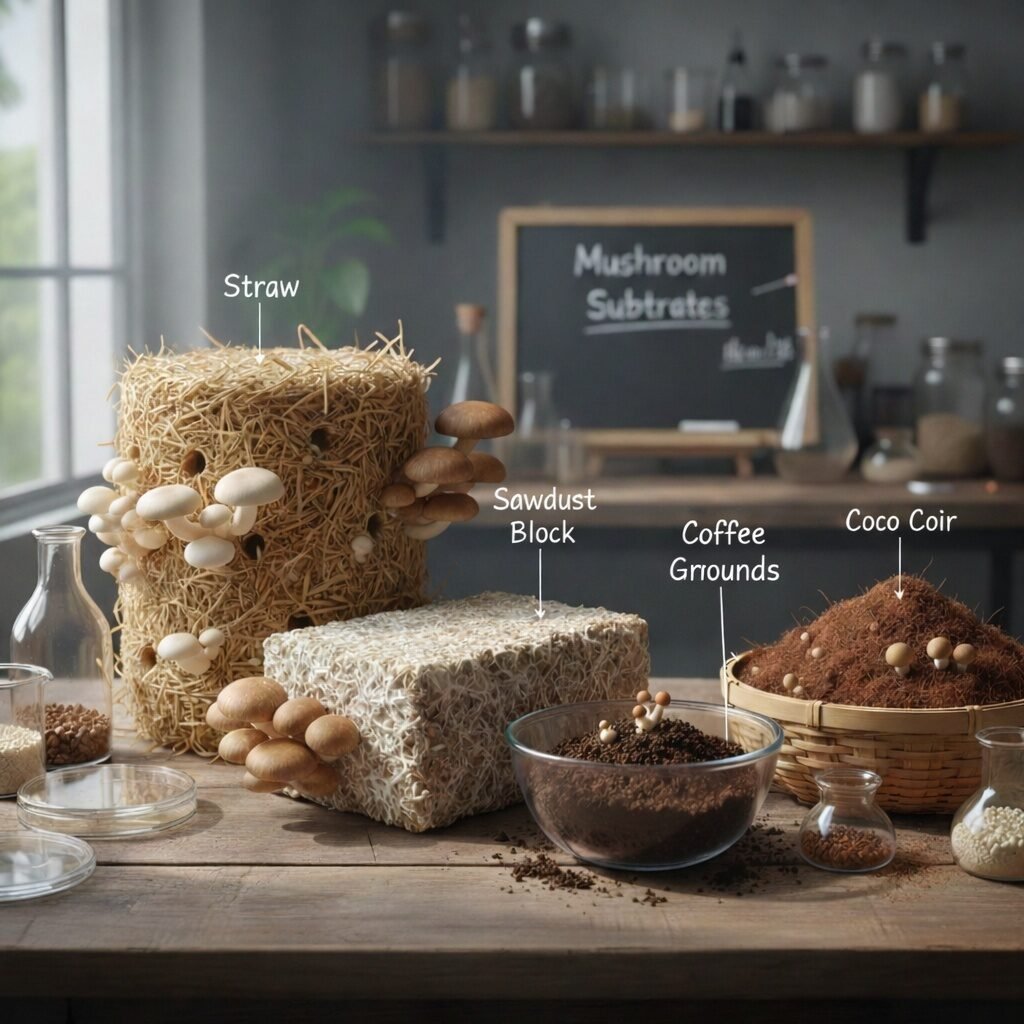
Many growers start with straw, sawdust, or wood chips. But these are just the beginning. As you go deeper, you discover unique materials—coffee grounds, manure, cardboard, and even corn cobs. The right choice depends on the mushroom species, your location, and your resources. Some substrates are cheap and easy to find. Others are more expensive but give higher yields.
This guide explores the best mushroom growing substrates. You’ll learn how each one works, their pros and cons, and how to prepare them. Whether you’re a beginner or an experienced grower, you’ll find new insights. By the end, you’ll know exactly which substrate fits your project—and how to avoid common mistakes that cost time and money.
Why Substrate Matters In Mushroom Cultivation
Substrate is not just soil for mushrooms. In fact, most mushrooms can’t grow in regular garden soil. The substrate provides nutrients, holds moisture, and supports the mushroom’s mycelium. If the substrate is wrong, mushrooms can’t get the food or water they need.
Mushrooms don’t have chlorophyll, so they can’t make their own food from sunlight. Instead, they absorb nutrients from their environment. The substrate is like their dinner plate and water bottle combined. It’s why even a great mushroom strain will fail if the substrate is poor.
For example, oyster mushrooms thrive on straw, but shiitake mushrooms do better on hardwood sawdust or logs. Button mushrooms, the most common supermarket variety, grow best on composted manure. The choice of substrate affects:
- Growth speed
- Mushroom size
- Flavor and texture
- Contamination risk
- Total yield
Substrate also affects the “flushes” (harvest cycles) you get. Good substrates let you harvest mushrooms several times before nutrients run out. A poor choice gives only one small flush.
Choosing wisely is the difference between a bumper crop and a disappointing harvest. Some beginners think any organic matter will work. In reality, the wrong substrate can attract pests, dry out too fast, or even poison the fungus.
Straw: A Classic Choice
Straw is one of the oldest and most popular substrates, especially for oyster mushrooms. It’s cheap, easy to find, and simple to prepare.
What Is Straw?
Straw is the dry stalk left after grains like wheat, barley, or rye are harvested. It’s not the same as hay (which is grass). Straw is hollow, light, and rich in cellulose. This makes it perfect for fast-growing mushrooms.
Straw’s structure creates air pockets, helping mycelium breathe and spread. Cellulose is a main food source for many mushroom species. Not all straw is equal—wheat and rye straw work best, while oat straw can be more brittle.
How To Use Straw
- Chop the straw into small pieces (2–5 cm). This increases the surface area for mycelium to colonize.
- Pasteurize the straw by soaking it in hot water (65–80°C) for 1–2 hours. This kills harmful bacteria and mold.
- Drain and cool the straw before mixing with mushroom spawn.
- Fill bags or containers with the straw and spawn.
Pasteurization is key. If you skip it, wild molds often out-compete the mushroom. After pasteurizing, spread the straw out to cool quickly to avoid bacteria growth.
Pros Of Straw
- Widely available and cheap
- Fast colonization
- High yields for species like oyster mushrooms
Straw is especially good for growing at home. You don’t need fancy equipment, just a pot for hot water and a place to drain the straw.
Cons Of Straw
- Prone to contamination if not pasteurized well
- Can become soggy if overwatered
- Not suitable for all mushroom species
Straw breaks down quickly, so you usually get 2–3 flushes before it needs replacing. This is fine for small projects, but commercial growers may need more robust options.
Non-obvious Insights
- Rye straw is often stronger and lasts longer than wheat straw.
- Using a lime soak (hydrated lime in water) instead of heat pasteurization works in warm climates with limited fuel.
- Chopping straw finely (rather than using long pieces) increases colonization speed, but if too fine, it packs too tightly and restricts airflow—aim for balance.
Credit: ediblegardentips.com
Sawdust: The King Of Hardwood Substrates
Sawdust, especially from hardwoods, is the best substrate for shiitake, lion’s mane, and other gourmet mushrooms.
What Is Sawdust?
Sawdust is the fine powder left after cutting or sanding wood. The best sawdust comes from hardwoods (oak, beech, maple). Avoid softwoods like pine—they contain resins and oils that harm mushrooms.
Fresh sawdust can contain tree sap or tannins, which might slow mushroom growth. Aged sawdust (left to sit for a few months) is more stable and less likely to contaminate. Make sure the sawdust is clean—no glue, paint, or chemicals.
How To Use Sawdust
- Sterilize the sawdust (using a pressure cooker or autoclave) to kill contaminants.
- Mix with bran (wheat or rice bran) to add extra nutrients.
- Moisten the mix until it feels like a wrung-out sponge.
- Fill bags or jars and inoculate with mushroom spawn.
Sterilization is important because sawdust and bran are rich in nutrients, which attract mold. Some growers use “grow bags” with filter patches that let air in but keep contaminants out.
Pros Of Sawdust
- Excellent for many gourmet mushrooms
- Supports slow, even growth
- Can be stored dry for months
Sawdust blocks can be stacked or kept on shelves, making them space-efficient for indoor growing.
Cons Of Sawdust
- Needs sterilization (not just pasteurization)
- Bran supplementation increases contamination risk
- Sometimes hard to find in clean, untreated form
If you don’t have a pressure cooker, look for pre-sterilized sawdust blocks from mushroom supply stores.
Non-obvious Insights
- Sawdust blocks with a mix of 80% hardwood sawdust and 20% bran give the highest shiitake yields.
- Aged sawdust (left for a few months) is less likely to contaminate than fresh sawdust.
- Adding a small amount of gypsum (2%) to the mix further boosts mycelium health and makes the substrate easier to handle.
Wood Chips: For Shiitake, Nameko, And More
Wood chips are larger pieces of wood, usually from logs or branches. They’re the traditional choice for shiitake and nameko mushrooms.
How To Use Wood Chips
- Choose hardwood chips (oak, maple, beech). Never use conifer chips.
- Soak and pasteurize chips in hot water for 1–2 hours.
- Mix with sawdust or bran for faster colonization.
- Inoculate with spawn and keep moist.
Wood chips are used for both indoor bags and outdoor mushroom beds. In outdoor beds, chips are spread in layers, sprinkled with spawn, and covered with straw or cardboard to keep moisture in.
Pros Of Wood Chips
- Long-lasting, slow to break down
- Great for outdoor beds or logs
- Natural mushroom flavors
Mushrooms grown on wood chips often develop deeper flavors and thicker stems, perfect for cooking.
Cons Of Wood Chips
- Slow colonization (months, not weeks)
- Heavier and bulkier than straw or sawdust
- Not ideal for small indoor grows
For big outdoor projects, wood chips are ideal. For a small room or apartment, they’re less practical.
Non-obvious Insights
- Mixing 50% chips with 50% sawdust speeds up colonization.
- Using smaller chips (1–3 cm) gives better results than large chunks.
- Hardwood chips from tree trimming services are cheap, but always ask about the tree type to avoid accidental use of conifers.

Credit: www.out-grow.com
Coffee Grounds: Recycling For Mushrooms
Used coffee grounds are a trendy substrate. They’re packed with nutrients and are great for oyster and enoki mushrooms.
How To Use Coffee Grounds
- Collect fresh, used grounds from coffee shops.
- Pasteurize if they’re more than a day old.
- Mix with straw or sawdust to improve texture and airflow.
- Inoculate with spawn quickly to avoid mold.
Coffee grounds are high in nitrogen, which mushrooms love, but also mold loves it, so speed is important. If you can’t use them right away, dry them in the sun or oven.
Pros Of Coffee Grounds
- Free and eco-friendly
- Rich in nitrogen and minerals
- Fast colonization
Using coffee grounds is a sustainable way to recycle kitchen waste and reduce landfill impact.
Cons Of Coffee Grounds
- Prone to contamination if not fresh
- Can clump and block airflow
- Limited to a few mushroom species
Too much coffee ground in a mix can make the substrate compact. Loosen it with straw or sawdust for best results.
Non-obvious Insights
- Adding 20–30% coffee grounds to straw boosts oyster yields.
- Drying grounds before use reduces contamination risk.
- Adding a pinch of gypsum when mixing coffee grounds further reduces clumping and gives better structure.
Manure: The Secret Behind Button Mushrooms
Composted manure is the standard for growing Agaricus species (button, portobello, cremini).
What Is Manure Substrate?
Good manure substrate is a mix of horse manure, straw, and gypsum, composted for 2–4 weeks. It’s rich in nutrients but must be aged to remove ammonia.
The composting process is as important as the ingredients. It should heat up (to kill pathogens), then cool and mature before use.
How To Use Manure
- Compost the mix to a dark, earthy smell.
- Pasteurize before inoculating.
- Fill trays or beds and add spawn.
For best results, turn the compost regularly during aging. Aged manure should not smell strong—if it does, let it sit longer.
Pros Of Manure
- Best for button mushrooms
- High yields and large fruit size
- Readily available in rural areas
Manure-based substrates can produce large mushrooms with firm texture and strong flavor.
Cons Of Manure
- Smelly and messy to handle
- Must be composted and pasteurized well
- Not for all mushroom species
Fresh manure is too strong and can kill mycelium. Proper composting is non-negotiable.
Non-obvious Insights
- Adding gypsum (calcium sulfate) balances pH and improves structure.
- Chicken manure is too strong alone; always blend with straw or horse manure.
- Over-composting can reduce nutrients, so aim for 2–4 weeks, not months.
Cardboard: Urban Growers’ Favorite
Cardboard is cheap, clean, and easy for beginners. It’s ideal for oyster, wine cap, and reishi mushrooms.
How To Use Cardboard
- Soak sheets in hot water to soften and pasteurize.
- Layer spawn between sheets in containers or bags.
- Keep moist and avoid direct sunlight.
Cardboard acts as both a substrate and a low-cost way to multiply spawn. It’s perfect for cloning mushrooms from stem butts.
Pros Of Cardboard
- Free and widely available
- Low contamination risk
- Perfect for cloning and spawn expansion
Even in cities, you can find clean cardboard boxes for free, making this method accessible for all.
Cons Of Cardboard
- Low nutrients: Yields are modest
- Dry out quickly if not monitored
- Not for high-value mushrooms
Cardboard works best for first colonization. For bigger harvests, transfer the colonized cardboard to richer substrates.
Non-obvious Insights
- Corrugated cardboard (with the wavy inner layer) works best.
- Adding coffee grounds or straw boosts yields.
- Avoid cardboard with heavy printing or wax coatings—these can contain chemicals harmful to fungi.
Coco Coir: Clean And Consistent
Coco coir is made from coconut husk fiber. It’s sterile, holds water well, and is popular for psilocybin and gourmet mushrooms.
How To Use Coco Coir
- Hydrate bricks with hot water.
- Mix with vermiculite (optional) for extra moisture retention.
- Add spawn directly.
Coco coir holds water like a sponge. It doesn’t compact much, so it keeps good airflow for the mycelium.
Pros Of Coco Coir
- Naturally resistant to mold
- Easy to store and transport
- Good structure for mycelium
It’s sold in compressed bricks, so you can buy and store it easily, using only what you need.
Cons Of Coco Coir
- Expensive compared to straw or sawdust
- Low in nutrients: Often needs supplementation
On its own, coir supports moderate yields. Adding nutrients improves results, but also raises contamination risk.
Non-obvious Insights
- Mixing with 10–20% coffee grounds or bran improves yield.
- Flushing with boiling water sterilizes coir for sensitive species.
- For larger grows, use coir as the base and supplement with local agricultural waste for cost savings.
Corn Cobs And Husks: Hidden Gem
Corn cobs and husks are often discarded, but they’re excellent for oyster and enoki mushrooms.
How To Use Corn Cobs
- Chop cobs and husks into small pieces.
- Pasteurize in hot water.
- Mix with other substrates if desired.
- Inoculate with spawn.
Corn cobs are rich in cellulose and give good airflow. The rough surface helps mycelium grip and spread.
Pros Of Corn Cobs
- Free on farms and rural areas
- Rich in cellulose
- Good texture for air flow
Corn waste is often burned or discarded. Using it for mushrooms turns trash into food.
Cons Of Corn Cobs
- Seasonal availability
- Need chopping and soaking
- Moderate yields
Dry cobs store well, but husks can go moldy if not used soon.
Non-obvious Insights
- Using dried cobs prevents souring during storage.
- Corn cob substrate holds water better than straw alone.
- Mixing with 10% straw or sawdust boosts both yield and colonization speed.
Paper And Paper Pellets: Simple But Effective
Shredded paper and compressed paper pellets (like cat litter) are easy substrates for small grows.
How To Use Paper
- Soak and pasteurize in hot water.
- Squeeze out excess water.
- Mix with spawn in bags or trays.
Newspapers, office paper, and paper pellets can all be used, but always check for toxic inks.
Pros Of Paper
- Cheap and easy to find
- Good for recycling waste
- Works for oyster, enoki, and wine cap mushrooms
If you want to start with zero cost, paper is a solid option for experimentation.
Cons Of Paper
- Low nutrient value
- Breaks down quickly
- Needs frequent misting
Paper dries out fast, especially in dry climates or heated homes.
Non-obvious Insights
- Avoid glossy or colored paper (toxic inks).
- Mixing with coffee grounds or sawdust improves results.
- Paper pellets (sold as animal bedding) absorb water evenly and are convenient for small batches.
Gypsum: The Substrate Enhancer
Gypsum (calcium sulfate) is not a substrate alone, but it’s a key additive for many recipes.
How To Use Gypsum
- Add 2–5% gypsum by weight to straw, sawdust, or manure mixes.
- Mix thoroughly before hydration.
Gypsum also prevents substrate from sticking together, which keeps airflow open.
Benefits Of Gypsum
- Balances pH
- Prevents clumping
- Supplies calcium for mycelial health
Calcium from gypsum strengthens cell walls, making mushrooms firmer and healthier.
Non-obvious Insights
- Too much gypsum can make the substrate hard and slow colonization.
- Always use food-grade gypsum.
- Gypsum helps counteract acidic supplements like coffee grounds, keeping conditions stable for most mushrooms.
Grain: For Spawn And More
Whole grains (rye, wheat, millet, sorghum) are the gold standard for making mushroom spawn but can also be used as a primary substrate for some species.
How To Use Grain
- Soak and boil to hydrate.
- Sterilize in jars or bags.
- Inoculate with mycelium or spores.
Grain spawn is the “seed” for most commercial mushroom farms. You can use it to start new batches or mix into bulk substrates.
Pros Of Grain
- Fast colonization
- High nutrient content
- Ideal for spawn production
Rye and millet are favorites because they don’t clump much and have even size.
Cons Of Grain
- High contamination risk if not sterile
- Expensive for large grows
- Not for outdoor beds
If you are just starting, buy pre-sterilized grain spawn to avoid frustration.
Non-obvious Insights
- Rye grain is the most forgiving for beginners.
- Mixing with vermiculite reduces clumping.
- Don’t overcook grains; mushy grains increase contamination.
Mixed Substrates: Custom Blends For High Yields
Experienced growers often mix different substrates to balance nutrition, water retention, and structure.
Popular Mixes
- Straw + coffee grounds for oyster mushrooms
- Sawdust + bran for shiitake
- Coco coir + vermiculite for psilocybin mushrooms
Mixing lets you use local waste products, save money, and fine-tune your results.
Why Blend?
Each material brings something unique. Mixing can:
- Boost yield
- Reduce contamination
- Adapt to local resources
For example, straw provides bulk and air, while coffee grounds add nutrients. Sawdust offers structure and long-term support, bran adds quick food for mycelium.
Non-obvious Insights
- Don’t add too many high-nutrient items (like bran or coffee) or contamination risk rises.
- Start with simple mixes and add ingredients as you learn.
- Keep notes on your blends and results for future reference—small changes can have big effects.
Comparing Substrates: Yield, Cost, And Difficulty
To help you choose, here’s a comparison of popular substrates for oyster mushrooms:
| Substrate | Average Yield (kg per 10kg substrate) | Relative Cost | Difficulty |
|---|---|---|---|
| Straw | 4–6 | Low | Easy |
| Sawdust | 5–7 | Medium | Medium |
| Wood Chips | 3–5 | Low | Medium |
| Coffee Grounds | 3–4 | Very Low | Medium |
| Manure | 5–7 (for Agaricus) | Low | Hard |
These numbers are averages. Actual yield depends on mushroom strain, cleanliness, and environment. For beginners, straw gives the best balance of yield and simplicity.

Credit: martian-mushrooms.com
Substrate Preparation Methods Compared
How you prepare the substrate can be as important as what you use.
| Method | Best For | Contamination Risk | Equipment Needed |
|---|---|---|---|
| Pasteurization (Hot Water) | Straw, wood chips, cardboard | Low | Large pot, thermometer |
| Sterilization (Pressure Cooker) | Sawdust, grain, coffee grounds | Very Low | Pressure cooker/autoclave |
| Lime Bath | Straw, cardboard | Medium | Hydrated lime, water tank |
Sterilization is more thorough but also needs special equipment. Pasteurization is enough for most low-nutrient substrates. Lime baths save energy but must be done carefully—wrong lime type or amount can ruin the batch.
Choosing The Right Substrate For Your Mushroom Type
Not all mushrooms can grow on every substrate. Here’s a quick guide:
- Oyster mushrooms: Straw, coffee grounds, cardboard, corn cobs, paper
- Shiitake: Hardwood sawdust, wood chips, logs
- Button mushrooms (Agaricus): Composted manure, straw
- Lion’s mane: Hardwood sawdust, supplemented with bran
- Enoki: Sawdust, corn cobs, coffee grounds
- Wine cap: Wood chips, straw, cardboard
- Reishi: Hardwood sawdust, logs
Matching mushroom and substrate is key. For example, trying to grow shiitake on straw won’t work well, and using manure for oyster mushrooms often leads to contamination.
Practical Tips
- Always match your substrate to the mushroom species.
- Start with what is easy to find locally.
- Test small batches before scaling up.
- When in doubt, ask mushroom grower groups online—local advice is often best.
Common Mistakes To Avoid
Even experienced growers make errors with substrates. Watch out for these pitfalls:
- Using untreated softwoods (like pine or cedar). Their oils are toxic to most mushrooms.
- Skipping pasteurization or sterilization. Contamination is the #1 reason for failure.
- Adding too much supplementation (like bran or coffee). This often causes mold.
- Overwatering the substrate. Mushrooms need air as much as water.
- Letting substrate get too dry. This stops mycelium growth.
Other mistakes include starting with huge batches before learning the basics, or not keeping good records of methods and results. Mushroom growing is part science, part art—keep learning with each grow.
Advanced Substrate Ideas
Some growers experiment with less common substrates for special results.
- Spent brewery grains: Good for oyster mushrooms; must be used fresh to avoid souring.
- Sugarcane bagasse: Used in tropical countries; cheap and effective.
- Cottonseed hulls: Popular in Asia for shiitake; high yields.
- Banana leaves: Used in Africa and South America for oyster mushrooms.
These materials may need special preparation or mixing with other substrates, but they can open new possibilities. For example, cottonseed hulls are used in China for massive shiitake farms. Sugarcane bagasse works best when chopped and mixed with straw or sawdust.
If you want to learn more about scientific studies on mushroom substrates, check out this resource: Wikipedia: Mushroom cultivation.
Frequently Asked Questions
What Is The Best Substrate For Oyster Mushrooms?
Straw is the most popular and reliable substrate for oyster mushrooms. It’s cheap, easy to find, and produces high yields. For even better results, you can mix straw with coffee grounds or sawdust. In warm, humid climates, chopped banana leaves or sugarcane bagasse can also work.
Can I Use Garden Soil To Grow Mushrooms?
No, most mushrooms will not grow in regular garden soil. They need substrates like straw, sawdust, manure, or cardboard, which provide the nutrients and structure their mycelium requires. Soil is often full of bacteria and mold that compete with mushrooms.
How Do I Know If My Substrate Is Contaminated?
Contamination shows as unusual colors, bad smells, or fuzzy mold that isn’t white. If you see green, black, or pink patches, or notice a sour or rotten odor, it’s best to discard the batch to avoid spreading problems. Healthy mycelium is white and spreads evenly.
Do I Always Need To Sterilize My Substrate?
Sterilization is essential for high-nutrient substrates like sawdust, grain, and coffee grounds. For straw, wood chips, and cardboard, pasteurization (heating to 65–80°C) is usually enough. Always follow the preparation method suited to your substrate. When in doubt, err on the side of caution—cleaner is always better.
How Moist Should My Substrate Be?
The perfect substrate feels like a wrung-out sponge—damp, but not dripping. Too much water can suffocate the mycelium, while too little will slow or stop growth. Always test by squeezing: if just a few drops come out, it’s right. For outdoor beds, check moisture daily, especially in hot or windy weather.
Final Thoughts
The best mushroom growing substrate depends on your mushroom species, location, and resources. Straw and sawdust are classics for a reason—they’re reliable, productive, and accessible. But don’t ignore the power of wood chips, coffee grounds, manure, or even cardboard and coco coir. Each substrate has unique strengths and weaknesses.
Experiment with what you have. Start small, keep things clean, and always monitor for contamination. As you gain experience, you’ll find blends and tricks that work best for you. With the right substrate, mushrooms will reward you with rich harvests—delicious, nutritious, and often far better than anything from the store.
Remember, mushroom growing is a journey. Try new materials, learn from mistakes, and stay curious. The world of fungi is bigger and more rewarding than you might think. Happy growing!