
If you want a garden with healthy plants and rich soil, there’s one simple solution many gardeners miss: mushroom compost tea. This natural liquid fertilizer is full of nutrients that boost plant growth, improve soil structure, and even help fight some diseases. But what exactly is mushroom compost tea, why is it so effective, and how do you make it at home? Let’s explore everything you need to know about this garden booster, step by step.
What Is Mushroom Compost Tea?
Mushroom compost tea is a liquid made by soaking mushroom compost in water, usually with air added, to create a nutrient-rich solution. This “tea” is not for drinking—it’s for your garden. It contains beneficial bacteria, fungi, micronutrients, and organic matter that plants love.
Unlike chemical fertilizers, mushroom compost tea works with the natural life in your soil. It feeds not just your plants, but the microbes that support healthy roots. Gardeners use it as a foliar spray (on leaves) or as a soil drench (around roots) for vegetables, flowers, lawns, and even trees.
But mushroom compost tea is more than just a “plant food. ” It acts like a probiotic for your garden, bringing in a whole community of helpful microbes. These microscopic workers help unlock nutrients already present in your soil, making them easier for plants to take up.
Many experienced gardeners notice a stronger, more balanced growth after regular use—leaves get greener, flowers bloom longer, and fruits taste sweeter.
Another reason gardeners value mushroom compost tea is its flexibility. You can use it on almost any type of plant and in many different situations. For example, if you’re starting a new garden bed, applying tea helps establish the soil’s biology quickly.
If you have an old flower bed that’s tired and compacted, regular drenching helps bring it back to life. Even houseplants in pots can benefit from an occasional watering with diluted tea.
Why Use Mushroom Compost Tea?
There are many ways to fertilize your garden, but mushroom compost tea stands out for a few reasons:
- Natural and Organic: It’s free from harsh chemicals.
- Soil Life Booster: The tea adds beneficial microbes, which help break down nutrients and fight off bad fungi.
- Gentle and Safe: Less risk of burning roots or leaves compared to strong synthetic fertilizers.
- Versatile: Works for vegetables, flowers, fruit trees, lawns, and even houseplants.
- Cost Effective: You can make it from kitchen scraps, store-bought compost, or mushroom farm waste.
Some studies even show that compost teas can help control plant diseases and improve yields. For example, research at the University of California found that compost teas may reduce foliar disease on some crops.
Mushroom compost tea also supports a more sustainable gardening approach. Using it regularly builds up your soil’s fertility over time, so you may notice that you need less and less extra fertilizer as the years go by. Healthy soils also mean fewer pests and less reliance on chemical sprays, making your garden more resilient.
A less obvious advantage is how tea helps during times of stress—like after transplanting or when plants are recovering from disease. The gentle nutrients and microbes in the tea help roots recover faster and support new growth. Many gardeners use mushroom compost tea as a “rescue remedy” when plants look tired or stressed.

Credit: www.amazon.com
Understanding Mushroom Compost
Before making tea, you need to know what mushroom compost is. It’s not made from mushrooms themselves, but from the material left after mushrooms are grown—often called spent mushroom substrate.
Common Ingredients In Mushroom Compost
- Straw or hay
- Chicken or horse manure
- Gypsum
- Peat moss
- Corn cobs
- Lime
These ingredients are composted together, then used to grow mushrooms. When the mushrooms are harvested, the leftover material is sold as mushroom compost.
The combination of straw, manure, and other organics provides a rich mix of nutrients and organic matter. Gypsum helps balance the pH and adds calcium and sulfur, both important for plant growth. The composting process also creates a soft, crumbly material that’s easy to mix into soil or use for making tea.
Is All Mushroom Compost The Same?
No. Quality varies. Some mushroom composts are high in salt, which can be a problem for salt-sensitive plants. Others are low in nutrients if they are reused too many times. Always check the source or ask your supplier for details.
For example, commercial mushroom farms may use their substrate several times before selling it as compost. The first cycle compost is usually richer in nutrients, while later cycles can be more depleted. Some home mushroom growers make their own substrate from simple ingredients and use it only once, so their spent compost is often higher in nutrients and lower in salt.
A non-obvious tip: If you notice white spots or patches on mushroom compost, it’s usually leftover mycelium (mushroom “roots”). This is harmless and even beneficial, but avoid using compost that smells sour, strongly of ammonia, or has visible mold growth.
What You Need To Make Mushroom Compost Tea
Making mushroom compost tea is simple, but you’ll need a few basic items:
- Mushroom compost (fresh or aged, but not moldy)
- Chlorine-free water (rainwater, well water, or tap water left to sit for 24 hours)
- A large bucket or container (at least 5 gallons)
- A porous bag (like a pillowcase or mesh bag)
- Air pump and airstone (for actively aerated tea, optional but recommended)
- Molasses or sugar (optional, to feed microbes)
- Stirring stick
- Measuring cup
Most home gardeners start with a 5-gallon setup. For larger gardens, you can scale up.
If you’re making tea for the first time, you don’t need fancy equipment. A simple plastic bucket, a cloth bag, and a wooden spoon are enough to get started. Many gardeners repurpose old pillowcases or nylon stockings as compost bags—they let water flow through but keep the solids contained.
Using an air pump is not required, but it makes a big difference. The extra oxygen supports the growth of aerobic (good) microbes and helps prevent the growth of harmful bacteria. If you already have an aquarium pump at home, it works perfectly for this purpose.
For best results, always use clean equipment. Rinse your bucket, bag, and any tools well before starting. This helps avoid introducing unwanted bacteria or mold into your tea.
Step-by-step: How To Make Mushroom Compost Tea
Let’s break down the process into clear steps. This method makes about 4-5 gallons—enough for a small to medium garden.
1. Prepare The Water
- Fill a clean 5-gallon bucket with water.
- If using tap water, let it sit uncovered for 24 hours so the chlorine evaporates. Chlorine can kill the good microbes you want.
If your area uses chloramine instead of chlorine, letting the water sit won’t remove it. Chloramine is a stronger disinfectant and is more stable. In this case, use a water conditioner (available at pet stores), collect rainwater, or buy distilled water.
Plants and microbes are very sensitive to even small amounts of chlorine or chloramine.
2. Fill Your Bag With Compost
- Place 2-3 cups of mushroom compost in your porous bag.
- Tie the bag so the compost doesn’t spill into the water.
If you want a stronger tea, you can increase the compost to 4 cups, but be careful not to overdo it, as too much can make a thick, muddy tea that’s hard to use. The goal is to create a liquid that looks like weak tea, not sludge.
3. Add The Compost Bag To The Water
- Submerge the bag in the bucket.
- Squeeze and move it around to help the water soak in.
Moving the bag gently helps release nutrients and microbes into the water. Some gardeners like to leave the bag floating, while others weigh it down with a clean stone to keep it fully submerged.
4. Add Microbe Food
- Add 1-2 tablespoons of unsulfured molasses or plain sugar. This feeds the beneficial bacteria and fungi.
- Stir well.
Molasses is the best choice because it dissolves easily and provides simple sugars that microbes love. Unsulfured molasses is important; sulfured types can harm microbial life. If you don’t have molasses, plain white or brown sugar works in a pinch.
This step is optional, but it really boosts the population of helpful microbes in the tea.
5. Aerate (optional, But Best)
- If you have an aquarium air pump, put the airstone in the bucket.
- Turn it on and let bubbles run through the water for 24-36 hours.
- If you don’t have a pump, just stir the tea several times a day to add some oxygen.
Aeration is the single most important step for making a high-quality tea. The more oxygen you provide, the more beneficial microbes multiply. If you’re stirring by hand, do it vigorously for 2-3 minutes, at least 3-4 times per day. You’ll notice the tea start to develop a pleasant, earthy smell as it brews.
6. Brew For 24-36 Hours
- Let the tea brew at room temperature (60–75°F or 15–24°C). Too hot or cold will slow the microbes.
- Do not brew longer than 36 hours or the tea can go “bad” and smell rotten.
If your indoor temperature is below 60°F (15°C), fermentation and microbial growth will slow down. In summer, keep the bucket out of direct sun to prevent overheating. If you check the tea and it smells sour or “off,” discard it and start again.
7. Strain And Use
- Remove the bag and squeeze out any extra liquid.
- For extra safety, strain the tea through cheesecloth or a fine mesh to remove particles that could clog your sprayer.
Fine straining is especially important if you plan to use the tea as a foliar spray. Even tiny bits of compost can clog spray nozzles. If you’re just pouring it around plants, straining is less critical but still helpful for an even application.
8. Apply Right Away
- Use the tea within 4 hours for best results. After that, the microbes start to die off.
- Apply as a soil drench or foliar spray (see next section).
Fresh tea is always most effective. If you have leftover tea, use it on non-edible areas or compost it—do not store it for later use.
How To Use Mushroom Compost Tea In Your Garden
Mushroom compost tea is versatile. Here’s how to use it for different plants and situations.
Soil Drench
Pour the tea directly on the soil around the base of your plants. This helps feed the roots and the beneficial microbes in the soil.
- Use about 1 quart (1 liter) per small plant or 1 gallon (4 liters) for larger shrubs or trees.
- Repeat every 2–4 weeks during the growing season.
For raised beds or vegetable gardens, you can use a watering can to distribute the tea evenly over the soil surface. For fruit trees or large shrubs, pour the tea in a ring around the drip line (the area under the outermost branches).
This targets the feeder roots that take up the most nutrients.
Foliar Spray
Spray the tea directly on plant leaves. This can help fight some foliar diseases and gives a quick nutrient boost.
- Use a clean pump sprayer.
- Spray early in the morning or late afternoon to avoid leaf burn.
- Coat both the tops and bottoms of leaves.
Foliar spraying is especially helpful for crops like tomatoes, peppers, and cucumbers, which are often attacked by fungal diseases. The beneficial microbes in the tea create a protective barrier on leaf surfaces, outcompeting harmful fungi and bacteria.
For Lawns
- Apply with a watering can or hose-end sprayer.
- Use about 1 gallon per 100 square feet.
- Repeat monthly for best results.
Lawns benefit from regular applications because compost tea helps break down thatch, improves root growth, and increases drought resistance. You may notice your lawn becoming greener and thicker with repeated treatments.
For Seedlings And Transplants
- Use diluted tea (mix with water 1: 1).
- Water seedlings gently after planting.
Seedlings are more sensitive to strong solutions, so always dilute the tea before use. Applying tea right after transplanting reduces transplant shock and helps young roots establish quickly.
Non-obvious tip: If you are using city water with chloramine (not chlorine), it will not evaporate easily. In this case, use a water conditioner or buy distilled water.
How Mushroom Compost Tea Benefits Your Garden
The true value of mushroom compost tea is more than just nutrients. Here’s what it does:
1. Boosts Soil Microbiology
Healthy soil isn’t just dirt—it’s alive. Compost tea adds beneficial bacteria and fungi that break down organic matter and make nutrients available to plants. This helps plants develop stronger roots and resist diseases.
Over time, the added microbes help convert raw organic matter in your soil into forms plants can absorb. For example, phosphorus in soil is often locked up in a form plants cannot use. Certain bacteria in compost tea help unlock this phosphorus, making it available just when plants need it most.
2. Provides A Gentle Fertilizer
Mushroom compost tea is not as strong as chemical fertilizers, but it’s rich in:
- Nitrogen (N)
- Phosphorus (P)
- Potassium (K)
- Calcium, magnesium, and trace minerals
These nutrients are in a form plants can easily absorb.
This gentle approach means there’s little risk of fertilizer burn, even if you apply the tea frequently. It’s safe for young seedlings, sensitive ornamentals, and established vegetables alike.
3. Improves Disease Resistance
Some studies show that foliar sprays of compost tea can help reduce fungal diseases like powdery mildew and leaf spot. The beneficial microbes outcompete harmful ones and may trigger the plant’s own defenses.
For example, gardeners growing roses or cucumbers often struggle with powdery mildew. Regular foliar spraying with compost tea can reduce outbreaks and slow the spread of disease. The tea doesn’t kill pathogens directly but creates a less favorable environment for them to grow.
4. Improves Soil Structure
Regular use can help sandy soils hold more water and clay soils drain better. The organic matter in the tea feeds earthworms and microbes, which build better soil structure.
Good soil structure means better root penetration, more oxygen for roots, and improved water retention. In heavy clay soils, compost tea helps prevent compaction, making it easier for plant roots to grow. In sandy soils, the organic matter helps hold moisture, reducing the need for frequent watering.
5. Reduces Fertilizer Use
Because compost tea feeds both plants and soil life, you may be able to reduce or even skip synthetic fertilizers. This saves money and is better for the environment.
An added benefit: as your soil improves, you’ll notice fewer weeds and less need for pesticides. Healthy, balanced soil supports stronger plants, which are more resistant to pests and diseases.
Comparing Mushroom Compost Tea With Other Compost Teas
There are several types of compost tea. How does mushroom compost tea compare?
| Type | Main Ingredients | Best For | Pros | Cons |
|---|---|---|---|---|
| Mushroom Compost Tea | Spent mushroom substrate, water, molasses | General plants, veggies, lawns | Gentle, rich in microbes, easy to make | May contain salt, not as strong in NPK |
| Vermicompost Tea | Worm castings, water, molasses | Seedlings, sensitive plants | Very high in beneficial microbes, low salt | Requires worm bin, can be expensive |
| Regular Compost Tea | Compost (yard or kitchen), water, molasses | All-purpose | Customizable, widely available | Quality varies by compost source |
Insight: Mushroom compost tea is especially good if you can get clean, low-salt spent mushroom substrate. For very young or salt-sensitive plants, vermicompost tea is sometimes safer.
Another difference: mushroom compost tea often contains unique fungi and enzymes left over from mushroom growing. These can help break down tough organic matter in your soil more quickly, accelerating the composting process right in your garden beds.
Common Mistakes When Making Mushroom Compost Tea
Even though it’s simple, there are a few pitfalls to avoid:
- Using chlorinated water: This kills the beneficial microbes.
- Over-brewing: More than 36 hours can lead to bad bacteria dominating the tea.
- Not cleaning equipment: Old compost stuck in sprayers or buckets can introduce pathogens.
- Applying in hot sun: Foliar sprays in midday heat can burn leaves.
- Using poor-quality compost: Compost with lots of salt or contaminants can harm plants.
Non-obvious mistake: Don’t store leftover tea for next time. It loses its benefits fast and can even turn harmful.
Another subtle error: adding too much sugar or molasses. While some microbe food is good, too much can feed the wrong kinds of bacteria, leading to a smelly, anaerobic brew. Stick to the recommended amounts.
After brewing, always rinse your equipment well and let it dry completely before storing. This prevents mold growth and keeps your next batch clean and effective.
How To Choose The Best Mushroom Compost
Not all mushroom composts are equal. Here’s how to pick a good one:
- Ask for salt content: Good mushroom compost should have a salt content below 4 dS/m.
- Check for contaminants: It should be free from pesticides or plastics.
- Smell: It should smell earthy, not rotten or ammonia-like.
- Appearance: Should look dark brown and crumbly, not slimy or white with mold.
If you buy from a store, look for certified organic products or ask the supplier about their process.
If you have a choice between bagged and bulk compost, know that bagged types are often screened and more uniform but can be drier and older. Bulk compost from local mushroom farms is usually fresher, but check for saltiness and visible debris.
When in doubt, mix a small batch of tea and test it on a few plants before treating your whole garden.
A non-obvious point: If you notice white “threads” or flecks in the compost, this is likely leftover mushroom mycelium, which is beneficial and a sign of recent mushroom activity.
Making Mushroom Compost At Home
If you have access to straw, manure, and mushroom spawn, you can make your own mushroom compost. The process is similar to regular composting but uses specific ingredients.
Basic Ingredients
- Straw or hay: 60%
- Chicken or horse manure: 30%
- Gypsum: 5%
- Water: Enough to keep pile moist
Mix these, water well, and let compost for 3–4 weeks, turning every few days. After growing a crop of mushrooms, the leftover substrate is ready to use or turn into tea.
Practical tip: Home-made mushroom compost is usually lower in salt and fresher than commercial types.
If you want to grow mushrooms first, add mushroom spawn (oyster or button mushrooms are easiest). After harvesting, the used substrate becomes spent mushroom compost. The composting process after mushroom growing helps reduce pathogens and makes nutrients more available for garden use.
A subtle advantage of making your own: you control the ingredients, so you know exactly what goes into your garden.
How Often Should You Use Mushroom Compost Tea?
Frequency depends on your plants and soil. Here’s a simple guide:
| Plant Type | Soil Drench | Foliar Spray |
|---|---|---|
| Vegetables | Every 2 weeks | Every 2-4 weeks |
| Flowers | Monthly | Monthly |
| Lawns | Monthly | — |
| Fruit Trees | Spring and Fall | Spring and Summer |
| Seedlings | Once after transplant | Not recommended |
Don’t overdo it—more is not always better. Too much liquid can make soil soggy and increase disease risk.
In heavy clay soils or during rainy periods, use tea less often to avoid waterlogging. In sandy or very dry soils, a bit more frequent application can help maintain moisture and microbial life.

Credit: www.sciencedirect.com
Mushroom Compost Tea Vs. Synthetic Fertilizers
Many gardeners wonder: is compost tea as good as synthetic fertilizers? Here’s a comparison:
| Feature | Mushroom Compost Tea | Synthetic Fertilizer |
|---|---|---|
| Main Benefit | Improves soil life, slow nutrient release | Quick nutrient boost |
| Risk of Burn | Low | High if overapplied |
| Environmental Impact | Low, sustainable | Can cause runoff, pollution |
| Cost | Very low (homemade) | Varies, can be high |
| Soil Health | Improves over time | Often depletes microbes |
Key takeaway: Compost tea is not a quick fix for very poor soils, but it’s unmatched for long-term soil health.
For rapid green-up of lawns or rescue of starving plants, synthetic fertilizers may show results faster. However, repeated use can harm soil life, leading to dependence on chemicals. Compost tea works slower but builds a more balanced, resilient soil ecosystem.
Safety Tips When Handling Compost Tea
- Wear gloves when handling compost or tea to avoid skin irritation.
- Wash hands after gardening.
- If using foliar sprays, wear a mask to avoid breathing in droplets.
- Store all equipment clean and dry.
Extra tip: Never use compost tea on edible leaves just before harvest. Wait at least 1–2 days.
Also, keep tea out of reach of children and pets, as ingesting it could cause stomach upset. If you have cuts or sensitive skin, wear long sleeves and gloves to avoid irritation.
For people with allergies to mold or fungi, use extra care when handling compost and tea, as spores may be present in small amounts.
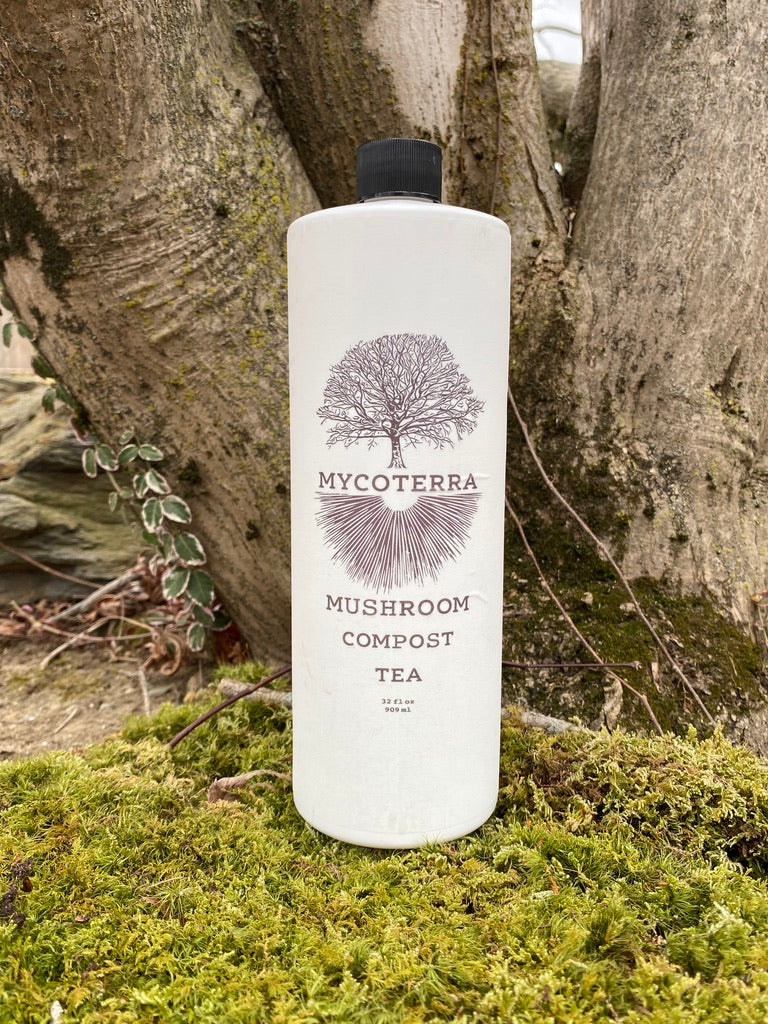
Credit: shop.mycoterrafarm.com
Real-world Example: Mushroom Compost Tea In Action
Maria, a gardener from Oregon, struggled with poor soil and slow-growing tomatoes. She started applying mushroom compost tea every two weeks during the growing season. By mid-summer, her plants grew thicker stems, greener leaves, and produced more fruit. She noticed fewer problems with leaf spots.
Maria’s experience matches studies showing compost tea can help with both plant health and productivity.
Another gardener, Sam in Texas, had sandy soil that dried out quickly. By adding mushroom compost tea monthly, he saw his peppers and eggplants bounce back from heat stress and keep producing even in midsummer. His soil became darker and held water longer, reducing his need for irrigation.
In both cases, the gardeners didn’t just see a quick improvement—they noticed their gardens improved each year, becoming easier to manage and more resistant to problems.
Troubleshooting Problems With Compost Tea
If your compost tea smells bad (like rotten eggs), it’s a sign of anaerobic (no oxygen) bacteria. This tea can harm plants. Always:
- Use an air pump if possible.
- Brew for no longer than 36 hours.
- Use fresh, high-quality compost.
- Clean your equipment well.
If you see mold or scum on your tea, discard it and start over.
If you accidentally apply a batch of bad-smelling tea, flush the area with plenty of clean water. Watch your plants for signs of stress, such as yellowing or wilting leaves. Most will recover, but avoid repeating the mistake.
If your plants don’t seem to respond to the tea, check your compost quality and brewing process. Sometimes, old or nutrient-poor compost won’t give good results. Try sourcing compost from a different supplier or making your own.
How Mushroom Compost Tea Supports Sustainability
Using compost tea reduces waste by recycling mushroom substrate. It also means less dependence on chemical fertilizers, which can pollute rivers and lakes. Plus, healthier soil holds more water, reducing your need for irrigation.
Compost tea is a great way to close the loop in your garden—turning waste into a resource and building a more resilient ecosystem. Over time, you’ll notice less plant disease, fewer pest problems, and a greater diversity of insects and wildlife in your garden.
For more on sustainable gardening, check out this Compost Tea resource.
Frequently Asked Questions
What Plants Benefit Most From Mushroom Compost Tea?
Almost all garden plants benefit, but especially vegetables, flowers, and fruit trees. Lawns and shrubs also respond well. Sensitive plants like blueberries (which dislike salt) should be given diluted tea.
Acid-loving plants (like azaleas and rhododendrons) also do well with the gentle nutrients in mushroom compost tea, provided the compost isn’t too alkaline or salty.
Can I Store Mushroom Compost Tea For Later Use?
No. The tea should be used within 4–6 hours after brewing. Storing it leads to a loss of beneficial microbes and can encourage harmful bacteria.
If you have extra tea, pour it on your compost pile or around non-edible plants. It’s better to waste a little than risk harming your garden with old tea.
Is Mushroom Compost Tea Safe For Organic Gardening?
Yes, if you use organic mushroom compost and don’t add synthetic ingredients. It’s widely used by organic farmers and home gardeners.
Just double-check your compost source and any additives (like molasses) to make sure they’re approved for organic use if certification matters to you.
How Do I Know If My Compost Tea Is Good?
Good tea smells earthy, not sour or rotten. It should look like weak tea or broth. If it smells bad or has a film on top, discard it.
If in doubt, do a “sniff test” and try the tea on a small area first. Healthy plants respond quickly, usually with greener leaves and firmer growth.
Can I Make Compost Tea Without An Air Pump?
Yes, but it will have fewer beneficial microbes. Stirring often helps, but aerated tea (with a pump) is more effective, especially for disease prevention.
If you decide to make non-aerated tea, use it only as a soil drench and avoid foliar spraying. Non-aerated teas are more likely to grow unwanted bacteria if left too long.
Gardening success is often about the small, smart steps you take. Making and using mushroom compost tea is one of those steps—it’s simple, cheap, and can transform your soil and plants over time. With a little care and the right process, you’ll see greener, stronger, and more productive gardens, all while supporting the environment and reducing waste.
Give it a try and watch your garden thrive!