
Every year, forests, meadows, and hillsides transform as the seasons change, bringing a new wave of wild mushrooms. Foraging for mushrooms is more than just a hobby—it’s a journey through nature’s cycles, a puzzle for the senses, and a delicious way to connect with the land.
But knowing when to find which mushrooms is not always easy. Different species appear at different times, and even a week’s difference can turn an empty forest floor into a mushroom paradise.
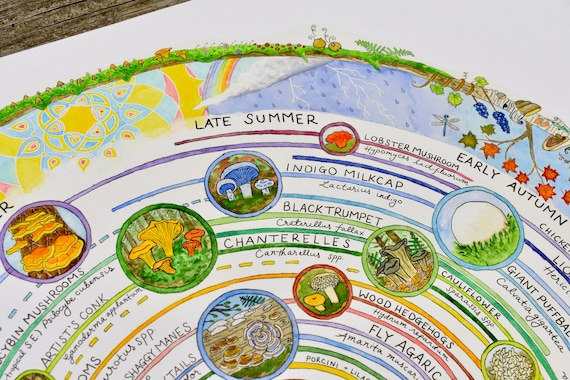
A well-planned seasonal mushroom foraging calendar helps you make the most of every month, so you find the right mushrooms at the right time. Whether you’re a curious beginner or an experienced forager, understanding this calendar will boost your success and safety. Every month brings its own treasures—from early spring morels to late autumn blewits—and each has unique habitats and clues. With practical tips and real-world examples, this guide will walk you through what to expect, how to prepare, and what to watch out for as you explore nature’s wild pantry through the year.
Understanding Mushroom Seasons
Before you start foraging, it’s important to know why mushrooms appear at certain times. Most mushrooms need a mix of moisture, temperature, and organic matter to fruit. Rainfall, humidity, and the warmth or chill of each season trigger their growth. Some mushrooms, like morels, pop up right after spring rains, while others, such as chanterelles, wait for summer heat and storms.
Climate and geography also play a big role. A mushroom that appears in April in the southern US might not show up until May or June in cooler northern regions. Elevation, tree type, and soil conditions further shape what you’ll find. So, always consider your local conditions and adjust the calendar a bit if needed.
A key insight: Many beginners overlook the link between weather patterns and mushroom flushes. A dry spring may delay morels, while a wet autumn can bring an explosion of late species. Watch the weather as closely as the calendar.
Preparing For Mushroom Foraging
To get the most from each season, some preparation is needed. Here’s what you should keep in mind before heading out:
- Learn local rules: Many parks and reserves have rules about foraging. Some allow it, some ban it, and some limit the amount you can take.
- Get good guides: Use reliable field guides or mushroom ID apps with clear photos. Online forums and local clubs can also help with tricky identifications.
- Bring the right gear: A small knife, a basket (never a plastic bag), and a brush for cleaning are essential. Wear sturdy shoes and clothes for hiking.
- Practice safety: Only eat mushrooms you’re 100% sure about. Many edible mushrooms have toxic lookalikes. When in doubt, leave it out.
A non-obvious tip: Photograph mushrooms in their habitat before picking. This helps with later identification and learning. Some species are easier to ID from their surroundings than their caps alone.
Month-by-month Mushroom Foraging Calendar
Let’s walk through the year, month by month, and see what wild mushrooms you can expect to find in temperate regions of North America and Europe. This guide offers highlights, but keep in mind local variations.
January
Winter can seem quiet, but a few hardy mushrooms still fruit in cold weather. They often grow on wood, feeding on decaying logs and branches.
Common finds:
- Velvet shank (Flammulina velutipes): Orange-brown caps, velvety stems. Grows on dead wood, often in clusters. Edible and mild in flavor.
- Oyster mushroom (Pleurotus ostreatus): Pale, shell-shaped caps on hardwood logs. Edible, with a delicate taste.
- Wood ear (Auricularia auricula-judae): Jelly-like, ear-shaped, brownish fungi on elder and other hardwoods. Used in soups.
Practical tips: Look for mushrooms after mild winter rains. Sun-warmed logs on south-facing slopes are good spots. Bring gloves—handling wood in winter can be chilly.
February
Late winter is similar to January, but with longer daylight and slightly warmer temperatures, you may see more action after rain or snowmelt.
Common finds:
- Velvet shank and oyster mushrooms continue.
- Scarlet elf cup (Sarcoscypha coccinea): Bright red, cup-shaped, often on decaying sticks. Beautiful but mild-tasting.
Important insight: Many beginners overlook fallen branches and dead logs, focusing only on ground mushrooms. In winter, most action is on wood.
March
As the ground warms, the first signs of spring appear. Still, most edible mushrooms are on wood.
Common finds:
- Oyster mushrooms and wood ear continue.
- Turkey tail (Trametes versicolor): Not edible, but very common. Used medicinally.
- Early morels (in southern regions): Rare, but possible by late March.
Tip: Watch for patches of melting snow—edges often have the first signs of spring mushrooms.
April
Now the real action begins. April is a transition month, with classic spring mushrooms starting to appear, especially after rains.
Common finds:
- Morels (Morchella spp. ): Highly prized, honeycomb caps, hollow. Grow near dead elms, ash, poplar, and in old orchards.
- St. George’s mushroom (Calocybe gambosa): White, mealy-smelling, grows in grassy areas and edges. Edible and tasty.
- Oyster mushrooms still appear, especially early in the month.
Key advice: Morels often appear after the first warm rains and when soil temperatures reach about 10°C (50°F). Carry a mesh bag to spread spores as you walk.
May
May is peak spring mushroom season. Forests and meadows burst with life, and so do the fungi.
Common finds:
- Morels peak in most areas.
- Dryad’s saddle (Polyporus squamosus): Large, scaly, fan-shaped on logs and stumps. Edible when young, with a cucumber smell.
- Fairy ring mushroom (Marasmius oreades): Small, tan, grows in rings in lawns and meadows. Popular for soups.
- Chicken of the woods (Laetiporus sulphureus): Bright yellow-orange, shelf-like, on oaks and other hardwoods. Tender and tasty when young.
Insight: Morel hunters often miss chicken of the woods, which appears at the same time but on wood, not soil. Always check logs and stumps.
June
Early summer brings new varieties as temperatures rise and moisture lingers from spring rains.
Common finds:
- Chanterelles (Cantharellus spp. ): Golden, trumpet-shaped, fruity aroma. Grow in mossy hardwood forests.
- Black trumpet (Craterellus cornucopioides): Dark, horn-shaped, hidden among leaf litter. Intense flavor.
- Shaggy mane (Coprinus comatus): Tall, white, shaggy caps, often in grass after rain. Edible when young.
Helpful comparison:
| Mushroom | Key Feature | Habitat | Best Use |
|---|---|---|---|
| Chanterelle | Fruity aroma, forked gills | Mossy forests | Sautéed, soups |
| Black trumpet | Dark, hollow horn | Leaf litter | Pasta, sauces |
| Shaggy mane | Shaggy white cap, inky when old | Lawns, grasslands | Fried, soups |
Tip: Chanterelles thrive after early summer thunderstorms. Look along stream edges and mossy roots.
July
Mid-summer is sometimes dry, but after rain, new species appear. Warmth and humidity are key.
Common finds:
- Chanterelles and black trumpets continue.
- Porcini (Boletus edulis): Thick, brown cap, spongy underside, under pines and spruce. Highly prized for flavor.
- Summer cep (Leccinum spp. ): Related to porcini, orange or brown caps, birch or aspen woods.
- Russula (Russula spp. ): Bright caps (red, green, yellow), many edible, some spicy or bitter.
Non-obvious insight: Many edible boletes (like porcini) have lookalikes that stain blue and taste bitter. Always check for color changes and avoid red-pored boletes.
August
As rains return, forests fill with a wider variety of mushrooms. This is peak season for many classic wild edibles.
Common finds:
- Porcini and chanterelles peak.
- Hedgehog mushroom (Hydnum repandum): Pale, with tooth-like spines under cap, nutty flavor.
- Lobster mushroom (Hypomyces lactifluorum): Bright orange, parasitic on other mushrooms, seafood flavor.
- Cauliflower mushroom (Sparassis crispa): Frilly, brain-like, at tree bases. Mild and crunchy.
Key advice: Forests with both conifers and hardwoods often have the most variety in August. Check both types of woods.
September
Early autumn is often the best time for mushroom foraging. Cooler nights, regular rain, and plenty of decaying plant matter create perfect conditions.
Common finds:
- Honey fungus (Armillaria mellea): Clusters on stumps, yellow-brown, edible but must be cooked well.
- Parasol mushroom (Macrolepiota procera): Tall, with large, umbrella-like caps, meadows or forest edges. Nutty flavor.
- Puffball (Lycoperdon spp. ): White, round, edible when young and pure white inside.
- Saffron milk cap (Lactarius deliciosus): Orange cap, orange milk, under pine trees, good for frying.
Practical tip: Parasols and puffballs are often found in open areas, not deep forest. Look in pastures and clearings.
October
Cool, damp weather continues, with some summer species fading and late-season mushrooms taking over.
Common finds:
- Wood blewits (Lepista nuda): Lilac-purple, grows in leaf litter, strong flavor.
- Field mushroom (Agaricus campestris): Classic white mushroom, meadows and fields, must be certain it’s not a toxic lookalike.
- Shaggy ink cap (Coprinus comatus): Continues from earlier, best when young.
- Matsutake (Tricholoma matsutake): Spicy aroma, under pine, highly valued in Asia.
Important detail: Blewits need a frost to fruit in large numbers. Wait for cool nights, then check leaf piles and compost heaps.
November
As leaves fall and nights get colder, mushroom choices narrow, but some interesting edibles remain.
Common finds:
- Wood blewits continue.
- Oyster mushrooms return with the rain.
- Late fall oyster (Panellus serotinus): Yellow-greenish, on dead wood, mild flavor.
- Enoki (wild form of Flammulina velutipes): Thin, orange caps, on logs, not to be confused with cultivated enoki.
Key tip: November is a good month to check fallen logs and branches after the first heavy rains. Mushrooms may be fewer, but easier to spot without leaf cover.
December
Winter returns, and most mushrooms disappear, but wood-loving species remain.
Common finds:
- Velvet shank and oyster mushrooms are the main edible options.
- Turkey tail and wood ear for medicinal or culinary uses.
Non-obvious insight: December is a good time for beginner foragers to practice ID on wood-loving mushrooms, as toxic lookalikes are rare in winter.
Comparing Edible And Toxic Lookalikes
It’s crucial to know that many edible mushrooms have dangerous or even deadly lookalikes. Here’s a quick comparison of some common pairs:
| Edible Mushroom | Toxic Lookalike | Key Difference |
|---|---|---|
| Morel | False morel (Gyromitra spp.) | True morels are hollow, false morels are not |
| Chanterelle | Jack-o’-lantern (Omphalotus) | Jack-o’-lantern has true gills, chanterelle has false gills |
| Field mushroom | Death cap (Amanita phalloides) | Death cap has a cup at base, white gills, sickly sweet smell |
| Parasol | Chlorophyllum molybdites | Chlorophyllum has green spores, parasol has white |
Expert guidance: Learn the differences by studying detailed photos and, if possible, join a local mushroom club or walk with experienced foragers.
Mushroom Foraging By Region
While the month-by-month guide above fits most temperate climates, your exact mushroom season may shift by weeks depending on where you live.
- Southern US and Mediterranean Europe: Many species fruit earlier, with peak morels in March-April, and summer mushrooms arriving by late May.
- Northern US, Canada, and Scandinavia: Peak may be June-July for morels, with late mushrooms into November.
- Mountain regions: Elevation delays fruiting; check lower slopes earlier, higher slopes later.
A key point: If you want to maximize your harvest, keep a personal diary of local fruiting times. Over a few years, this becomes your best resource.
Safety And Sustainability
Foraging is fun, but it comes with responsibility. Here are some important rules:
- Never eat a mushroom unless you’re 100% sure of its identity. Many edible mushrooms have poisonous twins.
- Harvest sustainably: Take only what you need. Leave small or old mushrooms to spread spores.
- Respect nature: Don’t damage logs, roots, or habitats. Avoid rare or protected species.
- Forage legally: Always check local regulations.
A common mistake: People sometimes pull out whole mushrooms, damaging the underground mycelium. Instead, cut or twist gently at the base.

Credit: www.chefs-resources.com
Practical Foraging Tips For Each Season
Every season brings unique challenges and opportunities. Here are some extra tips to help you succeed:
- Spring: Focus on old orchards, river bottoms, and burned areas for morels. Watch for sudden temperature changes, which can trigger growth.
- Summer: Look for mushrooms after thunderstorms. In dry periods, check near water sources or shaded north slopes.
- Autumn: Hunt in mixed woods for maximum variety. Many species fruit heavily after the first frosts.
- Winter: Scan dead logs, especially those with sun exposure. Mushrooms grow slowly but can survive freezing nights.
Pro tip: Early morning is best for foraging. Mushrooms are fresher, and you beat the competition—both human and animal.
Essential Tools For Successful Foraging
Bringing the right tools can make your foraging safer and more enjoyable:
- Field guide or app: For quick identification.
- Basket or mesh bag: Allows spores to spread.
- Sharp knife: For clean cuts.
- Small brush: For cleaning dirt off.
- Notebook or phone: For photos and notes.
- GPS or map: Forests can be disorienting.
Some foragers also bring a small trowel for digging up certain species (like truffles), but most edible mushrooms are harvested above ground.
Storing And Cooking Wild Mushrooms
Wild mushrooms are best eaten fresh, but sometimes you’ll have a big harvest. Here’s how to store them:
- Short term: Keep in a paper bag in the fridge. Most last 3–5 days.
- Drying: Slice and air-dry or use a dehydrator. Dried mushrooms last months and are easy to rehydrate.
- Freezing: Some, like chanterelles, can be sautéed and then frozen.
Cooking tip: Many wild mushrooms (chanterelles, morels) have richer flavors when sautéed slowly in butter or oil. Some (chicken of the woods, honey fungus) must be cooked well to avoid stomach upset.
A less-known fact: Never eat wild mushrooms raw. Even safe species can cause stomach upset if not cooked.
How Weather Impacts Mushroom Foraging
Weather is often more important than the calendar itself. Mushrooms need both moisture and temperature triggers to fruit.
- Rainfall: Most flushes follow 2–5 days after heavy rain.
- Temperature: Warm nights speed up growth, cold snaps slow it.
- Humidity: High humidity keeps mushrooms from drying out.
Some advanced foragers use soil thermometers and track rainfall to predict the best days to go out. While this might sound technical, even simple notes on rain and temperatures can improve your timing.
Joining The Mushroom Foraging Community
One of the best ways to learn is by joining others. Look for local mycology clubs, online forums, or guided walks. Sharing finds and experiences helps you learn faster and stay safer.
A helpful external resource: The North American Mycological Association offers information and lists of local clubs (North American Mycological Association).
Common Mistakes Beginners Make
- Ignoring toxic lookalikes: Always double-check before eating.
- Foraging in polluted areas: Avoid roadsides, industrial sites, and treated lawns. Mushrooms absorb toxins.
- Taking too much: Overharvesting can damage local populations.
- Not checking local rules: Some areas have strict bans on foraging.
A unique tip: If you’re unsure about a mushroom, keep it separate from others. Never mix unknown species with your main basket.

Credit: www.foragebox.co.uk
Seasonal Mushroom Calendar Quick Reference
Here’s a quick glance at when you’ll find the most popular edible mushrooms through the year:
| Mushroom | Jan | Feb | Mar | Apr | May | Jun | Jul | Aug | Sep | Oct | Nov | Dec |
|---|---|---|---|---|---|---|---|---|---|---|---|---|
| Morel | ● | ●● | ●●● | |||||||||
| Chanterelle | ● | ●● | ●●● | ●●● | ●● | |||||||
| Porcini | ● | ●● | ●●● | ●●● | ●● | |||||||
| Oyster | ● | ● | ● | ● | ● | ● | ● | |||||
| Chicken of the woods | ● | ●● | ●● | |||||||||
| Wood blewit | ● | ●● | ●● |
Legend: ● = common, ●● = peak season, ●●● = best time
Frequently Asked Questions
What Is The Best Month For Mushroom Foraging?
The best months are usually May (for morels and spring species) and September (for autumn varieties). However, the exact timing depends on your local climate and recent weather.
How Can I Tell If A Mushroom Is Poisonous?
There is no simple rule for spotting toxic mushrooms. Many edible species have dangerous lookalikes. The safest approach is to learn each species carefully, use good guides, and never eat anything you cannot identify with certainty.
Where Should I Look For Wild Mushrooms?
Different mushrooms prefer different habitats. Morels often grow in old orchards and near dead elms, while chanterelles like mossy hardwood forests. Always check near trees, logs, and leaf litter, and avoid polluted areas.
Is It Safe To Forage Mushrooms In The City?
Urban parks can have good mushrooms, but avoid picking near roads, railways, or treated lawns, as mushrooms absorb heavy metals and chemicals. Stick to clean, natural areas when possible.
What Should I Do If I Feel Sick After Eating Wild Mushrooms?
If you suspect mushroom poisoning, seek medical help immediately. Bring a sample of the mushroom with you for identification. Do not wait for symptoms to worsen, as some toxins act slowly but are very dangerous.
—
Foraging is a wonderful way to explore nature and enjoy unique flavors, but it demands respect, patience, and knowledge. By following a seasonal mushroom foraging calendar, you’ll not only increase your harvest but also deepen your connection with the rhythms of the wild. Stay safe, be curious, and enjoy the hunt—each month brings its own surprises and treasures.
Credit: www.etsy.com