
Maitake And Breast Cancer Prevention: D-fraction Study Review
Breast cancer is one of the most common cancers affecting women worldwide. Each year, millions of women receive the diagnosis, and for many, the news is life-changing. As medical science continues to search for better treatments, there has also been growing interest in prevention—especially through natural substances. One such substance that has caught scientific attention is Maitake mushroom, specifically its unique extract called D-Fraction. This extract is making headlines for its potential role in breast cancer prevention.
You may have heard stories about mushrooms and their health benefits, but the science behind Maitake and its D-Fraction is particularly fascinating. Several studies suggest that Maitake D-Fraction could support the immune system, reduce tumor growth, and possibly even help prevent the onset of certain cancers, including breast cancer.
But what exactly is Maitake D-Fraction? How does it work in the body? And can it really make a difference for women concerned about breast cancer?
This article takes a deep dive into the science, reviewing the most important studies, explaining how D-Fraction works, and providing a clear, simple guide to what every woman should know about Maitake and breast cancer prevention. Whether you are exploring options for your own health, supporting a loved one, or simply curious about breakthroughs in cancer research, this guide will give you the knowledge you need to make informed decisions.
What Is Maitake? Understanding The Mushroom
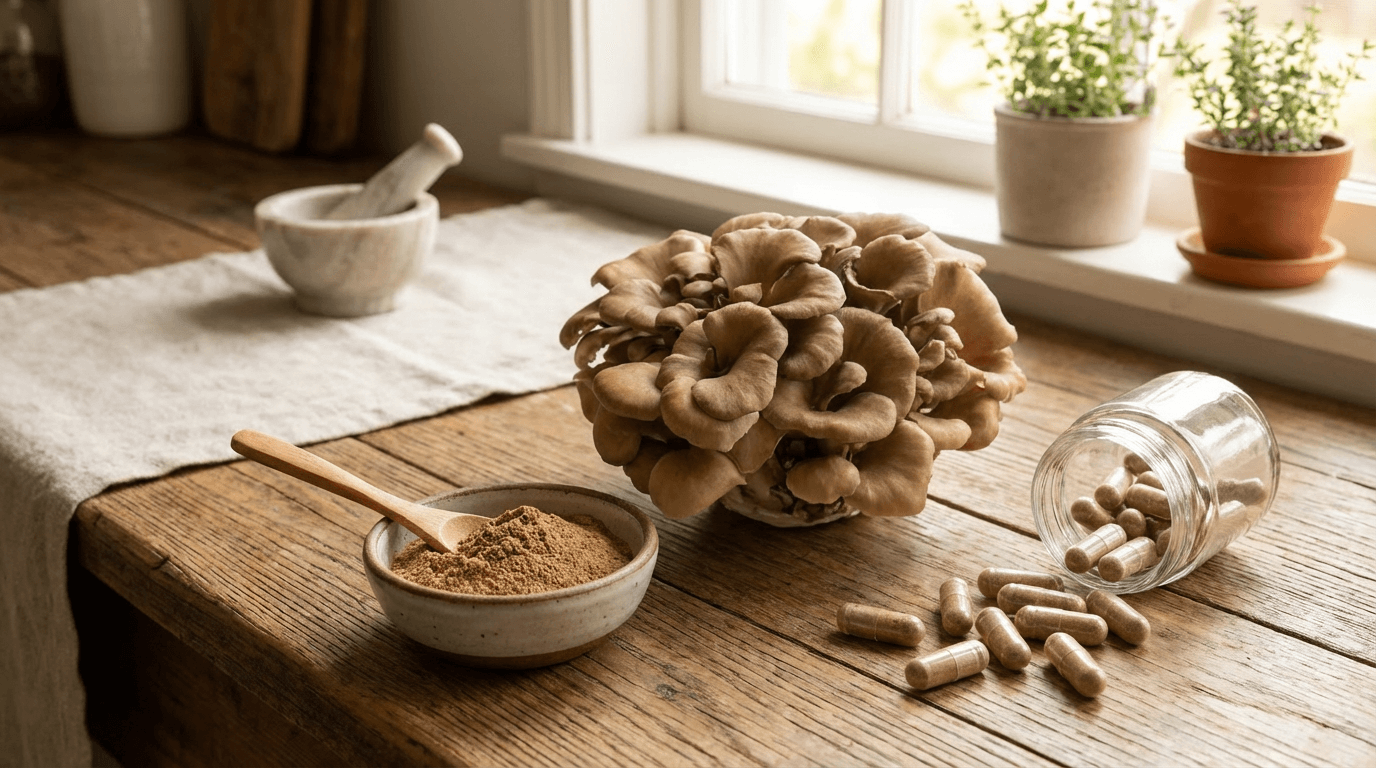
The Maitake mushroom (Grifola frondosa), also called “hen of the woods,” is native to the forests of Japan, China, and North America. For centuries, it has been used in traditional Asian medicine as a tonic to boost health and vitality. Maitake is known for its frilly, clustered appearance and savory taste, making it popular in cooking as well.
But beyond its culinary uses, Maitake contains several active compounds that have attracted the interest of scientists. The most important of these are beta-glucans, a type of polysaccharide found in the mushroom’s cell walls. Research shows that beta-glucans can stimulate the immune system, making them potentially useful for fighting infections and diseases, including cancer.
Key Features Of Maitake Mushroom
- Rich in polysaccharides (especially beta-glucans)
- Used for centuries in traditional medicine
- Naturally grows at the base of oak, elm, and maple trees
- Has a distinctive, layered appearance
- Increasingly available as a dietary supplement
How Maitake Differs From Other Mushrooms
Many edible mushrooms have health benefits, but Maitake stands out because of its high concentration of specific beta-glucans. These molecules are larger and more complex than those found in other mushrooms, which may explain their stronger biological effects.
| Mushroom | Main Active Compound | Traditional Use | Unique Feature |
|---|---|---|---|
| Maitake | Beta-glucans (D-Fraction) | Immunity, vitality | High concentration of D-Fraction |
| Reishi | Ganoderic acids | Longevity, relaxation | Adaptogenic properties |
| Shiitake | Lentinan | General health | Strong anti-viral activity |
What Is D-fraction? The Powerful Extract
D-Fraction is a purified extract derived from Maitake mushrooms. Scientists isolate this fraction because it contains a unique and highly active form of beta-glucan. Not all beta-glucans are the same; D-Fraction refers to a specific structure that has shown strong biological activity in laboratory and animal studies.
How D-fraction Is Made
To produce D-Fraction, manufacturers start with whole Maitake mushrooms. They use water and heat to extract the polysaccharides, then separate and purify the D-Fraction using advanced filtration. The result is a concentrated liquid or powder, often sold as a dietary supplement.
Why D-fraction Is Special
- Contains a unique 3-branched beta-glucan structure
- Highly absorbable by the body
- Demonstrated ability to activate immune cells
- Studied specifically for cancer prevention and support
D-Fraction is not the only beta-glucan in Maitake, but it is the most researched and seems to have the strongest effect on the immune system. This is why most scientific studies focus on D-Fraction, rather than whole mushroom powder or other extracts.
Breast Cancer: Why Prevention Matters
Breast cancer remains a leading cause of death among women globally. According to the World Health Organization, over 2.3 million women were diagnosed with breast cancer in 2020, and nearly 685,000 died from the disease. While new treatments have improved survival rates, prevention is still the most effective way to save lives.
Risk Factors For Breast Cancer
Understanding risk factors can help women take steps to protect themselves. Some of the main factors include:
- Age: Risk increases as you get older.
- Genetics: Family history and certain gene mutations (like BRCA1 and BRCA2).
- Hormone Levels: Early menstruation, late menopause, hormone therapy.
- Lifestyle: Obesity, alcohol use, lack of exercise.
- Diet: High-fat diets and low intake of fruits and vegetables.
While some risk factors can’t be changed, others—like diet and lifestyle—can be improved. This is where natural substances like Maitake D-Fraction may play an important role.
The Role Of The Immune System In Cancer Prevention
The immune system is your body’s defense against disease, including cancer. It can recognize and destroy abnormal cells before they become tumors. However, sometimes cancer cells evade the immune system, grow, and spread. Strengthening immune function is one promising way to lower cancer risk, especially for people with higher genetic or lifestyle risks.
How Maitake D-fraction May Prevent Breast Cancer
The link between Maitake D-Fraction and breast cancer prevention is built on several key findings from laboratory, animal, and human studies. The main benefits seem to come from D-Fraction’s ability to support and activate the immune system.
Immune System Activation
D-Fraction is known to stimulate natural killer (NK) cells, T-cells, and macrophages. These cells are crucial in detecting and destroying cancer cells at an early stage. By increasing the activity of these immune cells, D-Fraction can help the body find and eliminate abnormal breast cells before they turn into tumors.
Inhibition Of Tumor Growth
Some animal studies show that Maitake D-Fraction can slow the growth of breast tumors. This effect appears to be due to both direct and indirect actions:
- Direct: D-Fraction may stop cancer cells from multiplying.
- Indirect: By activating immune cells, it helps the body attack and destroy cancer cells more effectively.
Hormone Regulation
Certain types of breast cancer are driven by hormones like estrogen and progesterone. Early research suggests that Maitake D-Fraction might help balance hormone levels, which could reduce the risk of hormone-sensitive tumors developing.
Antioxidant Effects
Oxidative stress—damage caused by free radicals—has been linked to cancer formation. Maitake mushrooms, including D-Fraction, have antioxidant properties that can help protect cells from this damage, lowering the risk of mutations that could lead to cancer.
Review Of Key D-fraction Studies On Breast Cancer
Scientific interest in Maitake D-Fraction has led to several important studies. Here’s a summary of the most relevant research, including both laboratory and human trials.
1. Laboratory Studies
Researchers have tested D-Fraction on breast cancer cells in laboratory settings (in vitro). These studies found that D-Fraction can:
- Slow or stop the growth of breast cancer cells
- Induce apoptosis (programmed cell death), making it harder for cancer cells to survive
- Reduce the ability of cancer cells to spread (metastasis)
One notable study from 1997 found that Maitake D-Fraction caused apoptosis in breast cancer cell lines, reducing their viability by up to 60% after 48 hours of exposure.
2. Animal Studies
In mouse models, D-Fraction has shown similar effects:
- Mice given D-Fraction developed fewer and smaller breast tumors.
- Combining D-Fraction with certain chemotherapy drugs made the treatment more effective than chemotherapy alone.
- Mice treated with D-Fraction had stronger immune responses, with more active NK cells and macrophages.
For example, a 2002 Japanese study tested D-Fraction in mice with induced breast tumors. The group receiving D-Fraction had a tumor suppression rate of 45% compared to the control group.
3. Human Clinical Trials
Human studies are more limited but promising. The most cited research comes from a pilot study published in 2009 by Dr. Hiroaki Nanba and colleagues. In this trial:
- Women with advanced breast cancer received Maitake D-Fraction supplements alongside standard treatment.
- The group taking D-Fraction showed improved immune function (higher NK cell activity).
- Some women experienced partial tumor shrinkage, though more research is needed to confirm this effect.
Another small study found that D-Fraction supplementation improved quality of life and reduced side effects from chemotherapy, such as fatigue and low immunity.
4. Combined Therapy Studies
Some research has explored using D-Fraction alongside traditional cancer treatments like chemotherapy and radiation. Results suggest that D-Fraction can:
- Reduce side effects of chemotherapy (nausea, fatigue, immune suppression)
- Enhance the effectiveness of drugs like cyclophosphamide and doxorubicin
- Help patients recover faster after treatment
These findings are important because they show D-Fraction may be useful not just for prevention, but also for supporting women who are already undergoing treatment for breast cancer.
Table: Summary Of Key Study Findings
| Study Type | Main Finding | Details | Reference |
|---|---|---|---|
| Lab (in vitro) | Reduced cancer cell growth | 60% reduction in viability | Nanba et al., 1997 |
| Animal | Tumor suppression (45%) | Enhanced immune response | Japanese study, 2002 |
| Human (pilot) | Higher NK cell activity | Partial tumor shrinkage in some | Nanba et al., 2009 |
| Combined therapy | Better chemo tolerance | Reduced side effects | Multiple sources |
How D-fraction Works In The Body: Mechanisms Explained
Understanding how D-Fraction helps prevent breast cancer requires a closer look at its biological mechanisms.
Immune Modulation
D-Fraction’s beta-glucans bind to special receptors (called Dectin-1 and CR3) on immune cells. This binding acts like an “on switch,” telling the immune system to become more active. As a result, NK cells and macrophages are better able to find and destroy cancer cells.
Inducing Apoptosis
Cancer cells often avoid normal cell death. D-Fraction appears to trigger apoptosis by activating certain genes inside the cancer cell. This process causes the cancer cell to break down in a controlled way.
Anti-angiogenesis
Tumors need a blood supply to grow. D-Fraction may help prevent the formation of new blood vessels (angiogenesis) that feed tumors. This limits the nutrients reaching cancer cells, slowing their growth.
Reducing Inflammation
Chronic inflammation can increase cancer risk. D-Fraction helps lower levels of pro-inflammatory cytokines, reducing the conditions that allow cancer to develop and spread.
Hormone Modulation
Early studies hint that D-Fraction may help balance estrogen and other hormones. Since many breast cancers are hormone-sensitive, this effect could be especially important for prevention.

Credit: www.researchgate.net
Maitake D-fraction Versus Other Natural Cancer Preventives
Maitake is not the only natural substance studied for cancer prevention. How does D-Fraction compare to other options like green tea, curcumin, or Reishi mushroom?
| Substance | Main Active Compound | Targeted Cancer Type | Main Benefit | Unique Feature |
|---|---|---|---|---|
| Maitake D-Fraction | Beta-glucan | Breast, colon, lung | Immune activation | Strong NK cell stimulation |
| Green Tea (EGCG) | Epigallocatechin gallate | Breast, prostate | Antioxidant, anti-angiogenesis | Widely studied, easy to consume |
| Curcumin | Curcumin | Colon, breast | Anti-inflammatory | Potent, but low absorption |
| Reishi | Ganoderic acids | Liver, lung | Immune regulation | Adaptogenic effect |
While all these natural substances offer benefits, Maitake D-Fraction stands out for its strong immune-activating effects and specific research on breast cancer. Unlike curcumin, which has low absorption, D-Fraction is easily absorbed and well-tolerated.
Dosage, Safety, And Use: Practical Guidance
If you’re considering Maitake D-Fraction for breast cancer prevention, it’s essential to understand how to use it safely and effectively.
Typical Dosage
Most studies use D-Fraction in doses ranging from 20 mg to 100 mg per day of the active beta-glucan. Supplements are available in both liquid and capsule form. For general immune support and prevention, lower doses are often recommended. For people at higher risk or with a diagnosis, higher doses may be used—always under medical supervision.
How To Take Maitake D-fraction
- With or without food: D-Fraction can be taken at any time of day.
- Consistency matters: Daily use provides the best results.
- Form: Liquid drops are absorbed quickly; capsules are more convenient for many people.
Safety Profile
Maitake D-Fraction is considered safe for most people. Side effects are rare and usually mild, including:
- Upset stomach
- Diarrhea
- Nausea
These symptoms often disappear as your body adjusts. People with mushroom allergies should avoid Maitake. If you are on immune-suppressing drugs or have an autoimmune disease, consult your doctor before starting D-Fraction.
Interaction With Other Treatments
D-Fraction is often used alongside traditional cancer treatments. Studies show it does not interfere with chemotherapy or radiation—in fact, it may help reduce side effects. However, always speak with your oncologist before adding any supplement to your routine.
Quality Matters
Choose supplements from reputable brands that provide third-party testing for purity and potency. Cheap, untested products may not contain enough active D-Fraction to be effective.
Non-obvious Insights: What Most People Miss
Most articles cover the basics of Maitake D-Fraction, but a few important points often go unnoticed:
- D-Fraction is not the same as whole Maitake powder. Many health food stores sell dried Maitake or simple mushroom powders. These contain some beta-glucans but not the concentrated, standardized D-Fraction used in studies. If you want the cancer-preventive effects, look for products labeled “Maitake D-Fraction” with a clear dosage.
- Timing of use can matter. Preliminary data suggest that taking D-Fraction before cancer develops (as a preventive) may be more effective than starting after diagnosis. The immune system is stronger at preventing cancer than eliminating advanced tumors.
- Combination with lifestyle changes boosts results. D-Fraction works best when combined with other healthy habits—like eating a plant-rich diet, exercising, and limiting alcohol. The extract is not a magic bullet, but it can be a powerful part of a holistic cancer prevention plan.
Real-world Stories: Experiences With Maitake D-fraction
While scientific data is crucial, personal experiences also matter. Many women who have used Maitake D-Fraction share stories of improved well-being, stronger immunity, and fewer side effects during cancer treatment.
For example, one breast cancer survivor reported that adding D-Fraction to her routine helped her tolerate chemotherapy better, with less fatigue and faster recovery after each cycle. Others mention feeling less anxious about cancer recurrence when using D-Fraction as part of their prevention strategy.
It’s important to remember that individual results vary. What works for one person may not work for another. Always use supplements as part of a broader health plan, not as a replacement for medical care.
Expert Opinions: What Doctors And Scientists Say
Some oncologists and researchers see promise in Maitake D-Fraction but emphasize that it is not a replacement for standard treatment. Instead, they view it as a complementary approach that may support the immune system and improve quality of life.
Dr. Hiroaki Nanba, a leading researcher in the field, has said that Maitake D-Fraction shows unique immune-boosting properties not found in other mushroom extracts. However, he and others agree that larger, well-controlled clinical trials are needed before D-Fraction can be officially recommended for cancer prevention.
Organizations like the American Cancer Society recognize the potential of mushroom extracts but urge patients to discuss all supplements with their healthcare team.
Frequently Asked Questions
What Is The Difference Between Maitake D-fraction And Regular Maitake Supplements?
Regular Maitake supplements are usually made from dried or powdered whole mushrooms. These contain many nutrients, but the amount of active beta-glucans is much lower than in D-Fraction. Maitake D-Fraction is a highly purified extract with a specific structure, shown in research to support immune function and cancer prevention much more effectively than standard powders.
Can Maitake D-fraction Be Used Alongside Chemotherapy?
Yes, most studies show that D-Fraction is safe to use with chemotherapy and may even reduce some side effects. It can help keep immune function strong during cancer treatment. However, always speak to your oncologist before starting any new supplement.
Are There Any Risks Or Side Effects With D-fraction?
For most people, D-Fraction is safe and well-tolerated. Mild side effects like stomach upset or diarrhea can happen, especially at higher doses. People with mushroom allergies or those taking immune-suppressing drugs should avoid D-Fraction unless advised by a doctor.
How Long Should I Take Maitake D-fraction For Breast Cancer Prevention?
There is no official guideline on duration, but most experts suggest using D-Fraction consistently over the long term, especially if you have risk factors for breast cancer. Taking breaks or cycling use is not necessary unless you experience side effects.
Credit: antioxi-supplements.com
Where Can I Find High-quality Maitake D-fraction Supplements?
Look for brands that use standardized D-Fraction, list the amount of active beta-glucan, and provide third-party testing for purity. Health food stores, online retailers, and some clinics carry reputable products. For more information, you can read scientific summaries at National Cancer Institute.
The Future Of Maitake D-fraction In Breast Cancer Prevention
Maitake D-Fraction is one of the most exciting natural substances being studied for cancer prevention today. Its ability to stimulate the immune system, inhibit tumor growth, and support overall health makes it a promising addition to the fight against breast cancer.
While more large-scale human trials are needed, current evidence suggests that D-Fraction can play a valuable role in prevention—especially for women at higher risk.
If you are considering D-Fraction for yourself or a loved one, talk to your healthcare provider, learn about quality supplements, and use it as part of a broader approach to health. Combined with regular screenings, a healthy lifestyle, and medical care, Maitake D-Fraction may help more women live cancer-free lives.

Credit: antioxi-supplements.com