
Cordyceps Vs Caffeine: A Head-to-head Energy Comparison
Every day, millions of people look for ways to boost their energy. Some reach for a hot cup of coffee, while others try natural supplements like cordyceps. Both are famous for increasing alertness and stamina, but they work in very different ways. If you want steady energy, fewer crashes, or better physical performance, it’s important to know what sets cordyceps and caffeine apart.
This article dives deep into how cordyceps and caffeine affect your body, their benefits, side effects, and which is better for different lifestyles. We’ll compare scientific studies, real-world results, and offer practical advice for anyone thinking about adding these boosters to their routine.
By the end, you’ll have a clear understanding of which one fits your needs best.
What Is Cordyceps?
Cordyceps is a type of fungus that grows mainly in Asia, especially on the high mountains of China, Nepal, and Tibet. Traditionally, it was used in Chinese medicine to fight tiredness, improve lungs, and boost the immune system. Ancient healers believed that cordyceps could restore “vital energy” and help with many illnesses. Stories tell of yak herders who noticed their animals became stronger after eating wild cordyceps in the grasslands.
Today, most cordyceps supplements use lab-grown strains, mainly Cordyceps militaris. The wild variety, Cordyceps sinensis, is rare and expensive. Scientists have found that cordyceps contains special compounds, including cordycepin and polysaccharides, which help the body use oxygen more efficiently and may increase ATP, the main energy molecule in our cells. These components also have mild anti-inflammatory and antioxidant properties, which may help the body recover from stress and exercise.
Cordyceps is usually taken as a powder, capsule, or in drinks. People use it for natural energy, athletic performance, and even as a support for stress. In some places, it’s also cooked into soups or added to rice dishes. More recently, cordyceps is appearing in protein bars and energy drinks, as companies look for alternatives to traditional caffeine-heavy products.
What Is Caffeine?
Caffeine is a natural stimulant found in coffee, tea, energy drinks, cola, and even chocolate. It is the most widely used psychoactive substance in the world. Caffeine mainly works by blocking a brain chemical called adenosine, which makes us feel sleepy. By doing this, caffeine helps us feel more awake and alert.
On average, a cup of coffee has about 95 mg of caffeine, while black tea has 40–70 mg, and a can of energy drink can range from 80 to 150 mg. Caffeine is absorbed quickly, usually reaching a peak in the blood within 30 to 60 minutes.
Some people feel the effect sooner, especially on an empty stomach.
People use caffeine for a fast energy boost, better focus, and improved physical performance. But it can also cause side effects like jitters, a fast heartbeat, or trouble sleeping. Over time, regular caffeine use can lead to dependence, meaning you may need more to get the same effect.
In some cultures, sharing coffee or tea is also a social activity, not just a way to stay awake.
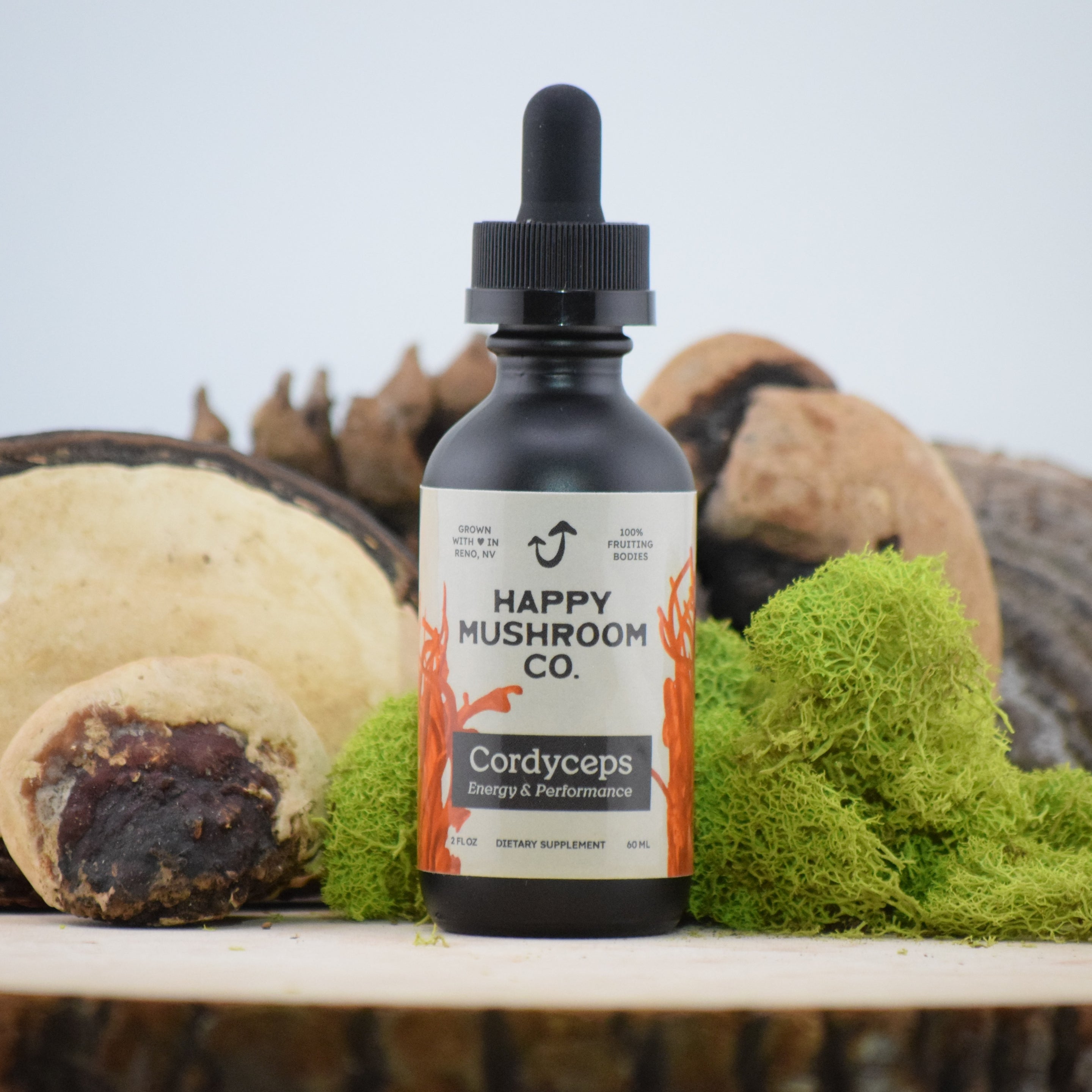
Credit: happymushroomco.com
How Cordyceps Boosts Energy
Cordyceps is not a stimulant. Instead, it increases energy by helping the body work better on a cellular level.
- Boosts ATP Production: ATP is the fuel that powers every cell. Studies show cordyceps can help the body make more ATP, especially during exercise. This means muscles get more energy and can keep working longer. Unlike stimulants, this doesn’t force your body to work harder, but allows it to use what it already has more efficiently.
- Improves Oxygen Use: Cordyceps helps the lungs take in and use oxygen more efficiently. This is why many athletes use it to delay tiredness. For example, people living at high altitudes, where the air is thin, sometimes use cordyceps to help their bodies cope with lower oxygen levels.
- Reduces Fatigue: The fungus can increase antioxidants in the body, which protect against stress and reduce tiredness after hard work. Antioxidants help remove “free radicals,” which are waste products that build up during exercise and make you feel tired.
- Balances Stress Hormones: Cordyceps may lower cortisol, the stress hormone. This helps keep energy levels steady without the ups and downs that come from stimulants. People under high stress may notice less exhaustion and better recovery from daily demands.
Example
A 2010 study in the Journal of Alternative and Complementary Medicine found that older adults who took cordyceps improved their exercise performance and had less fatigue than those who did not. Some participants also reported feeling less shortness of breath during everyday activities, such as climbing stairs or walking briskly.
Non-obvious Insight
Cordyceps does not give a “kick” like coffee. The energy boost is gentle and builds over days or weeks of regular use. Many people only notice how much better they feel when they stop taking it, realizing their old fatigue returns.
Another detail: Cordyceps may support immune health, which can also help with overall energy. When your immune system is strong, your body doesn’t have to “fight off” small infections or inflammation as much, which means less background tiredness.
How Caffeine Boosts Energy
Caffeine works fast and is known for its strong stimulating effect.
- Blocks Adenosine: Caffeine prevents the brain from feeling tired by blocking adenosine, a chemical that signals sleepiness. This means your brain stays in “awake mode” longer, even if your body is actually tired.
- Increases Adrenaline: It triggers the release of adrenaline, the “fight or flight” hormone, making you feel alert and ready to act. This hormone also raises your heart rate and can make your hands shake if you have too much.
- Boosts Dopamine: This brain chemical improves mood and motivation, which can make tasks feel easier. Some people feel more confident or happy after their morning coffee.
- Speeds Up Brain Activity: Caffeine helps you think faster and react more quickly. It’s often used by drivers, gamers, or anyone who needs to stay sharp for hours.
Example
After drinking coffee, most people feel more awake within 20–30 minutes. This effect can last 3–5 hours, depending on individual sensitivity. Some people find that even a small cup of coffee late in the day can keep them awake all night, while others can drink espresso after dinner and still sleep well.
Non-obvious Insight
Caffeine does not make new energy; it borrows it from your body’s reserves. This is why you often feel a “crash” after a few hours. The body tries to “catch up” on the rest you skipped, which is why you may feel even more tired later.
Another point: caffeine can make you feel less hungry or make you use the bathroom more often, which can affect hydration. If you don’t drink enough water, this can lead to more tiredness later.
Comparing Effects: Cordyceps Vs. Caffeine
Let’s look at how these two compare in key areas:
| Feature | Cordyceps | Caffeine |
|---|---|---|
| Type of Effect | Gradual, steady | Fast, strong |
| Time to Feel Effects | 1–2 weeks of regular use | 20–60 minutes |
| Duration | Long-lasting, no crash | 3–5 hours, crash likely |
| Physical Performance | Increases endurance | Boosts short-term power |
| Mental Alertness | Mild improvement | Strong improvement |
| Side Effects | Rare, mild | Common, can be strong |
You’ll notice that cordyceps is more about “supporting” the body, while caffeine is about “pushing” it to work harder. Some people use both together, but the experiences are very different.
Scientific Evidence: What Research Says
Cordyceps
- A review in 2016 found that cordyceps improved exercise performance and reduced tiredness in both animals and humans. These studies included both healthy people and those with chronic fatigue.
- In a 12-week study, healthy adults who took cordyceps had better oxygen use and longer time before exhaustion. Their post-exercise recovery was also faster, with less muscle soreness and quicker return to normal heart rate.
- Athletes using cordyceps for a month showed better stamina and faster muscle recovery. Some also noticed fewer colds and better sleep.
Researchers also found that cordyceps can help support healthy blood sugar levels, which means fewer energy dips during the day. This is important for people who feel tired after meals or who have unstable blood sugar.
Caffeine
- A 2013 meta-analysis showed that caffeine can improve endurance by 2–16%, depending on the sport. For example, runners, cyclists, and rowers often perform better after caffeine.
- Caffeine boosts both mental focus and physical power, which is why it’s a favorite before exams or competitions.
- It can help with short, intense activities and also with endurance events, but the effect is usually stronger in people who don’t use caffeine every day. Over time, the body gets used to caffeine, and the boost becomes smaller.
One interesting detail: caffeine can improve “perceived effort,” meaning you feel exercise is easier, even if your muscles are working just as hard. This psychological effect is a big reason why caffeine is so popular in sports.
Non-obvious Insight
Most studies on cordyceps use lab-grown Cordyceps militaris, not the expensive wild kind. Also, caffeine’s effect depends a lot on your genes—some people break it down slowly and feel jittery, while others hardly notice it.
A practical tip: if you want to test cordyceps, check for the exact species and extraction ratio (like “10:1 extract”) on the label. For caffeine, notice how your body feels after drinking coffee or tea, and adjust your dose as needed.
Physical Performance: Which Is Better?
Both cordyceps and caffeine are popular among athletes, but they shine in different areas.
Cordyceps For Endurance
- Helps runners, cyclists, and swimmers by making muscles use oxygen better.
- Supports longer workouts with less tiredness.
- May reduce muscle soreness after exercise.
- Can be used daily without losing effect, so it’s good for training blocks or multi-day events.
Some long-distance athletes report that cordyceps helps them recover faster between sessions, letting them train harder over time. It’s also used by people who want to stay active as they age, since it seems to support both strength and stamina.
Caffeine For Power And Quick Energy
- Great for short, high-intensity activities like sprinting or weightlifting.
- Works fast, so it’s useful right before a game or event.
- Can increase motivation and reaction time.
- May help “push through” tiredness during a long event, but the risk of crashing later is higher.
Caffeine is often used by team-sport athletes, drivers, or anyone who needs a sharp edge for a short period. Some sports ban very high doses of caffeine, so check the rules if you compete.
Example
A cyclist might use cordyceps for months to slowly improve stamina, while a basketball player might drink coffee an hour before a game for a quick burst.
Another example: a marathon runner could take cordyceps daily for steady energy, and use a small amount of caffeine only during races for an extra kick.
Mental Focus And Alertness
Caffeine
Caffeine is famous for boosting mental performance. It can improve focus, memory, and reaction speed. That’s why students and office workers often rely on coffee or energy drinks.
Caffeine’s effect on the brain is so strong that it’s used in some painkillers and cold medicines to help people feel better faster. However, too much can lead to nervousness, overthinking, or even mild anxiety.
Cordyceps
Cordyceps has a much milder effect on the brain. Some people report feeling less “foggy” and more balanced, but it does not give the sharp mental “kick” of caffeine.
People under chronic stress or with sleep issues sometimes find that cordyceps helps them concentrate better, not by stimulating, but by calming the background stress that distracts them.
Non-obvious Insight
Cordyceps may help with mental clarity by reducing stress hormones, not by stimulating the brain directly. This makes it a good choice for people who want calm focus without anxiety.
Also, cordyceps doesn’t interfere with sleep—some people even report better sleep quality after a few weeks of use.
Side Effects And Safety
Both cordyceps and caffeine are generally safe, but they have different risk profiles.
Cordyceps Side Effects
- Mild stomach upset in some people
- Dry mouth
- Loose stools (rare)
- Allergic reactions are possible but very rare
Cordyceps is usually safe for most adults, but people with autoimmune diseases or those taking immune-suppressing drugs should be careful. Pregnant or breastfeeding women should check with a doctor.
One less-known risk is with mushroom allergies—people allergic to mushrooms or mold may react to cordyceps, although this is very rare.
Caffeine Side Effects
- Jitters or shakiness
- Fast heartbeat
- Trouble sleeping (insomnia)
- Increased anxiety
- Stomach upset
- Headaches or migraines (especially if you stop suddenly)
Caffeine can be dangerous in very high doses (over 400 mg per day for adults). Some people are more sensitive and can have side effects at much lower amounts. Caffeine can also interact with some medicines, making them less effective or too strong.
Comparison Table
| Side Effect | Cordyceps | Caffeine |
|---|---|---|
| Jitters | No | Yes |
| Sleep Problems | No | Yes |
| Stomach Issues | Rare | Sometimes |
| Heart Rate | No effect | Increases |
| Addiction/Withdrawal | No | Yes |
Tolerance And Dependence
Caffeine
Regular use of caffeine leads to tolerance. Over time, you need more to get the same effect. If you stop suddenly, you may feel headaches, tiredness, or bad mood—this is withdrawal.
Long-term heavy caffeine use can also make some people feel anxious or unable to relax, even when they want to. This is especially true for people with anxiety disorders.
Cordyceps
Cordyceps does not cause tolerance or withdrawal. The effects may get better over weeks of use.
Some people even find their sleep or mood improves with continued use, as their body becomes better at handling stress.
Non-obvious Insight
People often think all “energy boosters” create dependence, but cordyceps works differently from caffeine. Its main effect is on physical stamina and stress, not on the brain’s reward system.
Switching from caffeine to cordyceps can help some people break the cycle of needing more and more coffee every day.
How To Use Cordyceps
Cordyceps comes in several forms: capsules, powders, teas, and even as an ingredient in energy drinks.
Dosage
- Most studies use 1–3 grams per day of cordyceps powder or 500–1000 mg of extract.
- Take with food to avoid stomach upset.
- For athletes, higher doses are sometimes used under supervision, but more is not always better.
Tips
- Choose products with “Cordyceps militaris” for best results; wild “sinensis” is very expensive and hard to find.
- Look for brands that test for quality and purity.
- Effects build over time, so use daily for 2–4 weeks before judging the results.
- Store in a cool, dry place to keep the powder fresh.
Example
A runner might take 1 gram of cordyceps powder in a morning smoothie every day for a month to see stamina improvements.
Another example: someone with a busy job might use cordyceps capsules with breakfast to help with steady energy throughout the workday.
How To Use Caffeine
Caffeine is found naturally in coffee, tea, chocolate, and energy drinks. It’s also available as pills or powders.
Dosage
- Safe daily limit for most adults: Up to 400 mg (about 4 cups of coffee).
- For a single boost, 50–200 mg is enough for most people.
- For children and teens, much less is recommended (consult a doctor).
Tips
- Start with a small amount to see how your body reacts.
- Avoid caffeine after 2 pm if you have trouble sleeping.
- Don’t mix with alcohol or other stimulants.
- Drink extra water, as caffeine can be dehydrating.
Example
A student might drink a cup of coffee (95 mg) before studying, but avoid more to prevent jitters.
A worker may switch to green tea in the afternoon, which has less caffeine, to avoid trouble sleeping at night.
Who Should Choose Cordyceps?
Cordyceps is a better fit for some people, including:
- Athletes who need long-term stamina, not just quick energy.
- People with sensitivity to caffeine (those who get jitters or anxiety from coffee).
- Older adults looking for a gentle energy lift.
- Anyone wanting to avoid crashes or withdrawal symptoms.
- Individuals with high stress who want balanced, steady energy.
Cordyceps is also popular among people interested in natural, traditional remedies. People who want to support their immune system or who want to avoid stimulants may also benefit.
Who Should Choose Caffeine?
Caffeine is a good choice for:
- People needing fast, strong alertness (for work, study, or driving).
- Athletes in short, intense sports who want a quick power boost.
- Individuals who enjoy coffee or tea as part of their routine.
- People who tolerate caffeine well and don’t experience side effects.
- Those who need immediate focus for short periods.
Non-obvious Insight
Caffeine is best used “strategically”—for example, only before a big meeting or test, not all day, every day. This reduces tolerance and keeps the effect strong.
People who cycle their caffeine use (taking breaks) often find it works better when they really need it.
Combining Cordyceps And Caffeine
Some energy supplements and drinks now include both cordyceps and caffeine. The idea is to get the best of both: cordyceps for steady energy and recovery, caffeine for a quick mental lift.
Is It Safe?
For most healthy adults, combining both in moderate amounts is safe. But you should:
- Start with low doses to see how you feel.
- Avoid taking both late in the day to prevent sleep problems.
- Watch for any unusual side effects.
- If you have any health conditions, ask a doctor first.
Example
A pre-workout drink might contain 100 mg of caffeine and 1 gram of cordyceps, giving both a quick and steady energy boost.
Some people also use cordyceps daily, and add caffeine only for special situations, like a sports competition or a long drive.
Non-obvious Insight
You may not need as much caffeine if you combine it with cordyceps. Some people find they can cut their usual coffee dose in half when paired with cordyceps and still feel sharp.
Paying attention to how your body feels can help you find the right balance.
Price And Availability
Cordyceps
- Pure cordyceps powder or capsules can cost $1–$3 per daily dose.
- Quality varies a lot—look for lab-tested brands.
- Available in health stores, online, and sometimes in supermarkets.
- Wild cordyceps can cost hundreds of dollars per ounce and is not necessary for most people.
Caffeine
- Coffee and tea are cheap and easy to find.
- Caffeine pills cost just a few cents per dose.
- Available everywhere, including vending machines.
- Specialty drinks and energy shots can be much more expensive.
Comparison Table
| Factor | Cordyceps | Caffeine |
|---|---|---|
| Availability | Supplements, health stores, online | Coffee, tea, drinks, pills, everywhere |
| Average Cost per Dose | $1–$3 | $0.10–$0.50 |
| Quality Variation | High | Low |
| Regulation | Supplements, less strict | Food, well regulated |

Credit: antioxi-supplements.com
Common Myths And Misunderstandings
Myth 1: Cordyceps Works Instantly
Many people expect cordyceps to work like caffeine. In reality, it builds up in the body and shows the best results after 1–2 weeks of use.
Myth 2: Caffeine Is The Only Effective Energy Booster
While caffeine is fast and strong, it’s not the only way to get more energy. Cordyceps, better sleep, hydration, and exercise can all improve energy naturally.
Myth 3: Cordyceps Is A Magic Mushroom
Cordyceps is not psychedelic and will not cause hallucinations. It is a functional mushroom, used for health and stamina.
Myth 4: Caffeine Causes Heart Attacks
Moderate caffeine use is safe for most people. Problems usually happen at very high doses or in people with heart conditions.
Myth 5: Cordyceps And Caffeine Can’t Be Mixed
There is no rule against using both together. In fact, some supplements combine them for a balanced effect.
Practical Tips For Better Energy
- Try cordyceps if you want gentle, long-lasting energy without side effects.
- Use caffeine for quick focus, but don’t overdo it to avoid crashes.
- Combine both only if you know how each affects you.
- Drink enough water and get good sleep—no supplement can replace these.
- Pay attention to your body. If you feel anxious or have trouble sleeping, adjust your dose or timing.
- Always buy from trusted brands, especially for cordyceps supplements.
- Don’t chase energy at the expense of rest—sometimes, a nap or walk outside is the best solution.
- Keep a simple energy journal. Track how you feel with different supplements and doses to find what works for you.
Key Takeaways
- Cordyceps gives a slow, steady energy boost and improves physical stamina with few side effects.
- Caffeine gives fast, strong alertness and power, but can cause jitters, crashes, and dependence.
- The best choice depends on your goals: Long-term stamina and recovery (cordyceps) or quick mental focus (caffeine).
- Both can be safe and effective if used wisely.
- Scientific studies support both, but cordyceps may take longer to work and is more expensive.
- Always listen to your body and adjust as needed.
For those who want to read more about cordyceps research, check out this scientific review.
Frequently Asked Questions
What Is The Main Difference Between Cordyceps And Caffeine?
Cordyceps is a fungus that boosts energy gradually by improving oxygen use and reducing fatigue, with no crash or jitters. Caffeine is a fast-acting stimulant that blocks sleep signals in the brain, giving quick alertness but often followed by a crash.
Can I Take Cordyceps And Caffeine Together?
Yes, many people combine them for both steady and quick energy. Start with low doses and see how your body reacts, especially if you are sensitive to stimulants.
How Long Does It Take To Feel The Effects Of Cordyceps?
Most people need to use cordyceps daily for 1–2 weeks before noticing results. The energy boost is slow and builds over time, unlike the immediate effect of caffeine.
Who Should Avoid Caffeine Or Cordyceps?
People with heart problems, high blood pressure, or anxiety should be careful with caffeine. Those with autoimmune diseases or on immune-suppressing medication should check with a doctor before taking cordyceps.
Is Cordyceps Safe For Long-term Use?
Current research shows cordyceps is safe for most people when used as directed. There is no evidence of dependence or serious side effects with long-term use, but always use high-quality supplements and talk to your doctor if you have health concerns.
Choosing between cordyceps and caffeine depends on your lifestyle, needs, and how your body responds. With the right knowledge, you can enjoy better energy, focus, and well-being—naturally or with a little help from science.

Credit: bodybraincoffee.com