The world of cancer research is always searching for new ways to fight this difficult disease. In recent years, natural compounds from plants and fungi have drawn much attention. Among these, the maitake mushroom (Grifola frondosa) stands out. Known as the “dancing mushroom” in Japan, maitake is famous for its unique taste and supposed health benefits. But what makes it truly interesting is a special extract called D-Fraction. Scientists believe D-Fraction could have powerful effects on the immune system and may help in cancer treatment.
This article explores the story behind maitake mushroom cancer research, focusing on D-Fraction and its clinical trial results. You will learn what D-Fraction is, how it works, what clinical studies have found, and what this means for patients and doctors.
If you are curious about natural approaches to cancer, or you want to understand how science studies such substances, you will find clear answers here.
Maitake Mushroom: What Makes It Special?
The maitake mushroom grows in clusters at the base of trees, especially oaks. It has been used in traditional Japanese and Chinese medicine for centuries. People used it to boost energy, support the immune system, and even for general wellness. In modern times, researchers became interested in maitake because of its unique compounds called beta-glucans.
Beta-glucans are types of complex sugars found in the cell walls of maitake mushrooms. These sugars are not just for taste—they can interact with the human immune system. When scientists isolated different fractions from maitake, they discovered one, called D-Fraction, had especially strong biological activity.
Maitake mushrooms are also unique in their nutritional profile. Besides beta-glucans, they contain other beneficial nutrients like vitamins B and D, minerals such as potassium, and important amino acids. While these nutrients support general health, it is the beta-glucans that are most studied for cancer-related effects.
A non-obvious insight here is that the way maitake mushrooms are grown and processed can affect the amount of active beta-glucans. Wild-harvested maitake may differ from cultivated varieties, and extraction methods can also change the potency of the D-Fraction. This is one reason why clinical research always uses standardized extracts.
What Is D-fraction?
D-Fraction is a purified extract from the maitake mushroom. It contains a group of complex beta-glucans. These beta-glucans have a branched structure, which allows them to bind to certain receptors on immune cells. The process to extract D-Fraction is complex. It involves hot water extraction, filtration, and purification steps to get rid of unwanted compounds.
Why is D-Fraction important? Research suggests that it can activate the immune system in special ways. For example, it may increase the activity of natural killer (NK) cells, macrophages, and T-cells—all important for fighting cancer cells. Unlike some other mushroom extracts, D-Fraction has been studied in both lab and human clinical settings.
One detail that beginners often miss is that not all “maitake” supplements contain true D-Fraction. Only extracts that use the correct process and confirm the beta-glucan content can be called D-Fraction. Many products on the market use the term loosely, so patients and families need to look for evidence of standardization and clinical testing.
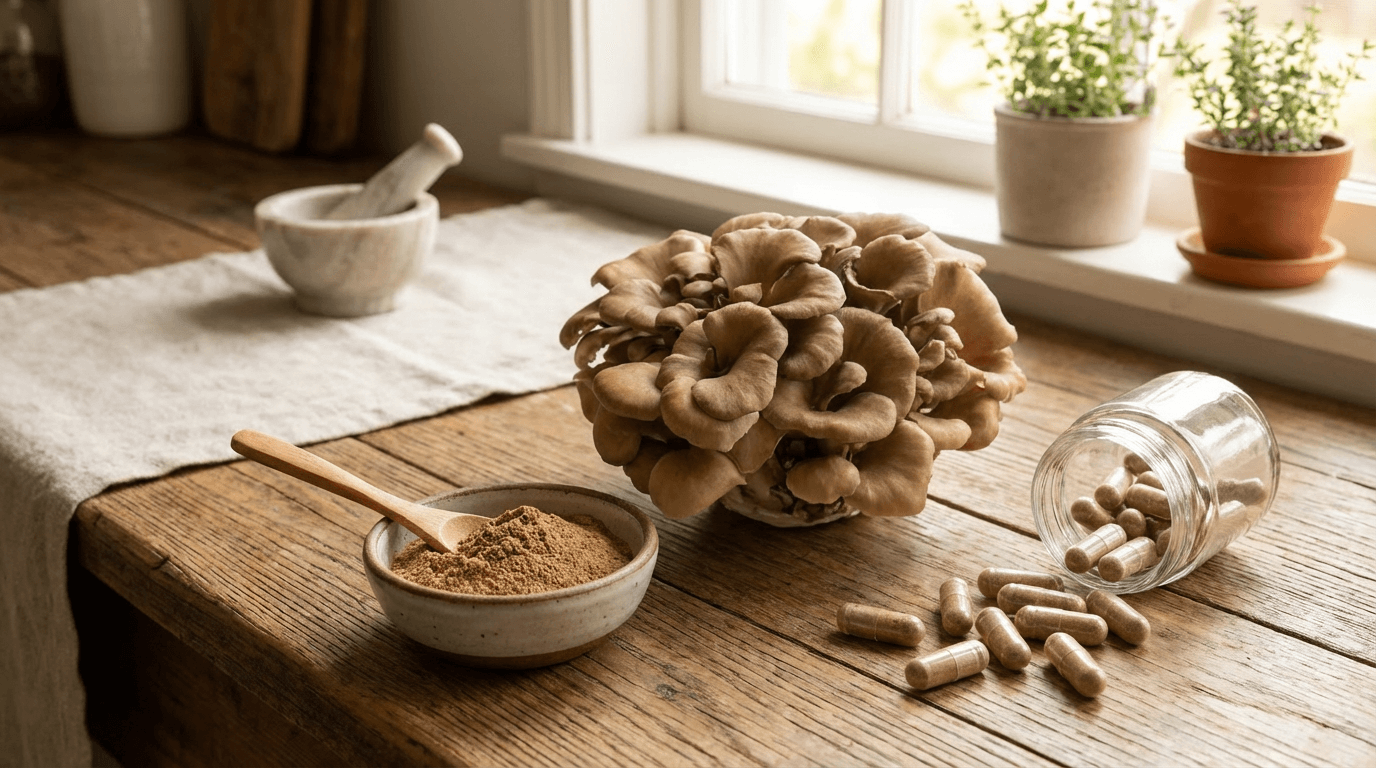
Another interesting fact is that D-Fraction is water-soluble. This means it can be taken as a liquid, capsule, or powder. The choice of form can affect how well it is absorbed and how easy it is to take, especially for people with difficulty swallowing or digestive issues.

Credit: www.frontiersin.org
How D-fraction May Affect Cancer
Cancer is a group of diseases where cells grow uncontrollably. The immune system can sometimes recognize and kill these cells, but cancer can also hide or weaken the immune response. Scientists are interested in substances that might help the immune system find and destroy cancer cells.
D-Fraction is thought to help in these ways:
- Immune System Activation: D-Fraction can stimulate NK cells, which are like the body’s security guards. They find and destroy abnormal cells, including cancer.
- Cytokine Production: It may increase the release of cytokines, which are signaling molecules that help immune cells communicate and organize an attack on cancer.
- Direct Tumor Inhibition: Some studies suggest D-Fraction can slow the growth of tumors directly, although this effect is less understood.
Immune activation is a complex process. For example, when D-Fraction triggers NK cells, it does not just make them more active; it also helps them move toward cancer cells and recognize them more easily. This could be especially important in cancers that use “cloaking” tactics to avoid detection.
One detail that is often overlooked is that the immune system needs to be balanced. Too much activation can lead to inflammation or even autoimmunity, where the body attacks its own tissues. So, D-Fraction’s ability to boost immune response without causing widespread inflammation is important.
These effects are based on laboratory and animal studies. But how does D-Fraction perform in real patients? This is where clinical trials come in.
Early Laboratory And Animal Studies
Before human trials, D-Fraction was tested in the lab and in animals. These studies showed promising results.
- In mice with implanted tumors, D-Fraction reduced tumor size and improved survival.
- In test tubes, D-Fraction increased the activity of NK cells and other immune responses.
- Some studies combined D-Fraction with standard chemotherapy drugs, showing better results than chemotherapy alone.
For example, in one animal study, mice with liver cancer who received both D-Fraction and chemotherapy lived longer and had smaller tumors than those who received chemotherapy alone. These kinds of “synergy” effects are a big reason why scientists became interested in combining natural extracts with medical treatments.
It is also worth mentioning that D-Fraction showed selectivity—it boosted immune cells’ attack on cancer while not overstimulating normal cells. This selectivity is important because it may mean fewer side effects compared to some synthetic immune boosters.
However, results in animals do not always predict what will happen in humans. That is why clinical trials are so important.
Clinical Trials: Testing D-fraction In Humans
Clinical trials are research studies that test new treatments in people. They usually have several phases:
- Phase I: Tests safety and side effects in a small group.
- Phase II: Looks at whether the treatment works and checks for more side effects.
- Phase III: Compares the new treatment to standard care in a larger group.
Most studies on D-Fraction are early-phase or pilot studies, but some have included larger groups.
Clinical Trial Designs For D-fraction
Studies on D-Fraction have used different designs:
- Some gave D-Fraction alone.
- Others gave D-Fraction with chemotherapy or other drugs.
- Most did not use a placebo group, but some compared D-Fraction plus standard care to standard care alone.
The studies often measured:
- Changes in immune cell activity.
- Tumor size or progression.
- Quality of life.
- Survival time.
A point that often goes unnoticed is that measuring immune changes does not always translate to visible changes in tumor size or patient survival, especially in a short period. This makes interpreting results a bit more complex.
Let’s look at the main clinical trials and their results.
Major Clinical Trials On Maitake D-fraction
Study 1: Pilot Study In Advanced Cancer Patients (japan, 1995)
One of the first human studies of D-Fraction was done in Japan in the mid-1990s by Dr. Hiroaki Nanba and colleagues. They tested maitake D-Fraction in 165 patients with different advanced cancers (like liver, lung, breast, and prostate).
- Method: Patients took maitake D-Fraction orally, some with standard chemotherapy, some without.
- Results: About 58% of patients showed improvement in symptoms, immune markers, or tumor regression. The best effects were seen in breast, lung, and liver cancer.
- Side effects: D-Fraction was well-tolerated, with few side effects.
This study also tracked how quickly patients felt improvements. Many reported better appetite, less fatigue, and improved mood within a few weeks. While not a cure, these quality-of-life changes are important, especially in advanced cancer.
Insight: This study was not randomized or blinded, which means results could have bias. Still, the improvement rates were higher than expected for advanced cancer.
Study 2: D-fraction With Chemotherapy In Breast Cancer (2002)
A small study looked at maitake D-Fraction in combination with chemotherapy in breast cancer patients.
- Method: Patients took D-Fraction while receiving standard chemotherapy.
- Results: Those taking D-Fraction had fewer chemotherapy side effects (like nausea and fatigue) and better immune cell activity. Tumor responses were similar between groups.
- Side effects: No serious side effects from D-Fraction.
A deeper look at the study shows that patients taking D-Fraction were less likely to need dose reductions in their chemotherapy—meaning they could complete their planned treatment. This is a practical benefit, as completing treatment can sometimes improve outcomes.
Insight: One non-obvious benefit is that D-Fraction may help patients tolerate chemotherapy better, not just fight cancer itself.
Study 3: Immune Effects In Cancer Patients (2004, Memorial Sloan Kettering)
Researchers in the United States tested D-Fraction on 34 cancer patients. This was a phase I/II study focused on immune system changes.
- Method: Patients took maitake extract for 12 weeks. Blood samples were taken to measure immune markers.
- Results: Increased activity of NK cells and T-cells was observed in most patients. Some patients also reported better appetite and energy.
- Side effects: Mild stomach upset in a few cases.
Another detail is that some patients in this study had tried other immune-boosting supplements before. The rise in immune markers with D-Fraction was still noticeable, suggesting it could work even in people who had used other natural products.
Insight: Immune activation does not always mean the cancer will shrink, but it can improve the body’s ability to fight disease.
Study 4: Maitake Extract In Myelodysplastic Syndromes (mds, 2010)
A study at Memorial Sloan Kettering Cancer Center tested maitake D-Fraction in people with myelodysplastic syndromes (pre-leukemia conditions).
- Method: Patients took maitake extract daily for 12 weeks.
- Results: Improved neutrophil (a type of white blood cell) function in some patients. No major changes in overall disease status, but some immune parameters improved.
- Side effects: Well-tolerated.
A closer look shows that improved neutrophil function can help lower the risk of infections, a common problem in MDS. Even if the disease did not go away, supporting the immune system can make a real difference in daily life.
Insight: For blood cancers, D-Fraction may help improve certain immune cell functions even if it does not cure the disease.
Study 5: Maitake And Quality Of Life In Cancer (2013)
Some smaller studies have focused on quality of life for cancer patients taking D-Fraction.
- Method: D-Fraction was given to patients undergoing chemotherapy.
- Results: Patients reported less fatigue, better mood, and improved appetite compared to those who did not take D-Fraction.
- Side effects: Minimal and mild.
It is interesting that psychological well-being (like mood and energy) improved even when physical symptoms were not much changed. This suggests D-Fraction’s benefits may go beyond just the immune system.
Insight: Quality of life improvements matter a lot to cancer patients, especially during hard treatments.
Data Overview: D-fraction Clinical Results
To give a clear view, here is a summary of some main findings from clinical trials:
| Study | Cancer Type | Main Outcome | Sample Size | Side Effects |
|---|---|---|---|---|
| Nanba et al., 1995 | Various | Improved symptoms, immune markers | 165 | Minimal |
| Breast Cancer Combo, 2002 | Breast | Less chemo side effects, immune boost | 80 | None serious |
| MSKCC, 2004 | Various | NK cell, T-cell increase | 34 | Mild GI upset |
| MDS, 2010 | MDS | Improved neutrophil function | 21 | Well-tolerated |
It is worth noting that in most studies, patients were able to continue their regular cancer treatments. This suggests that D-Fraction does not interfere with typical care and may be a safe addition for many people.
Comparing D-fraction To Other Mushroom Extracts
D-Fraction is not the only mushroom extract studied for cancer. Other well-known types are:
- PSK (Polysaccharide-K) from turkey tail mushrooms.
- Lentinan from shiitake mushrooms.
How Does Maitake D-fraction Compare?
| Extract | Source | Main Use | Clinical Evidence | Unique Features |
|---|---|---|---|---|
| D-Fraction | Maitake | Immune support, adjunct in cancer | Moderate, mostly small studies | Strong NK cell activation |
| PSK | Turkey Tail | Adjuvant in stomach, colon cancers | Strong, large trials in Japan | Approved in Japan |
| Lentinan | Shiitake | Lung, stomach cancer support | Moderate, some large trials | IV form available |
A detail that often goes unnoticed: the approval of PSK in Japan means it is covered by insurance and used as part of regular cancer care. In contrast, D-Fraction and lentinan are more often used as supplements, not as prescription drugs, in most countries. Also, PSK and lentinan are usually given as powders or injections, while D-Fraction is most often taken orally.
Insight: PSK and lentinan have more large-scale studies and are approved in some countries as adjuncts to chemotherapy. D-Fraction is still mainly used as a supplement, not as a prescription drug.
Credit: antioxi-supplements.com
Mechanisms: How D-fraction Works In The Body
D-Fraction acts mainly through the immune system. Here is how it may work:
- Binds to immune cell receptors: Beta-glucans in D-Fraction attach to receptors on NK cells, macrophages, and dendritic cells.
- Activates signaling pathways: This binding triggers internal signals, leading to cell activation.
- Boosts cytotoxic activity: NK cells become more aggressive in finding and killing abnormal cells.
- Increases cytokine release: D-Fraction stimulates the production of interleukins, interferons, and other signaling molecules.
- May work with chemotherapy: Some data suggest D-Fraction can make chemotherapy more effective or reduce its side effects.
Another insight is that D-Fraction may also “educate” the immune system—helping it remember how to recognize cancer cells. This kind of immune memory is the basis for some new cancer vaccines, so D-Fraction could be useful in future combination therapies.
Non-obvious tip: The effectiveness of D-Fraction may depend on the patient’s existing immune status. People with very weak immune systems might see less benefit.
Safety And Side Effects
One Big Question Is: Is D-fraction Safe?
- Most studies find D-Fraction is well-tolerated.
- Reported side effects are usually mild: Stomach upset, diarrhea, or mild allergic reactions.
- No severe adverse events have been linked to D-Fraction in clinical trials.
- It does not seem to interfere with standard chemotherapy drugs.
There is also no evidence that D-Fraction causes immune over-activation or “cytokine storms,” which can be dangerous. This is important for cancer patients, who are often more vulnerable to side effects.
However, as with any supplement, quality can vary between brands. Patients should use products from reliable sources.

Credit: antioxi-supplements.com
Key Limitations Of Current Research
While the results are promising, there are important limits:
- Small sample sizes: Most studies include fewer than 100 patients.
- Few randomized, controlled trials: The gold standard for research is a large, double-blind, placebo-controlled trial. Few exist for D-Fraction.
- Mixed cancer types: Studies often include different cancers, making results harder to compare.
- Short follow-up: Most studies last a few weeks or months, not years.
- Publication bias: Positive studies are published more often than negative ones.
Another limitation is that most studies are done in Japan or the US. Results may not always apply to people with different backgrounds, diets, or medical care systems.
Practical advice: Patients should see D-Fraction as a possible support, not a proven cure.
D-fraction As A Complementary Therapy
Many cancer patients look for complementary therapies to use with standard care. D-Fraction fits this role:
- It can be taken with chemotherapy or radiation.
- It may help with side effects like fatigue or poor appetite.
- It is not a replacement for medical treatment.
Some patients use D-Fraction as part of a larger integrative approach, including good nutrition, gentle exercise, and stress management. Used this way, it can be part of a toolkit for better well-being during cancer treatment.
Doctors in Japan sometimes recommend D-Fraction, but in the US and Europe, it is mainly used as a supplement. Patients should always discuss new supplements with their oncologist.
Dosage And Usage Recommendations
Clinical trials have used a range of dosages:
- Typical oral doses are 1 to 6 grams per day of maitake extract, with D-Fraction content standardized.
- Some studies use liquid extracts (e.g., 1-3 ml daily).
Tips:
- Always use a standardized product that lists D-Fraction or beta-glucan content.
- Start with a lower dose and increase gradually.
- Take with food to reduce stomach upset.
Some people prefer liquid extracts because they are absorbed faster. Others choose capsules for convenience. There is no strong evidence one form is better than another, so personal preference and tolerance matter.
Caution: Supplements are not strictly regulated in many countries. Quality varies widely.
Who Might Benefit Most From D-fraction?
Based on current research, D-Fraction may be most useful for:
- Patients with solid tumors (breast, lung, liver, prostate).
- People wanting immune system support during chemotherapy.
- Those seeking improved quality of life during cancer treatment.
It may be less useful as a single therapy for advanced or aggressive cancers.
Example: A breast cancer patient undergoing chemotherapy might use D-Fraction to reduce fatigue and support immune function.
It is important to set clear goals. For example, a patient hoping to improve appetite or energy may have a different experience than someone aiming to shrink tumors. Discussing these goals with a healthcare provider helps avoid disappointment.
What Patients And Families Should Ask
Before starting D-Fraction, consider these questions:
- Is there evidence it helps for my cancer type?
- Will it interact with my current medications?
- Are there side effects I should watch for?
- How do I choose a high-quality product?
- What are my goals—cure, symptom relief, or immune support?
Tip: Always involve your healthcare team in these decisions.
A practical point: Ask for documentation or certificates of analysis from supplement companies. Reliable brands will provide proof of purity and standardized content.
The Future Of Maitake D-fraction Research
Interest in D-Fraction remains strong, but more research is needed. The future may bring:
- Large, randomized trials in specific cancers.
- Studies comparing D-Fraction to other immune therapies.
- Research on combining D-Fraction with new cancer drugs (like immunotherapies).
- Better understanding of who benefits most.
Scientists are also looking at how D-Fraction may help prevent cancer recurrence after treatment or reduce the risk of infection in people with low white blood cell counts. Studies in these areas could open up new uses for D-Fraction in supportive cancer care.
Non-obvious insight: As more is learned about the immune system, D-Fraction could be paired with checkpoint inhibitors or cancer vaccines in the future.
Where To Find Reliable Information
For those wanting to read more, reliable sources include major cancer centers and peer-reviewed journals. The Memorial Sloan Kettering Cancer Center provides a helpful summary of maitake research:
Memorial Sloan Kettering Maitake Mushroom Information.
It is also helpful to check with national cancer organizations or hospital integrative medicine programs for updated guidance.
Frequently Asked Questions
What Is Maitake D-fraction?
Maitake D-Fraction is a purified extract from the maitake mushroom. It contains special beta-glucans that can activate the immune system. D-Fraction is studied for its possible role in supporting cancer treatment.
Is D-fraction A Cure For Cancer?
No, D-Fraction is not a cure. It may help support the immune system, reduce treatment side effects, or improve quality of life. It should always be used together with standard cancer care, not as a replacement.
Are There Any Risks Or Side Effects With D-fraction?
Most people tolerate D-Fraction well. Mild side effects include stomach upset or diarrhea. Allergic reactions are rare. Always talk to your doctor before adding any supplement.
How Is D-fraction Different From Other Mushroom Extracts?
D-Fraction comes from maitake mushrooms and contains a special type of beta-glucan. Other extracts, like PSK from turkey tail, have different structures and are sometimes used as prescription drugs in certain countries. D-Fraction is mainly a supplement.
Where Can I Buy Maitake D-fraction?
D-Fraction is sold as a supplement in health food stores and online. Look for products that are standardized, list the amount of D-Fraction, and come from reputable companies. Discuss with your healthcare provider before starting.
Can D-fraction Be Used With Other Supplements Or Herbs?
There is limited research on combining D-Fraction with other herbs or supplements. Some combinations may have benefits, but others could increase side effects or lower effectiveness. Always check with your doctor or a trained integrative medicine specialist.
Cancer research is a journey of many steps. Maitake D-Fraction is an exciting area, showing that nature still holds secrets for future medicine. While it is not a magic bullet, it offers hope for better support and quality of life for those facing cancer.
As always, careful research, honest discussion with doctors, and realistic expectations are the best path forward.