Maitake Mushroom Benefits: The Immune-boosting ‘dancing Mushroom’
If you’re searching for a natural way to boost your immune system, you may come across the maitake mushroom. Known as the “dancing mushroom” in Japan, maitake has a long history in traditional medicine. Its name comes from stories about people dancing with joy after finding it in the wild, believing it held powerful health secrets. Today, science is catching up to these ancient beliefs, with research pointing to real benefits for immune health, energy, and more.
But is maitake just another superfood trend? Or does it offer something truly special? This article takes you deep into the world of maitake mushrooms. You’ll learn what they are, how they work, and what makes them stand out from other mushrooms.
We’ll look at the science, practical ways to use them, and even common mistakes to avoid. Whether you’re a health enthusiast or just curious about natural immunity boosters, this guide will give you a clear, complete picture.
What Is The Maitake Mushroom?
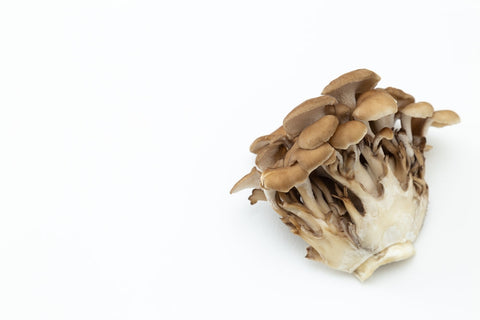
Maitake (Grifola frondosa) grows wild at the base of oak, maple, and elm trees in Japan, China, and North America. Its unique fan-like shape looks like ruffled feathers or a small hen, giving it the nickname “hen of the woods.” Maitake mushrooms are large and can weigh up to 45 kilograms (100 pounds) in the wild, though smaller clusters are more common.
While maitake has been eaten as a food in Asia for centuries, it was also prized as a medicinal mushroom. Healers believed it could boost energy, fight illness, and help balance the body’s systems. Today, maitake is sold fresh, dried, or in supplement form worldwide.
Unique Compounds In Maitake
What sets maitake apart from other mushrooms is its high content of beta-glucans. These are special polysaccharides (complex sugars) found in the mushroom’s cell walls. Beta-glucans are known for their ability to stimulate the immune system.
But maitake offers more than beta-glucans. It contains:
- Vitamins: Such as vitamin D, B2 (riboflavin), and niacin
- Minerals: Including potassium, copper, and phosphorus
- Antioxidants: Like ergothioneine and phenolic compounds
- Fiber: Which supports gut health
Among the most researched compounds is the Maitake D-Fraction. This is a purified extract of maitake’s beta-glucans, shown to have strong immune-supporting activity.
The Science Behind Maitake’s Immune Benefits
Maitake’s reputation as an “immune-boosting” mushroom isn’t just folk wisdom. Modern research, including lab, animal, and human studies, shows that maitake can influence the body’s immune system in several ways.
How Maitake Supports Immunity
1. Activates White Blood Cells
Maitake’s beta-glucans can activate macrophages, natural killer (NK) cells, and T cells. These are key defenders that find and destroy viruses, bacteria, and even abnormal cells.
2. Enhances Cytokine Production
Maitake can increase the production of cytokines—chemical messengers that help coordinate the body’s immune response. This helps your body react faster and stronger when faced with infections.
3. Boosts Antibody Production
Some studies suggest maitake may help the body make more antibodies, which are proteins that recognize and neutralize germs.
Evidence From Research
- In a 2010 human study, healthy adults who took maitake extract showed increased NK cell activity and higher immune cell counts after only a few weeks.
- Animal studies show maitake can reduce the severity of infections and speed up recovery.
- Early trials suggest maitake may help support the immune system in people with certain cancers, although more research is needed.
Non-obvious Insight
Many people think all mushrooms offer the same benefits. In reality, maitake’s unique D-Fraction is stronger in stimulating immune cells than the beta-glucans found in shiitake or reishi mushrooms. This makes maitake a special choice for those seeking targeted immune support.
Additional Health Benefits Of Maitake
While immunity is the main claim to fame, maitake offers a range of other health benefits. Let’s look at what the research says.
Blood Sugar And Diabetes Support
Some studies show maitake can help regulate blood sugar levels. Its polysaccharides may improve insulin sensitivity and reduce spikes in blood sugar after meals. This could be helpful for people managing type 2 diabetes or metabolic syndrome.
Heart Health
Maitake’s fiber and antioxidants can lower cholesterol and reduce inflammation. In animal studies, maitake extract reduced LDL (“bad”) cholesterol and raised HDL (“good”) cholesterol.
Weight Management
Maitake is low in calories but high in fiber, which can help you feel full and eat less. Animal research suggests maitake may slow the absorption of fat and sugars, supporting weight loss efforts.
Cancer Research
Perhaps the most exciting research is in cancer support. Maitake D-Fraction has shown promise in lab and animal studies for:
- Slowing tumor growth
- Enhancing the effects of chemotherapy
- Reducing side effects of cancer treatment
However, these effects need more confirmation in large human trials. Maitake should not replace standard cancer treatments, but it may be a useful addition under medical supervision.
Liver Health
Emerging research hints that maitake may help protect the liver from toxins and support healthy liver function, likely due to its antioxidants.
Non-obvious Insight
Many new users miss that maitake’s benefits come from regular use, not just a single serving. Its immune effects build over time, especially when used consistently as part of your routine.
Credit: mushroomkick.com
Comparing Maitake To Other Medicinal Mushrooms
Maitake, shiitake, and reishi are often mentioned together, but they have different strengths. Here’s a side-by-side look at their main features.
| Mushroom | Main Benefit | Key Compound | Best For |
|---|---|---|---|
| Maitake | Immune boosting, blood sugar support | D-Fraction beta-glucans | General immunity, metabolic health |
| Shiitake | Heart health, cholesterol control | Lentinan | Cardiovascular health |
| Reishi | Stress relief, immune balance | Triterpenes | Calm, immune modulation |
How To Choose And Use Maitake Mushrooms
Maitake is available in many forms—fresh, dried, and as supplements. Each type has its own advantages.
Fresh Maitake
- Best for cooking and eating as food.
- Rich in flavor, with a mild, earthy taste.
- Contains natural fiber and nutrients.
Dried Maitake
- Easy to store and use in soups, stews, and teas.
- More concentrated than fresh mushrooms.
Maitake Extracts And Supplements
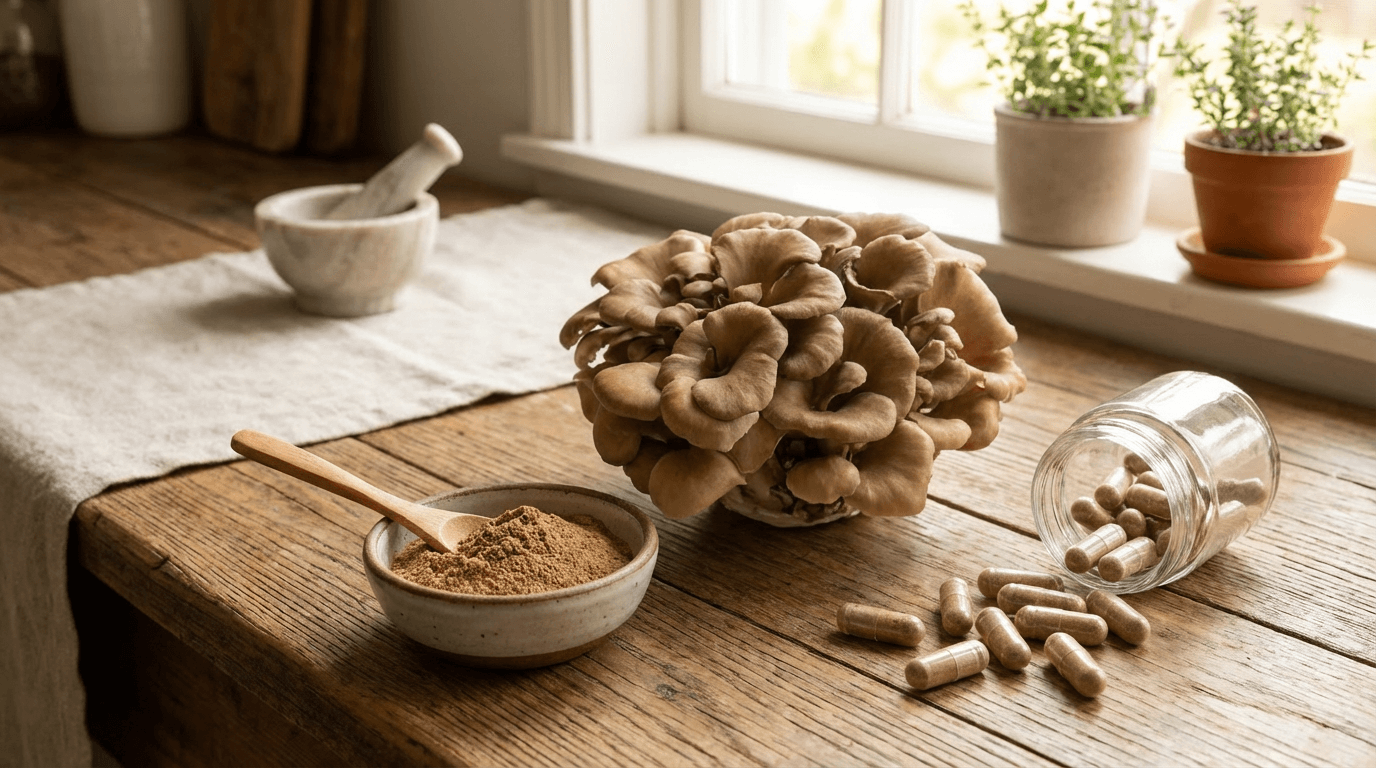
- Available as capsules, powders, and liquid extracts.
- Standardized for beta-glucan content, especially D-Fraction.
- Ideal for those who want a consistent daily dose.
How To Read Supplement Labels
Not all maitake supplements are created equal. Look for:
- The type of extract (e.g., D-Fraction or SX-Fraction)
- The beta-glucan percentage (higher is better)
- Third-party testing for purity
If the label is unclear or just says “mushroom blend,” the product may be low in active compounds.
Comparing Forms Of Maitake
Here’s a quick comparison to help you decide which form suits your needs:
| Form | Best For | Pros | Cons |
|---|---|---|---|
| Fresh | Cooking, full nutrition | Great taste, fiber, vitamins | Short shelf-life, not as concentrated |
| Dried | Soups, teas, storage | Long-lasting, easy to use | Needs soaking, flavor changes |
| Extract/Supplement | Immune support, regular use | Standardized, convenient | May lack full-spectrum nutrients |
Non-obvious Insight
Many people believe higher doses always work better. In fact, maitake’s immune-boosting effects may level off after a certain amount. Taking more than the recommended dose does not always give greater benefits and may increase the risk of side effects.
Cooking With Maitake: Practical Tips And Recipes
Fresh maitake mushrooms are not only healthy—they’re delicious. Their texture is tender yet meaty, and their flavor is mild and earthy. Here’s how to get the best from them in your kitchen.
Cleaning And Storing
- Gently brush off dirt with a damp cloth. Avoid soaking, as mushrooms absorb water.
- Store in a paper bag in the fridge. Use within a week for best taste.
Cooking Ideas
- Stir-Fries: Tear maitake into bite-sized pieces and sauté with garlic, ginger, and vegetables.
- Soups and Stews: Add dried or fresh maitake to broths for extra umami flavor.
- Roasting: Toss with olive oil and roast until crispy—great as a side dish or salad topping.
- Risotto: Stir sautéed maitake into creamy rice dishes.
- Maitake Tea: Simmer dried maitake in water for a warm, immune-supporting drink.
Sample Recipe: Simple Maitake Stir-fry
- 200g fresh maitake mushrooms
- 1 tablespoon olive oil
- 1 clove garlic, minced
- 1 teaspoon grated ginger
- 1 tablespoon soy sauce
- 2 green onions, sliced
- Clean and tear maitake into pieces.
- Heat oil in a pan. Add garlic and ginger, cook for 1 minute.
- Add maitake, stir-fry for 4-5 minutes until soft.
- Splash with soy sauce and toss in green onions.
- Serve hot as a side or with rice.
Cooking Tip
Maitake’s unique flavor is best with minimal seasoning. Avoid strong spices that can overpower its natural taste.
Maitake Mushroom Dosage: How Much To Take?
There is no official “one-size-fits-all” dose for maitake, but most studies and experts suggest:
- Fresh or dried maitake: 50–100 grams (about 2–3.5 ounces) daily as food
- Extracts or supplements: 500–1500 mg per day (standardized to beta-glucans or D-Fraction)
Higher doses may be used in clinical studies, but for everyday use, start with the lower end to check your body’s response. Always read product labels and consult with your doctor if you’re on medication or have a health condition.
Who Should Not Use Maitake?
While maitake is safe for most people, there are some cases where caution is needed.
Allergies
If you are allergic to mushrooms, avoid maitake.
Blood Sugar Medication
Maitake can lower blood sugar. If you take diabetes medicine, monitor your levels closely and talk to your doctor before adding maitake.
Autoimmune Disorders
Because maitake stimulates the immune system, it could worsen symptoms in people with autoimmune conditions (like lupus or rheumatoid arthritis). Always check with your healthcare provider.
Pregnancy And Breastfeeding
There is not enough research on maitake’s safety for pregnant or breastfeeding women. Better to avoid unless approved by your doctor.
Surgery
Maitake may affect blood sugar and bleeding. Stop using it at least two weeks before surgery.
Common Mistakes When Using Maitake
- Overcooking: Maitake’s nutrients can be damaged by high, prolonged heat. Lightly cook or add at the end of recipes.
- Buying Poor-Quality Supplements: Many brands use fillers or low amounts of active compounds. Choose supplements with clear labeling and third-party testing.
- Expecting Instant Results: Maitake works best when used regularly over time, not as a quick fix.
- Ignoring Interactions: If you take medicine, always check for interactions before starting maitake.
- Storing Incorrectly: Fresh maitake can spoil quickly if left in plastic. Use a paper bag and refrigerate.
Credit: antioxi-supplements.com
The Story Behind The ‘dancing Mushroom’
Why is maitake called the “dancing mushroom”? The legend goes back hundreds of years in Japan. Wild maitake was so valuable that people who found a large cluster would dance with joy, knowing they could trade it for silver or other goods.
Its rarity and health benefits made it almost as precious as treasure.
Today, you don’t have to search deep forests or trade for silver. Maitake is grown commercially and can be found in many grocery stores and health shops. But the sense of excitement remains—especially as science continues to reveal its hidden powers.
Maitake And Modern Immune Health
With more people looking for natural ways to support their immune systems, maitake stands out. Its beta-glucans help “train” the immune system, making it more alert and efficient. Unlike strong drugs that suppress or overstimulate, maitake gently balances immune function. This is important, because a balanced immune system is less likely to overreact (causing allergies or autoimmune disease) or underperform (leading to frequent infections).
The Importance Of A Healthy Gut
A surprising link exists between mushrooms like maitake and gut health. Maitake’s fiber feeds healthy gut bacteria, which in turn support immunity. This “gut-immune” connection is why maitake can help not just with colds, but with whole-body health.
Maitake And Aging: Can It Help You Stay Young?
Oxidative stress and inflammation are two major causes of aging and age-related diseases. Maitake’s antioxidants help neutralize free radicals, while its beta-glucans reduce chronic inflammation. Some small studies suggest maitake may help maintain energy, memory, and even skin health as you age.
Real-world Examples: Who Uses Maitake?
Athletes
Some athletes use maitake to recover faster from tough workouts, since a strong immune system helps prevent illness and injury.
Office Workers
People in busy offices often catch colds and flu. Regular maitake use may reduce sick days and speed up recovery.
Older Adults
As we age, the immune system gets weaker. Maitake can help “recharge” immune cells, improving resistance to infections.
Maitake In Traditional And Modern Medicine
In traditional Chinese and Japanese medicine, maitake was used to “tonify” or strengthen the body. It was often given to people recovering from illness or surgery. Today, maitake extracts are sold as immune supplements in pharmacies and health food stores around the world.
In Japan, maitake D-Fraction is even approved as a supportive therapy for some cancers, used alongside chemotherapy to help patients tolerate treatment better.
Maitake And The Environment
Choosing maitake is not only good for your health—it’s also good for the planet. Maitake can be grown on agricultural waste, using less water and land than most animal foods. It’s a sustainable source of nutrition.
How To Grow Your Own Maitake
If you love gardening or want a fresh supply of maitake, you can even grow it at home. Maitake kits are available online and require a cool, shady spot and some patience (it can take months to fruit). The reward is fresh, organic maitake with unbeatable taste.
The Future Of Maitake: What’s Next?
Scientists continue to study maitake for new uses. Early research is exploring its effects on:
- Viral infections, including influenza
- Chronic fatigue syndrome
- Immune health in the elderly
- Skin conditions related to inflammation
As more studies are published, maitake’s role in mainstream healthcare may grow.

Credit: lolahemp.com
Frequently Asked Questions
What Is The Best Way To Take Maitake For Immune Support?
The most effective way is through a standardized maitake extract containing D-Fraction beta-glucans. Capsules and liquid extracts offer a reliable daily dose. If you enjoy cooking, fresh maitake is also beneficial, especially when eaten regularly. Remember, consistency is key—take maitake daily for several weeks to notice full effects.
Can Maitake Mushrooms Help Fight Colds And Flu?
Maitake mushrooms may help your body defend against colds and flu by boosting immune cells like NK cells and macrophages. While it cannot prevent all infections, regular use may reduce severity and speed up recovery. Maitake works best as a preventive, not as a cure after symptoms start.
Are There Any Side Effects From Taking Maitake?
Maitake is considered safe for most people. Mild side effects may include upset stomach or diarrhea, especially with large doses. Rarely, allergic reactions can occur. If you are on medication for blood sugar or have a bleeding disorder, consult your doctor before using maitake.
Is Maitake Better Than Reishi Or Shiitake Mushrooms?
Each mushroom has unique strengths. Maitake is best for immune support and blood sugar control. Reishi is valued for stress relief and immune balance, while shiitake shines for heart health. For overall wellness, some people use a blend of all three. Choose based on your main health goal.
Where Can I Find More Research About Maitake?
For in-depth studies, check resources like the U.S. National Institutes of Health or scientific reviews on medicinal mushrooms. One useful source is the Wikipedia page on Grifola frondosa, which links to research articles and references.
Maitake mushrooms are more than just a food—they’re a bridge between ancient healing and modern science. With the right knowledge, you can use maitake to strengthen your immune system and support your health in many ways. Whether you enjoy them fresh in your kitchen or as a carefully chosen supplement, the “dancing mushroom” offers benefits worth celebrating.