
Growing mushrooms can feel like magic. One day, you see only white threads in your substrate. Suddenly, tiny mushroom pins appear and grow quickly into full fruit. But this transformation does not happen by chance. Mushroom fruiting depends on a mix of signals from the environment. If you want consistent harvests, you need to understand what triggers mushrooms to fruit.
Three main factors control this process: light, temperature, and fresh air exchange. Each one acts as a switch, telling the fungus that conditions are right to make mushrooms. If even one is missing, your mycelium (the white root-like network) may grow well but never produce mushrooms. This article will help you master these fruiting triggers. You will learn how each factor works, how they interact, and how to adjust them for the best results in your grow room or home setup.
Whether you are a beginner or have tried mushroom cultivation before, understanding these triggers will take your results to the next level. Many new growers focus on substrate and spawn but miss these hidden signals. By the end, you will see mushrooms not as random luck but as the result of clear, controllable steps.
Understanding Mushroom Fruiting
Mushrooms are the fruiting bodies of certain fungi. When we see a mushroom, we are seeing the part of the fungus that produces spores. But for most of its life, the fungus grows as mycelium—a network of fine threads—in a dark, moist environment.
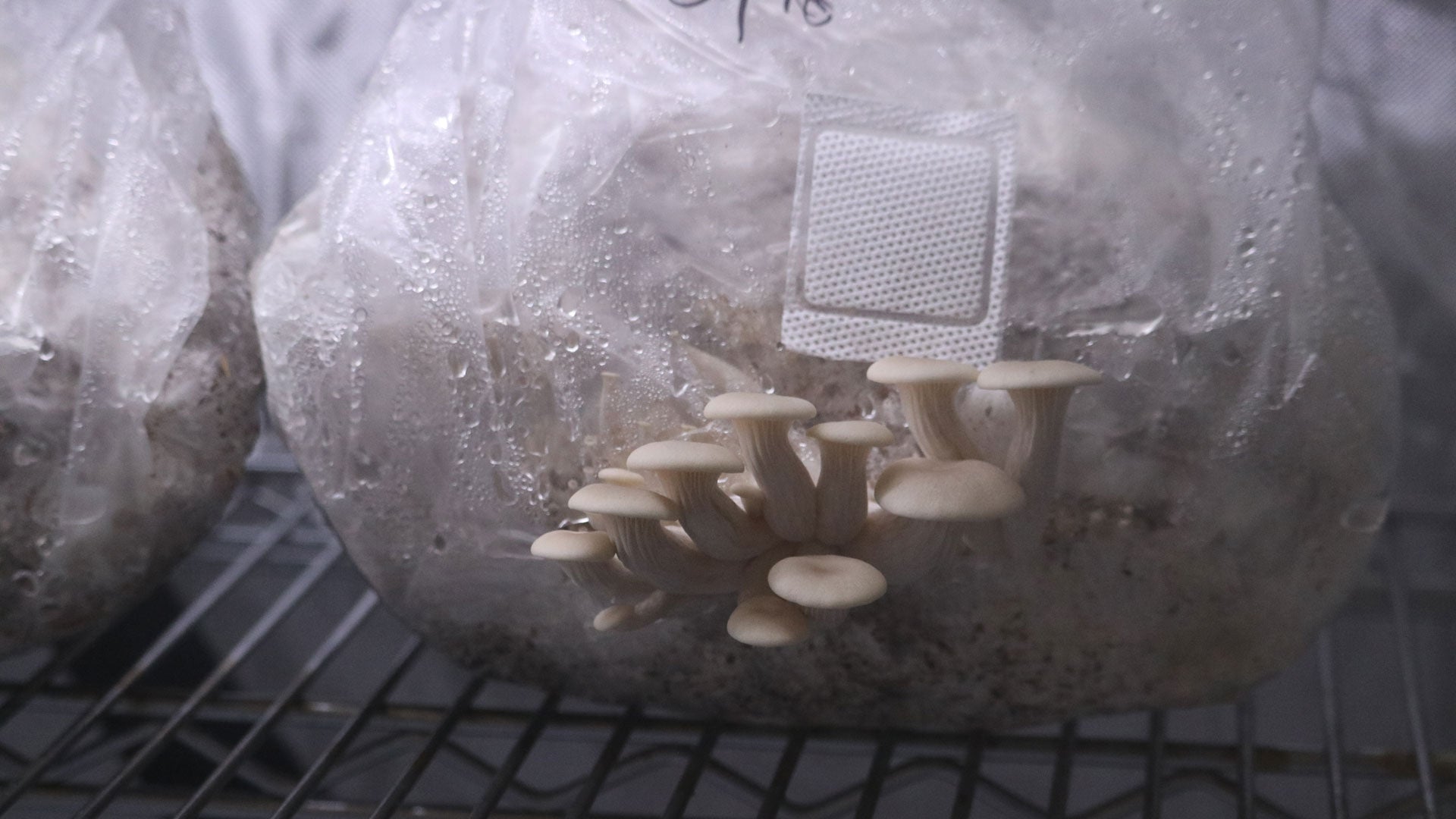
Fruiting is a special stage in the fungal life cycle, triggered by changes in the environment.
Some mushrooms will not fruit unless conditions change from those favored by mycelium growth. In nature, this ensures that mushrooms only appear when they are likely to survive and spread their spores. Indoors, you must recreate these triggers.
The Critical Stages
- Colonization: Mycelium spreads through the substrate, digesting nutrients.
- Primordia Formation: Small knots, called pins, form when the fungus senses a change.
- Fruiting: Pins grow into full mushrooms, ready to drop spores.
The switch from stage two to three is where fruiting triggers matter most.
Light: The Mushroom’s Signal To Fruit
Many people think mushrooms grow in total darkness. While mycelium prefers darkness, most mushrooms need light to fruit. Light is not food for mushrooms (they do not photosynthesize), but it is a signal.
How Light Triggers Fruiting
Light tells the fungus that it has reached the surface and can safely release spores. Without light, many species will delay or even skip fruiting. For example, Oyster mushrooms (Pleurotus spp.) and Shiittake need at least a few hours of light each day to form proper caps and stems.
Types Of Light
- Natural sunlight: Works well, but avoid direct hot rays that dry out the substrate.
- Fluorescent lights: Common in grow rooms; provide the right spectrum.
- LEDs: Energy-efficient and customizable; blue and white LEDs work best.
Light Intensity And Duration
Mushrooms are less demanding than plants. Most species need only 400–1000 lux (a standard office has about 400 lux). Too much light can cause mushrooms to dry out or grow abnormally. Most commercial growers use 12 hours of light and 12 hours of dark during fruiting.
Common Mistakes
- Using strong plant grow lights (these are often too intense)
- Not providing enough light, leading to long, thin mushrooms
- Placing lights too close, causing heat and dry spots
Practical Tips
- Use a simple timer for consistent light cycles.
- Hang lights at least 30–40 cm above your fruiting chamber.
- For small home grows, a desk lamp or LED strip can be enough.
Non-obvious Insight
Light direction matters. Mushrooms tend to grow toward the light source. If you want straight stems, light from above is best. Side lighting can cause curving.
Light Spectrum For Fruiting
Not all light colors are equal. Mushrooms respond most strongly to blue and white light (around 450–500 nm). Red light does not trigger fruiting as well. Some research shows that even brief pulses of blue light can start fruiting in some species.
Example: Oyster Mushroom
- Needs 8–12 hours of blue/white light daily.
- Without light, caps will be small, and stems will stretch.
Example: Shiitake
- Needs less light (4–6 hours can work), but good light improves cap color and firmness.
| Mushroom Species | Light Needs | Result Without Light |
|---|---|---|
| Oyster | Medium to high (8–12 hr) | Thin stems, poor caps |
| Shiitake | Low to medium (4–6 hr) | Pale, small caps |
| Lion’s Mane | Medium (6–8 hr) | Misshapen fruit |
Temperature: The Thermostat Of Fruiting
Temperature is the main way mushrooms sense the seasons. Most species grow mycelium best at one temperature but need a drop or change to trigger fruiting. This mimics the shift from summer (growth) to fall (fruiting) in nature.
Ideal Temperatures For Common Species
- Oyster Mushrooms: Colonize at 20–24°C; fruit at 14–20°C
- Shiitake: Colonize at 24–27°C; fruit at 13–18°C
- Lion’s Mane: Colonize at 21–24°C; fruit at 16–21°C
- Button Mushrooms: Colonize at 24–27°C; fruit at 17–19°C
Why Temperature Triggers Fruiting
A sudden drop in temperature tells the fungus that the weather is changing. In nature, this usually means autumn rains—a good time for mushrooms. Indoors, you can control this by moving colonized blocks to a cooler area.
How To Control Temperature
- Use a thermometer in your fruiting room.
- Avoid placing grow kits next to heaters or in direct sunlight.
- For large grows, consider air conditioning or cooling fans.
What Happens If Temperature Is Wrong
- Too high: Mycelium keeps growing but no fruit appears; contamination risk rises.
- Too low: Growth slows; pins may form but not develop.
Pro Tip
A temperature shock works well for some species. For example, Shiitake blocks are often soaked in cold water (10–15°C) for 12–24 hours to trigger fruiting.
Temperature Fluctuations
Small daily shifts (2–4°C) can improve yields. Mushrooms are used to natural swings from day to night. Try lowering night temperatures if you want better pinning.
Example: Shiitake Fruiting Cycle
- Colonize at 24°C for 6–8 weeks.
- Drop to 16°C and soak in cold water for a day.
- Move to fruiting room at 15–18°C with fresh air and light.
| Stage | Temperature (°C) | Duration |
|---|---|---|
| Colonization | 24–27 | 6–8 weeks |
| Fruiting Initiation | 13–18 | 1–2 days (shock) |
| Fruiting | 15–18 | 7–14 days |
Insufficient Temperature Changes
Many beginners keep their grow area at one steady temperature. This can delay or reduce fruiting. For best results, mimic nature—warm for mycelium, cool for fruiting.
Non-obvious Insight
Some species, like Enoki mushrooms, require very cold fruiting conditions (8–12°C). This is why their stems are long and thin. Trying to fruit them at room temperature will not give the classic look or texture.
Fresh Air Exchange: Oxygen For Growth
The role of fresh air exchange is often misunderstood. When mycelium grows, it can tolerate low oxygen and high carbon dioxide (CO2). But to make mushrooms, fungi need more oxygen and less CO2.
How Fresh Air Triggers Fruiting
High CO2 tells the fungus it is still buried in the substrate. Fresh air signals “you are at the surface—safe to fruit. ” Without enough fresh air, mushrooms grow long stems and tiny caps, or may not form at all.
Signs Of Poor Fresh Air Exchange
- Long, skinny stems (called “legginess”)
- Small or deformed caps
- Fuzzy white growth on stem bases
- Mushrooms stop growing or abort
Methods For Fresh Air Exchange
- Open the fruiting chamber several times per day for 1–2 minutes.
- Use a small fan to gently move air (avoid strong wind).
- For large grows, install air vents or HEPA filters.
How Much Fresh Air Is Enough?
Aim to replace the air in your fruiting chamber at least 4–6 times per hour. For small setups, manual fanning works; for big ones, automation is best.
Co2 Levels
- Mycelium grows at 5000–10,000 ppm CO2.
- Fruiting needs CO2 below 1000 ppm.
You can buy low-cost CO2 meters to check your levels.
Example: Oyster Mushroom
Oysters are very sensitive to CO2. High CO2 makes them grow tall and thin. For thick, wide caps, increase air exchange as soon as pins appear.
Example: Lion’s Mane
Lion’s Mane grows well with moderate air exchange but will form spines (the “teeth”) only with good airflow. Poor air leads to “cauliflower-like” blobs instead of nice spines.
Non-obvious Insight
Fresh air also helps control humidity and prevents mold. Stale, humid air invites contamination. If you see green mold, increase airflow.
Balancing Air With Humidity
More air means faster drying. Always monitor humidity (aim for 85–95%) when increasing fresh air. Use misting, humidifiers, or wet perlite to balance.
| Air Exchange Method | Best For | Risks |
|---|---|---|
| Manual fanning | Small home grows | Forgetting to fan, uneven CO2 |
| Passive vents | Mid-size setups | May dry out substrate |
| Fans and automation | Commercial grows | Too strong can dry out pins |
Credit: www.redwoodmushroomsupply.com
How Triggers Work Together
Light, temperature, and fresh air do not work alone. The best fruiting happens when all three are right. Missing one can block fruiting or lower quality.
Sequence Of Triggers
- Complete colonization: Mycelium fills substrate.
- Temperature change: Signals a new season.
- Fresh air: Tells fungus it is at the surface.
- Light: Guides direction and shape.
Some growers make the mistake of adding light before the block is fully colonized. This can lead to early pinning and contamination. Always check for full colonization before starting fruiting triggers.
Species Differences
Each mushroom has its own ideal mix of triggers. For example:
- Oysters: Very sensitive to CO2 and light, less to temperature.
- Shiitake: Needs a strong temperature shock.
- Button mushrooms: Needs high humidity and steady cool temperature.
Practical Example
You have a colonized block of oyster mushroom mycelium. Move it from a 24°C dark closet to a 16°C fruiting chamber. Add 12 hours of blue/white light. Fan the chamber four times a day. In 3–7 days, you will see pins form and grow into mushrooms.
Non-obvious Insight
Do not rush triggers. Forcing fruiting before full colonization can lead to mold and weak flushes. Patience increases yield.
Advanced Tips For Consistent Fruiting
Once you master the basics, small changes can improve your harvest.
1. Monitor And Log Conditions
Keep a notebook or spreadsheet. Write down light hours, temperature swings, and air exchange. Patterns will emerge that help you adjust for better results.
2. Use Timers And Sensors
Automate light and air exchange with cheap timers and humidity/temp sensors. This gives more consistent conditions and frees up your time.
3. Adjust For Each Flush
After the first harvest, conditions may change. Lower humidity and increase air for later flushes, as the substrate dries out.
4. Watch For Contamination
Good air flow and the right temperature lower contamination risk. If you see green, black, or yellow spots, remove affected substrate and increase air exchange.
5. Experiment With Light Cycles
Try 8, 10, or 12 hours of light. Some species (like Shiitake) may yield better with less light. Adjust to see what works in your space.
6. Use Cold Shocks
Not just for Shiitake—some oysters and other species respond well to 1–2 days in a fridge before fruiting.
7. Combine Triggers
For stubborn species, try changing two or three triggers at once. For example, drop temperature and increase air at the same time.
Common Myths About Fruiting Triggers
Many new growers hear advice that is outdated or wrong. Let’s clear up a few myths.
Myth 1: Mushrooms Need No Light
Truth: Most edible mushrooms need some light to fruit and grow well.
Myth 2: Any Air Movement Is Enough
Truth: Mushrooms are very sensitive to CO2. Gentle, steady air is better than random fanning.
Myth 3: Fruiting Is All About Temperature
Truth: Fruiting depends on a combination of signals. Temperature alone is not enough for most species.
Myth 4: More Is Always Better
Truth: Too much light, air, or cold can harm mushrooms. Balance is key.
Myth 5: You Can Skip Triggers For Fast Results
Truth: Skipping triggers may give one flush, but yields and quality will be lower.
Troubleshooting Fruiting Problems
Even with the best setup, sometimes mushrooms refuse to fruit. Here’s how to diagnose common issues.
Problem: No Pins Form
- Check if substrate is fully colonized.
- Raise or lower temperature by 2–4°C.
- Ensure fresh air and light are present.
Problem: Long Stems, Small Caps
- Increase fresh air exchange.
- Reduce CO2 (fan more or add vent holes).
- Check light direction and intensity.
Problem: Mushrooms Dry Out Or Shrink
- Lower air speed.
- Increase humidity to 85–95%.
- Move lights higher or use lower intensity.
Problem: Green Mold Or Contamination
- Remove affected blocks.
- Increase air exchange.
- Clean chamber and tools.
Problem: Mushrooms Stop Growing
- Check for substrate dryness.
- Mist with clean water.
- Adjust temperature or light.
Case Study: Oyster Mushroom Fruiting Setup
Let’s walk through a complete oyster mushroom setup using all three triggers.
Step 1: Colonization
- Substrate: Straw or sawdust, fully sterilized.
- Inoculate with oyster mushroom spawn.
- Incubate at 22–24°C in darkness for 10–14 days.
Step 2: Pre-fruiting Check
- Confirm white mycelium covers all substrate.
- No green, black, or yellow spots.
Step 3: Trigger Fruiting
- Move to fruiting chamber at 16–18°C.
- Turn on 12 hours of blue/white light per day.
- Open chamber or fan gently 4–6 times daily.
- Mist walls to keep humidity at 90%.
Step 4: Monitoring
- Pins should appear in 3–7 days.
- Watch for long stems (increase air) or dry caps (lower airflow).
- Harvest when caps flatten out.
Step 5: Second Flush
- Rest substrate for 2–3 days.
- Repeat triggers to get a second round of mushrooms.
This method gives 2–3 flushes per block, with high yield and low contamination.
Beyond The Basics: Adapting Triggers For Different Mushrooms
Not all mushrooms respond the same way to triggers. Here are examples for other popular species.
Shiitake
- Needs a strong temperature shock (cold water soak).
- Less light, but steady air flow.
- Fruit at 13–18°C, 4–6 hours light, good humidity.
Lion’s Mane
- Sensitive to substrate moisture and air.
- Fruit at 16–21°C with 6–8 hours of light.
- Good air for long spines.
King Oyster
- Prefers cool air (12–16°C) and low CO2 for thick stems.
- Needs at least 8 hours of light.
Enoki
- Needs cold (8–12°C) and little light for classic look.
- High humidity and good air flow.

Credit: zombiemyco.com
Scientific Studies On Fruiting Triggers
Research supports the importance of these triggers. A study in *Mycological Research* showed that Oyster mushrooms produced 30% more yield under 12 hours of blue light compared to darkness. Another study found that CO2 levels above 1500 ppm stopped pinning in Shiitake.
If you want more scientific detail, visit the Mushroom Cultivation Wikipedia page.
Frequently Asked Questions
What Happens If I Skip One Of The Fruiting Triggers?
If you miss light, temperature change, or fresh air, most mushrooms will not fruit or will have poor quality. The mycelium may stay alive but will not make mushrooms.
Can I Use Sunlight For Mushroom Fruiting?
Yes, but indirect sunlight is best. Too much direct sun can dry out the substrate and harm mushrooms. Use a curtain or move the chamber to a bright room.
How Do I Check If Air Exchange Is Enough?
Look for signs: long thin stems mean low air; short, thick stems mean good air. You can also use a CO2 meter for exact measurement.
Is Humidity As Important As Light, Temperature, And Air?
Humidity is critical but is not a trigger itself. It keeps pins alive once triggers start fruiting. Aim for 85–95% during fruiting.
Do All Mushrooms Use The Same Triggers?
All use the same three triggers, but the exact needs differ. Check the requirements for your species before starting.
Growing mushrooms is both an art and a science. Mastering light, temperature, and fresh air exchange gives you control over the magic of fruiting. With care, attention to detail, and the right triggers, you will see reliable harvests and healthy mushrooms—again and again.

Credit: www.mdpi.com