
Growing your own mushrooms at home is more than a hobby; it’s a way to connect with nature, produce healthy food, and discover the fascinating world of fungi. For many, shiitake mushrooms and other hardwood-loving species are favorites because they’re tasty, nutritious, and can be grown on logs using simple methods. But if you’ve never tried before, the process of inoculating logs may seem a bit mysterious. The good news is, with the right guidance, you can turn hardwood logs into productive mushroom beds for years to come. Let’s break down every step so you can confidently start your own mushroom log project.
Why Grow Mushrooms On Logs?
Mushrooms grown on logs are known for their rich flavor and texture. Shiitake, lion’s mane, maitake, and oyster mushrooms all thrive on hardwoods, and the results are often better than store-bought. Unlike quick-growing indoor kits, log inoculation takes more time but rewards you with larger harvests and a sustainable setup. Logs can keep producing for three to seven years, depending on species and care. For anyone with access to wood and a bit of outdoor space, it’s a rewarding and low-cost way to enjoy gourmet mushrooms.
Growing mushrooms on logs also gives you a deeper connection with natural cycles. You get to observe how fungi interact with wood, transforming it slowly into soil and nutrients for other plants. Over time, you’ll notice changes in the logs, the appearance of mushroom “pins,” and the gradual decomposition of the wood.
This process is both educational and meditative.
Another benefit is flavor. Mushrooms grown on logs, especially outdoors, often have a more complex and robust taste compared to those grown quickly in bags or on straw. Many chefs and home cooks appreciate the firmer texture and the earthy undertones that come from slow, natural growth.
For gardeners, mushroom logs offer a use for pruned branches or storm-damaged wood. Instead of burning or discarding logs, you can transform them into a productive food source. This makes mushroom log cultivation not only practical but also environmentally friendly.
Choosing Mushroom Species For Log Inoculation
Not all mushrooms grow well on logs. The most successful species have evolved to break down hardwoods, especially oaks, maples, and beeches. Here’s a closer look at the top choices:
- Shiitake (Lentinula edodes): The classic for log cultivation. Shiitake has a meaty texture, deep umami flavor, and high nutritional value. It’s reliable on oak, sweetgum, and other dense hardwoods.
- Lion’s Mane (Hericium erinaceus): Unique for its “pom-pom” look and seafood-like taste. Lion’s mane is less common but gains popularity for its possible brain health benefits.
- Maitake (Grifola frondosa): Also called “hen of the woods,” this mushroom forms large, frilly clusters. It’s prized in Asian cuisine and grows well on oak.
- Oyster Mushrooms (Pleurotus spp. ): Fast-growing and tolerant of a wider range of woods, including softer hardwoods like poplar and beech.
- Reishi (Ganoderma lucidum): Used in traditional medicine, reishi prefers oak and maple but needs patience since it fruits slowly.
Each species has its own needs, but the basic process is similar. Beginners often start with shiitake or oyster mushrooms because they’re forgiving and productive.
When choosing, think about your climate and local wood supply. Shiitake and lion’s mane do best in temperate regions, while oyster mushrooms tolerate a wider range of temperatures. Maitake prefers a bit more moisture and shade. Reishi needs warm summers and plenty of patience, as it can take two years or more before you see the first fruit.
If you want variety, you can inoculate different logs with different species and observe how each performs. This is a great way to learn the unique features of each mushroom and see which thrives best in your backyard.
Non-obvious insight: Some advanced growers try “stacking”—inoculating the same log with two compatible species (like shiitake and oyster), but this requires experience and careful timing to avoid competition between the mycelia.

Credit: ohioline.osu.edu
What You Need To Inoculate Logs
Before you begin, gathering the right tools and materials will make the process smoother. Here’s what you’ll need:
- Freshly cut hardwood logs: 3 to 8 inches in diameter, 3 to 4 feet long. Oak is best for shiitake, but other hardwoods work for different species.
- Mushroom spawn: Usually in plug (dowel), sawdust, or thimble form. Match the spawn type to your tools and preferences.
- Drill: A power drill with a bit matching your spawn size (usually 5/16” for plugs).
- Mallet or hammer: To tap spawn into holes.
- Wax: Cheese wax or beeswax to seal holes and keep out pests.
- Small paintbrush or dauber: For applying wax.
- Optional: Log tags or markers, protective gloves, and disinfectant for tools.
Choosing high-quality spawn from a trusted supplier is crucial. Poor-quality or contaminated spawn can ruin your hard work. Don’t use old or dry logs; the wood should be cut within a few weeks of inoculation, while still alive but dormant.
If you plan to inoculate many logs, consider making a “work station. ” A simple table, tarp, and organized tools can save time and prevent mistakes. Keep your wax warm but not overheated—if it smokes, it’s too hot and can damage the spawn.
A few extra items can make the job smoother: a bucket of water for soaking tools, a towel to wipe hands, and a bin for spent wax or broken plugs.
Practical tip: Disinfect your drill bits and tools between batches, especially if you’re working with different mushroom species. This reduces the chance of cross-contamination.
Selecting And Preparing Logs
Success starts with the right log. The type of wood, its condition, and timing all matter. Here’s what to keep in mind:
Wood Type
- Dense hardwoods like oak, beech, and maple give the best yields for most mushrooms.
- Softer hardwoods (poplar, aspen, birch) are suitable for oyster mushrooms but may break down faster.
- Avoid conifers (pine, spruce, cedar). Their resins and saps inhibit mushroom growth.
If you have access to fruit trees (like apple or cherry), use caution. Some fruit woods can be used for certain species, but they often contain natural antifungal compounds that slow colonization. Always research your local tree types before using them.
Log Size
Logs should be manageable—usually 3 to 8 inches in diameter and 3 to 4 feet long. Thicker logs last longer but are heavier.
Shorter logs are easier to handle and stack, making them practical for small spaces or for children to help. If you want logs to double as garden edging, choose uniform sizes for a neat look.
Cutting Time
- Cut logs in late winter or early spring when trees are dormant. This keeps sugars in the wood that help mushrooms grow.
- Let logs “rest” for 1-3 weeks after cutting. This allows tree defenses to fade but wood to remain moist and alive.
- Do not wait more than 6 weeks, or the logs may dry out or invite unwanted fungi.
If you live in a wet climate, cover the logs loosely to keep rain off. Too much surface moisture can also encourage unwanted molds.
Bark Condition
Bark must be intact. Damaged bark makes logs more vulnerable to pests and contamination. Handle logs gently and store in shade until inoculation.
If you accidentally nick the bark, wax over the wound during inoculation to help seal it.
Non-obvious tip: If you live in a dry area, wrap logs in a tarp or plastic overnight to prevent moisture loss before inoculation. Moisture is key for mushroom colonization.
Understanding Mushroom Spawn Types
“Mushroom spawn” is a fancy word for material carrying mushroom mycelium (the living body of the fungus). There are three main types used for log inoculation:
Plug Spawn
Wooden dowels colonized with mycelium. Easy to handle, especially for beginners. Inserted into drilled holes, then sealed with wax. Widely available for shiitake and oyster mushrooms.
Plug spawn is less messy than sawdust and doesn’t require special tools. The plugs can be pressed in by hand for smaller logs, though a mallet is recommended for secure placement.
Sawdust Spawn
Sawdust mixed with mycelium. It colonizes logs faster than plugs but requires a special inoculation tool (“palm inoculator” or plunger) for efficient application. Popular with advanced growers.
Sawdust spawn fills the holes more completely, giving more points of contact for mycelium to spread. This can lead to faster colonization and, sometimes, earlier fruiting.
Thimble Spawn
Small discs (like plugs) covered with mycelium, sometimes with wax already on top. They’re convenient but less common and more expensive.
Thimble spawn is popular for demonstration projects or workshops, where speed and ease are important.
Here’s a quick comparison:
| Spawn Type | Speed of Colonization | Ease of Use | Cost | Best For |
|---|---|---|---|---|
| Plug | Moderate | Easy | Medium | Beginners |
| Sawdust | Fast | Intermediate | Low | Large Projects |
| Thimble | Moderate | Very Easy | High | Quick Inoculation |
Insight: If you’re new, start with plug spawn. If you plan to inoculate dozens of logs, consider investing in sawdust spawn and an inoculation tool.
If you want to experiment, you can try both plug and sawdust spawn on different logs and compare colonization speed and yield. Some growers even split logs lengthwise and test different spawn types side by side.
Step-by-step Guide: How To Inoculate Logs
Let’s go through each stage, from preparing your logs to sealing them up.
1. Gather And Prepare Logs
Select logs with healthy bark, recently cut from hardwood trees. Cut to desired length (3-4 feet). Rest logs in a cool, shaded spot for 1-3 weeks.
Stack logs loosely off the ground—use pallets, bricks, or boards. Keeping logs off bare soil helps prevent contamination from soil fungi and insects.
2. Drill Holes
- Use a drill bit matching your spawn (usually 5/16” for plugs, 7/16” for thimbles, 12mm for sawdust).
- Drill holes 1 to 1.5 inches deep.
- Space holes 4-6 inches apart in rows along the log’s length.
- Rotate the log and offset each row, making a diamond pattern. This ensures even colonization.
A typical 3-foot log needs 30-40 holes.
Tip: Don’t drill all holes from one side. Rotate the log as you go to avoid splitting.
If you’re inoculating a large batch, pre-mark logs with a crayon or chalk to keep hole spacing even. This small step helps ensure no areas are missed and prevents overcrowding.
3. Insert Spawn
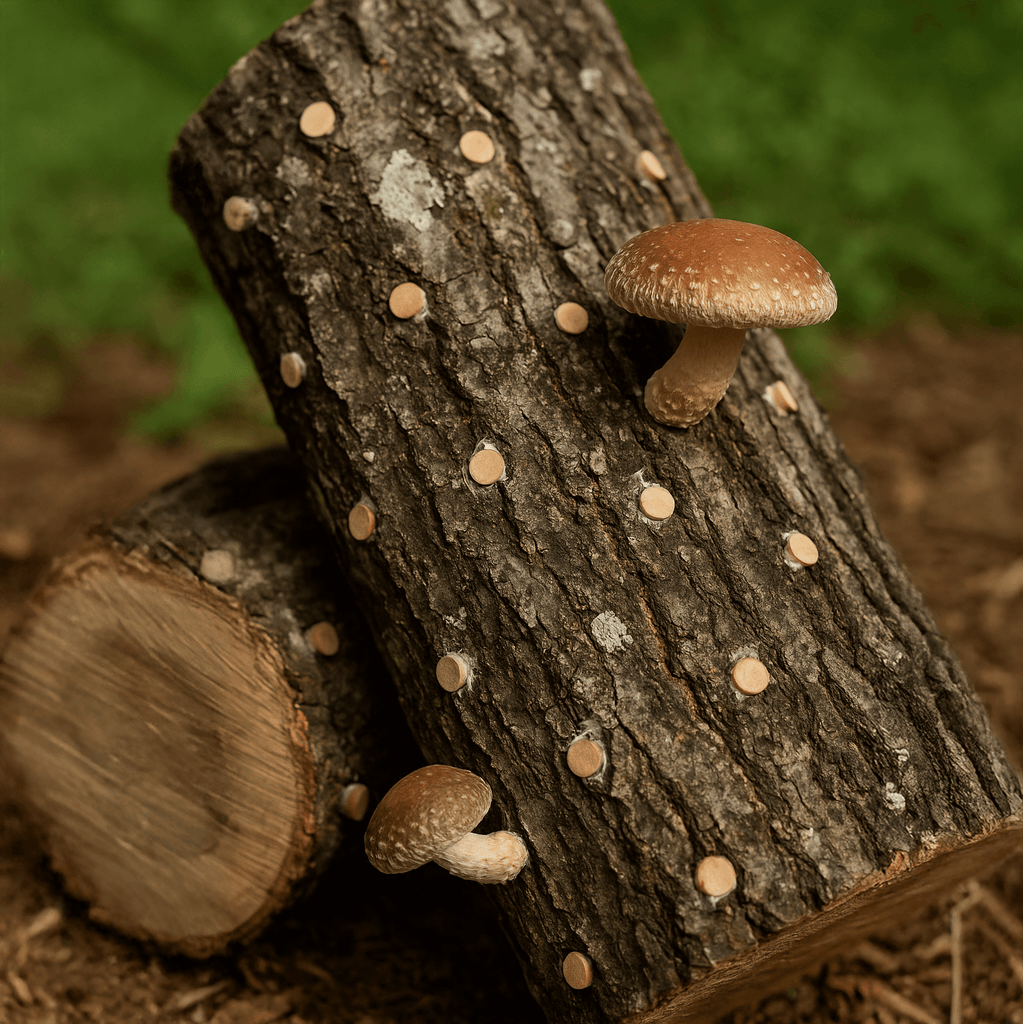
- For plug spawn: Tap a plug into each hole using a mallet until flush with the bark.
- For sawdust spawn: Use an inoculation tool to press sawdust into each hole, packing it firmly.
- For thimble spawn: Push each thimble into the hole.
Work quickly but gently. If spawn dries out, colonization slows.
If you’re working with children or beginners, plug spawn is safest. For large projects, sawdust spawn can speed things up, but practice on a few holes first to get the feel.
4. Seal Holes With Wax
Melt cheese wax or beeswax in a small pot (double boiler works well). Use a brush or dauber to cover each hole with a dab of wax. This keeps moisture in and pests out.
Also seal any cut branch ends or damaged bark.
Non-obvious tip: If you live in an area with woodpeckers or squirrels, add extra wax or use aluminum screening to protect your logs.
Don’t overheat the wax—gentle melting preserves its sealing qualities. If you don’t have beeswax, paraffin works in a pinch, but it’s less eco-friendly.
5. Label And Track Logs
Use a waterproof marker or metal tag to note the mushroom species, spawn date, and wood type on each log. This helps you track results and learn for next time.
If you’re growing multiple species, color-code tags for easy identification at a glance.
6. Arrange Logs For Incubation
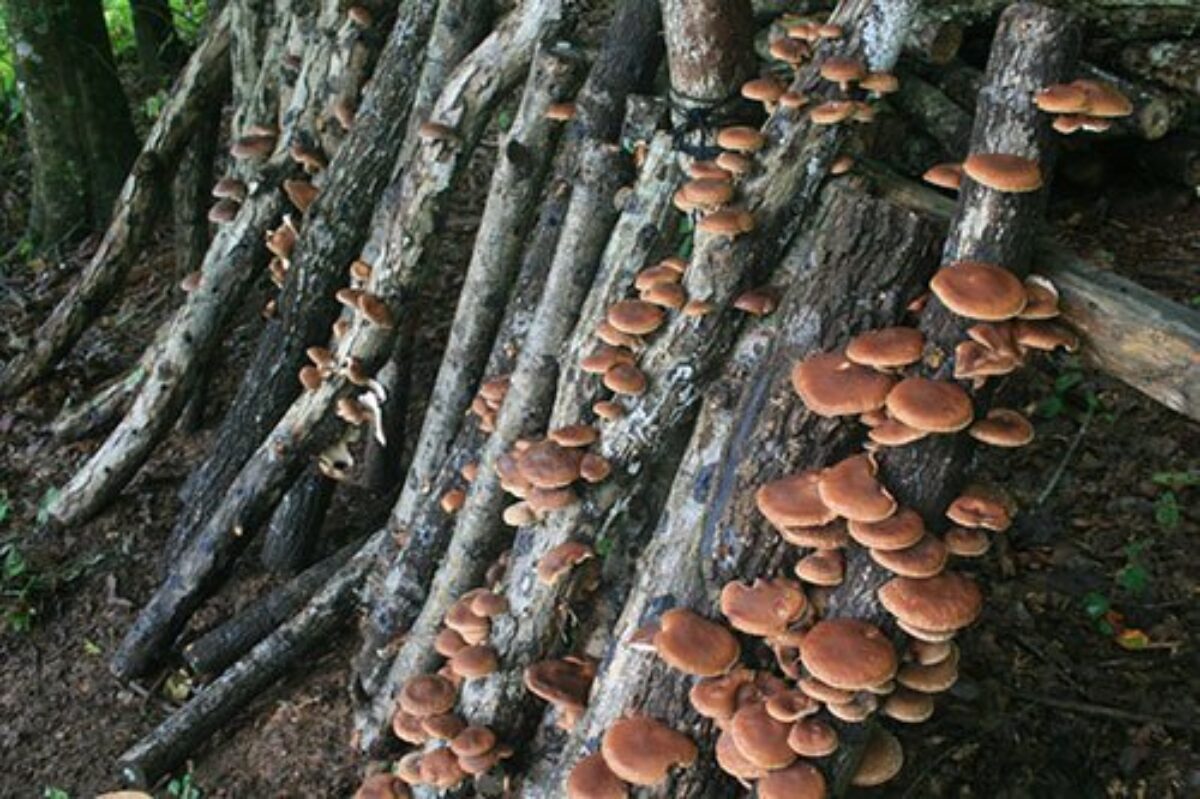
Move logs to a shady spot protected from wind and sun. Stack them in a crisscross (“log cabin”) pattern or lean them upright against a fence. Make sure air can flow between logs.
Avoid direct ground contact—use bricks, pallets, or rails to raise logs. This prevents rot and pest problems.
For large numbers, “lean-to” stacking against a north-facing wall works well. Rotate logs every few months to check for signs of colonization or damage.
7. Maintain Moisture
Logs must stay moist for mycelium to grow. If rainfall is low, water logs every 1-2 weeks with a garden hose. In hot, dry climates, cover logs with shade cloth or burlap to reduce evaporation.
Practical tip: The logs should feel heavy and cool to the touch. If they become light or sound hollow when tapped, soak them in clean water for 12-24 hours.
A simple moisture check: push a thin stick into the log—if it comes out damp, the log is hydrated. If dry, it’s soaking time.
8. Wait For Colonization
Mycelium will spread through the logs over 6 to 18 months, depending on species, wood type, and climate. Shiitake usually takes 9-12 months; oyster and lion’s mane can be faster.
During this time, avoid disturbing the logs. Check for signs of unwanted molds (green, black, or fuzzy growth) and remove them if possible.
Insight: Patience is key. Many beginners worry if nothing happens for months, but mycelium works slowly inside the wood.
If you want to check progress, gently lift the log and look at the ends—if you see white patches or a sweet mushroom smell, colonization is underway.
Credit: www.wildabundance.net
How To “shock” Logs And Harvest Mushrooms
When your logs are fully colonized, it’s time to encourage fruiting. In nature, mushrooms fruit after rain or a cold snap. You can “shock” your logs to trigger this process.
How To Shock Logs
- Submerge colonized logs in cold water for 12-24 hours. Use a large container, kiddie pool, or pond.
- After soaking, lean logs upright in a shady spot. Keep them off the ground.
- Within 7-14 days, mushroom “pins” (tiny mushrooms) should appear.
If you don’t have a container large enough, pour water over the logs repeatedly, or wrap them in wet towels for 24 hours. Consistency is more important than volume.
Harvesting
Harvest mushrooms when caps are fully open but before they flatten or edges curl up. Use a sharp knife to cut the stem flush with the bark.
A single log can produce several flushes each year, with rest periods in between. Shiitake logs may fruit 2-3 times per year, for up to 7 years.
Don’t pull mushrooms off by hand, as this can damage the bark and reduce future yields.
Troubleshooting Common Problems
Even with care, things can go wrong. Here’s how to solve common issues:
Contamination
If you see green, black, or fuzzy mold, scrape it off with a clean knife. Increase airflow and reduce moisture if mold returns. Use only fresh, healthy logs.
It’s normal to see some white mycelium on the bark or ends of logs. Only worry if you see odd colors (green, black, pink) or if mushrooms smell sour or rotten.
Dry Logs
If logs dry out, soak them overnight in water. Repeat as needed during hot months.
If logs are very light and brittle, they may be too far gone—start fresh with new wood next season.
No Fruiting
If logs don’t produce after a year, check:
- Is the log too dry?
- Is the log too shaded or too sunny?
- Is the spawn old or poor quality?
Try soaking logs again or moving to a slightly brighter spot.
Animals And Insects
Slugs, squirrels, and birds may eat mushrooms or spawn. Protect with netting, screens, or by moving logs.
Insight: Sometimes, mushroom pins appear but die off. This can be caused by sudden weather changes or low humidity. Keep logs moist and sheltered during dry spells.
Comparing Log Inoculation With Other Mushroom Growing Methods
How does log inoculation stack up against other ways to grow mushrooms, like sawdust bags or straw?
| Method | Yield | Setup Cost | Maintenance | Longevity |
|---|---|---|---|---|
| Logs | High (over years) | Low to Medium | Low | 3-7 years |
| Sawdust Bags | High (short-term) | Medium | Medium | 1-2 months |
| Straw Substrate | Medium | Low | High | 1-2 months |
Log cultivation is perfect if you have outdoor space and patience. Bags and straw are better for quick, indoor results.
Log inoculation also uses less plastic and creates less waste than bag methods. If you prefer sustainable gardening, logs are the way to go. The main trade-off is time—if you want mushrooms in weeks, choose bags or straw; if you want years of harvest, choose logs.
Best Practices For Success
- Use only fresh, healthy logs from the right hardwood species.
- Inoculate logs within 2-6 weeks of cutting.
- Keep logs moist but not waterlogged.
- Space holes evenly in a diamond pattern.
- Label logs clearly.
- Be patient—good things take time.
Many beginners fail by rushing the process or using unsuitable wood. Take time to gather quality materials and your logs will reward you for years.
Non-obvious tip: Rotate the logs’ position every few months to encourage even colonization and reduce the risk of one side drying out.
Safety Considerations
While growing mushrooms is safe, a few basic steps help protect your health:
- Only use spawn from trusted sources. Wild mushrooms can be toxic.
- Never eat mushrooms you cannot positively identify.
- Wear gloves if you have sensitive skin; some waxes or wood saps can irritate.
- Keep logs away from pets and children during colonization.
- Clean tools before and after use to prevent disease spread.
If you’re unsure about identification, consult a local mushroom club or expert before eating your harvest. Never taste-test unknown mushrooms.
Sustainable And Ecological Benefits
Mushroom log cultivation offers more than just food. It’s a sustainable way to use branches from tree pruning, storm damage, or firewood cuts. The process recycles wood that would otherwise rot or burn, returning nutrients to the soil. After logs finish producing, they break down into rich compost for your garden.
Non-obvious insight: Shiitake logs can also support beneficial insects and small wildlife, adding biodiversity to your backyard.
Logs also act as microhabitats. Over time, you may notice moss, lichens, or small insects living on or around your mushroom logs. This adds to the ecological value of your garden or homestead.
Storing And Using Your Mushroom Harvest
Fresh mushrooms should be used or preserved quickly:
- Store in a paper bag in the fridge for up to a week.
- Dry shiitake or lion’s mane in a dehydrator for long-term storage.
- Cook before eating—many hardwood mushrooms are tough or slightly bitter raw.
Shiitake mushrooms add umami to soups, stir-fries, and risottos. Lion’s mane makes a great vegetarian “crab cake. ” Maitake is delicious roasted or grilled.
To dry mushrooms, slice them thinly and arrange in a single layer in a dehydrator or on a rack in a warm, airy space. Once fully dry, store in airtight jars away from sunlight. Dried mushrooms can be rehydrated in hot water for cooking.
Non-obvious tip: Save the soaking water from dried mushrooms and use it as a flavorful broth in recipes. It’s packed with umami and nutrients.
Scaling Up: For Small Farms And Community Projects
If you have access to more wood or want to involve a group, log inoculation scales well. Community gardens, schools, and small farms can all benefit from a “mushroom log yard. ” The same basic steps apply—just multiply your tools and spawn.
Be sure to track which logs are which, and rotate harvests for steady supply.
Example: A small farm with 100 shiitake logs (4 feet long, 6 inches diameter) can harvest 10-20 pounds of mushrooms per year for local markets or home use.
Larger projects can also use group inoculation days—friends or volunteers help drill and inoculate logs, turning work into a fun event. Finished logs can be lined along walking paths, stacked in shady groves, or used as decorative edible fences.
If marketing mushrooms, be sure to follow local food safety rules and label products clearly with the species and harvest date.
Where To Find More Information
There are excellent guides, books, and online resources about mushroom log cultivation. For in-depth research and updated practices, visit the Shiitake Wikipedia page.
You’ll also find active forums, local mushroom clubs, and extension services that can offer advice for your region’s climate and wood types.
Frequently Asked Questions
What Is The Best Wood For Shiitake Mushroom Logs?
Shiitake mushrooms grow best on dense hardwoods like oak, beech, and sugar maple. Oak is the top choice because it’s durable and holds moisture well. Softer hardwoods (like poplar) work but break down faster, so yields are lower and logs don’t last as long.
How Long Does It Take For Mushrooms To Grow After Inoculation?
It usually takes 6 to 18 months for mushrooms to fruit after you inoculate the logs. Shiitake takes about 9 to 12 months. Oyster and lion’s mane mushrooms can produce in as little as 6 months if conditions are good. Patience is important, as the mycelium needs time to colonize the wood.
Can I Use Logs From My Backyard Trees?
Yes, as long as they are a suitable hardwood and have not been treated with chemicals or pesticides. Make sure the logs are fresh (cut within 2-6 weeks), with healthy bark and no signs of rot or disease. Avoid logs from coniferous (pine, cedar) or toxic trees.
If you’re unsure about tree species, ask a local arborist or extension office for help. Always avoid trees with visible signs of fungus, disease, or heavy insect damage.
How Do I Know If My Logs Are Too Dry?
If logs feel lightweight, sound hollow, or have cracked bark, they may be too dry for mushroom growth. Ideally, logs should feel heavy and cool. If dry, soak them in clean water for 12-24 hours before and after inoculation.
How Long Will A Shiitake Log Produce Mushrooms?
A well-cared-for log will produce mushrooms for 3 to 7 years, depending on the wood type, log size, and climate. Thicker logs last longer. Harvests are best in the first 2-4 years and then taper off as the wood is consumed.
Growing shiitake and other hardwood mushrooms on logs is a rewarding journey that connects you to nature and provides delicious, healthy food for years. With careful planning, patience, and a little effort, you’ll enjoy bountiful harvests and the satisfaction of cultivating one of nature’s most fascinating foods right in your own backyard.
Credit: www.out-grow.com