
Foraging Black Trumpet Mushrooms: The Elusive Flavor Treasure
Few wild mushrooms capture the imagination of foragers like the black trumpet. This delicate, dark mushroom is sometimes called the “trumpet of the dead,” but its flavor brings dishes to life. Finding black trumpets can feel like searching for treasure—they hide well, but once you spot one, you may discover a whole patch. Their unique taste and texture make them a favorite among chefs and mushroom hunters alike. For many, the excitement of foraging is not just about the hunt, but about savoring a wild flavor that’s hard to find in stores.
Whether you are a curious beginner, a passionate cook, or an experienced forager, learning about black trumpets adds a new layer to your connection with nature and food. This article explores everything you need to know about black trumpet mushrooms: where they grow, how to identify them, foraging tips, safe handling, and creative ways to use them in the kitchen. You’ll also learn practical advice for beginners and experienced foragers, plus some surprising facts even seasoned mushroom hunters may not know.
What Are Black Trumpet Mushrooms?
Black trumpet mushrooms, known scientifically as Craterellus cornucopioides, are an edible wild fungus with a distinctive shape and color. They are part of the Cantharellaceae family, closely related to chanterelles. Their other names include horn of plenty and trumpet of the dead (from the French “trompette de la mort”).
Characteristics
- Shape: Thin, trumpet-like, with a hollow stem and fluted edges. The cap flares out like a horn or a flower, often with a wavy and irregular rim.
- Color: Ranges from deep charcoal to smoky gray, sometimes even brownish-black, and can have subtle shades of blue or purple depending on age and moisture.
- Size: Usually 2–10 cm tall, with a cap that flares out up to 8 cm wide. Smaller specimens are easy to miss, while larger ones can be spotted from a distance if you know what to look for.
- Texture: Thin, flexible, and almost leathery when fresh; becomes brittle when dried. The thinness allows them to cook quickly and absorb flavors well.
- Smell: Earthy, with a hint of fruitiness—some say reminiscent of black truffles or a faint apricot scent.
These mushrooms lack gills under the cap, which sets them apart from toxic lookalikes. Instead, the underside is smooth or slightly wrinkled. When you break one apart, you’ll see the hollow tube running from base to top, which is a key identification point.
Unique Flavor Profile
Black trumpets are famous for their intense umami and smoky, nutty flavor. When cooked, their aroma deepens, lending a luxurious taste to soups, sauces, and risottos. Their flavor can enhance both vegetarian and meat dishes. Some describe the taste as slightly sweet with a long, lingering finish on the palate. The depth of their flavor comes out best when sautéed gently or used in slow-cooked dishes.
Another unique trait is their ability to absorb and amplify the flavors of other ingredients. For example, when cooked with cream or butter, black trumpets create a rich, silken sauce that elevates simple pasta or eggs.
Nutritional Value
Though not widely studied, black trumpets are known to be:
- Low in calories
- High in fiber (good for digestion)
- A good source of potassium, iron, and vitamin B12
- Contain some vitamin D, especially if picked after exposure to sunlight
Eating wild mushrooms like black trumpets can add valuable nutrients to your diet, especially for people seeking plant-based sources of minerals. The high potassium supports heart health, while iron helps prevent fatigue. Unlike many other wild mushrooms, black trumpets contain more B vitamins, which are essential for energy and brain function.
Non-obvious insight: Because black trumpets are thin and contain little water, they are less likely to cause digestive upset compared to some thicker, tougher wild mushrooms.
Where And When To Find Black Trumpets
Foraging for black trumpets is like a seasonal treasure hunt. Understanding their preferred environment and timing is key to success.
Geographic Range
Black trumpets grow in:
- North America (Eastern US, Pacific Northwest, and parts of Canada)
- Europe (from the Mediterranean to Scandinavia)
- Asia (certain temperate forests, such as in Japan and Korea)
They are common in hardwood forests, especially where oak, beech, and maple trees grow. In the United States, you’ll often find them in older, established forests where the soil is rich and undisturbed. In Europe, they are common in mixed deciduous woods.
Non-obvious insight: Black trumpets often prefer forests with a mix of tree species, not just one type. This biodiversity creates the right balance of shade, moisture, and decaying matter they need.
Seasonal Timing
The main season varies by region:
- Eastern US: Late June to early September, peaking after long, warm rains.
- Pacific Northwest: November to January (rainy season), sometimes even into February in mild winters.
- Europe: July to October, with the best flushes after a week of steady moisture.
Weather is a big factor—black trumpets like warm, humid conditions and often appear after steady rains. Dry spells can slow or stop their growth. In some years, you might find only a few, while in wet years, they can carpet the forest floor.
Habitat Preferences
You’ll find black trumpets:
- On mossy hillsides where water drains but does not pool
- In leaf litter near decaying wood, logs, or old tree roots
- Along moist forest paths, sometimes hidden under ferns or leaves
- On slopes with good drainage, especially north-facing or shaded hillsides
They rarely grow in open fields or pine forests. Instead, look for mature forests with a thick layer of leaf litter and plenty of shade.
Non-obvious insight: Black trumpets sometimes grow near small streams or seeps, where the ground stays moist but not soggy. Areas with consistent humidity are more productive than places that dry out quickly.
Microclimate Matters
Black trumpets are sensitive to microclimate. Even in a large forest, they may appear in one moist, shaded hollow and not elsewhere. Learning to “read” the land—looking for north-facing slopes, patches of moss, or areas with lots of decaying leaves—can make a big difference.
Foragers sometimes use a walking stick to gently move leaves aside and check under ferns or low plants. Morning is often the best time to search, as the mushrooms are firm and easier to spot in the dew.
Non-obvious insight: Black trumpets often grow in the same spot year after year. If you find some, mark the place on your map or GPS. Over time, you’ll develop a personal “mushroom calendar” for your favorite forest spots.
Credit: lykyn.com
How To Identify Black Trumpet Mushrooms
Correct identification is critical. While black trumpets have few toxic lookalikes, mistakes can happen, especially for beginners.
Key Identification Features
- Color: Always dark—never bright or pale. Black, charcoal, or dark gray. Young mushrooms can be dark brown, but never yellow or red.
- Shape: Hollow trumpet or funnel, from the stem through the cap. When sliced, you should see a tube open all the way through.
- Surface: No gills or pores underneath; the surface is smooth or wrinkled. The outside may be slightly rough or scaly in older specimens.
- Edges: Wavy, sometimes split or frilled, especially on mature mushrooms.
- Stem: Thin, hollow, and continuous with the cap. Not bulbous or swollen at the base.
A mature black trumpet is often shaped like a vase or cornucopia, with a flaring rim and a slightly curled edge.
Comparison With Similar Mushrooms
Here’s how black trumpets compare to some other mushrooms:
| Mushroom | Underside | Color | Edibility |
|---|---|---|---|
| Black Trumpet | Smooth/wrinkled | Black/charcoal | Edible, choice |
| Chanterelle | Forked ridges | Yellow/orange | Edible, choice |
| Devil’s Urn | Smooth inside | Dark brown | Edible, but not tasty |
| Deadly Galerina | Gills | Brownish | Toxic |
Expert tip: Always check the stem. Black trumpets are hollow throughout, but some lookalikes have solid or fibrous stems. The deadly galerina has a ring on the stem, which black trumpets never have.
Smell And Texture
Crush a small piece and smell it. Black trumpets have a pleasant, fruity, earthy aroma. Their thin, flexible texture is also a clue—most toxic mushrooms are either brittle or rubbery. If the mushroom crumbles easily when dry or bends without breaking when fresh, it may be a black trumpet.
Spore Print
If you’re unsure, take a spore print:
- Place the cap, gill side down, on a piece of white paper
- Cover with a bowl
- Wait 4–6 hours
Black trumpets will leave a white to pale pink spore print. This is an important step if you are ever uncertain about your find.
Non-obvious insight: The spore print is often very faint due to the small size and thinness of the mushroom. Hold the paper at an angle to see it in the light.
Foraging Techniques: How To Find And Harvest
Finding black trumpets takes patience and a trained eye. Their dark color makes them blend into the forest floor.
How To Spot Them
- Scan the ground slowly; look for shadows and shapes, not just colors. Black trumpets are often best seen from an angle, not straight down.
- Get low to the ground—sometimes you’ll see their outlines against the light. Kneeling or crouching can reveal hidden patches.
- Search in groups. Once you find one, look closely for more nearby. They often grow in clusters of 3–20 mushrooms, sometimes more.
Non-obvious insight: After rain, black trumpets can appear almost overnight. If you visit a good spot and find nothing, return in 2–3 days after wet weather.
Harvesting Tips
- Use a small knife or scissors to cut the mushroom at the base. This helps reduce damage to the underground mycelium.
- Leave the root in the ground to allow regrowth and spore dispersal.
- Carry a mesh bag—this helps spread spores as you walk. Cloth bags also work, but avoid plastic.
- Gently brush off dirt and leaves, but avoid washing until you get home.
If the mushrooms are wet from rain, give them extra space in your bag so they don’t mash together.
Non-obvious insight: Black trumpets can “hide” under leaves even when mature. Move aside leaf litter gently with your hands. A small paintbrush or mushroom brush is useful for cleaning in the field.
Sustainable Foraging
- Only take what you can use. Leave plenty for animals and the next wave of mushrooms.
- Leave some mushrooms behind to ensure future harvests. This is key to keeping patches healthy.
- Respect private property and local foraging laws. Always ask before entering someone’s land.
Foragers who care for the land help mushrooms thrive year after year. Sustainable harvesting ensures that the ecosystem continues to support both mushrooms and wildlife.
Safety And Toxic Lookalikes
While black trumpets are among the safest wild mushrooms, caution is always wise.
Common Mistakes
- Confusing black trumpets with deadly galerina (Galerina marginata), which has gills and a ring on the stem.
- Picking old or decaying mushrooms, which can cause stomach upset.
- Not checking for city or park regulations—some places ban foraging.
- Harvesting in polluted areas (near roads, factories, or treated lawns), which can result in contaminated mushrooms.
How To Avoid Mistakes
- Learn with an experienced guide, especially your first time.
- Use multiple identification features (color, shape, stem, spore print).
- Never eat a mushroom unless 100% certain.
- If in doubt, leave it in the forest.
What To Do If Unsure
If you’re not sure, don’t eat it. Take photos and ask in a local mushroom club or online forum for help. Some mobile apps can help with identification, but always double-check with human experts.
Non-obvious insight: Even edible mushrooms can cause problems if they are old, waterlogged, or infested with insects. Always choose young, healthy specimens.
Cleaning And Preserving Black Trumpets
Fresh black trumpets are delicate. Handling and storage matter.
Cleaning Steps
- Shake off loose dirt and debris in the forest. The less soil you bring home, the easier your cleanup.
- At home, rinse gently in cool water. Use a soft brush to remove soil. If they are very dirty, swish them in a bowl of water and quickly drain.
- Pat dry with a towel. Avoid soaking—they soak up water quickly, which can dilute their flavor and make them slimy.
For large batches, spin briefly in a salad spinner to remove excess water.
Drying
Drying is the best way to preserve black trumpets:
- Lay mushrooms in a single layer on a mesh rack or baking sheet.
- Air dry in a well-ventilated area for several days, or use a food dehydrator set to low heat (about 40°C/105°F).
- Store in airtight jars away from light and moisture.
Dried black trumpets keep for a year or more and are easy to rehydrate. Some foragers prefer to powder dried mushrooms for instant use in recipes.
Non-obvious insight: Black trumpets shrink dramatically when dried, sometimes to less than a tenth of their original size. Plan accordingly if you want to store a winter’s supply.
Freezing
Black trumpets can be frozen:
- Sauté lightly in butter or oil, then cool and freeze in small containers or freezer bags.
- Do not freeze raw—they become mushy when thawed.
Freezing is best for mushrooms you plan to use in soups or stews, as the texture changes.
Pickling
Some people pickle black trumpets for a tangy, long-lasting treat. Use vinegar, spices, and sterilized jars. Pickled trumpets can be used as a condiment or antipasto.
Expert tip: Powder dried black trumpets in a blender to create a rich, smoky seasoning for soups and sauces. This “mushroom dust” is a secret ingredient for chefs.
Cooking With Black Trumpet Mushrooms
Black trumpets are prized in gourmet kitchens. Their flavor transforms simple dishes.
Culinary Uses
- Sauté in butter with garlic for a quick side dish
- Add to risotto, pasta, or omelets
- Stir into cream sauces or soups for a smoky depth
- Use as a topping for steak, chicken, or fish
- Mix into stuffing or rice dishes
- Fold into scrambled eggs or quiches
- Sprinkle over pizza or flatbreads before baking
Their subtle, complex taste pairs well with herbs like thyme, tarragon, and parsley. Even a small handful can add deep flavor to a large pot of food.
Non-obvious insight: Use black trumpets in cold dishes, like salads or pâtés, after cooking and cooling them. Their aroma holds up well and adds a gourmet touch.
Rehydrating Dried Mushrooms
- Soak in warm water for 20–30 minutes. The mushrooms will re-expand and become flexible.
- Save the soaking liquid—strain and use as a broth. This liquid is full of flavor and can be used in soups, sauces, or even rice.
- Squeeze out excess water before cooking to avoid soggy dishes.
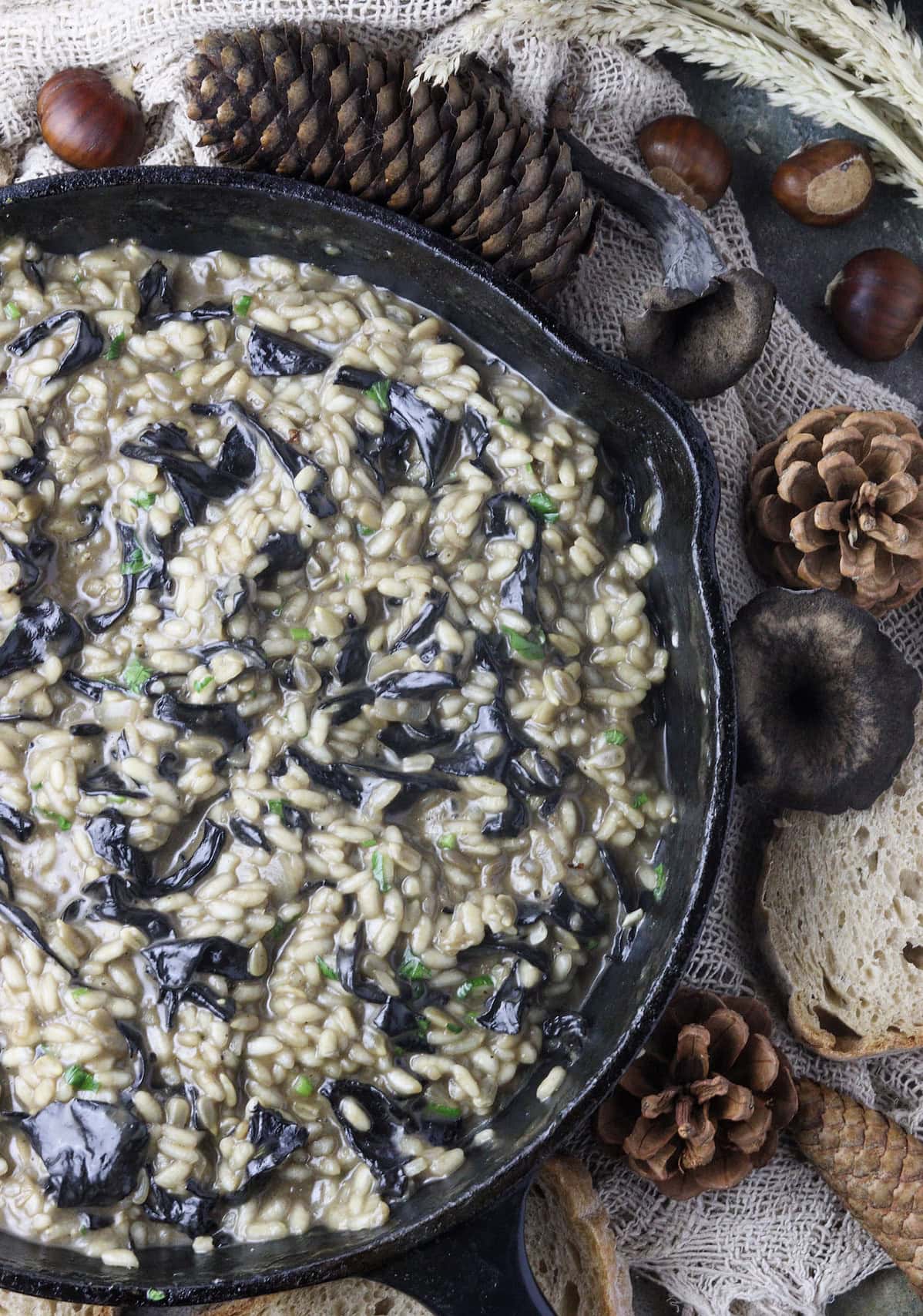
Sample Recipe: Black Trumpet Risotto
Ingredients:
- 1 cup dried black trumpets (or 2 cups fresh)
- 1 1/2 cups Arborio rice
- 4 cups chicken or vegetable stock
- 2 shallots, minced
- 2 tablespoons butter
- 1/2 cup white wine
- 1/2 cup grated Parmesan cheese
- Salt and pepper to taste
Instructions:
- Rehydrate dried mushrooms if using. Strain and reserve soaking liquid.
- Sauté shallots in butter until soft.
- Add rice, cook 2 minutes.
- Pour in wine, stir until absorbed.
- Add stock 1/2 cup at a time, stirring and waiting until absorbed.
- Add mushrooms halfway through.
- Stir in cheese, salt, and pepper before serving.
Extra tip: For even deeper flavor, use the mushroom soaking liquid as part of your stock.
Flavor Pairings
Black trumpets pair well with:
- Cream
- Eggs
- Aged cheeses
- Beef, pork, and poultry
- White wines and sherry
- Mild herbs like chives, tarragon, and chervil
Their flavor is delicate—avoid overpowering them with strong spices or chilis. Simpler recipes often showcase their aroma best.
Cultural And Historical Significance
Black trumpets have been valued for centuries in European and Asian cuisines.
Traditional Uses
- In France, they are called “trompette de la mort” and often used in game dishes and pâtés. Chefs add them to classic sauces or blend them into terrines.
- In Italy, known as “trombetta dei morti,” they’re popular in risottos and pasta sauces. In some regions, they are dried and used as a seasoning.
- In Eastern Europe, black trumpets are sometimes dried for winter stews. In Slavic countries, they are seen as a symbol of autumn.
Folklore
The name “trumpet of the dead” comes from old stories. Some believed the mushrooms grew where the dead played music underground—hence their appearance around All Souls’ Day. In some cultures, finding black trumpets was seen as a good omen, signaling a bountiful mushroom season.
Modern Popularity
In recent years, chefs have rediscovered black trumpets for their unique taste. They appear in high-end restaurants and are sold dried in specialty stores. Creative cooks use them in both traditional and modern dishes, experimenting with new pairings.
Non-obvious insight: Unlike many wild mushrooms, black trumpets rarely trigger allergic reactions, making them a safe choice for most people. This makes them popular with diners who are cautious about wild foods.

Credit: www.amazon.com
Comparing Black Trumpets To Other Wild Mushrooms
Foragers and chefs often wonder how black trumpets stack up against other wild favorites.
| Mushroom | Flavor | Texture | Availability |
|---|---|---|---|
| Black Trumpet | Smoky, nutty, umami | Delicate, thin | Elusive, patchy |
| Chanterelle | Fruity, apricot-like | Firm, meaty | Common in summer |
| Morel | Earthy, nutty | Honeycomb, spongy | Short spring season |
| Porcini | Rich, meaty | Thick, solid | Found in autumn |
Black trumpets are among the hardest to spot but are highly valued for their special taste. Their subtle aroma means they can be used in both main dishes and as a highlight in lighter fare.
Foraging Ethics And Legal Considerations
Foraging is rewarding, but it comes with responsibilities.
Respect For Nature
- Don’t overharvest—leave plenty for wildlife and other foragers.
- Avoid trampling fragile habitats. Stay on established paths where possible.
- Use clean tools and bags to prevent spreading disease.
Foragers can also help by picking up litter or reporting illegal dumping. Healthy forests mean more mushrooms for everyone.
Legal Aspects
- Check local laws—some parks and reserves ban mushroom picking.
- Respect private property and always ask permission.
- Some countries require permits for commercial harvesting.
- In some places, the amount you can collect is limited (for example, by weight or number of baskets).
Non-obvious insight: Some forests have “forager days” when mushroom hunting is allowed. Joining organized groups can be a safe way to learn and follow the rules.
Community
Joining a local mushroom club can provide guidance, safety, and a sense of community. You’ll also learn about new patches and share experiences. Many clubs offer classes, group forays, and identification workshops.
Expert tip: Keep a foraging journal. Record locations, dates, and weather. This helps track patterns and improves your future hunts. Some foragers even sketch their finds or press dried specimens.
Credit: foodnutters.com
Health Benefits And Risks
Black trumpets are not just tasty—they offer health benefits.
Nutrients
- Potassium: Supports heart health and helps regulate blood pressure.
- Iron: Helps prevent anemia and promotes healthy blood.
- Vitamins B2, B12: Essential for energy and nerve function.
- Antioxidants: May reduce inflammation and support immunity.
- Fiber: Aids digestion and gut health.
Eating a variety of wild mushrooms provides different nutrients than most store-bought varieties.
Risks
- Wild mushrooms can cause stomach upset if eaten raw or not cleaned well.
- Allergic reactions are rare but possible. If you have a mushroom allergy, avoid all wild types.
- Never eat old, moldy, or bug-infested mushrooms. These can cause food poisoning.
- Some people experience digestive upset if they eat large quantities of mushrooms, especially if not cooked thoroughly.
How To Minimize Risk
- Cook mushrooms thoroughly to break down tough fibers and neutralize minor toxins.
- Try a small amount first if you’ve never eaten black trumpets.
- Store fresh mushrooms in paper, not plastic, to avoid spoilage.
- Avoid picking mushrooms in areas sprayed with pesticides or herbicides.
For more about mushroom safety, see the official advice on the [US Forest Service](https://www.fs.fed.us/wildflowers/ethnobotany/mushrooms/index.shtml).
Common Foraging Mistakes And How To Avoid Them
Even experienced foragers can make errors. Here are some of the most common:
- Not checking for lookalikes: Always double-check before eating.
- Over-harvesting: Take only what you need.
- Ignoring habitat clues: Black trumpets need certain trees and moisture.
- Foraging alone: Go with a friend, especially in new areas.
- Not recording finds: Without a record, you may forget good spots.
- Harvesting during dry spells: Mushrooms are less flavorful and more likely to spoil.
- Skipping the spore print: This simple test can prevent mistakes.
Practical advice: Take clear photos of your finds, both in the ground and after harvesting. This helps with identification and learning. Compare your pictures with reliable field guides or websites.
Black Trumpets In The Modern Kitchen
Many chefs consider black trumpets a “secret ingredient.” Here’s how restaurants and home cooks use them:
- Infused into cream sauces for pasta or seafood
- Mixed into scrambled eggs or soufflés
- Folded into savory crepes or galettes
- Baked onto flatbreads or pizzas
- Used as a garnish for soups and purees
- Swirled into mashed potatoes or polenta for a smoky twist
- Combined with leeks and cream for a classic tart filling
Because dried black trumpets are powerful, a small amount goes a long way. They are also popular in vegetarian and vegan cuisine for their umami boost.
Non-obvious insight: Black trumpets work well in desserts. Some pastry chefs use their earthy flavor in ice creams or paired with chocolate. The combination of mushroom and cocoa is surprisingly harmonious.
Storing And Transporting Your Foraged Mushrooms
How you handle mushrooms after the hunt affects their taste and shelf life.
In The Field
- Use a basket or mesh bag—never plastic, which traps moisture and speeds decay.
- Handle gently to avoid bruising.
- Keep different mushroom species separate to avoid cross-contamination.
At Home
- Store in a paper bag in the fridge.
- Use within 2–3 days for best flavor and texture.
- Dry or freeze extras immediately to prevent waste.
Long-term
- Dried black trumpets can be kept in glass jars or vacuum-sealed bags.
- Check for moisture—if you see condensation, dry again.
- Store in a cool, dark place to preserve flavor.
Expert tip: Store dried black trumpets with a small packet of food-safe desiccant to prevent spoilage. Silica gel packets work well and are easy to find.
Frequently Asked Questions
What Do Black Trumpet Mushrooms Taste Like?
Black trumpets have a smoky, nutty, and earthy flavor, with a strong umami note. They are more subtle than porcini but richer than regular chanterelles. Some people notice a hint of sweetness or black truffle aroma, especially when dried. Their taste can vary slightly depending on where and when they were picked.
Are Black Trumpet Mushrooms Safe To Eat Raw?
It’s best to cook black trumpets. Raw wild mushrooms can be hard to digest and may contain small amounts of natural toxins. Cooking improves both flavor and safety. Sauté, roast, or simmer for best results.
How Can You Tell Black Trumpets From Toxic Mushrooms?
Look for a hollow trumpet shape, smooth underside, and dark color. Avoid mushrooms with gills, rings, or bright colors. When in doubt, consult an expert or take a spore print, which should be pale pink to white.
Can You Grow Black Trumpet Mushrooms At Home?
Growing black trumpets is very difficult. They form a symbiotic relationship with tree roots and need specific soil and climate conditions. Most commercially sold black trumpets are wild-harvested. Some companies are researching cultivation, but success is rare.
What’s The Best Way To Store Black Trumpet Mushrooms?
Fresh black trumpets should be kept in a paper bag in the fridge and used within a few days. For long-term storage, dry them thoroughly and keep in an airtight container away from light and moisture. Powdered trumpets are convenient and last even longer.
—
The search for black trumpet mushrooms is part adventure, part culinary delight. With the right knowledge, a sharp eye, and respect for nature, foragers can enjoy one of the forest’s most elusive and rewarding treasures—bringing a touch of wild flavor to the table.