
Growing mushrooms is exciting, but it comes with risks. The most common challenge for new and experienced growers is contamination. A small mistake or a dirty tool can ruin weeks of work. The biggest threats are green mold, cobweb mold, and bacterial infections. If you do not manage these, your mushroom crop can fail completely. But with the right knowledge, you can spot problems early and fix them before they spread. This article explains how to identify, prevent, and fix these common issues, based on real experiences and science.
Understanding Mushroom Cultivation Contamination
Mushrooms need a clean environment to grow. Unlike plants, they have no protective skin. This means bacteria and mold can attack easily. Contaminants often come from unsterile tools, poor air quality, dirty hands, or even the substrate. Most problems start small and are easy to miss if you do not check carefully.
The three major types of contamination are:
- Green mold (usually Trichoderma)
- Cobweb mold (mainly Dactylium)
- Bacteria (often called wet spot or sour rot)
Each contaminant looks different and spreads in its own way. To keep your mushrooms healthy, you must learn to recognize each type and act quickly.
Green Mold (trichoderma): The Silent Destroyer
What Is Green Mold?
Green mold is caused by several Trichoderma species. It starts white, then turns bright green as spores form. This mold is a fierce competitor. It eats the same food as mushrooms and spreads fast, especially in humid and warm places.
How Green Mold Attacks
Green mold breaks down mushroom mycelium and takes over the substrate. It releases chemicals that stop mushrooms from growing. Often, it starts invisible and only shows green when it’s already strong.
Signs Of Green Mold
- White patches turn bright green within 1-2 days
- Mushrooms stop growing in that area
- Musty or earthy smell
- Mycelium looks weak or watery
Why Green Mold Happens
Common causes include:
- Unsterilized substrate or tools
- High humidity (above 90%) with poor airflow
- Contaminated spores or grain
- Handling the substrate with dirty hands
A key insight: Many new growers think green mold starts green. In fact, it is white at first, just like healthy mushroom mycelium. Only later does it become green when it produces spores. Checking early for odd textures or fast-spreading white patches helps you catch it early.
How To Fix Green Mold
- Isolate: Move contaminated containers away from healthy ones immediately.
- Remove: Scoop out all affected substrate and at least 2 cm of healthy material around it.
- Clean Tools: Wipe tools with 70% alcohol before and after use.
- Apply Salt: Sprinkle table salt on the spot to slow mold growth (a temporary fix).
- Increase Fresh Air: Improve airflow and keep humidity below 85%.
- Monitor: Watch daily for new green spots.
If the contamination is widespread, it is better to dispose of the whole batch. Trying to save a heavily infected grow can spread spores to your next crop.
Preventing Green Mold
- Always sterilize substrate and jars for at least 60 minutes at 15 psi.
- Wear clean gloves and a mask when handling mushrooms.
- Use a still air box or flow hood for transfers.
- Store spores and cultures in sealed containers.
Many beginners skip sterilizing tools between uses, thinking a quick rinse is enough. This is a common reason green mold returns. Proper sterilization is vital every time.
Cobweb Mold: The Fast Invader
What Is Cobweb Mold?
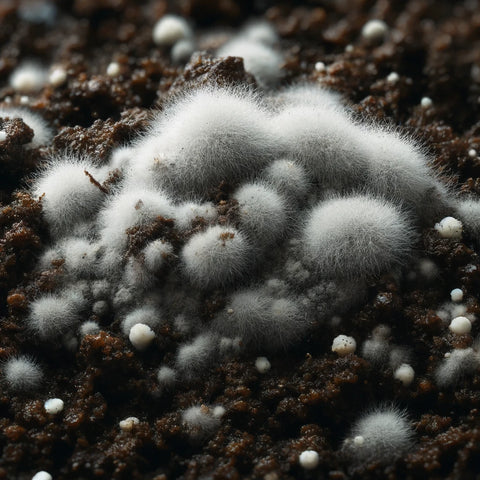
Cobweb mold looks like thin, gray or white spider webs on the surface. The main species is Dactylium. It grows much faster than mushroom mycelium and can cover the whole surface in a day or two.
How Cobweb Mold Spreads
Cobweb mold loves stale, humid air. It spreads most in closed containers with poor air exchange. It sends out tiny spores that float in the air and land on wet surfaces.
Signs Of Cobweb Mold
- Wispy, gray, spider-web-like growth
- Grows much faster than mushroom mycelium
- Sometimes causes mushrooms to rot or turn soft
- A faint, dusty smell
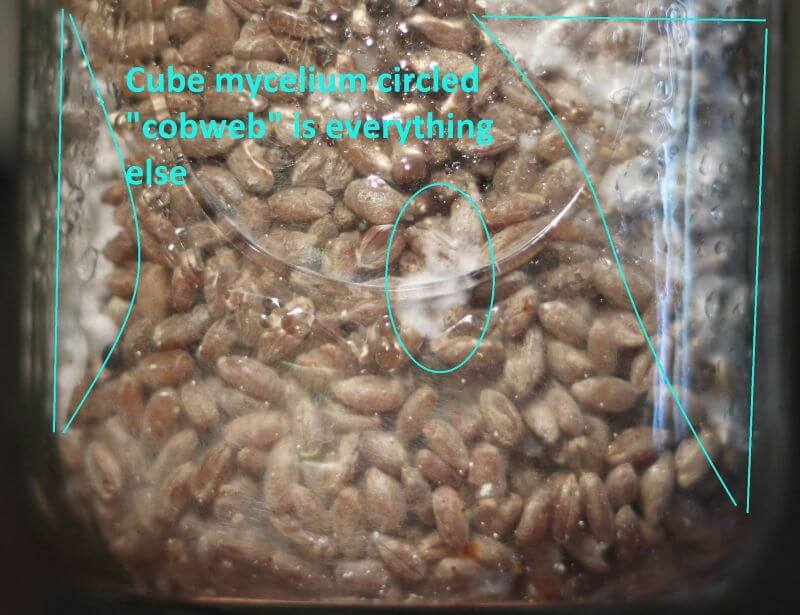
One mistake people make is confusing cobweb mold with healthy mycelium. Real mycelium is bright white and thick, while cobweb is thin, gray, and almost transparent.
How To Fix Cobweb Mold
- Lower Humidity: Open the lid or fan the container to dry out the surface.
- Spray Hydrogen Peroxide: Use 3% hydrogen peroxide mist on the affected area. Cobweb mold dies, but mushrooms survive.
- Improve Airflow: Add more air holes or fan the box 2-3 times a day.
- Remove Heavy Growth: Carefully scoop out large cobweb patches with a sterile spoon.
Hydrogen peroxide is very effective. Cobweb cannot survive it, but mushroom mycelium can. This is one of the few cases where you can use a chemical fix without harming your crop.
Preventing Cobweb Mold
- Do not let air become stale. Fan your containers daily.
- Keep humidity at 80-85%, not higher.
- Avoid overwatering the substrate.
- Clean your grow area regularly.
A little-known tip: Regularly wiping container lids and sides with alcohol reduces invisible cobweb spores. Beginners often forget the lid, but spores collect there and drop onto the substrate when opened.
Bacterial Contamination: The Wet Spot Problem
What Is Bacterial Contamination?
Bacteria cause the “wet spot” or “sour rot” problems in mushroom cultivation. The most common bacteria are Bacillus species. They thrive in wet, warm, low-oxygen spots in the substrate.
How Bacteria Spread
Bacteria multiply in water droplets and sticky grains. They can survive incomplete sterilization and spread from dirty hands or unwashed grains. Unlike molds, bacteria often create slime, bad smells, and mushy textures.
Signs Of Bacterial Contamination
- Wet, slimy, or oily patches in the substrate
- Sour, rotten, or sweet smell (like old gym socks)
- Grains stick together or look grayish
- Mycelium stops growing in the affected area
One insight: Not all wet spots are bacteria. Sometimes, excess water pools without infection. True bacterial wet spots always smell bad and make mycelium stop growing.
How To Fix Bacterial Contamination
- Remove Infected Substrate: Scoop out all slimy or smelly areas and some healthy substrate around them.
- Increase Airflow: Bacteria love low oxygen. Fan the container to dry out wet spots.
- Reduce Moisture: Stop misting and let the surface dry for a day or two.
- Hydrogen Peroxide Soak: In mild cases, a 3% hydrogen peroxide soak can slow bacteria, but it will not cure a heavy infection.
- Monitor: If bad smell remains, discard the batch.
For jars: If you see bacterial contamination in grain jars, it is best to throw them out. The bacteria can survive and spread to future batches.
Preventing Bacterial Contamination
- Rinse grains thoroughly before sterilizing.
- Pressure cook for at least 90 minutes at 15 psi.
- Use clean water and avoid over-wetting the substrate.
- Store grains in a cool, dry place.
Beginner growers often reuse water-soaked grains or old substrate, thinking it saves time. This almost always leads to bacteria problems. Fresh, properly prepared grains are essential.

Credit: www.youtube.com
Comparing Green Mold, Cobweb, And Bacterial Contamination
Understanding the differences helps you act quickly. Here is a clear comparison of the three main contaminations:
| Contaminant | Appearance | Smell | Spread Speed | Best Fix |
|---|---|---|---|---|
| Green Mold (Trichoderma) | White at first, bright green later | Earthy, musty | Medium-Fast | Remove + salt + airflow |
| Cobweb Mold | Thin, gray, wispy | Faint, dusty | Very Fast | Hydrogen peroxide + airflow |
| Bacteria (Wet Spot) | Wet, slimy, sticky | Sour, rotten | Slow-Medium | Remove + dry + discard if severe |
This table can help you quickly identify problems at a glance.
Step-by-step: What To Do When You Find Contamination
- Check Daily: Inspect your mushroom containers every day for unusual colors, smells, or textures.
- Isolate Quickly: Move any suspicious batch away from healthy ones.
- Identify the Problem: Use the signs listed above to decide if it is green mold, cobweb, or bacteria.
- Take Action: Use the right fix (removal, hydrogen peroxide, airflow, or discard).
- Clean Up: Always clean your hands, tools, and workspace after handling contamination.
- Review Your Process: Ask what went wrong—was the substrate too wet, were tools unclean, was the room dusty?
A practical insight: Most contamination comes from overlooked habits. For example, touching your phone while working spreads germs. Set up a strict routine and stick to it.
Real-world Examples And Case Studies
Example 1: Green Mold In A Rye Grain Jar
A grower noticed a white patch in their rye jar after 7 days. By day 10, it had turned bright green. The grower had not sterilized their spoon between mixing jars. Removing the patch and adding salt slowed the growth, but the contamination came back.
The next batch, with better sterilization, succeeded.
Lesson: Always sterilize tools between each use, not just before starting.
Example 2: Cobweb Mold In A Fruiting Chamber
After a heavy misting, a thin gray web appeared overnight. The grower confused it with mycelium and left it. The next day, mushrooms stopped growing, and the web doubled in size. Spraying 3% hydrogen peroxide killed the cobweb, and airflow was improved.
The crop recovered.
Lesson: If growth is faster than usual and looks wispy, act quickly with hydrogen peroxide.
Example 3: Bacterial Wet Spot In Brown Rice Substrate
A new grower noticed a sour smell and slimy patch in their rice bag. They had used tap water and undercooked the substrate. The batch was thrown out, but the next one used distilled water and full sterilization, with no contamination.
Lesson: Use clean water and complete sterilization every time.
Common Mistakes And How To Avoid Them
- Not sterilizing long enough: Many think 30 minutes is enough. Most contaminants need at least 60-90 minutes at 15 psi.
- Touching substrate with bare hands: Even clean-looking hands carry bacteria. Always use gloves and clean them with alcohol.
- Over-misting: Too much water creates perfect conditions for mold and bacteria.
- Not cleaning lids and sides: Spores collect on surfaces above the substrate. Wipe them often.
- Ignoring small patches: Early action can save a whole batch. Do not wait for the problem to get bigger.
Advanced tip: Use a still air box or laminar flow hood for all transfers. This reduces airborne spores by over 90%, but many home growers skip this because it seems like extra work.
Credit: gromagik.com
How To Set Up A Contamination-resistant Grow Room
A clean grow space is your best defense. Here’s how to set one up:
Choose The Right Space
- Pick a room with few windows and little foot traffic.
- Remove carpets and clutter, as they trap dust and spores.
- If possible, use a small room that is easy to clean.
Clean Regularly
- Wipe all surfaces with 70% alcohol before each session.
- Mop the floor with soapy water weekly.
- Keep pets, plants, and food out of the area.
Air Quality Control
- Use a HEPA filter or air purifier to remove mold spores.
- Run the filter for 30 minutes before working.
- Avoid fans that blow dust around.
Tools And Equipment
- Use metal or glass tools; they are easier to sterilize.
- Store all tools in a sealed box.
- Sterilize with alcohol or flame before each use.
Clothing And Hygiene
- Wear clean clothes, a mask, and gloves.
- Tie back long hair.
- Wash hands up to the elbows before starting.
One insight: Many growers clean the space but forget about themselves. Skin flakes and hair are major sources of contamination. Covering up is as important as cleaning the room.
Advanced Tips For Preventing Contamination
- UV Light: A UV-C lamp can kill most spores in the air in 10-15 minutes. Use only when not in the room.
- Pressure Cooker Monitoring: Use a thermometer to check the real temperature inside, not just the dial. Many pressure cookers run cooler than their settings.
- Separate Dirty and Clean Areas: Set up a “dirty” table for prepping substrate and a “clean” table for inoculation. Never mix tools between them.
- Test Water Quality: Hard or contaminated tap water increases bacterial risk. Use filtered or bottled water if possible.
- Use Grain Spawn Bags with Filters: These bags let air in but keep spores out. They are better than jars for large batches.
Many beginners think contamination is just “bad luck. ” In fact, most can be prevented with careful habits and setup.
When To Save A Batch And When To Start Over
A big question is: “Can I save my mushrooms, or must I start again?”
- Small, early contamination: If you catch green mold or cobweb early and it is in a small spot, removal and treatment may save the batch.
- Wide or deep contamination: If more than 30% of the substrate is infected, it is best to throw it out. Trying to save it often spreads spores.
- Strong, bad smell: If the smell is overpowering or makes you gag, discard the batch. Bacteria may produce toxins.
- Multiple contaminations: If you see more than one type (e.g., green and cobweb together), the risk to future grows is too high.
Do not risk your whole grow room for one batch. Contaminants can linger and ruin future crops.
Disposing Of Contaminated Substrate Safely
Throwing away contaminated material is important. Do it safely to avoid spreading spores.
- Seal in a Bag: Place the substrate in a heavy trash bag. Tie tightly.
- Spray with Alcohol: Mist the bag with alcohol before moving it.
- Dispose Outside: Take it outside immediately. Do not leave it in indoor trash.
- Clean Up: Wipe all surfaces and tools with alcohol after disposal.
Some growers compost old substrate. Only do this if you have an outdoor compost far from your grow area. Mold spores can survive in the soil and return if you are not careful.
Credit: fungiacademy.com
Regular Maintenance And Monitoring
Keeping contamination away is a daily job. Here’s how to keep your setup healthy:
- Daily Checks: Look for color changes, odd smells, or wet patches.
- Weekly Cleaning: Wipe down all surfaces, tools, and containers.
- Monthly Deep Clean: Wash walls, floors, and shelves with soap and water.
- Replace Filters: Change HEPA or air purifier filters every 3-6 months.
A key insight: Most contaminations start small and get missed during busy weeks. Setting a daily alarm to check your grow saves a lot of headaches.
Data: How Common Is Contamination?
Studies show that up to 40% of home mushroom grows are lost to contamination, especially among beginners. Green mold is the most common, followed by bacteria and then cobweb mold.
| Contaminant | Home Grow Rate (%) | Commercial Grow Rate (%) |
|---|---|---|
| Green Mold | 28 | 12 |
| Bacterial Wet Spot | 8 | 4 |
| Cobweb Mold | 4 | 2 |
Commercial growers lose fewer crops because they have strict routines and better equipment. Home growers can reduce contamination by copying some of these habits.
Trusted Resources
Learning more helps you prevent and fix problems faster. For detailed guides, see the Wikipedia page on mushroom cultivation.
Frequently Asked Questions
What Is The Best Way To Tell Green Mold From Mushroom Mycelium?
Green mold is white at first, just like mycelium. The key difference is that green mold turns bright green within a day or two, especially when disturbed. It also spreads faster and can have a rougher texture. If you are unsure, watch for color change and smell.
Can Cobweb Mold Harm My Health?
Cobweb mold is not usually dangerous to healthy people, but its spores can cause breathing problems for those with allergies or asthma. Always remove contaminated material and clean the area with good airflow. Wear a mask if you are sensitive.
Is Hydrogen Peroxide Safe For Mushrooms?
Yes, 3% hydrogen peroxide kills cobweb mold but does not harm mushroom mycelium. Spray lightly and only on the affected area. Do not use higher concentrations, as they can damage your crop.
How Can I Stop Bacteria From Infecting My Substrate?
The most important steps are sterilizing your substrate for at least 90 minutes at 15 psi and using clean water. Always rinse grains well, and avoid touching the substrate with bare hands. Store prepared grains in a cool, dry place.
Should I Throw Away The Whole Batch If I See Mold?
If you catch contamination early and it is small, you can try removing and treating the spot. But if the mold covers a large area or there is a strong bad smell, it is safer to throw out the whole batch.
Saving a bad batch can risk your next grow.
Growing mushrooms is a rewarding hobby, but it requires attention to detail. Understanding and controlling contamination is key to success. By learning to spot green mold, cobweb mold, and bacteria early, and using strong hygiene habits, you can enjoy healthy, high-yield crops.
If you make a mistake, do not get discouraged—every grower faces contamination at some point. The real skill is learning, adapting, and improving with each harvest.