
Growing mushrooms at home can be a rewarding hobby or even a small business. But before those white oyster or golden mushrooms burst from the substrate, you need to give them a good start. One of the easiest and most effective ways to prepare straw for mushroom growing is the cold water lime pasteurization method. This technique is simple, low-cost, and does not require any fancy equipment or a lot of energy. For many beginner and small-scale mushroom growers, it’s a game-changer.
Yet, many guides online leave out important details or skip steps that matter. You may have heard that pasteurization is about “killing bad things and letting good things survive,” but what exactly happens when you soak straw with lime? How do you avoid mistakes that lead to failed mushroom crops? This article will walk you through every step, explain why each part is important, and offer practical tips you won’t find in short tutorials. Even if you’re new to mushroom growing, you’ll feel confident to start with the cold water lime method.
Why Pasteurize Straw For Mushroom Growing?
Straw is a popular substrate for mushrooms like oyster, shiitake, and more. But raw straw isn’t clean. It’s full of bacteria, mold spores, and other organisms that compete with mushrooms. If you skip pasteurization, your straw may quickly turn green with mold or get a bad smell, ruining your crop.
Pasteurization is not the same as sterilization. Pasteurization reduces or kills most unwanted microbes but leaves behind some beneficial ones. This creates an environment where mushrooms can out-compete harmful organisms. The cold water lime method is especially popular because it uses basic materials and is safer than hot water or chemical sterilization.
What Is The Cold Water Lime Pasteurization Method?
The cold water lime pasteurization technique uses hydrated lime mixed with cold water to treat straw. The high pH created by the lime kills many pathogens and weakens mold spores. Unlike hot water pasteurization (which needs large pots and lots of energy), the cold water method is energy-saving and accessible to anyone.
You simply soak chopped straw in a water bath with a high concentration of hydrated lime for a set period, usually between 12-24 hours. After draining, the straw is ready for mushroom inoculation.
Key Benefits Of The Cold Water Lime Method
- Low Cost: No need for large pots, burners, or gas.
- Low Energy Use: No heating required.
- Safety: No burns or boiling water.
- Simple Materials: Only need straw, water, and the right lime.
- Scalable: Easy to use for small or large batches.
However, there are important details to get right. Using the wrong lime type, not chopping straw, or soaking for too little time can hurt your results. These are common mistakes beginners make.
Understanding Hydrated Lime: The Most Important Ingredient
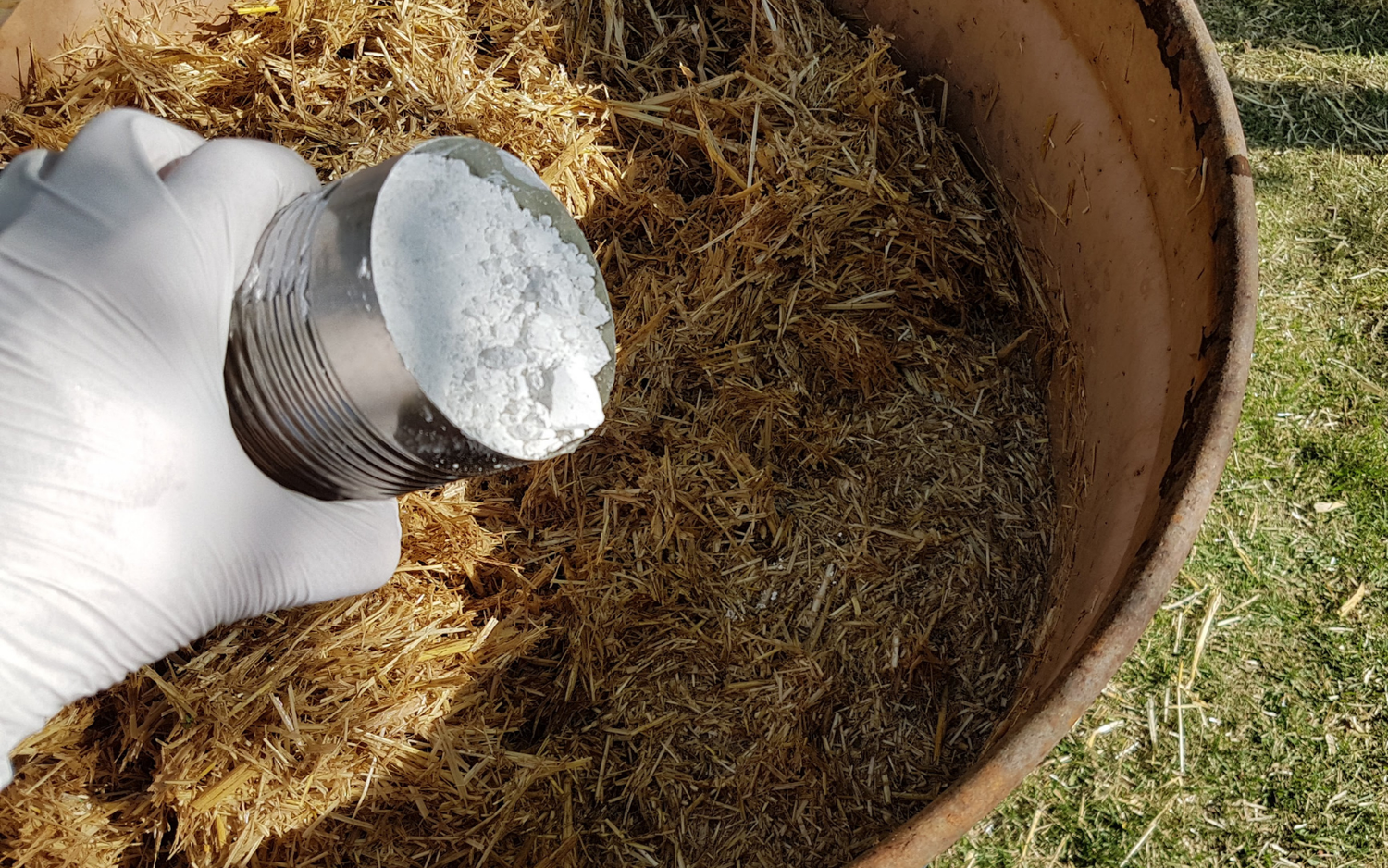
Not all lime is the same. For cold water pasteurization, you need hydrated lime with a high calcium content and no magnesium. The ideal lime is calcium hydroxide (Ca(OH)2), often sold as builders lime, slaked lime, or pickling lime.
If you use garden lime (often dolomitic lime), it contains magnesium and doesn’t raise pH enough to kill contaminants. That’s a big reason why some growers fail.
How To Identify Good Hydrated Lime
- Look for calcium hydroxide or “Type S” hydrated lime.
- Check the label for at least 90% Ca(OH)2 and less than 2% magnesium.
- Avoid “dolomitic” or “agricultural” lime for this method.
If you’re not sure, ask at a building supply or look up the product’s data sheet online.
Materials And Equipment Needed
Gather everything before you start. Here’s what you’ll need:
- Straw: Wheat, barley, or oat straw. Avoid straw with seeds or mold.
- Hydrated Lime: Pure calcium hydroxide, as explained above.
- Clean Water: Tap water usually works, but avoid hard or mineral-heavy water.
- Large Container: 100-200 liter food-grade plastic barrel, bin, or tub.
- Mesh Bags or Laundry Bags: For easy handling of straw.
- Scale: To weigh lime and straw for accuracy.
- Gloves and Mask: Lime dust can irritate skin and lungs.
- Stick or Pole: For stirring the straw in water.
- Draining Rack/Area: Pallets, mesh, or clean ground for draining straw.
Optional but helpful:
- Thermometer: To check water temperature (must be below 30°C/86°F).
- PH Test Strips: To confirm water pH is above 12.
How Much Straw And Lime?
For best results, keep ratios consistent. A standard formula:
- 100 liters of water
- 5 kg of chopped straw (dry weight)
- 100 grams of hydrated lime (for strong lime, Ca(OH)2 over 90%)
Some guides recommend up to 1% lime by weight of water (1 kg per 100 liters), but most find 0. 1% (100g per 100L) is enough if using pure hydrated lime.
If your lime is weaker, you may need more. Too much lime can damage mushroom mycelium, so don’t overdo it.
Preparing The Straw
Choosing The Right Straw
Use fresh, yellow, clean straw. Avoid straw that is:
- Moldy or wet
- Full of seeds
- Very dirty or dusty
Wheat straw is preferred. Oat and barley straw work, but sometimes have more dust or hulls.
Chopping The Straw
Chop straw into pieces between 2–10 cm long. This increases surface area, makes soaking more effective, and helps the mycelium grow quickly.
Ways to chop straw:
- Use a garden shredder or chipper.
- Cut with a sharp knife or machete.
- Use hedge clippers or scissors for small amounts.
Don’t skip this step—long straw makes it harder for mushrooms to colonize.
Step-by-step: Cold Water Lime Pasteurization
Now let’s walk through the full process. Each step is important for a successful mushroom grow.
1. Prepare The Straw
- Chop straw into short pieces.
- Shake off excess dust or dirt.
- Fill mesh bags or keep loose if using a large container.
2. Mix The Lime Solution
- Fill your container with clean, cold water.
- Sprinkle hydrated lime into the water while stirring.
- Mix well to dissolve all lime—avoid clumps.
- Check pH if possible; aim for pH 12 or higher.
Example Calculation
For a 200-liter barrel:
- Use 200g hydrated lime (if high purity).
- Fill with 200 liters of water.
- Mix until fully dissolved.
3. Add Straw To The Lime Solution
- Submerge straw bags or loose straw in the lime water.
- Press down so all straw is underwater.
- Place a clean stone, brick, or lid on top to keep straw submerged.
4. Soak For The Right Time
- Let straw soak for 12–24 hours.
- Minimum time: 12 hours for chopped, soft straw.
- Maximum: 24 hours. Longer can make straw too soft and lower mushroom yield.
Soaking time depends on how tightly straw is packed, how cold the water is, and straw thickness. Thicker straw may need up to 24 hours.
5. Remove And Drain The Straw
- Lift out straw using bags or by hand (wear gloves).
- Let straw drain for 1–2 hours.
- Spread on a clean surface, on pallets, or a mesh rack.
- Final moisture content is key: Squeeze a handful—only a few drops should come out.
Over-wet straw leads to contamination, while too dry straw slows growth.
6. Inoculate The Straw
- Use mushroom spawn (grain or sawdust).
- Mix thoroughly with the cooled, drained straw.
- Fill into grow bags, buckets, or containers.
- Seal or cover as needed for your mushroom type.
Inoculate as soon as possible—don’t leave pasteurized straw sitting for hours.
7. Incubate And Fruiting
- Place inoculated straw in a clean, warm area (20–25°C).
- Mushrooms will colonize straw in 10–20 days.
- Move to fruiting conditions (more light, humidity, fresh air).
Common Mistakes And How To Avoid Them
Many beginners lose their first batch to simple errors. Here’s what to watch for:
Using The Wrong Lime
- Only use hydrated lime with high calcium and low magnesium.
- Avoid garden or dolomitic lime.
Not Chopping Straw
- Long straw resists soaking and colonization.
- Always chop to 2–10 cm pieces.
Inaccurate Lime Or Straw Measurement
- Too little lime = weak pasteurization.
- Too much lime = damages mycelium.
Poor Soaking Or Draining
- Incomplete soaking leaves dry patches.
- Over-wet straw after draining encourages mold.
Dirty Environment
- Don’t pasteurize near compost, pets, or open windows.
- Work quickly and keep things clean after draining straw.
Delayed Inoculation
- Inoculate within a few hours after draining.
- Pasteurized straw left too long can get contaminated.
How Cold Water Lime Pasteurization Works (the Science)
The technique works by dramatically raising the pH of the water. Most microbes, including mold and bacteria, cannot survive or reproduce in an alkaline environment (pH 12 or higher). However, mushroom mycelium can tolerate this short period of high pH because the lime is washed off after draining, and the pH drops as the straw dries and is inoculated.
High pH also softens straw, breaking down surface waxes and making nutrients more available to mushrooms.
Comparing Pasteurization Methods
There are several ways to pasteurize straw for mushrooms. Here’s how cold water lime compares to others:
| Method | Pros | Cons | Best For |
|---|---|---|---|
| Cold Water Lime | Low cost, safe, easy, no heating | Need correct lime, longer soak | Beginners, small farms |
| Hot Water | Reliable, easy to understand | Needs lots of energy and equipment | Small-medium farms |
| Steam Pasteurization | Very effective, large scale | Expensive, complex | Large farms |
| Chemical (Lime/Peroxide) | Works for various substrates | Chemicals must be handled carefully | Advanced growers |
For most home and small farm growers, the cold water lime method offers the best balance of safety, cost, and effectiveness.
Ideal Conditions For Pasteurization Success
To maximize your mushroom yield, pay attention to these factors:
- Water Quality: Use clean, neutral water. Hard or mineral-rich water can reduce lime effectiveness.
- Straw Quality: Use fresh, golden straw. Avoid very old or moldy straw.
- PH: Always aim for a pH above 12. Use test strips if unsure.
- Soak Time: Keep within 12–24 hours. Don’t rush or over-soak.
- Cleanliness: Clean tools, containers, and hands reduce risk of contamination.

Credit: www.youtube.com
Practical Tips For Best Results
- Hydrated lime can irritate skin and lungs. Always wear gloves and a mask when handling.
- If you have access to a pH meter, test your lime solution before soaking straw.
- If straw floats, use a clean stone or weight to keep it submerged.
- Work in a shaded or cool area to avoid heating the water.
- Use mesh bags for straw to make draining and handling easier.
- If you want to pasteurize more straw, increase water and lime in the same ratio.
- After draining, use straw within 2–3 hours for best results.
Troubleshooting: What To Do If Things Go Wrong
Even with care, problems can happen. Here’s how to handle them:
Straw Smells Bad After Soaking
- May be over-soaked or straw was moldy to start.
- Try using fresher straw and reduce soak time.
Mushrooms Won’t Grow Or Colonize Slowly
- Lime may be too strong or too weak.
- Check your lime type and amounts.
- Ensure straw is not too wet or dry when inoculated.
Mold Or Green Spots Appear
- Contamination from dirty tools, hands, or environment.
- Clean all surfaces and inoculate quickly.
Straw Too Wet Or Dry
- Squeeze test: Only a few drops should come out.
- Too wet: Drain longer.
- Too dry: Spray with clean water before inoculation.
How To Store And Handle Pasteurized Straw
Pasteurized straw is best used immediately. If you must store it:
- Keep in a clean bag or covered container.
- Use within 12 hours.
- Don’t let it dry out or get contaminated.
Scaling Up: Larger Batches For Small Farms
The cold water lime method scales well. For larger batches:
- Use bigger barrels or multiple containers.
- Prepare straw and lime solution in advance.
- Use multiple mesh bags for easy handling.
Here’s a scaling example:
| Batch Size | Water (liters) | Straw (kg) | Lime (g) |
|---|---|---|---|
| Small | 100 | 5 | 100 |
| Medium | 200 | 10 | 200 |
| Large | 500 | 25 | 500 |
Always keep the ratios consistent for reliable results.
Comparing Straw To Other Substrates
Straw is popular for oyster mushrooms, but how does it compare to other options like sawdust or coffee grounds?
| Substrate | Availability | Ease of Preparation | Yield Potential |
|---|---|---|---|
| Straw | High | Easy (with lime method) | High |
| Sawdust | Medium | Hard (needs sterilization) | Very High |
| Coffee Grounds | Low | Medium | Medium |
| Coir | Medium | Easy | Medium |
Straw is often chosen for its balance of high yield, low cost, and easy preparation.
Success Stories And Real-world Examples
Many small mushroom farms around the world use the cold water lime method. For example, urban mushroom growers in Europe and South Asia report consistent yields using chopped wheat straw and hydrated lime, even in basic setups.
One small grower in Bangladesh increased yield by 30% after switching from boiling water pasteurization to the cold water lime method. Not only did this save money on fuel, but the process was also much safer and easier for family members to help with.
In South America, community projects use large barrels and mesh bags to process hundreds of kilograms of straw weekly, producing mushrooms for local markets and nutrition programs.
Environmental And Safety Considerations
The cold water lime method is more environmentally friendly than boiling or steaming, as it uses less energy. However, lime must be handled carefully:
- Store hydrated lime in a dry, sealed container.
- Wear gloves, mask, and eye protection when handling.
- Dispose of lime water responsibly—do not pour on plants or near waterways.
After draining, the used lime water can be neutralized with vinegar or left to air out before disposal. Always follow local regulations.
Cold Water Lime Pasteurization For Different Mushroom Types
While oyster mushrooms are the most common, other mushrooms can also be grown on lime-pasteurized straw, such as:
- King oyster (Pleurotus eryngii)
- Pink oyster (Pleurotus djamor)
- Shimeji mushrooms
- Straw mushroom (Volvariella volvacea)
However, not all gourmet mushrooms will thrive with this method. Shiitake, for example, prefers hardwood sawdust and a different preparation.

Credit: zombiemyco.com
Advanced Tips: Improving Yield And Reducing Contamination
- Double Pasteurization: For tough or very dirty straw, repeat the lime soak with fresh solution.
- Add Gypsum: Some growers add 1–2% gypsum (calcium sulfate) to balance nutrients.
- Use Spawn at 10% Rate: Higher spawn rates (10% by weight) speed colonization and reduce contamination risk.
- Monitor Humidity: During fruiting, keep humidity above 85% for best mushroom growth.
- Rotate Crops: Change substrate sources to reduce long-term contamination.
Cost Analysis: How Much Does It Really Cost?
The main costs are straw, lime, water, and containers. Here’s an estimate for a small batch (5 kg straw):
- Straw: $2 (or free from local farms)
- Hydrated Lime: $0.50
- Water: Minimal (tap)
- Bags/Containers: $5 (reusable)
- Mushroom Spawn: $10
Total: Around $18 for a batch yielding 3–5 kg mushrooms, which can sell for $30–$50 in local markets.
Credit: freshcap.com
Learning From Failures: Two Non-obvious Insights
- Water Quality Matters More Than You Think: If your tap water is hard (lots of minerals), lime may not dissolve well, lowering pH and allowing contaminants. Try using rainwater or distilled water if problems continue.
- Lime Storage Affects Potency: Hydrated lime absorbs water from the air and loses strength over time. Always use fresh lime from a sealed container, or your pasteurization may fail without obvious signs.
Where To Learn More
For further reading on mushroom growing and substrate preparation, check resources like the Wikipedia page on mushroom cultivation. Many mushroom grower forums and university agricultural extensions also offer reliable guides.
Frequently Asked Questions
What Mushrooms Can I Grow With Cold Water Lime Pasteurization?
Most commonly, oyster mushrooms (all varieties) do very well. Some other mushrooms like king oyster and straw mushrooms also succeed. However, shiitake and many gourmet mushrooms need different substrates and methods.
Can I Use Any Type Of Lime For This Method?
No. Only use hydrated lime with high calcium content and very low magnesium (less than 2%). Do not use garden lime, dolomite, or quicklime.
How Long Should I Soak The Straw?
Soak the straw for 12–24 hours. Less than 12 hours may not pasteurize fully. More than 24 hours can make the straw too soft and lower mushroom yield.
Is Cold Water Lime Pasteurization Safe For Beginners?
Yes. It’s much safer than hot water methods—no risk of burns. The main safety concern is handling hydrated lime, which can irritate skin and eyes. Wear gloves and avoid breathing dust.
What Do I Do If I See Mold After Pasteurizing?
If mold appears, it usually means contaminated straw, too much moisture, or a dirty environment. Try using fresher straw, draining better, and cleaning all tools and surfaces before your next attempt.
Growing mushrooms with the cold water lime method is a reliable, accessible, and affordable way to get started. By following the steps above, paying attention to details, and learning from each batch, you can produce healthy, delicious mushrooms for your kitchen or market.