
Radiation therapy is a common and powerful treatment for many types of cancer. While it can destroy cancer cells, it often comes with difficult side effects—especially for the digestive system. Many people find their gut health is disrupted for weeks or even months after finishing radiation. Symptoms like diarrhea, nausea, abdominal pain, and poor appetite can linger, making recovery harder.
In recent years, the mushroom known as Turkey Tail has become popular for its possible benefits for the gut, especially after medical treatments like radiation therapy. This article will give you a clear, complete look at how Turkey Tail may help gut health after radiation, what the science says, how to use it, and important things to consider before adding it to your routine. We’ll also answer the most common questions people have about Turkey Tail and gut recovery.
Understanding Gut Health After Radiation Therapy
Radiation targets cancer, but it doesn’t always stop at just the tumor. The surrounding healthy tissues, especially in the digestive tract, can also be affected. Let’s look at what happens inside the gut after radiation therapy and why recovery can be challenging.
How Radiation Therapy Impacts The Gut
The gastrointestinal tract is lined with fast-growing cells. Radiation is designed to attack rapidly dividing cells, so the lining of the stomach, small intestine, and colon can get damaged during treatment. Some common effects include:
- Thinning of the gut lining: This makes it easier for bacteria or toxins to pass through, leading to inflammation.
- Loss of good bacteria: Healthy gut bacteria are reduced, which can slow digestion and weaken the immune system.
- Reduced enzyme production: Enzymes help break down food. Without enough, nutrients are not absorbed well.
Common Gut Problems After Radiation
People often experience:
- Diarrhea or loose stools
- Abdominal pain or cramps
- Bloating and gas
- Nausea and vomiting
- Poor appetite and weight loss
- Mouth sores (if radiation is near the head or neck)
These symptoms can make daily life difficult. But more importantly, they slow down the body’s ability to heal and regain strength.
The Importance Of Restoring Gut Health
A healthy gut is more than just comfortable digestion. The gut is the center of the immune system. It helps fight infection, absorb nutrients, and even balance mood. If gut health is poor after radiation, recovery from cancer is harder and new health problems can appear. That’s why many people look for ways to speed up gut healing and bring back balance.
What Is Turkey Tail Mushroom?
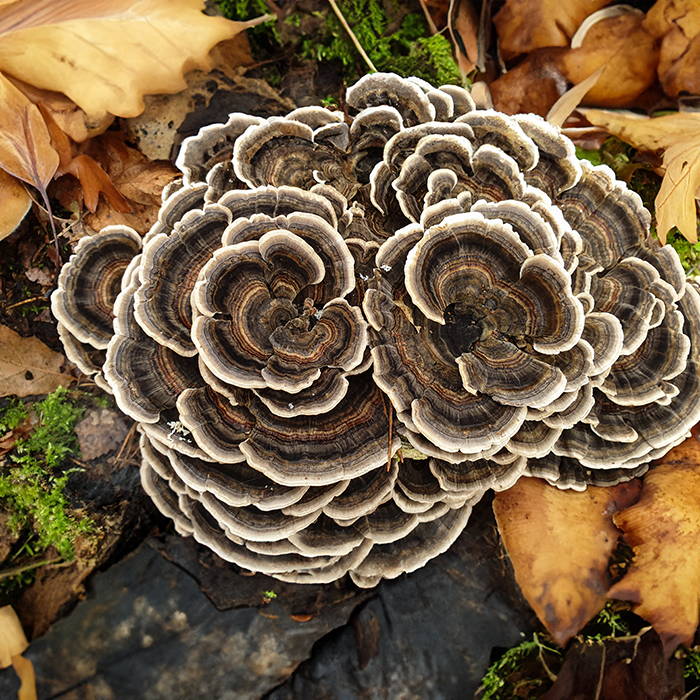
Turkey Tail (scientific name: *Trametes versicolor*) is a colorful mushroom that grows on dead logs and tree stumps around the world. Its name comes from the fan-like shape and the many bands of color, which look like a wild turkey’s tail.
Traditional Uses
For hundreds of years, Turkey Tail has been used in Traditional Chinese Medicine and by indigenous groups in North America. It was used to:
- Support energy and stamina
- Boost the immune system
- Help the body recover from illness
What Makes Turkey Tail Special?
The mushroom is rich in:
- Polysaccharide-K (PSK) and Polysaccharide-Peptide (PSP): These are special sugars that are believed to have powerful immune-boosting effects.
- Beta-glucans: These help the body fight infection and may reduce inflammation.
- Antioxidants: These protect cells from damage and help tissues repair.
Because of these nutrients, Turkey Tail is now studied for many health problems, including gut health after cancer treatment.
How Turkey Tail Supports Gut Health After Radiation
Turkey Tail’s effect on the gut is complex, but several key benefits stand out—especially for people recovering from radiation therapy.
1. Restoring Healthy Gut Bacteria
Radiation often kills both bad and good bacteria in the gut. This imbalance, called dysbiosis, can lead to diarrhea, pain, and poor immune function.
Turkey Tail contains prebiotics, which are food for good bacteria. By feeding the right bacteria, it helps them regrow and balance out harmful microbes. Research shows that Turkey Tail can increase the number of Lactobacillus and Bifidobacterium, two of the most important gut bacteria for health.
2. Reducing Gut Inflammation
Radiation can cause inflammation in the gut lining, making it red, swollen, and painful. Turkey Tail’s beta-glucans help calm this inflammation. Studies in animals show that Turkey Tail extract can reduce markers of gut inflammation and help the tissue heal faster.
3. Supporting The Immune System
A large part of the immune system lives in the gut. Turkey Tail’s PSK and PSP have been shown to boost immune cells and help the body fight off infections that can happen after radiation. A stronger immune system also helps the gut lining repair itself.
4. Helping Repair The Gut Lining
Turkey Tail’s antioxidants and polysaccharides help protect the cells in the gut from further damage and support their repair. This can lead to faster healing and less discomfort after radiation.
5. Improving Digestion And Nutrient Absorption
By bringing back good bacteria and reducing inflammation, Turkey Tail can help restore normal digestion. This means food is broken down better, and vitamins and minerals are absorbed more easily, helping people regain strength after cancer treatment.
Real-life Example
In a small study of cancer patients who took Turkey Tail extract after radiation, many reported less diarrhea and better appetite compared to those who did not. While more research is needed, the results are promising.
Comparing Turkey Tail With Other Gut Support Options
Many people use probiotics, prebiotic foods, or even medications to help the gut after radiation. How does Turkey Tail stack up?
| Option | Main Benefit | Drawback | Best For |
|---|---|---|---|
| Turkey Tail | Boosts good bacteria, reduces inflammation, supports immune system | Some people may have allergies; not suitable for everyone | Overall gut support and immune recovery |
| Probiotics | Replaces specific good bacteria lost after radiation | Some strains may not survive stomach acid; not all are effective | Targeted support for bacterial balance |
| Prebiotic foods (fiber-rich) | Feeds good bacteria, improves stool quality | Can cause gas or bloating if gut is sensitive | Mild gut imbalances |
| Prescription medications | Stops diarrhea or reduces stomach acid quickly | May have side effects; does not restore bacteria | Severe symptoms needing fast relief |
Turkey Tail is unique because it combines the benefits of prebiotics, immune support, and anti-inflammatory effects in one natural food.
:max_bytes(150000):strip_icc()/VWH-Nutrition-Turkey-Tail-f13883db219d42f289388b12569c150c.jpg)
Credit: www.verywellhealth.com
The Science Behind Turkey Tail And Gut Health
There is growing research on Turkey Tail for gut health, especially after harsh treatments like radiation. While most studies are still in the early stages, the results are promising.
Key Research Findings
- Increased Good Bacteria: A 2020 animal study found that Turkey Tail extract increased the diversity and number of good bacteria in the intestines after radiation exposure.
- Reduced Inflammation: Studies in mice show that Turkey Tail can reduce gut inflammation, leading to less pain and faster healing.
- Immune Recovery: Clinical trials in Japan found that cancer patients who took Turkey Tail extract (PSK) after radiation recovered immune function faster and had fewer infections.
- Better Quality of Life: Some studies report that Turkey Tail users have fewer digestive side effects and better appetite compared to those who do not take it.
How Strong Is The Evidence?
Most of the current research is in animals or small human studies. Large clinical trials are needed to confirm the benefits. However, the traditional use and the safety profile make it a popular choice for gut support after cancer treatment.
Non-obvious Insights
- Turkey Tail works best when combined with a healthy diet. It is not a magic cure but supports the body’s natural healing.
- Timing matters: Starting Turkey Tail soon after radiation may give better results than waiting until gut symptoms become severe.
How To Use Turkey Tail After Radiation Therapy
If you want to try Turkey Tail for gut health, it’s important to use it safely and effectively.
Forms Of Turkey Tail
Turkey Tail is available in several forms:
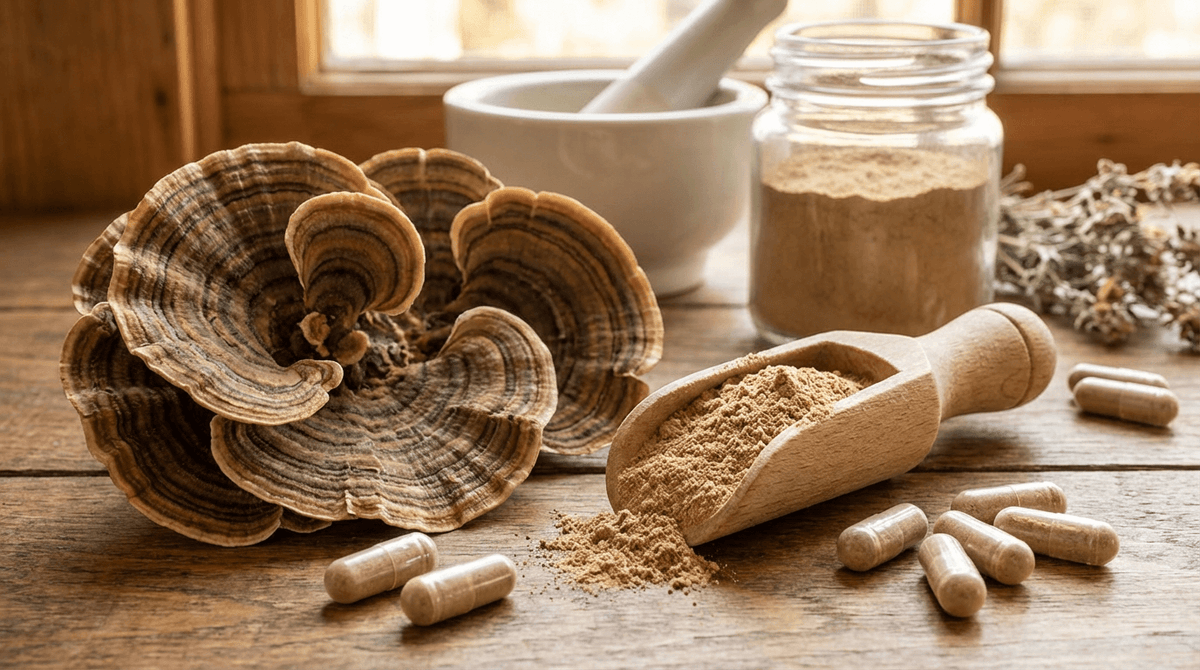
- Powder: Easy to mix into smoothies or food.
- Capsules: Convenient and good for travel.
- Extracts or tinctures: Concentrated and may be stronger.
- Tea: Made by simmering dried mushrooms in water.
Typical Dosage
There is no official dose, but most studies use:
- 1,000–3,000 mg per day of Turkey Tail extract or powder, split into 2–3 doses.
- For tea, 1–2 cups per day is common.
How To Take It
- Take Turkey Tail with food to avoid stomach upset.
- Start with a low dose, then slowly increase to see how your body reacts.
- Drink plenty of water.
Combining With Other Gut Support
Turkey Tail can be used with other gut recovery methods, like:
- Probiotics (capsules or fermented foods)
- Prebiotic foods (bananas, oats, garlic, onions)
- Gentle exercise
- Hydration
But always talk to your doctor before starting Turkey Tail if you are still in cancer treatment or taking other medicines.
Who Should Avoid Turkey Tail?
- People with mushroom allergies
- Those with certain autoimmune disorders (check with your doctor)
- Children, unless advised by a medical professional
Credit: northspore.com
Potential Side Effects And Safety
Turkey Tail is generally safe for most people, but some side effects can happen, especially if taken in large amounts.
Possible Side Effects
- Mild digestive upset (gas, bloating, or diarrhea)
- Allergic reactions (rare, but possible)
- Dark-colored stools (from mushroom pigments)
If you experience rash, swelling, or severe stomach pain, stop using Turkey Tail and see a doctor.
Safety With Other Medications
Turkey Tail can interact with:
- Immunosuppressant drugs
- Blood thinners
If you are taking these medications, check with your healthcare provider first.
Quality Matters
Not all Turkey Tail supplements are equal. Some are mixed with other mushrooms or fillers. Choose products that are:
- Certified organic
- Third-party tested for purity
- Clearly labeled with dose and ingredients
Practical Tips For Gut Recovery After Radiation
Turkey Tail can be a helpful tool, but gut healing is a process. Here are some tips to speed up recovery:
1. Eat A Gentle, Healing Diet
- Choose soft, cooked foods (rice, bananas, applesauce, oatmeal)
- Avoid spicy, fried, or fatty foods
- Stay away from alcohol and caffeine
2. Add Probiotics And Prebiotics
Probiotics can help restore bacteria, while prebiotics feed them. Use both for better results.
3. Stay Hydrated
Radiation can cause dehydration, especially if you have diarrhea. Drink water, clear broths, or electrolyte drinks.
4. Move Your Body Gently
Light walking or stretching can help the gut move food along and reduce bloating.
5. Manage Stress
Stress can slow healing. Practice deep breathing, meditation, or gentle activities you enjoy.
6. Listen To Your Body
If certain foods or supplements make symptoms worse, stop and try something else.
Turkey Tail In Traditional And Modern Medicine
Turkey Tail is unique because it bridges ancient wisdom and modern science.
Traditional Medicine
In China and Japan, Turkey Tail has been used for centuries to support recovery after illness, including cancer. It is often given as a tea or as part of herbal blends.
Modern Medicine
In Japan, PSK (from Turkey Tail) is an approved drug for supporting cancer recovery. It is often used alongside chemotherapy and radiation. In the West, Turkey Tail is a popular supplement but not an official medicine.
How It Differs Globally
| Country | Use of Turkey Tail | Regulation |
|---|---|---|
| Japan | PSK prescribed after cancer therapy | Government approved, prescription only |
| United States | Sold as supplement, not as medicine | Dietary supplement; less regulation |
| China | Used in traditional medicine, teas | Widely available, traditional use |
| Europe | Available as supplement | Regulated as food supplement |
Common Mistakes When Using Turkey Tail For Gut Health
Many people are new to mushrooms like Turkey Tail. Here are mistakes to avoid for better results:
- Taking too high a dose too soon: Start low and increase slowly.
- Using low-quality supplements: Cheap products may have fillers or lack the active compounds.
- Skipping other healthy habits: Turkey Tail works best with a good diet and lifestyle.
- Expecting instant results: Gut healing takes time—sometimes weeks or months.
- Not checking with your doctor: Especially important if you have other health issues or take medicine.
Success Stories: How Turkey Tail Helped Real People
Hearing real experiences can help you understand what to expect.
Case 1: Faster Recovery After Colon Cancer Radiation
Maria, a 57-year-old from Spain, finished radiation for colon cancer and struggled with diarrhea and fatigue. She started Turkey Tail capsules (2,000 mg daily) with her doctor’s support. Within three weeks, her digestion improved, and she felt more energetic.
Case 2: Appetite And Weight Gain After Stomach Radiation
Tom, a 62-year-old from Canada, lost his appetite and weight after stomach radiation. He tried Turkey Tail tea with light meals. Over two months, his appetite returned, and he regained lost weight.
Case 3: Fewer Infections During Recovery
Anita, a breast cancer survivor, took Turkey Tail extract after her last radiation session. She noticed fewer colds and infections and felt her stomach was less sensitive to certain foods.
These stories are not proof, but they show how Turkey Tail can be part of a broader recovery plan.
When To Expect Results
People often ask, “How soon will I feel better? ” The answer depends on your body, the dose, and what else you are doing to recover.
- Some people notice better digestion in 2–4 weeks
- Others need 2–3 months for full effects
- Improvements may be subtle at first (less bloating, more regular stools)
Consistency is key. Keep a daily journal of symptoms to track your progress.
Turkey Tail Vs. Other Medicinal Mushrooms
There are many medicinal mushrooms out there. How does Turkey Tail compare?
| Mushroom | Main Benefit | Best Use | Unique Feature |
|---|---|---|---|
| Turkey Tail | Gut health, immune support | After radiation, gut problems | High in PSK, PSP |
| Reishi | Calms stress, supports sleep | Insomnia, anxiety | Contains triterpenes |
| Lion’s Mane | Brain health, nerve repair | Brain fog, nerve pain | Stimulates nerve growth factor |
| Chaga | Antioxidant, anti-inflammatory | Oxidative stress, general health | Very high in antioxidants |
| Cordyceps | Boosts energy, endurance | Fatigue, athletic performance | Improves oxygen use |
While other mushrooms have their place, Turkey Tail is the top choice for gut healing after radiation.
How To Choose A Good Turkey Tail Supplement
The supplement market is crowded, and not all products are created equal. Here’s what to look for:
1. Check For Real Turkey Tail
Some products use “mycelium on grain,” which means the mushroom is grown on rice or oats and ground up. This can dilute the active compounds. Look for products that use:
- Whole fruiting body (the real mushroom cap)
- Clearly labeled “Trametes versicolor”
2. Look For Third-party Testing
Reputable brands have their products tested for:
- Potency (amount of PSK/PSP)
- Purity (no heavy metals or pesticides)
- Contaminants (no mold or bacteria)
3. Choose Organic If Possible
Organic Turkey Tail is grown without harmful chemicals.
4. Read The Label
Avoid products with many fillers, artificial colors, or unnecessary additives.
5. Review Company Reputation
Check reviews and see if the company is transparent about sourcing and testing.
Combining Turkey Tail With Medical Treatment
Turkey Tail is not a replacement for medical treatment. It is best used as a support alongside standard care.
Working With Your Doctor
- Tell your doctor before starting Turkey Tail, especially if you are on medications.
- Ask if Turkey Tail is safe with your treatment plan.
- Share any side effects or new symptoms.
Integrative Cancer Care
Some cancer centers offer integrative care, which blends Western and traditional treatments. Turkey Tail may be part of these programs, often combined with other therapies like acupuncture, nutrition advice, and stress management.
Useful Resource
For more information about integrative cancer care, check the National Cancer Institute’s Complementary and Alternative Medicine page.
Frequently Asked Questions
What Is The Best Way To Take Turkey Tail For Gut Health After Radiation?
The best way is to use a high-quality Turkey Tail supplement (powder or capsule) made from the fruiting body, at a dose of 1,000–3,000 mg per day. Take it with meals and start with a low dose to see how your body reacts.
Tea is also a good gentle option.
How Long Should I Use Turkey Tail After Radiation Therapy?
Most people use Turkey Tail for at least 2–3 months after finishing radiation. Some continue longer if symptoms persist. It is safe for long-term use if you tolerate it well, but always check with your healthcare provider.
Can I Take Turkey Tail With Probiotics And Other Supplements?
Yes, Turkey Tail works well with probiotics and prebiotic foods. This combination can speed up recovery and restore gut balance. Just space out the supplements through the day to avoid stomach upset.
Are There Any Risks Of Using Turkey Tail After Radiation?
Turkey Tail is usually safe, but mild digestive upset or rare allergic reactions can happen. If you are taking immune-suppressing drugs or blood thinners, consult your doctor. Always buy from reputable sources to avoid contaminants.
Will Turkey Tail Interact With My Cancer Medications?
Turkey Tail is generally safe, but it can interact with some medications. It’s important to discuss with your oncologist before adding Turkey Tail, especially if you are still in active cancer treatment or taking many drugs.
Recovering gut health after radiation therapy is a journey. Turkey Tail offers natural support backed by tradition and growing research. With the right approach, you can rebuild your gut, regain strength, and move forward with confidence. Always put safety first and use Turkey Tail as one part of a broader recovery plan. Your gut—and your whole body—will thank you.
Credit: antioxi-supplements.com