
Finding wild chaga mushrooms on birch trees can feel like a treasure hunt in the forest. The promise of this unique fungus—prized for its health benefits and earthy flavor—draws foragers and nature lovers alike. But for beginners, telling true chaga apart from lookalikes or tree wounds isn’t always easy. With this visual field guide, you’ll learn how to confidently spot, identify, and distinguish chaga on birch trees, avoiding common mistakes and maximizing your chances for a safe and successful harvest.
What Is Chaga?
Chaga (Inonotus obliquus) is a type of fungus that grows mainly on birch trees in cold climates. Unlike many mushrooms that look like caps or shelves, chaga forms a hard, dark mass called a “conk.” This conk looks more like burnt charcoal than a typical mushroom. Inside, the chaga is softer and has a rusty orange color. For centuries, people in Russia, Scandinavia, and parts of North America have used chaga in teas and folk remedies.
Chaga is not a fruiting body like the mushrooms you see in grocery stores. Instead, it is a sterile growth (or sclerotium) that forms as the fungus colonizes the tree. The actual reproductive part of chaga, which releases spores, is hidden inside the tree and rarely seen.
This makes the black conk on the outside especially important, as it is the main way humans interact with the fungus.
Many people are surprised to learn that chaga is not soft or spongy like most edible mushrooms. Instead, its exterior is dense, tough, and feels almost like wood or very hard cork. This unusual texture is one reason chaga is so durable and can survive harsh winter conditions without decaying quickly.
Another unique thing about chaga is how slow-growing it is. Some conks can take 10 to 15 years to reach harvest size, making them a rare find in some forests. This slow growth is part of why chaga is considered precious among foragers.
Why Does Chaga Grow On Birch Trees?
The relationship between chaga and birch trees is unique. Chaga only grows on living trees—mostly birches—and uses the tree’s nutrients to develop over many years. The fungus enters the tree through wounds or broken branches. As it grows, chaga slowly digests the wood, forming the hard black conk on the outside. The best chaga comes from mature birch trees that have been undisturbed for decades.
Chaga relies specifically on compounds found in birch bark, such as betulin and betulinic acid. These chemicals are part of what give chaga its reputation for health benefits. Birch trees and chaga have a parasitic relationship: the chaga fungus slowly feeds on the tree’s tissues, which can eventually weaken or kill the host, but this process takes many years.
One detail that beginners often miss is that chaga will only survive on living birch wood. Once the tree dies, the fungus loses its food source, and the conk eventually stops growing and breaks down. If you see a conk on a dead or fallen birch, it is almost always old, degraded, and not suitable for harvesting.
Where To Search For Chaga
Before you start hunting, it helps to know where chaga likes to grow. Not every forest or birch tree will have it. Here are the main conditions to look for:
- Cold climates: Chaga thrives in the northern forests of Canada, Alaska, Russia, and Scandinavia.
- Birch trees: Look for white birch, yellow birch, or paper birch. Other tree species rarely host chaga.
- Mature trees: Older, thicker birches are more likely to have large chaga conks.
- Undisturbed forests: Chaga prefers areas that are less logged or disturbed by people.
When searching, focus on forests with a high density of birch trees, especially those that look healthy and have thick trunks. Chaga is less common in young forests or areas with frequent logging, because there simply hasn’t been enough time for the fungus to grow.
Pro tip: Scan birch trunks from the ground up to about 10 feet high—this is where most chaga conks are found.
Another insider tip is to look for chaga in forests that are not too wet or swampy. While birch trees can grow in damp soil, chaga seems to prefer slightly drier upland areas where the trees are not stressed by standing water.
If you find a patch of older birch trees on a gentle slope or ridge, your chances are higher.
Don’t get discouraged if you don’t find chaga right away. Even in perfect habitats, only a small percentage of birch trees will have visible conks. Some foragers walk for hours before spotting their first one.
How To Identify Birch Trees
Since chaga only grows on birch, you must first learn to recognize these trees. Some key features include:
- White or yellowish bark: Birch bark peels in thin, papery strips.
- Horizontal black lines: Called lenticels, these lines run across the bark.
- Ovate leaves: Birch leaves are oval-shaped with a pointed tip and double-toothed edge.
Birch trees are easy to spot in the winter because of their bright bark, even when leaves are gone.
It’s helpful to touch the bark and gently peel back a strip. Birch bark is famous for its flexibility and smooth feel. In contrast, aspen trees, which can also have white bark, do not peel in strips and lack the same fine horizontal lines.
If you’re in Europe or northern Asia, European white birch is often the most common host. In North America, paper birch and yellow birch are your best bets. Black birch has darker bark and rarely hosts chaga.
Common Birch Species That Host Chaga
| Birch Species | Bark Color | Chaga Likelihood |
|---|---|---|
| Paper Birch (Betula papyrifera) | White | High |
| Yellow Birch (Betula alleghaniensis) | Yellow-Gray | Moderate |
| Black Birch (Betula lenta) | Dark Brown | Low |
| European White Birch (Betula pendula) | Bright White | High |
In practical terms, focus on trees at least 20 years old, with a trunk diameter wider than your thigh. Younger, thin birches almost never have chaga.

Credit: meltingforest.com
Chaga’s Appearance: Visual Signs
Spotting chaga is not about looking for a typical mushroom shape. Instead, chaga conks look like a chunk of burnt wood sticking out from the tree trunk. Here’s how to recognize it:
- Color: The outer surface is jet black, rough, and cracked—like charcoal.
- Shape: Irregular, lumpy, and almost crusty. Some are rounded; others look like horse hooves.
- Size: Can range from a small fist-sized knob to a mass over a foot long.
- Location: Grows on the main trunk, rarely on branches.
When you break off a piece, the inside should be bright orange or rusty brown and corky in texture—not woody or crumbly.
Chaga often blends in with dark, wet bark or moss. A tip is to look for growths that cast a shadow on the snow or stand out in low sunlight. The cracked surface can sometimes catch leaf litter or pine needles, so brush these away to see the true texture.
Chaga Vs. Tree Wounds
Don’t confuse chaga with dead bark or cankers. A true chaga conk is firmly attached and much harder than rotten wood.
Another thing to check is the edge where the chaga meets the bark. It should look fused to the tree, almost as if it grew out of a wound. Rotting bark, by contrast, flakes away easily and is soft inside.
Step-by-step Guide To Identifying Chaga
Follow these steps when you find a growth on a birch tree. They’ll help you be sure you’re looking at real chaga.
1. Check The Host Tree
Is the tree definitely a birch? Double-check the bark and leaves. Chaga rarely grows on other species.
For added certainty, scrape a bit of bark with your knife—birch bark has a slight wintergreen scent (especially yellow or black birch). This can help in tricky cases.
2. Examine The Growth’s Color
Is the outside surface deep black, like burnt charcoal? If it’s gray or brown, it’s probably not chaga.
Shine a flashlight on the surface if you’re in low light. The blackness should not be a thin layer—chaga is truly dark through and through.
3. Look At The Shape And Texture
Is the growth lumpy, cracked, and rough? Chaga is never smooth, flat, or shelf-like.
A helpful check is to run a gloved hand across the surface. It should feel uneven and may have sharp edges or points from the cracks.
4. Test The Hardness
Chaga’s surface is very hard and dry. You shouldn’t be able to break it easily with your hands.
If you try to dig a fingernail into it, the surface should resist easily, much more than a polypore or canker.
5. Check The Interior Color
If you carefully break off a piece (with a knife), the inside should be golden orange or rusty brown. If it’s pale or white, it’s not chaga.
The interior also has a unique, slightly fibrous look—almost like compressed sawdust. This is a key trait.
6. Location On The Tree
Chaga usually grows at chest height or lower, directly on the trunk. If the growth is high in the canopy or on small branches, it’s probably not chaga.
Sometimes you’ll see chaga higher up, but it’s rare. Use binoculars to scan tall trunks in old forests for larger conks.
7. Size
Chaga conks are rarely tiny. Most are at least the size of a fist. If you see many small, flat bumps, these are likely not chaga.
If in doubt, look for a single large mass, not a cluster of small shelves.
8. Smell
Chaga has a faint, earthy smell. If it smells rotten or like typical mushrooms, it may be a different fungus.
This scent is stronger when the conk is freshly cut.
9. Season
Chaga can be found year-round, but it is easiest to spot in fall and winter when leaves are gone. The dark color stands out against white birch bark and snow.
One more advantage in winter: chaga is less likely to be infested with insects, making it a better harvest.
Chaga Vs. Common Lookalikes
Several other growths and fungi can be mistaken for chaga. Here’s how to tell them apart.
Chaga Vs. Birch Polypore
The birch polypore (Fomitopsis betulina) is a shelf fungus that also grows on birch. It’s smooth, white to brown, and hoof-shaped—not black or cracked.
Birch polypores are often found in clusters, and you can usually break them off by hand. Their undersides are smooth and pore-covered, while chaga’s is just rough and solid.
Chaga Vs. Knot Or Burl
Tree burls are rounded lumps caused by the tree’s own growth, not a fungus. Burls are woody and have the same color as the rest of the trunk.
You can often see growth rings inside a burl if cut, and burls tend to be much smoother than chaga’s cracked surface.
Chaga Vs. Canker
Cankers are wounds or scars on the tree, often grayish or brown, and soft or crumbly. Unlike chaga, they don’t have a black crust or orange interior.
Cankers may ooze sap or show signs of insect damage, which is uncommon in chaga.
Quick Comparison: Chaga Vs. Lookalikes
| Feature | Chaga | Birch Polypore | Burl/Canker |
|---|---|---|---|
| Color (Outside) | Black, rough | White to brown, smooth | Gray/brown, woody |
| Color (Inside) | Orange/rusty | White/woody | Same as bark |
| Texture | Hard, cracked | Rubbery/woody | Woody/soft |
| Location | Birch trunk | Birch trunk | Any tree part |
Key Differences Between Chaga And Other Fungi
Many fungi grow on birch, but chaga stands out if you know what to look for. Remember these points:
- Chaga is always black outside, orange inside.
- Chaga never forms a classic mushroom shape.
- Chaga is found only on birch—if it’s on oak or maple, it’s not chaga.
Non-obvious insight: Some people mistake old fire scars or lightning wounds for chaga. True chaga is never just a burnt patch; it always has an orange-brown interior.
Another advanced tip: If you’re unsure, take a photo and check with a local mycology group. With experience, you’ll notice chaga’s unique “burnt lump” look is not quite like anything else in the forest.
Advanced Tips For Accurate Identification
Once you’re comfortable identifying chaga, use these expert tips to avoid rare mistakes:
- Check for annual growth rings: True chaga grows slowly and may have faint layers inside, like a tree’s own rings.
- Look for multiple conks: If a birch has one chaga, it often has more nearby.
- Avoid chaga on dying trees: Chaga from healthy birches is higher quality. Conks from dead or rotten trees may be contaminated.
Beginner mistake: Harvesting from a sick or dead tree can result in chaga full of insects, mold, or toxins.
Another advanced trick is to gently tap the conk with your knife handle. A healthy, mature chaga sounds solid, while old or rotten conks sound hollow or break easily.
Best Season For Chaga Harvest
While chaga is present year-round, the best time to find and harvest it is late fall to early spring. During this period:
- Leaves are off the trees, making chaga easier to spot.
- Sap is not running, so cutting doesn’t harm the tree as much.
- Chaga is drier and less likely to be infested with bugs.
Summer harvesting is possible but not recommended for beginners.
One extra benefit in winter: you can see animal tracks in the snow, which sometimes lead you to chaga. Squirrels and woodpeckers often visit birch trees with healthy chaga, looking for insects or shelter.
Credit: lykyn.com
Safety And Legal Considerations
Before you start collecting chaga, keep these points in mind:
- Know local laws: In some areas, harvesting chaga on public land or in national parks is illegal.
- Respect private property: Always ask permission before harvesting on someone else’s land.
- Sustainability: Never take all the chaga from one tree. Leave at least 25% so the fungus—and the tree—can survive.
Non-obvious insight: Removing all the chaga can kill the tree faster and stop future harvests for everyone.
Some regions have chaga-specific regulations, so check with your local forestry office before collecting. Also, be aware that overharvesting is harming wild populations in some popular areas.
Harvesting Chaga: What To Do After Identification
If you’re sure you’ve found real chaga, follow these steps for a safe and responsible harvest:
- Use a clean knife or hatchet: Carefully cut away part of the conk, leaving some behind.
- Do not pry with your hands: This can damage the tree’s bark and the chaga itself.
- Store chaga in a paper bag: Plastic traps moisture and can cause mold.
- Dry chaga before storage: Slice into smaller pieces and air dry in a cool, dry place.
Avoid using power tools or saws, which can injure the tree and introduce bacteria. Work gently, making sure to leave at least a quarter of the conk attached to the tree.
For larger conks, cut off only what you need—chaga will continue to grow slowly if the tree remains healthy.
Chaga’s Health Benefits And Active Compounds
Chaga is famous for its supposed health properties, though scientific research is still ongoing. Some of the main compounds found in chaga include:
- Betulinic acid: Comes from the birch bark, thought to have anti-inflammatory effects.
- Polysaccharides: These may support immune health.
- Antioxidants: Chaga has one of the highest ORAC (Oxygen Radical Absorbance Capacity) scores among natural foods.
Example: A 2010 study found that chaga extract had strong antioxidant activity, higher than blueberries or acai (see Wikipedia: Inonotus obliquus).
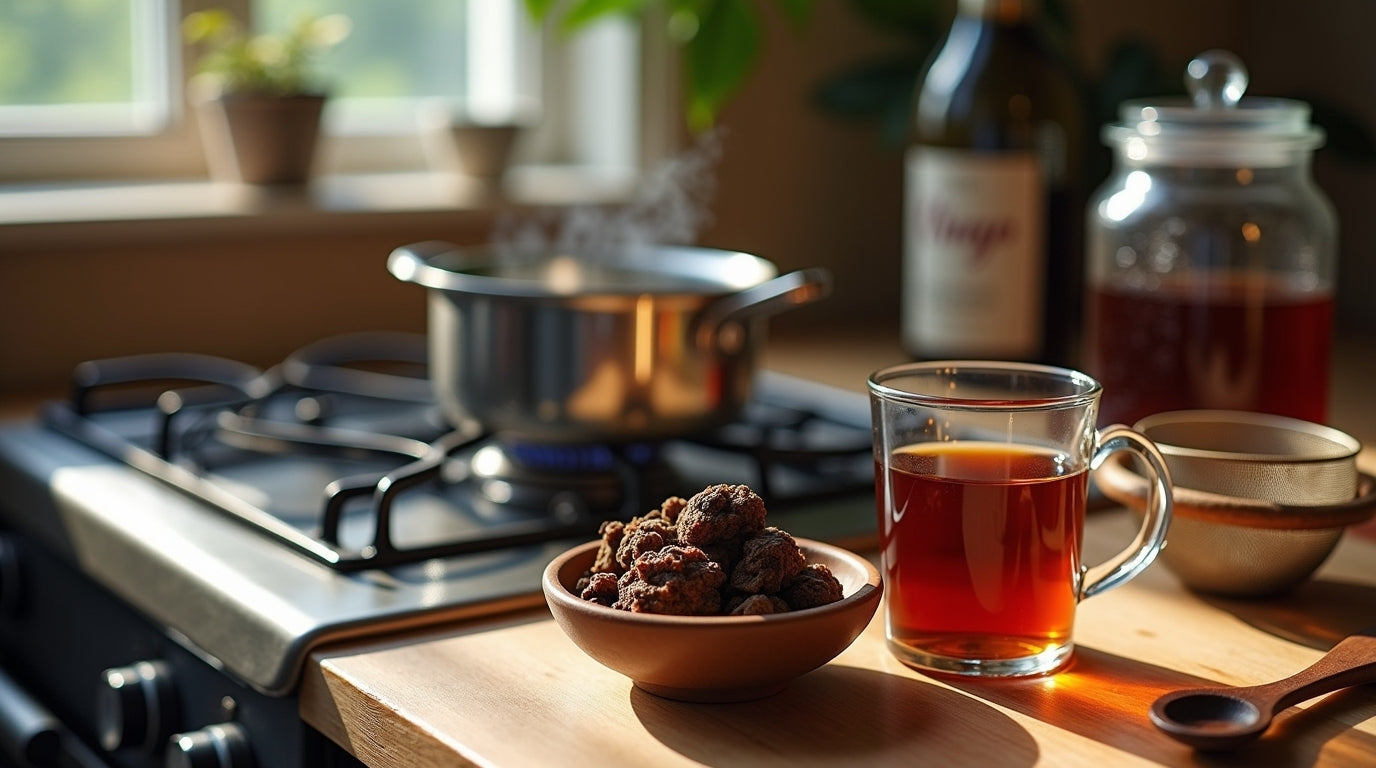
Traditional use includes making tea, tinctures, or extracts from dried chaga chunks. Some people also grind chaga into powder and add it to smoothies or coffee.
It’s important to note that while chaga is popular in folk medicine, more research is needed to fully understand its effects and safety. Always consult a healthcare provider before using chaga medicinally, especially if you have health conditions or take medication.
Drying And Storing Chaga
Once harvested, chaga needs to be dried and stored correctly to preserve its quality.
- Cut into small chunks: This helps speed up drying.
- Air dry: Place pieces on a screen or rack in a dry, airy spot, away from direct sunlight.
- Drying time: Usually takes 1–3 weeks depending on chunk size and humidity.
- Test for dryness: Chaga should snap cleanly when bent, not feel damp or rubbery.
- Store in glass jars or paper bags: Keep away from heat and moisture.
Pro tip: Never use plastic bags for long-term storage. Mold can ruin your harvest.
If you want to dry chaga quickly, a dehydrator set to low temperature (no more than 45°C/110°F) can be used. Never bake chaga in the oven or microwave, as high heat destroys some beneficial compounds.
Once fully dry, chaga can last for years if kept cool and dark. Check your stored chaga every few months for signs of mold or insect activity.

Credit: lacasadelassetas.com
Common Mistakes When Identifying Chaga
Even experienced foragers make errors. Here’s what to avoid:
- Harvesting lookalikes: Always double-check the inside color and host tree.
- Taking from sick trees: Poor quality and possible toxins.
- Confusing burls for chaga: Remember, chaga is black outside, orange inside.
- Using only pictures: Field guides help, but seeing real chaga in person teaches you much more.
One mistake beginners make is rushing the identification step. If you’re unsure, leave it and ask an expert later. Taking time ensures a safe and rewarding experience.
Chaga And Sustainability
With rising demand, overharvesting is a problem in some regions. Follow these guidelines to protect the forest:
- Harvest only what you need: Leave enough for wildlife and future growth.
- Don’t damage the tree: Use clean tools and never strip bark.
- Educate others: Share responsible foraging techniques.
Wildlife, especially insects and birds, also use chaga conks for shelter and food. Removing all the chaga from an area can disrupt these small ecosystems.
Some foragers mark their harvest sites on a map and revisit only after several years, allowing new growth to appear. This practice helps ensure chaga is available for future generations.
Visual Cues: A Summary Table
Here’s a quick reference for your next walk in the woods:
| Visual Cue | What to Look For | What to Avoid |
|---|---|---|
| Surface Color | Deep black, cracked | Gray, brown, smooth |
| Interior Color | Orange/rusty, corky | White, woody, spongy |
| Shape | Lumpy, irregular | Flat, shelf-like, rounded burl |
| Host Tree | Birch only | Other species |
Keep this table on your phone or in your foraging kit for a quick confidence boost in the field.
How To Practice Identifying Chaga
To become confident, practice is key. Here are some ways to improve:
- Join a local mushroom club: Learn from experts and see real chaga in the field.
- Go with an experienced forager: They can point out subtle differences.
- Use multiple senses: Look, feel, and even smell the growth.
- Keep a journal: Record where and when you find chaga for future reference.
Try visiting the same forest in different seasons. Notice how chaga stands out in winter but can be hidden by leaves and moss in summer. Over time, you’ll develop a “forager’s eye” for spotting even small conks from a distance.
Tips For Photographing And Documenting Chaga
If you’re not ready to harvest, taking clear photos can help with later identification or consultation.
- Photograph the whole tree: Show bark, leaves, and the growth’s location.
- Take close-ups: Show surface texture and color.
- Include a size reference: Place a coin or your hand next to the conk.
This documentation helps you compare finds and build your field skills.
For best results, take photos in natural daylight. If possible, snap a picture of the conk’s interior after cutting a small piece—this orange color is a helpful ID tool.
Chaga Foraging Ethics
As interest in wild harvesting grows, ethical foraging becomes more important. Remember:
- Harvest with permission
- Share knowledge
- Leave the forest as you found it
Being a responsible forager helps protect both the trees and future generations of mushroom hunters.
If you see evidence of overharvesting or damage in your area, consider reporting it to local authorities or conservation groups. Responsible foraging is about more than just your own harvest—it’s about the health of the whole ecosystem.
Frequently Asked Questions
What Does True Chaga Look Like On A Birch Tree?
True chaga appears as a hard, black, cracked mass on the trunk of a birch tree. It does not look like a typical mushroom. When broken open, the inside is orange or rusty brown and corky, not white or woody.
Chaga often has an irregular shape and may look like a large scab or burnt lump sticking out from the bark.
Can Chaga Grow On Trees Other Than Birch?
Chaga almost always grows on birch trees—especially paper, yellow, and European white birch. Rare reports exist on other trees, but these are exceptions and often not true chaga.
If you see something similar on alder, poplar, or beech, it’s likely a different fungus. Always confirm the tree species before harvesting.
Is It Safe To Eat Wild Chaga?
If you positively identify chaga and harvest it from a healthy birch in a clean area, it is generally safe to use in teas or extracts. However, avoid chaga from polluted areas or sick trees. Always dry it thoroughly and consult local guidelines for food safety.
People with allergies to mushrooms or birch should use caution and consult a healthcare provider before consuming chaga.
How Do I Tell Chaga Apart From Birch Polypore?
Chaga is black outside and orange inside, rough and cracked. Birch polypore is white to brown, smooth, and forms a classic shelf or hoof shape. It is also much softer when fresh.
If you’re still unsure, try breaking off a piece—chaga will resist, while birch polypore comes away easily.
Can I Cultivate Chaga At Home?
Chaga is difficult to grow at home because it has a special relationship with living birch trees and takes many years to develop. Most home attempts are not successful. For reliable chaga, wild foraging is still the main method.
Some companies are experimenting with chaga cultivation, but results are inconsistent. For most people, learning to identify and harvest wild chaga is the best approach.
Identifying chaga on birch trees is a skill that improves with time, observation, and practice. With the knowledge from this visual field guide, you can enter the forest with confidence—knowing how to spot true chaga, avoid common mistakes, and harvest responsibly. Each foraging trip builds your expertise, connecting you more deeply with the natural world.